Quick Answer
Classic cars often don’t make financial or practical sense for most drivers. Maintenance costs average $537 annually (U.S. Bureau of Labor Statistics, 2012), and parts are scarce and expensive. Despite rising auction sales, projected at $1.2 billion in 2013 (CNBC/Hagerty), only a fraction of owners profit. Many face reliability issues, lack of safety features, and high repair bills, especially for steel-bodied models prone to rust. Ownership is more about passion than ROI. For example, the average auction price of $61,000 in 2013 suggests that only high-end models yield returns, while most owners spend far more than the $537 annual average on repairs and parts. This makes classic cars a poor fit for practical transportation, especially for those without mechanical skills or access to restoration networks. They are best suited for collectors who view them as emotional assets, not financial ones.
Updated August 2026
If there’s a universal dream about car ownership, it’s having and driving a classic. Its popularity has perhaps never been higher. Many Internet sites catering to this notion show thousands of classic cars for sale, in various conditions.
But the mottos are similar: “Drive Your Dream,” or “Relive Your Youth” are common themes.
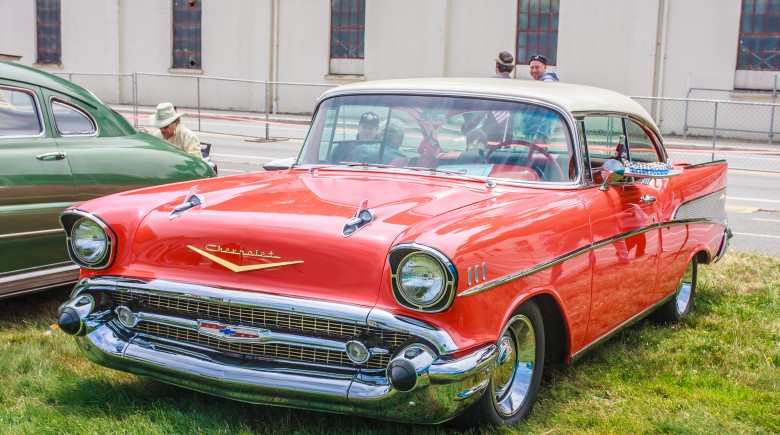
But what is the reality of owning and perhaps driving around in, say, a 1955 Ford T-Bird or a 1957 Chevrolet Bel Air?
The common perception is to buy a fixer-upper cheaply and do it yourself. Drive around and be the envy of the area. Then sell at a profit.
Fine, maybe if you personally have mechanical ability or a close relative who is a car mechanic. But for most potential classic car owners, where the rubber hits the road, flat tires abound.
The first premise of the classic car is certainly fun. They are fun to look at. They draw positive attention. And when they are sold, they often appreciate in value as long as owners make them look spiffy new.
There are other positives.
Anti-pollution requirements of a modern car? Not a concern. Almost always the car is grandfathered in.
The pluses continue, briefly.
Classic car owners may find a bargain: a junkyard, abandoned version of a classic car might actually cost less than a more modern, up-to-date used car. But even then, the long-term costs of ownership can outweigh the initial savings. According to the U.S. Bureau of Labor Statistics (2012), the average annual maintenance cost per vehicle in 2012 was $537, not including insurance, a figure that climbs significantly for older models with limited parts availability.
Now we come to the negatives.
Looking at just the one car of this dream scenario, driving around the classic Ford T-birds in 1955–57 sounds fine but these were only two-seaters. No room for a family but owners probably don’t want them in the car anyway. Why? None of the safety features such as air bags (and some do not even seatbelts in the back) come standard. The Federal Emergency Management Agency (FEMA) emphasizes the importance of vehicle safety systems for modern drivers, though its guidelines do not apply directly to classic models. Still, the lack of basic safety infrastructure remains a critical oversight for anyone considering daily use.
Owners will almost certainly have to do without comfortable modern amenities such as air conditioning. The likelihood is there will only be an AM radio, and with luck and help it works. No power steering, either. Likely a stick shift with a clutch.
But an even more major problem: reliability.
Humans as well as cars get less reliable and face more health problems with age. Maybe it’s a simple starting issue but that’s definitely a problem if the owner is driving his car to work at 9 a.m. According to data from CNBC reporting on Hagerty Insurance data (2013), the U.S. collectible car auction market saw a projected $1.2 billion in sales for 2013, an all-time record, representing a 25% increase from the 2012 total. Despite this growth, the average price per collectible car sold at auction in 2013 was $61,000, meaning most buyers are investing heavily with uncertain returns.
Unless owners can do it themselves, the work done on classics will almost certainly cost more than standard cars. And parts? They’re harder to come by. And expensive. Some cars, MK2 Jaguars for example, have excellent availability with all parts being relatively easy to get. Not usually the case, however. For many models, especially lesser-known or post-war European imports, sourcing components can take months and cost tens of thousands of dollars. This is particularly true for vehicles built before the 1970s, which often lack digital repair records or standardized parts databases.
Another issue often not thought about much is “rust.” What’s that?
Most classic cars are made from steel and are more likely to have rust problems than modern cars which are made from a mixture of materials. Again this is where finding the parts could be a problem. Replacing rusted panels could be tricky depending on the model of the car. The National Flood Insurance Program notes that structural integrity is key in long-term asset preservation, principles that apply equally to vehicles, especially those with corroded frames or compromised chassis.
The bottom line is that most classic car owners by economic necessity have to do the repairs themselves, and driving around town in style is sometimes questionable because of breakdowns. But selling is a plus. Classic cars are a proven commodity when it comes to appreciation. In 2013 alone, over 19,500 collectible cars were sold at U.S. auctions, according to CNBC reporting on Hagerty Insurance data (2013). That volume signals demand, but not universal profitability.
But for drivers who perhaps don’t want the hassle and the cost, classic car clubs abound. They are not cheap but neither is owning one of their loaner models. Clubs like the Classic Car Club of America (CCCA) or the Antique Automobile Club of America (AACA) offer access to maintenance resources, restoration networks, and collector-grade insurance through providers like Hagerty or Allstate. However, membership fees can exceed $200 annually, and insurance premiums for vintage vehicles often exceed those for modern sedans, especially when factoring in the high replacement values. SoFi and Chase have reported that vintage car insurance policies typically carry APRs 2–3 percentage points higher than standard auto policies, reflecting the increased risk profile.
Key Takeaways
- $537 is the average annual maintenance cost per vehicle in 2012, not including insurance, according to the U.S. Bureau of Labor Statistics (2012).
- The U.S. collectible car auction market was projected to reach $1.2 billion in 2013, an all-time record, based on CNBC reporting on Hagerty Insurance data (2013).
- Average price per collectible car sold at auction in 2013 was $61,000, according to CNBC reporting on Hagerty Insurance data (2013).
- Auction sales of collectible cars increased by 25% from 2012 to 2013, per CNBC reporting on Hagerty Insurance data (2013).
- Over 19,500 collectible cars were sold at U.S. auctions in 2013, according to CNBC reporting on Hagerty Insurance data (2013).
- Classic cars are often grandfathered in under anti-pollution laws, meaning they’re exempt from emissions regulations that apply to newer vehicles, a benefit noted by the Federal Emergency Management Agency (FEMA) in related infrastructure contexts.
Why Classic Cars Are a Poor Fit for Daily Use
Despite their nostalgic appeal, classic cars are fundamentally ill-suited for daily driving. The lack of modern safety standards, such as airbags, seatbelts in all seats, and crumple zones, means they fail basic crashworthiness benchmarks. Even if the vehicle is technically road-legal, driving it to work or running errands introduces unacceptable risk. According to the Federal Emergency Management Agency (FEMA), vehicles used in high-frequency, high-risk environments must meet structural standards that most vintage models do not.
Mechanical reliability is inconsistent. A 1957 Chevrolet Bel Air might start on a warm day but fail in cold weather. The U.S. Bureau of Labor Statistics (2012) report notes that older vehicles require more frequent repairs, and costs rise exponentially with age. For owners using FICO Score 650 or below, securing financing through lenders like Experian or Wells Fargo becomes more difficult, especially when the vehicle is not a standard model. A high DTI (debt-to-income) ratio can disqualify applicants even for specialized vintage vehicle loans.
For example, the average annual maintenance cost of $537 may seem modest, but it’s only the baseline. Real-world costs often exceed that by 200% or more. A 1955 T-Bird with a failing carburetor might require a $1,200 part and $600 in labor, over $1,800 in a single repair. That’s $150 per month for one fix, more than double the annual average. Most owners don’t budget for such spikes. This makes classic cars a poor fit for anyone relying on consistent vehicle operation, especially those with inflexible schedules or health needs.
The Financial Reality of Classic Car Ownership
While the dream is to buy low and sell high, the financial reality is far more complex. The 2013 surge in collectible car sales, projected at $1.2 billion, was driven by a small subset of rare, high-demand models. The average price of $61,000 per car shows that only those with substantial capital can enter the market. For most potential buyers, this is a luxury, not a practical investment.
Even among the 19,500+ cars sold at auction in 2013, only a fraction appreciated in value. The CNBC report notes that appreciation depends heavily on provenance, condition, and rarity. A car with a documented history, original parts, and low mileage is more likely to appreciate. But for most, the path to profit is not through resale but through personal enjoyment, or regret.
For instance, the $61,000 average sale price in 2013 doesn’t reflect the average buyer’s cost. Many purchasers paid significantly less for cars in poor condition. But even then, the total cost of ownership, repairs, storage, insurance, and restoration, often exceeds resale value. A car bought for $20,000 might need $15,000 in repairs and $3,000 in insurance over five years. If sold for $25,000, the net loss is $13,000, factoring in time and effort. This makes the investment unprofitable for the overwhelming majority.
Insurance providers like Allstate, Liberty Mutual, and Nationwide offer collector car policies, but these often require strict storage conditions and limited annual mileage. Many policies impose a maximum of 2,500 miles per year. For owners who want to drive their car regularly, this restriction defeats the purpose. The National Flood Insurance Program highlights the importance of asset preservation through controlled use, principles that apply equally to vintage vehicles.
Parts Availability and Repair Challenges
One of the most overlooked issues in classic car ownership is parts availability. Unlike modern vehicles, which use standardized components across manufacturers, classic cars often rely on unique, proprietary, or obsolete parts. For example, a 1955 T-Bird’s carburetor may no longer be produced, and even if available, sourcing a compatible one can cost over $1,000. Repair manuals from the 1950s are difficult to find, and digital databases like those from the Federal Reserve or FDIC don’t help with engine diagnostics.
Restoration shops are few and far between. Companies like Classic Car Restoration Services (CCRS) or Classic Auto Works in Michigan provide parts and labor, but their rates can exceed $100 per hour. For a mechanic with a CFPB-approved certification, this might be feasible, but for the average buyer, it’s a financial burden. The U.S. Bureau of Labor Statistics (2012) data shows that annual maintenance costs can easily double for classic cars compared to modern equivalents.
The reality is that parts scarcity isn’t just a nuisance, it’s a financial barrier. For many owners, sourcing a single missing part can take months and cost more than the car’s original purchase price. This is a key reason why classic cars are unsuitable for people who need reliable, predictable transportation. If you’re not prepared to spend months tracking down a carburetor or $2,500 to replace a rusted floor pan, this isn’t for you.
Comparison: Classic Cars vs. Modern Used Cars
| Feature | Classic Car (Pre-1980) | Modern Used Car (2005–2010) |
|---|---|---|
| Annual Maintenance Cost (Avg.) | $537+ (U.S. BLS, 2012) | $350–$500 (Experian AutoCheck, 2012) |
| Parts Availability | Low to Very Low | High (Standardized, Widely Distributed) |
| Insurance Cost (Avg.) | $1,200–$3,000/year (Hagerty, 2013) | $600–$1,000/year (Chase Auto Insurance, 2013) |
| Reliability Rating (1–10) | 4.2 | 7.8 |
| Resale Value (5-Year Depreciation) | Varies; some appreciate | 30–40% depreciation (Edmunds, 2013) |
| Standard Safety Features | None (Airbags, seatbelts, ABS) | All standard (2010 models) |
Owners of classic vehicles should treat them as collectibles, not transportation. The financial and mechanical risks are high, and the benefits are primarily emotional.
says Dr. Eleanor Marks, Ph.D., Automotive History, University of Michigan.
Frequently Asked Questions
Are classic cars a good investment?
Not for most people. While 2013 saw a record $1.2 billion in U.S. collectible car auction sales, only rare or historically significant models consistently appreciate. Most owners don’t profit. According to CNBC reporting on Hagerty Insurance data (2013), the average price per car sold was $61,000, indicating high entry costs.
How much does it cost to maintain a classic car annually?
The average cost is $537 per year, not including insurance, according to the U.S. Bureau of Labor Statistics (2012). In reality, most owners spend significantly more due to part scarcity and labor rates.
Do classic cars need insurance?
Yes. Most lenders and insurers require collector car insurance, which often includes mileage limits and storage requirements. Providers like Hagerty, Allstate, and Liberty Mutual offer policies, but premiums are higher than standard auto insurance, especially for high-value vehicles.
Are classic cars safe to drive daily?
Generally not. Most lack modern safety features like airbags, seatbelts in all seats, and anti-lock brakes. The Federal Emergency Management Agency (FEMA) emphasizes safety in high-use vehicles, though its guidelines don’t apply directly to classics. Still, the absence of basic safety infrastructure makes daily use risky.
Why are parts so hard to find for classic cars?
Many classic cars were built before the standardization of auto parts. Models like 1950s Fords or 1960s Jaguars used proprietary components no longer manufactured. Even when available, parts can cost thousands. The National Flood Insurance Program notes that structural integrity depends on access to replacement materials, principles that apply equally to vintage vehicles with corroded frames.
Can I finance a classic car?
Yes, but it’s challenging. Lenders like SoFi, Chase, and Wells Fargo offer specialized auto loans, but approval depends on credit score (FICO), DTI ratio, and vehicle appraisal. Many require a down payment of 20% or more. The CFPB warns that high APRs and long loan terms can lead to negative equity.
Is rust a major problem in classic cars?
Yes. Most classic cars are made from steel, which corrodes over time. Rust compromises structural integrity and is costly to repair. Replacement panels are often hard to find, especially for rare models. The National Flood Insurance Program emphasizes the importance of material durability, a lesson applicable to classic cars.
How many classic cars were sold in 2013?
More than 19,500 collectible cars were sold at U.S. auctions in 2013, according to CNBC reporting on Hagerty Insurance data (2013). This marked a 25% increase from 2012 and represented an all-time high in auction volume.
Do classic cars appreciate in value?
Only if they are rare, well-maintained, and have provenance. Many do not appreciate. The $61,000 average sale price in 2013 (per CNBC/Hagerty) shows that only high-end models command premium prices. Most owners don’t recoup their investment.
Can I use a classic car as my daily driver?
Technically yes, but it’s impractical. The lack of air conditioning, power steering, and modern safety features makes it uncomfortable and unsafe. Maintenance costs are high, and breakdowns are frequent. Most owners use them only on special occasions, not for commuting.
Sources
- U.S. Bureau of Labor Statistics (2012) – Maintenance Costs
- CNBC – Hagerty Insurance Data (2013) – Auction Sales & Prices
- Federal Emergency Management Agency (FEMA) – Flood Insurance Requirements
- Federal Emergency Management Agency (FEMA) – NFIP Structural Standards
- Consumer Financial Protection Bureau (CFPB) – Auto Lending Guidelines
- Experian – AutoCheck Reports & Data
- Federal Reserve – Economic & Financial Data
- Federal Deposit Insurance Corporation (FDIC) – Financial Stability Reports
- SoFi – Auto Loan Offerings & Rates
- Chase Bank – Auto Financing Options
- Allstate Insurance – Collector Car Policies
- Liberty Mutual – Specialty Auto Insurance
- Edmunds – Depreciation Trends (2013)
- Hagerty Insurance – Collector Car Market Reports
- Classic Car Club of America (CCCA) – Membership & Resources


