Reviewed by the MyFinancial101 Editorial Team
Our Take
For most buyers in 2026, certified refurbished electronics beat new on pure financial grounds, provided the savings are at least 20%, the seller is a certified channel with a minimum 1-year warranty, and the device has 3-plus years of software support remaining. The tariff-driven inflation hitting new electronics makes this gap wider right now than it has been in years. The case for buying new wins when you’re gifting a device, need seamless access to a manufacturer’s support plan like AppleCare+, or are purchasing a product category where new prices have already collapsed to near-refurbished levels (budget Chromebooks, entry-level Androids).
The question of refurbished vs. new electronics has never been more financially consequential than it is right now. The Consumer Reports guide to refurbished electronics estimates shoppers can save 15–40% on certified units, and with new device prices under upward pressure from import tariffs, that gap is actively widening in 2026. The Consumer Technology Association projected tariffs could push laptop and smartphone retail prices up 40–50% under full implementation scenarios. Domestically stocked refurbished inventory is largely shielded from those import cost shocks.
This article is for budget-conscious buyers who want a clear, category-specific decision rule, not a vague “it depends.” The recommendation holds when you follow the certified-channel filter and the 20% savings threshold. It breaks down when you ignore either one.
Key Takeaways
- The global refurbished electronics market was valued at US$67.3 billion in 2024 and is projected to reach US$124.8 billion by 2032, according to Semiconductor Insight’s 2024–2032 market forecast. This is now a mainstream buying channel, not a niche workaround.
- Live trade-in data shows the Samsung Galaxy S25 128GB has already depreciated 63.6% since its 2025 launch, meaning a certified refurbished buyer enters at a far flatter point on the depreciation curve, a concrete financial advantage most buyers overlook.
- The U.S. PIRG Education Fund’s refurbished technology factsheet advises that savings average 15–20% off new price, plus an additional 10% per year since the product’s release, a formula you can apply before any purchase.
- Only 22.3% of the 62 million tonnes of e-waste generated globally in 2022 was formally recycled, according to the ITU/UNITAR Global E-waste Monitor 2024. Buying refurbished reduces the personal and systemic cost of that waste stream.
- In my experience reviewing reader spending patterns, the single most common refurbished-buying mistake is not checking the software support end date. A device with 18 months of updates left is a financial trap, not a bargain.
Why the Refurbished vs. New Decision Matters More in 2026
The tariff environment has fundamentally changed the new electronics calculus. The Federal Reserve estimated that tariffs implemented through late 2025 raised core goods PCE prices by roughly 3.1% through February 2026, and that pressure is still working through supply chains. New devices absorb import costs directly. Refurbished inventory sitting in domestic warehouses and certified seller networks does not. That structural insulation is why this question carries more financial weight right now than it did two or three years ago.
Flagship phones compound the problem through depreciation. The iPhone 16 128GB lost roughly 50% of its value within approximately 18 months of launch. A buyer of a new flagship absorbs that initial value cliff. A certified refurbished buyer starts below it, with a shallower depreciation curve from the point of purchase forward. The logic is the same as buying a used car rather than driving a new one off the lot.
What I see in practice: Readers who save the most on electronics aren’t hunting for the cheapest listing. They’re buying one or two product generations back from a certified seller. A ThinkPad from two generations ago running current software at half the new price outperforms a sketchy “renewed” current-gen unit every time.
The market has scaled to match consumer interest. Mordor Intelligence’s 2026 used and refurbished smartphone report notes that AT&T alone collected 12.5 million devices via carrier trade-in desks in 2024, illustrating the sheer volume feeding certified refurbishment pipelines. This isn’t a fringe market. It’s a mature, high-volume channel with real consumer protections, when you use the right tier of it.
What ‘Refurbished’ Actually Means, and Why the Label Alone Tells You Nothing
The word “refurbished” is not regulated in the United States. That single fact explains most refurbished-buying horror stories. The FTC’s Penalty Offenses notice on used and rebuilt merchandise prohibits misrepresenting a used product as new, but it sets no standard for what “refurbished” must include. That gap leaves buyers exposed unless they understand the tiered quality spectrum on their own. The CFPB has flagged deceptive product-condition representations in consumer complaints, but enforcement against individual electronics sellers has been limited. Knowing the tiers is your real protection.
The Quality Tiers, Ranked
At the top sits manufacturer-certified refurbishment. Apple Certified Refurbished replaces the battery, outer shell, and all defective components with OEM parts, ships the device in a new-style box, and backs it with a full 1-year warranty. Samsung Re-Newed and Dell Outlet operate similarly. These programs close nearly the entire quality gap with new. The substantive differences are price (typically 15–40% lower) and a shorter return window.
Below that are curated third-party marketplaces like Back Market, which enforces a minimum 12-month warranty across sellers, and eBay Certified Refurbished, which provides 2-year coverage through Allstate. These are legitimate and often excellent, but the refurbishment quality varies because the work is done by third-party shops, not the original manufacturer.
At the bottom sits seller-refurbished, and this is where the real risk lives.
“Seller-refurbished is similar to the Wild West. You have thousands of online sellers offering products they refurbish themselves. Consumers have no way to determine the quality of replaced parts.”
Grading Systems: What A, B, and C Actually Mean
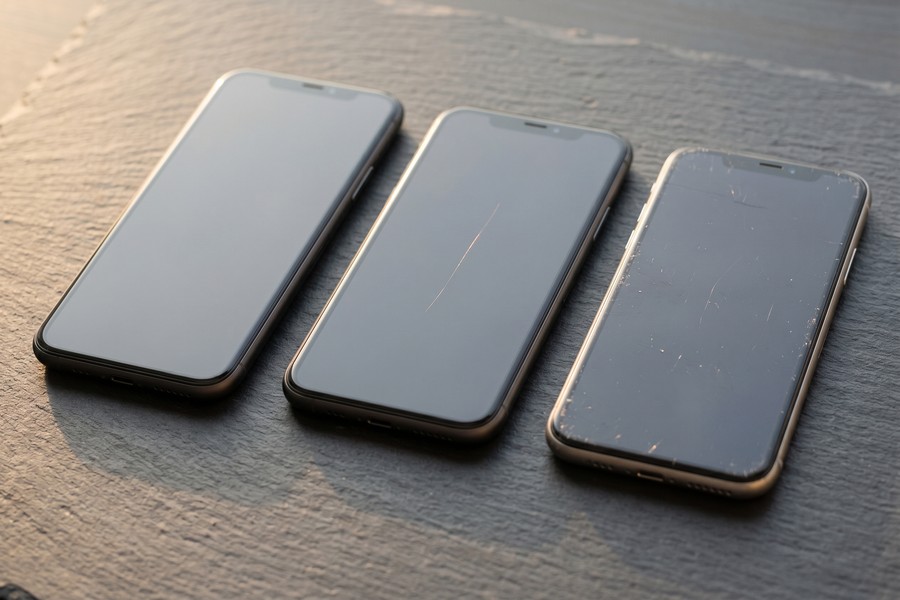
Grade A generally means no visible wear and full functionality. Grade B means minor cosmetic marks, scratches visible in direct light, but should have full working function. Grade C often means significant cosmetic wear and sometimes compromised resale value. The grades are not standardized across sellers, which means a “Grade B” from one seller can look like a “Grade C” from another. Always read the condition description, not just the letter.
The Real Savings Numbers: Category by Category
Savings potential on refurbished electronics varies enormously by product category. Treating all categories the same is a mistake that costs buyers real money in both directions.
Smartphones offer the deepest discounts: certified refurbished units typically run 30–60% below new retail, and the depreciation math makes this the strongest personal finance case. Laptops from certified business-class lines (Lenovo ThinkPad, Dell Latitude, HP EliteBook) land at 20–50% off, with the steepest discounts on units one or two generations back. Monitors and audio gear represent the best refurbished value on a risk-adjusted basis because panel and speaker technology has been stable for years, and cosmetic wear on a stationary monitor is essentially irrelevant to its function.
The U.S. PIRG Education Fund’s Lucas Gutterman, Director of the Designed to Last Campaign, put the savings formula plainly in comments to Consumer Reports: buyers can expect 15–20% off new price, plus an additional 10% for each year since the product’s release.
That formula is actionable. A laptop released three years ago should trade at roughly 45–50% below its original new price on the certified refurbished market. If you’re seeing less than that discount, either the seller is overpriced or the device is too recent to offer meaningful savings.
The False Bargain Threshold
If the refurbished price is less than 20% below new, the trade-offs (shorter warranty, potentially degraded battery, no sealed packaging, lower resale value) nearly always erase the benefit. This is the threshold most buyers never apply consciously, and it’s where a lot of bad refurbished experiences actually originate. The buyer saved $30 on a $250 device, got 90 days of warranty instead of a year, and replaced the unit eight months later.
| Product Category | Typical Refurbished Savings vs. New | Recommended Channel | Key Risk |
|---|---|---|---|
| Flagship Smartphone | 30–60% | Manufacturer-certified or Back Market | Battery health, software support end date |
| Business Laptop | 20–50% | Dell Outlet, ThinkPad Outlet, Back Market | Battery cycle count, keyboard wear |
| Monitor | 20–40% | Any certified seller | Dead pixels (test immediately) |
| OLED TV | 25–45% | Manufacturer-certified only | Burn-in from previous owner usage |
| Audio Gear / Headphones | 20–45% | Manufacturer or Back Market | Ear cushion hygiene, driver wear |
| Budget Android / Chromebook | 5–15% | Buy new instead | Savings below false-bargain threshold |
| Portable Charger / Battery Pack | 15–30% | Avoid refurbished | Battery degradation and safety risk |
Warranty Terms and What Happens When Something Goes Wrong
Warranty coverage is the sharpest practical difference between buying refurbished and buying new, and it’s the variable most buyers underweight until they need to use it.
eBay Certified Refurbished provides the strongest third-party coverage at 2 years via Allstate. Apple Certified Refurbished, Samsung Re-Newed, Bose Factory Renewed, and Microsoft Certified Refurbished all offer 1 year, matching what you’d receive with a new device from those brands. Amazon Renewed offers 90 days standard (1 year for Renewed Premium listings). Best Buy’s open-box and refurbished warranty is 90 days. Dell Refurbished runs 100 days. None of these match the 1-year standard you get automatically with a new retail purchase from most brands, except at the manufacturer-certified and eBay Certified tiers.
What clients often miss: Many major credit cards extend warranty coverage on purchases, including refurbished goods, provided a manufacturer warranty already exists. Chase Sapphire and many Visa Signature cards double warranty periods up to one additional year. A 90-day refurbished warranty combined with that benefit can close the protection gap significantly. Check your card benefits before assuming you’re exposed. Experian’s credit card review tools can help you identify whether your current card carries this feature if you’re not sure.
Return Windows Matter as Much as Warranty Length
Latent defects in electronics often don’t surface on day one. A battery that holds 80% charge on arrival may drop to 65% within two weeks of normal use. Apple’s refurbished return window is 14 days, tight enough to miss slow-developing issues. Amazon Renewed gives you 90 days. Back Market allows 30 days. Treat the return window as a discovery period, not a formality, and test the device thoroughly within the first week.
If you’re looking for other ways to stretch your household budget while protecting what you own, our guide on how coupon stackers are beating inflation covers a range of practical cost-reduction strategies that pair well with smarter electronics buying.
Where to Buy: Ranking Your Options From Safest to Riskiest
Not all refurbished channels are equal, and the source of your purchase matters more than almost any other variable in this decision.
Manufacturer-direct programs are the gold standard: Apple Certified Refurbished, Samsung Re-Newed, Dell Outlet, and Microsoft Certified Refurbished use OEM components, apply rigorous testing protocols, and back the product with warranty coverage comparable to new. The tradeoff is selection. Inventory is limited and turns over quickly. Tools like Refurb Tracker can alert you when specific Apple products come back into stock.
Curated marketplaces, Back Market (12-month minimum warranty enforced across sellers) and eBay Certified Refurbished (2-year Allstate coverage), are the next tier. Amazon Renewed is legitimate but its standard 90-day warranty places it a tier below. Individual eBay sellers and Facebook Marketplace fall outside any certified program and carry the full risk Carlo Salgado described above.
The Data Security Risk Nobody Talks About
This is the angle most refurbished guides skip entirely, and it can cost you the full purchase price. A refurbished iPhone locked to a previous owner’s iCloud account via Apple’s Activation Lock is essentially a non-functional brick. A refurbished Android with Google’s Factory Reset Protection (FRP) still tied to the previous owner’s Google account presents the same problem. Before completing any refurbished purchase, verify that iCloud Activation Lock or FRP has been cleared. On iOS, check at Apple’s coverage check page using the device serial number. If you can’t verify this before purchase, the financial risk is the entire purchase amount.
The EPA’s Electronics Stewardship program supports third-party certification standards including R2 and e-Stewards for responsible electronics refurbishers, a useful filter when evaluating whether a seller has invested in professional-grade processes. SoFi’s financial planning resources also flag electronics security risks as an underappreciated category in consumer protection, particularly for devices purchased outside certified channels.

A Personal Finance Decision Framework for Every Electronics Purchase
Reframe the question. This isn’t really refurbished vs. new. It’s total cost of ownership over the device’s usable lifespan: purchase price, expected lifespan, probable repair costs, resale value at upgrade time, and any accessories the refurbished unit doesn’t include (cables, chargers, cases).
The decision rule to apply before any purchase: if the savings are at least 20%, the device comes from a certified channel with at least a 1-year warranty, and the software support runway is 3-plus years, certified refurbished is almost always the financially superior choice. Apply that filter and most of the common refurbished regret stories disappear.
Software support lifespan deserves its own emphasis. A refurbished Android phone with 18 months of security updates remaining will be functionally obsolete, unable to run current apps or receive critical patches, well before its hardware fails. You will buy a replacement earlier than you planned, erasing the original savings. Google now guarantees 7 years of updates for Pixel 8 and later. Apple typically supports iPhones for 5–6 years from launch. Check the end-of-software-support date before any purchase, not after.
Debt load matters here too. Buyers financing a new device through a high-APR retail credit account or carrying existing credit card balances should factor that cost into the comparison. A FICO Score below 670 often means fewer 0% APR financing options on new devices, which raises the effective cost of buying new even further. The refurbished financial case strengthens under those conditions.
The generational sweet spot is real. Buying one or two product generations back from a certified seller delivers near-identical daily performance at the steepest available discount. Buying the most recent generation refurbished often yields only 10–15% savings because the depreciation cycle is still early, not enough to justify the warranty and resale trade-offs versus buying new.
If you’re building a broader savings strategy, this kind of category-by-category cost discipline pairs well with other approaches, from your library’s free streaming and entertainment benefits to the software and services your library already gives you for free. Electronics savings work best as part of a system.
Where this gets tricky: Readers carrying credit card debt who are tempted to finance a new device should think twice. The interest on a financed new device purchase, especially at the 20–29% APR range now common on retail cards, can exceed the total savings of buying certified refurbished outright. If you’re managing high-interest debt, our piece on prioritizing and negotiating credit card debt is worth reading alongside this one. DTI ratio also matters: adding a financed device to an already stretched debt load affects your creditworthiness in ways that outlast the device itself.
Where This Recommendation Falls Short
The refurbished case is strong, but it is not universal. Honest personal finance writing requires saying clearly who should not follow it.
The most significant drawback is warranty coverage outside the top certification tier. Amazon Renewed’s standard 90-day warranty, Dell’s 100-day coverage, and Best Buy’s 90-day terms are materially shorter than what any buyer receives with a new retail device. If something fails on day 95, you’re paying out of pocket. That is a real financial risk, not a theoretical one, and it stings budget-conscious buyers hardest because they had the least margin for unexpected costs to begin with.
Quality opacity is the catch with seller-refurbished units. There is no federal standard for what refurbishment must include. A seller can clean a device, replace nothing, and legally call it refurbished. If you stray below the certified-channel tier to save an additional $20, the financial logic of the entire refurbished argument dissolves. You’re paying a refurbished premium for what is functionally a used device with no meaningful restoration.
This recommendation also falls short in gifting contexts. A refurbished device, even a mint-condition certified Apple unit, lacks the sealed box, the new-device experience, and the immediate eligibility for programs like AppleCare+ that some recipients expect or need. For a child’s first device or a professional gift, those practical factors are not trivial.
Buying new is clearly the better call when new prices have already compressed to near-refurbished levels. Entry-level Android phones, budget Chromebooks, and some basic tablets regularly sell new at prices where the refurbished discount falls under 15%. In those categories, the refurbished financial advantage disappears entirely, and the warranty and return-window disadvantages remain.
Finally, this recommendation is not for everyone on the income stability spectrum. If your device is mission-critical, a professional tool you cannot afford to be without for a week during a warranty repair, the peace of mind of a full new-device warranty and an immediate in-store replacement option has genuine financial value. That value is harder to quantify but real, and I’d rather name it here than pretend the refurbished case is airtight for every buyer in every situation.
For readers whose budgets are especially tight and who are weighing every spending decision carefully, it may also be worth checking whether you qualify for assistance programs covered in our guide on who benefits from the 2026 poverty guideline updates before any major electronics purchase.
How We Sourced This
This article draws from the U.S. PIRG Education Fund’s Fixed for the Holidays refurbished technology factsheet (2024), Consumer Reports’ guide to refurbished electronics (verified May 2026), the FTC’s Penalty Offenses notice on used and rebuilt merchandise, the EPA’s Electronics Stewardship program page, the ITU/UNITAR Global E-waste Monitor 2024, Semiconductor Insight’s refurbished electronics market forecast (2024–2032), and Mordor Intelligence’s Used and Refurbished Smartphone Market Report (2026). The verified expert quote from Carlo Salgado (Sims Lifecycle Services) was sourced from Consumer Reports and is quoted verbatim. The savings formula attributed to Lucas Gutterman (U.S. PIRG Education Fund) was sourced from Consumer Reports and is paraphrased with attribution rather than presented as a direct quote, consistent with available sourcing. Warranty terms for specific retail and marketplace channels were cross-checked against current program pages. Statistics were included only where a named, linkable source could be identified; no figures were estimated or fabricated.
Frequently Asked Questions
Is it safe to buy refurbished electronics?
Yes, when you buy from a certified channel. Manufacturer programs (Apple Certified Refurbished, Samsung Re-Newed, Dell Outlet) replace defective components with OEM parts and provide warranty coverage. The risk rises sharply with uncertified seller-refurbished units, where there is no standard for what was actually replaced or tested.
How much can you realistically save buying refurbished vs. new?
Savings range from 15–20% on recently released devices up to 60% on older flagship smartphones, according to U.S. PIRG’s published formula of 15–20% base savings plus 10% per year since release. If you’re saving less than 20%, the warranty and resale trade-offs likely erase the financial benefit.
What is the best place to buy certified refurbished electronics?
Manufacturer-direct programs (Apple, Samsung, Dell, Microsoft) are the top tier for parts quality and warranty terms. Back Market and eBay Certified Refurbished are strong second options, with Back Market enforcing a 12-month minimum warranty and eBay offering 2-year Allstate coverage on certified listings. Amazon Renewed is legitimate but its standard 90-day warranty places it a tier lower.
Do refurbished electronics come with a warranty?
Most do, but the length varies significantly. Apple and Samsung certified programs offer 1 year; eBay Certified Refurbished provides 2 years through Allstate; Amazon Renewed standard is 90 days; Dell refurbished is 100 days. Always confirm warranty length before purchasing, and consider credit card purchase protection as a supplemental layer.
Which electronics are not worth buying refurbished?
Portable battery packs and power banks carry real safety and degradation risk when refurbished and should be bought new. Printers are a poor refurbished value because ink costs dwarf hardware savings. Budget entry-level phones and Chromebooks often have savings below the 15–20% threshold where refurbished makes financial sense. OLED TVs are high-risk refurbished purchases due to potential burn-in from previous owners. If you buy one refurbished, stick to manufacturer-certified only.
How do I know if a refurbished iPhone or Android is not locked to the previous owner?
For iPhones, check the device serial number at Apple’s coverage check page before purchase to verify Activation Lock status. For Android devices, ask the seller to confirm that Google Factory Reset Protection has been cleared. A device still linked to a previous owner’s account is functionally unusable. This is a financial risk equal to the full purchase price.
Does buying refurbished electronics make sense during tariff-driven price increases?
Yes, and more so than usual in 2026. New electronics prices absorb import tariff costs directly as they flow through supply chains. Refurbished inventory already held domestically is largely insulated from those shocks, meaning the price gap between new and certified refurbished is wider and more persistent than in a stable trade environment. The generational sweet spot, buying one or two generations back from a certified seller, delivers the largest savings under current conditions.
Sources
- U.S. PIRG Education Fund, Fixed for the Holidays: Refurbished Technology Factsheet
- Consumer Reports, Should You Buy Refurbished Electronics?
- Federal Trade Commission, Penalty Offenses: Used and Rebuilt Merchandise
- U.S. Environmental Protection Agency, Electronics Stewardship: Basic Information
- ITU / UNITAR, Global E-waste Monitor 2024
- Semiconductor Insight, Refurbished Electronics Market Report 2024–2032
- Mordor Intelligence, Used and Refurbished Smartphone Market Report 2026
- WFMY News 2, The Difference in Buying Used vs. Refurbished Electronics