Fact-checked by the MyFinancial101 editorial team
Quick Answer
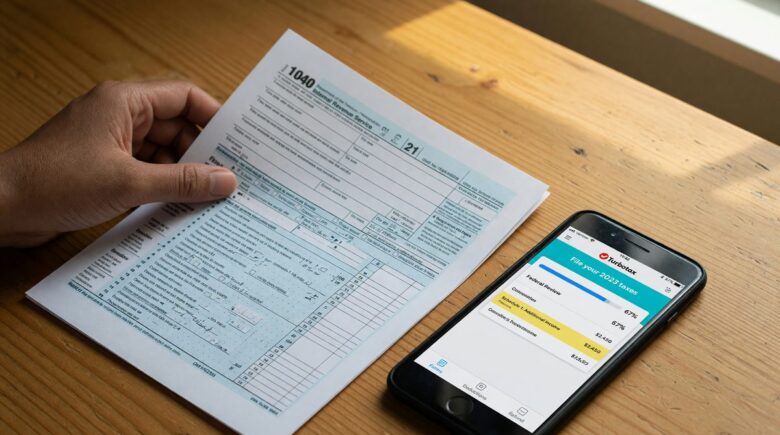
Tax software costs $0–$180 and works well for W-2 filers taking the standard deduction. Hiring a CPA averages around $273 for a basic return and is worth it once you add self-employment income, rental properties, investments, or multi-state filing. Most filers can decide in under 10 minutes by checking their income sources against a short complexity checklist.
The CPA vs tax software decision comes down to one question: how much can go wrong on your return? For a straightforward W-2 with one employer and the standard deduction, consumer software handles the job cleanly and costs a fraction of professional fees. But IRS filing season data from 2025 shows that out of 165.8 million individual returns received, roughly 87.9 million were e-filed through tax professionals, nearly 53% of the total. That split tells you something real: a substantial share of filers have decided the complexity warrants outside help.
The 2026 tax year carries additional weight. Several Tax Cuts and Jobs Act provisions are scheduled to sunset at the end of 2025, meaning higher marginal rates, a reduced standard deduction, and the return of personal exemptions could all affect returns filed in 2026. These changes disproportionately hit filers who have been using software on autopilot, since the platforms update their forms but rarely flag what strategy changes are now available to you. A CPA can adjust your withholding, retirement contributions, or business structure in response; software cannot.
This guide is for anyone heading into the 2026 filing season with at least one complicating factor on their return, freelance income, a rental unit, crypto trades, stock sales, or a recent life change like marriage or a home purchase. Work through each step below, and by the end you will have a clear recommendation specific to your situation.
Key Takeaways
- 67.1 million filers self-prepared their returns electronically in 2025, according to IRS filing season statistics, proof that software works at scale for straightforward situations.
- 96% of total EITC audit adjustment dollars in fiscal year 2024 came from returns prepared by non-credentialed paid preparers, per the IRS National Taxpayer Advocate report.
- Consumer software typically runs $0–$180, while a CPA averages around $273 for a basic individual return, but CPAs use professional platforms costing up to $6,000 that enable deeper analysis.
- CPAs hold unlimited IRS representation rights, meaning they can appear before the IRS on your behalf during audits or notices, as detailed by IRS preparer credential guidance.
- EITC payments were estimated at 27.3% improper (totaling $15.9 billion) in fiscal year 2024, according to the IRS National Taxpayer Advocate, a reminder that complexity and errors cluster around credits, not just income types.
- TCJA provisions sunsetting after 2025 mean tax strategy decisions made in 2026 carry unusually high long-term stakes for itemizers and business owners.
In This Guide
Step 1: How Complex Is Your Tax Return, Really?
Most people underestimate their own tax complexity. A single W-2 and no investment accounts? You are genuinely a software candidate. But if any item on the list below applies to you, the calculus shifts.
Complexity Triggers That Push Beyond Software’s Comfort Zone
Run through this checklist before you open any platform or call any professional. Each item below adds a layer of judgment that software handles inconsistently:
- Self-employment or freelance income, Schedule C requires expense categorization, home office calculations, and qualified business income (QBI) deductions that software guides only superficially.
- Rental properties, Depreciation schedules, passive activity loss rules, and recapture on sale require multi-year tracking that most consumer tools manage poorly across tax years.
- Cryptocurrency transactions, Basis tracking across wallets and exchanges, especially after multiple trades or DeFi activity, is a known weak point for software. If you have been active in crypto, see our breakdown of cryptocurrency investment risks for context on how tax exposure can accumulate.
- Stock sales with complex basis, Inherited assets, employee stock purchase plans (ESPPs), and incentive stock options (ISOs) each carry specific basis rules that change your tax outcome significantly.
- Multi-state income, If you earned income in more than one state, allocation rules vary by state. Software often mishandles credit-for-taxes-paid calculations between states, leaving money on the table or creating an underpayment.
- Business ownership or partnership interests, K-1 income from an S-corp, partnership, or trust adds passive activity layers that a guided interview struggles to address accurately.
- Major life events, Marriage, divorce, a new child, home purchase, or inheritance each open and close credits or deductions that software may not proactively surface.
What to Watch Out For
A return that looks simple can still hide nuance. “Simple” filers who claim the Earned Income Tax Credit, for instance, are part of a category where 27.3% of payments were estimated as improper in fiscal year 2024, per the IRS National Taxpayer Advocate report. The EITC is notoriously tricky to claim correctly, and software’s guided interview is not a substitute for someone who knows which edge cases to ask about.
Before buying any software tier or scheduling a CPA consultation, pull last year’s return and count the number of distinct IRS forms filed. Every form beyond a 1040 and one W-2 adds complexity. Three or more additional forms is a reasonable threshold for at least getting a CPA quote.
Step 2: What Will You Actually Pay?
Consumer software costs between $0 and $180 for most filers; a CPA averages around $273 for a basic individual return, with more complex returns running $400–$1,500 or higher. That price gap narrows considerably once you account for what each side actually delivers.
Tax software prices are public and tiered. TurboTax’s Deluxe edition (itemized deductions, HSA, mortgage interest) runs around $69 for federal, with state returns adding $59 each. Their Self-Employed tier costs around $129 plus state. H&R Block and TaxAct run roughly 20–40% cheaper at comparable tiers. Free File through the IRS Free File program is available to filers earning under $79,000 and is a genuinely strong option for simple returns. CPAs, by contrast, use professional-grade platforms, Thomson Reuters UltraTax, Intuit ProConnect, Drake Tax, that cost $1,000–$6,000 per year. You do not pay that cost directly; it is absorbed into their fee structure. But it does mean they are working with tools that run deeper checks and handle edge cases that consumer platforms skip entirely.
If a CPA charges $400 for a self-employed return and identifies one missed home office deduction worth $2,000 (reducing your taxable income by $2,000 at a 22% marginal rate), that deduction alone saves $440 in federal taxes, more than covering the fee. Software would have required you to know to enter the deduction yourself.
Step 3: Which Option Catches More and Costs Less in Errors?
Software is accurate at what it is designed to do. A guided interview on a W-2 return with standard deduction will produce a correct return the vast majority of the time. The problem is the ceiling: software cannot ask a follow-up question it was not programmed to ask.
Where Software Performs Well
For the roughly 67.1 million self-prepared e-filers in 2025 (per IRS statistics), the software-guided process works because their returns genuinely fit the template. W-2 income, standard deduction, maybe a student loan interest deduction, the form logic is straightforward, and the software’s error-checking catches math mistakes and missing information reliably. If this describes you, paying $200+ for a CPA is hard to justify.
Where CPAs Pull Ahead
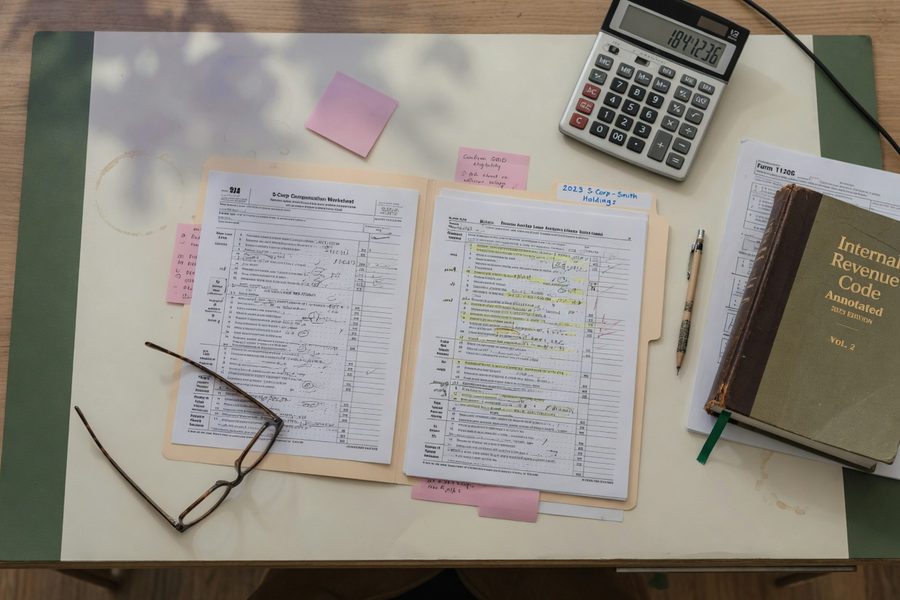
Judgment calls are where the gap opens. Reasonable compensation for an S-corp owner-employee, passive activity loss carryovers, investment interest expense allocation, and the interaction between QBI deductions and W-2 wage limits, these require someone who has seen dozens of similar situations and knows what the IRS scrutinizes. The IRS’s guidance on preparer credentials notes that CPAs must meet ongoing education, exam, and continuing education requirements, and that continuing education specifically covers current-year law changes, not just static rules.
The 2026 TCJA sunset adds a specific optimization opportunity that software will not surface proactively. Filers who have been taking the standard deduction might now benefit from bunching charitable contributions or prepaying certain deductible expenses before year-end, but only if they understand that the standard deduction is likely to drop. A CPA will model that scenario; software will process whatever numbers you enter.
What to Watch Out For
AI-assisted features in newer software versions, TurboTax’s Intuit Assist, H&R Block’s AI Tax Assist, can answer basic questions about where to enter information. They are not advisors. They cannot tell you whether to elect out of bonus depreciation, how to time a Roth conversion, or whether your LLC should file as an S-corp. Treat them as a search engine embedded in the filing flow, not as a substitute for professional judgment.

| Factor | Tax Software | CPA |
|---|---|---|
| Cost (federal + one state) | $0–$180 | $273–$1,500+ |
| Time required from filer | 2–8 hours (data entry + review) | 1–2 hours (document hand-off + review call) |
| W-2 simple return accuracy | Very high | Very high |
| Self-employment optimization | Limited (form-guided only) | Strong (judgment + law knowledge) |
| Multi-state filing | Partial (extra fees per state) | Full allocation analysis |
| IRS audit representation | Add-on ($40–$60/year) or none | Unlimited, included in relationship |
| Year-round planning | None | Available (often included or low additional fee) |
| TCJA sunset strategy | Forms updated; no proactive advice | Modeling and recommendations provided |
Not all paid tax preparers are CPAs. The IRS distinguishes between credentialed preparers (CPAs, Enrolled Agents, tax attorneys) with unlimited representation rights and non-credentialed preparers who can only represent clients in limited circumstances. Check the IRS directory of credentialed preparers before hiring anyone.
Step 4: What Happens If the IRS Comes Knocking?
This is the step most people skip until they need it. Software packages offer audit protection as an add-on, typically $40–$60 per year, but that coverage usually means a representative helps you organize documents and respond to correspondence. It does not mean someone appears before the IRS on your behalf.
CPA Representation Rights
CPAs hold unlimited IRS representation rights. Per IRS preparer credential guidance, this means a CPA can represent you before any IRS office, audits, appeals, collections, without you needing to be present. Enrolled Agents carry the same unlimited rights. That distinction matters when the IRS sends an audit notice on a complex return involving depreciation recapture or passive losses; those conversations benefit enormously from someone who prepared the return and knows every decision made on it.
What to Watch Out For
Software-prepared returns are not inherently more likely to be audited than professionally prepared ones for simple filers. The audit risk increases with complexity, and that is where the mix of software and complexity creates real exposure. The 96% of EITC audit adjustment dollars attributable to non-credentialed preparers, documented in the IRS National Taxpayer Advocate report, illustrates how the wrong preparer on a complex credit creates outsized audit risk. Self-prepared returns with complex credits fall into a similar category.
If you used software and receive an IRS notice, you can still hire a CPA or Enrolled Agent to represent you after the fact. The cost for post-filing representation typically runs $150–$400 per hour, far more than the original preparation fee. That retroactive cost is a concrete argument for using a credentialed preparer on complex returns in the first place.
Step 5: How to Make the Final Call and Vet Your Option
The decision framework is straightforward: if your return fits squarely into software’s strengths, one or two W-2s, standard deduction, no self-employment, no rentals, no complex investments, use software and keep the money. If you have even two of the complexity triggers from Step 1, get at least one CPA quote before defaulting to software.
How to Vet a CPA
Start with the IRS directory of credentialed tax professionals, which lets you search by ZIP code, credential type, and foreign language ability. Ask any candidate three questions before committing: What is your fee structure for my return type? Do you handle your own IRS notices or farm them out? Do you offer any year-round planning contact? A CPA who cannot answer the fee question specifically, and quotes only “it depends”, is not organized enough to manage your return confidently.
How to Test Software Without Commitment
Most major platforms allow you to start a return and enter all your data before paying. Complete the entire return, review the summary, and check your refund or balance due before you enter payment information. If the number looks off, get a second opinion from a CPA before filing. That comparison approach costs you only time. If you are already tracking your finances and looking for ways to reduce your tax burden year-round, pairing software filing with a read-through of tax season preparation strategies can help you arrive at any preparer better organized.
The Hybrid Approach
A middle path that works well for moderately complex returns: use software to organize your documents and run a preliminary return, then pay a CPA for a one-hour review before you file. Some CPAs offer this as a flat-fee “return review” service for $100–$200. You get the software’s efficiency and the CPA’s oversight without paying for full preparation. This is particularly useful for first-time self-employed filers who are not yet sure how much complexity their return carries.
One honest caveat: CPAs vary significantly in quality, responsiveness, and specialization. A generalist CPA who primarily handles simple W-2 returns may not add more value on your Schedule C than good software would. Ask specifically whether the CPA has experience with your income type, freelancers, rental owners, and stock-option recipients each have distinct needs, and not every CPA handles all three with equal depth. For those managing debt alongside tax obligations, understanding your full financial picture matters; our guide on prioritizing and negotiating credit card debt covers how to sequence those decisions alongside tax planning.

If you are self-employed or have rental income, ask your CPA specifically about estimated quarterly tax payments for the coming year. Software will not calculate next year’s estimates unless you ask it to, and underpayment penalties, currently 8% annualized, can easily cost more than the CPA’s planning fee. For those building income through freelancing or side work, our coverage of the rise of micro-freelancing also touches on how quickly tax obligations accumulate for new independent earners.
Related reading: Should You Use a Tax Preparer or File Yourself in 2026? Pros and Cons.
Frequently Asked Questions
Can I use tax software if I have self-employment income?
You can, but you should go in with realistic expectations. Self-employed filers need Schedule C, Schedule SE, and often a QBI deduction calculation, and the software will walk you through those forms. The limitation is that it cannot tell you whether your expense categorizations are aggressive, whether your home office calculation will hold up to scrutiny, or whether an S-corp election would reduce your self-employment tax. For a first year of modest freelance income (under $30,000), software is a reasonable starting point; for an established business, a CPA is worth the fee.
How much does a CPA charge to do your taxes?
A basic individual return with a CPA averages around $273, but the range is wide. A straightforward return with a W-2 and standard deduction may run $150–$200. A return with Schedule C, a rental property, and stock sales can run $500–$1,200 or more. Ask for a flat-fee quote before engaging, hourly billing for tax preparation is a red flag that your costs are unpredictable.
Is TurboTax accurate enough for a complicated return?
TurboTax handles complex forms competently, but form accuracy and return optimization are different things. The software will correctly calculate depreciation if you enter the right numbers, but it will not tell you whether you should take bonus depreciation or use the Section 179 deduction instead, or how that choice affects your QBI deduction. For returns with multiple complexity factors, the software is accurate at the mechanical level and limited at the strategic level.
What income level makes hiring a CPA worth it?
Income level alone is not the right filter. A filer earning $60,000 entirely from one W-2 has less need for a CPA than a filer earning $50,000 with a mix of freelance income, rental income, and crypto sales. The better question is income-source complexity. As a rough guide: once you have more than three distinct income sources or any asset sales with complicated basis, a CPA is likely to pay for itself through missed deductions and avoided errors.
Does filing with software increase my audit risk?
For simple returns, no evidence suggests that software-prepared returns face higher audit rates than professionally prepared ones. The audit risk concentrates around specific claim types, large Schedule C deductions, EITC claims with mismatches, and large charitable deductions relative to income, regardless of who prepared the return. Where the difference shows up is in what happens after an audit notice arrives: a CPA can represent you directly; software cannot.
Should I hire a CPA if I have investments and sold stock this year?
It depends on the complexity of the sales. A handful of stock sales from a standard brokerage account with reported cost basis, where you receive a 1099-B with all figures already calculated, is manageable in software. If you have employee stock options, RSUs, ESPPs, or inherited securities where basis requires reconstruction, a CPA is a strong choice. ISOs in particular carry alternative minimum tax implications that software addresses only with heavy user input.
What is the difference between a CPA and an Enrolled Agent for taxes?
Both hold unlimited IRS representation rights, meaning both can appear before the IRS on your behalf during audits, appeals, and collections, per IRS credential guidance. The primary difference is that CPAs hold a broader accounting credential covering financial statements, business accounting, and advisory work, while Enrolled Agents specialize exclusively in taxation. For pure tax preparation and IRS representation, an EA is often equally qualified at a lower fee than a CPA at a larger firm.
Can I file in multiple states with tax software?
Most major software platforms handle multi-state returns, but each state return costs extra, typically $40–$59 per state on top of the federal fee, and the quality of the allocation logic varies. States with complex reciprocity agreements or allocation formulas for part-year residents are a known weakness. If you earned income in three or more states, or if you moved mid-year, a CPA with multi-state experience will produce a more accurate result and is likely to find credits for taxes paid to other states that software misses. For those navigating income changes due to new employment, our piece on hourly jobs available in 2026 covers how rapidly income diversification is shifting the tax picture for many workers.
Is there a free way to get professional tax help?
Yes. The IRS Volunteer Income Tax Assistance (VITA) program provides free in-person preparation by IRS-certified volunteers for filers earning generally $67,000 or less. AARP Tax-Aide offers similar help with no income limit for filers over 50. These are not CPAs, but for straightforward returns that qualify, VITA and AARP Tax-Aide are a legitimate free alternative to both software and paid professionals. Our earlier overview of free IRS tax help and overlooked credits covers exactly which programs apply and how to find a local site.
What tax documents do I need to gather before deciding between software and a CPA?
Gather everything first, then decide, the document pile often reveals complexity you had forgotten. At minimum, collect all W-2s, 1099s (income, interest, dividends, brokerage), any K-1s from partnerships or trusts, receipts for deductible expenses, last year’s return, and any IRS notices received during the year. If your document pile includes more than one K-1, a 1099-B with multiple transactions, or any forms you do not immediately recognize, that is a signal to at least consult a CPA before filing on your own.
Sources
- Internal Revenue Service, Filing Season Statistics for Week Ending December 26, 2025
- IRS National Taxpayer Advocate, Annual Report to Congress 2025
- Internal Revenue Service, Choosing a Tax Professional
- Internal Revenue Service, Understanding Tax Return Preparer Credentials and Qualifications
- Internal Revenue Service, Free File: Do Your Federal Taxes for Free
- Internal Revenue Service, Volunteer Income Tax Assistance (VITA) Program
- Taxpayer Advocate Service, 2025 Annual Report to Congress
- American Institute of CPAs (AICPA), Tax Resources and CPA Standards