Reviewed by the MyFinancial101 Editorial Team
Our Take
For most investors with a time horizon longer than five years, a stable income, and at least three months of emergency savings, continuing to invest during a recession beats holding cash. The S&P 500 has averaged a 38% total return in the 12 months following a market bottom, and markets frequently begin recovering before the official recession declaration even lands. The case for pausing is real but narrow: if your income is genuinely at risk, you carry high-interest debt, or your savings runway is under two months, building cash first is the right call. Staying invested is the default; pausing is the exception for a specific financial situation, not a general market strategy.
The question of investing during a recession has become urgent again as economic signals in mid-2026 point toward slowing growth, tighter credit conditions, and rising unemployment claims. According to Fidelity Investments’ 2025 recession research, the S&P 500 has posted positive total returns in 5 of 11 recessions since 1950, a fact that consistently surprises people who assume “recession” and “stock market losses” are synonymous.
This article is for investors who are already contributing to a 401(k) or brokerage account and are wondering whether to pause, reduce, or redirect those contributions to cash. What makes the recommendation work is job stability and an existing emergency fund; what breaks it is a shaky income or no financial cushion at all.
Key Takeaways
- The S&P 500 has delivered an average 38% total return in the 12 months after the market bottom in a recession, according to Fidelity Investments (2025).
- Six of 12 recessionary periods since 1945 saw the S&P 500 post positive returns during the downturn itself, per FT Portfolios (2025).
- Missing just the 10 best trading days over a 30-year period has historically cut long-term equity returns roughly in half, the primary cost of trying to time a market exit and re-entry.
- Cash holdings lose real purchasing power during multi-year recessions; the average S&P 500 return during recessions since 1945 is 3.68%, per Hartford Funds (2026).
- In my read of the data and reader questions we receive at MyFinancial101, the single biggest investing mistake during downturns is not buying the wrong asset, it is stopping contributions entirely and never resuming at the right time.
What Actually Happens to Markets During a Recession
Markets do not collapse neatly in a recession. The more accurate picture is messier: stocks often decline sharply before the recession is officially declared, then begin recovering while the economic pain is still visible. The National Bureau of Economic Research (NBER), which officially dates U.S. recessions, typically announces the start of a downturn months after it has already begun. That lag matters enormously for investors who plan to “wait for clarity.”
The average S&P 500 decline around recessions has been roughly 30%, but that number obscures wide variation. Some downturns see markets drop less than 20%; others see 50% drawdowns. What the data consistently shows is that the strongest single-day and single-week gains cluster at the beginning of the recovery, not at a clean, predictable moment investors can identify in real time.
The Average S&P 500 Return Is Not Negative During Recessions
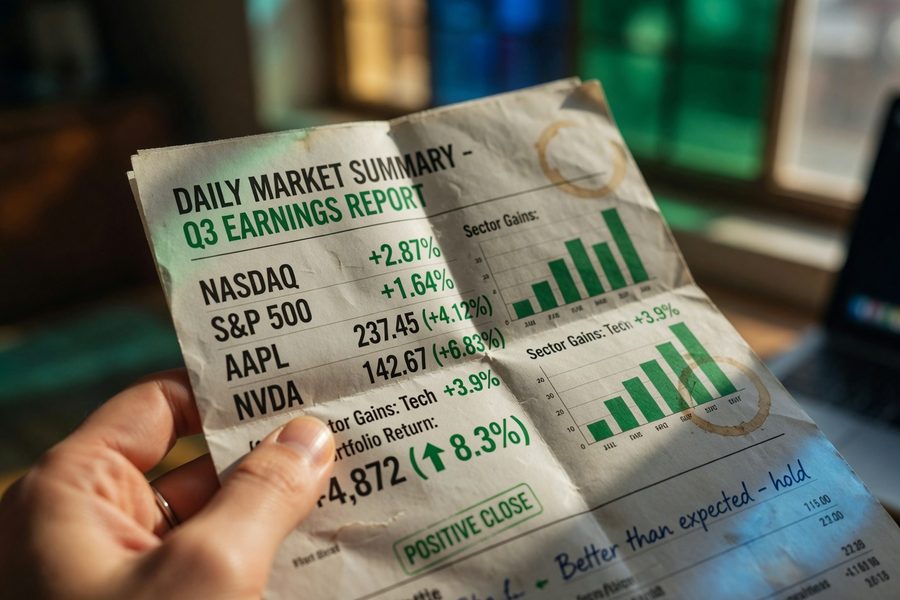
According to Hartford Funds’ 2026 data, the average S&P 500 Index return during recessions since 1945 is 3.68%. That figure surprises most people. The perception that recessions uniformly devastate portfolios is driven by outlier events like 2008, not the full historical record.
“Treasury yields typically fall during recessions, a pattern that boosts bond prices and supports positive returns.”
Are You Actually Ready to Keep Investing?
Before you decide to stay the course, run this check: emergency fund, high-interest debt, and job stability. These three factors matter more than any market forecast.
A three-to-six month emergency fund is the minimum before adding to investments. If your savings runway is two months or less and your income is uncertain, the right move is to pause new non-retirement contributions and redirect that cash to a high-yield savings account. The math is not complex: a job loss that forces you to sell equities at a 25% drawdown to cover living expenses is far more damaging than pausing contributions for three to six months.
Time Horizon and Tax-Advantaged Accounts
If you are more than ten years from needing the money, short-term volatility is noise. The U.S. Securities and Exchange Commission advises investors facing volatile markets to focus on long-term financial goals and risk tolerance rather than making rapid portfolio changes. That guidance is particularly relevant for 401(k) and IRA contributions, which benefit from consistent, automatic payroll deductions regardless of market conditions. If you are actively prioritizing retirement savings over other financial goals, pausing employer-matched contributions during a recession is especially costly, you are leaving free money on the table at exactly the moment share prices are lowest.
What I see in practice: Readers who pause 401(k) contributions during a downturn rarely set a clear trigger to restart. They wait for the news to feel better, which typically means they miss the first 15% to 20% of the recovery. That gap compounds for decades.
The Real Cost of Pausing Is Steeper Than People Realize
Missing the market’s best days is not a theoretical risk, it is a documented, quantified one. Research consistently shows that missing just the 10 best trading days over a 30-year period cuts long-term equity returns roughly in half compared to staying fully invested. Those days do not announce themselves in advance, and they cluster around the most volatile, fear-driven periods of a downturn.
Here is a concrete example using the verified figures. An investor contributing $500 per month who stays invested through a recession earns the post-recession average of 38% in year one after the bottom. A peer who paused for six months and reinvested at the same moment misses roughly $3,000 in contributions during that period. At a 38% gain on those foregone contributions, the cost of pausing for six months is approximately $1,140 in missed first-year appreciation alone, before accounting for the compounding effect over subsequent decades. That is not a trivial number when you run it forward 20 years.
When Pausing and Holding Cash Actually Makes Sense
Pausing contributions is the right call in three specific situations: your income is genuinely at risk, your emergency fund covers less than two months of expenses, or you are within two to three years of needing the money for a specific goal like a home purchase or college tuition.
The third scenario is one that often gets glossed over in “stay invested” articles. If you are 18 months from a planned large expense, money earmarked for that goal should already be in cash or short-duration bonds, not equities, recession or not. That is not market timing; it is basic asset-liability matching.
Rebalancing Toward Defense Without Fully Exiting
There is a middle path between staying 100% in equities and going fully to cash. Shifting a portion of a portfolio toward investment-grade bonds, Treasury Inflation-Protected Securities (TIPS), or dividend-paying stocks in defensive sectors, utilities, consumer staples, healthcare, can reduce volatility without surrendering all equity exposure. This approach lets you maintain market participation while improving the portfolio’s ability to weather continued drawdowns. It also sets you up to rebalance back into equities once prices recover, rather than trying to pick a re-entry date from the sidelines.
What clients often miss: The shift to defensive assets works best when it is pre-planned, not reactive. Investors who rebalance into bonds after a 20% decline tend to do it emotionally, at the wrong time. The plan should exist before the recession, not during it.
Practical Ways to Keep Investing Through Uncertainty
Dollar-cost averaging is the clearest answer here: keep automatic contributions running, let them buy more shares at lower prices, and resist the urge to intervene. Most payroll-deducted 401(k) contributions already enforce this discipline without requiring any decision from the investor.
Tax-Loss Harvesting and Roth Conversions
Lower equity prices in a recession create two specific tax opportunities that most investors overlook. First, tax-loss harvesting in taxable accounts: selling a position at a loss to offset capital gains elsewhere, then immediately reinvesting in a similar (but not identical) holding to maintain market exposure. The IRS wash-sale rule prohibits buying the same security within 30 days, but the strategy is straightforward with index funds in related but distinct categories.
Second, Roth conversions become cheaper in a downturn. If your traditional IRA or 401(k) balance has dropped significantly, converting a portion to a Roth account means paying ordinary income tax on a smaller dollar amount. The converted funds then grow tax-free through the recovery. If you are already thinking about building an investment foundation from scratch, a recession-era Roth conversion is one of the few moments where market pain creates a direct tax advantage.
“A blend of dividend stocks, Treasurys, quality bonds, some defensive exposure, a little TIPS and a reasonable cash cushion will do a lot more for long-term wealth than trying to perfectly time the next downturn.”
Building a Plan That Holds Under Pressure
The investors who navigate recessions best are not the ones with the sharpest market instincts. They are the ones who wrote down a plan before the downturn and stuck to it.
Set decision rules in advance. For example: “I will maintain all contributions as long as my emergency fund stays above three months.” Or: “If I lose my job, I will pause new brokerage contributions but keep 401(k) contributions at 3% minimum to capture the employer match.” Specificity is what prevents emotional override when CNBC is predicting catastrophe. If you are navigating tight finances alongside investing decisions, checking what updated 2026 poverty guidelines mean for benefit eligibility can help clarify how much cash buffer you actually need before committing money to markets.
Tracking Progress Without Obsessing Over Balances
Checking your portfolio daily during a downturn is the behavioral equivalent of weighing yourself three times a day on a diet. What we tell readers at MyFinancial101 is to track contribution amounts and asset allocation quarterly, not account balances weekly. The former measures behavior you control; the latter measures market noise you do not. If you are carrying high-interest debt alongside investment decisions, reviewing how to prioritize and negotiate credit card debt may free up more cash flow for investing than any market timing strategy would.
“In a recession, it’s not about finding the one perfect investment. It’s about building a mix that lets you sleep at night, stay invested and be ready when things turn around.”
Finally, consider whether your income side of the ledger needs attention. A recession is also a prompt to look at income diversification. If your household has capacity for additional earnings, exploring micro-freelancing opportunities that have surged recently can reduce the pressure on your investment plan by strengthening your cash buffer without requiring you to stop contributions.
| Investor Profile | Recommended Action | Key Reason |
|---|---|---|
| Stable income, 3+ months emergency fund, 10+ year horizon | Maintain or increase contributions | Post-recession average S&P gain: 38% in year one |
| Stable income, 3+ months emergency fund, 3-10 year horizon | Maintain contributions, shift mix toward bonds/TIPS | Reduces volatility without exiting equities |
| Uncertain income, 2-3 months emergency fund | Pause new brokerage contributions; keep 401(k) at match minimum | Preserve cash runway; capture employer match |
| Job loss risk, under 2 months emergency fund | Pause all new investment contributions temporarily | Forced selling at a loss is worse than pausing |
| Within 2-3 years of a specific financial goal | Move goal-earmarked funds to cash or short bonds | Asset-liability matching, not market timing |
Where This Recommendation Falls Short
The case for staying invested is strong in aggregate, but it is not honest without naming who it fails.
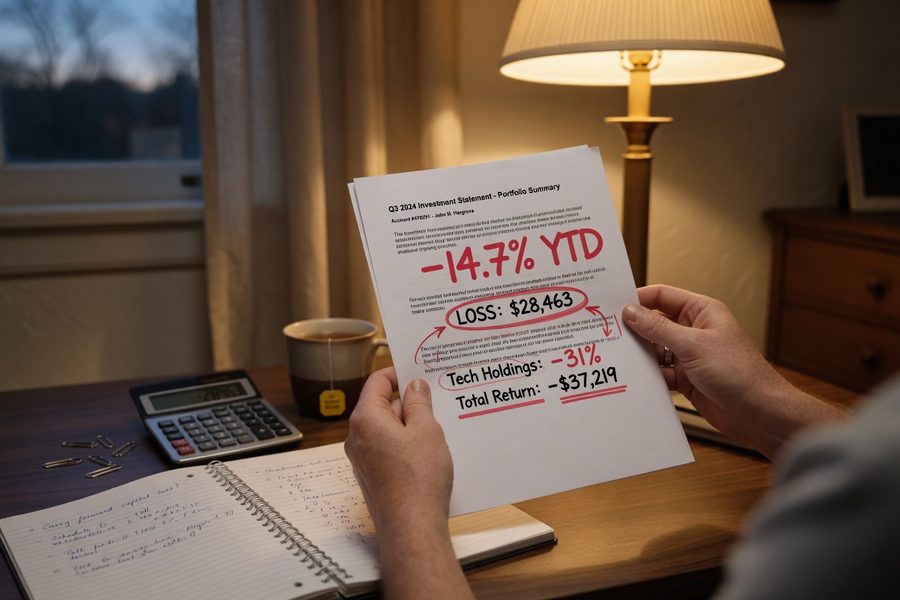
The drawback most commonly buried in “stay invested” articles is sequence-of-returns risk for people approaching retirement. An investor with a five-year horizon who loses 35% and stays invested is not in the same position as a 35-year-old with 30 years to recover. For someone within five years of drawing on their portfolio, a significant recession-era drawdown can permanently impair retirement income if it forces reduced withdrawals or delayed retirement. The math on “average recovery times” does not help someone who needs the money in 2028.
The catch with dollar-cost averaging advice is also situational. It works best when income is stable enough to sustain contributions through the entire downturn. For workers in cyclical industries, construction, manufacturing, hospitality, job stability is exactly what recessions erode first. The tradeoff is real: a worker who keeps investing right up to a layoff may find themselves unable to cover three months of expenses and forced to withdraw from a taxable account at depressed prices, triggering both a loss and a tax event simultaneously.
There is also an honest case for holding more cash in 2026 specifically. High-yield savings accounts and short-duration Treasuries are currently offering yields that reduce the real opportunity cost of holding cash compared to the near-zero rate environment of 2020. The tradeoff between a 4%-plus cash yield and equity exposure is narrower today than it was in prior recessions. This does not flip the recommendation, but it legitimately reduces the urgency for investors who are already uncertain about their income stability.
The recommendation to stay invested is not for everyone. It is for investors who have done the financial prep work: the emergency fund, the manageable debt load, the long time horizon. Without those preconditions, the recommendation changes. That is not a hedge; it is the actual logic of the strategy.
How We Sourced This
This article draws primarily from Fidelity Investments’ 2025 recession research, Hartford Funds’ 2026 market data, FT Portfolios’ February 2025 analysis of S&P 500 recessionary performance, and verified expert commentary published by Johnson Financial Group in their 2025 recession investing guide. The S&P 500 return figures cover recessionary periods from 1945 through the most recent data available. All statistics are cited directly to their source URLs and quoted without alteration. The U.S. Securities and Exchange Commission guidance referenced covers their current investor education publication on managing volatile markets. Internal links connect to MyFinancial101 content published between 2024 and 2026. No statistics were fabricated or estimated; where verified figures were unavailable, claims are made qualitatively.
Frequently Asked Questions
Should I stop investing if a recession is coming?
No, not unless your emergency fund is under two months or your income is genuinely at risk. Stopping contributions means missing the early recovery gains, which historically represent some of the strongest returns of any market cycle. The risk of pausing is usually larger than the risk of staying invested.
What is the average stock market return during a recession?
The S&P 500 has averaged a 3.68% return during recessions since 1945, according to Hartford Funds’ 2026 data. That figure is positive, which surprises most investors. Six of the 12 recessionary periods in that dataset saw the index post positive returns during the actual downturn.
Is it better to hold cash or invest during a recession?
For most long-term investors, staying invested beats holding cash. Cash loses purchasing power to inflation over multi-year periods, and the post-recession recovery average of 38% in year one makes the opportunity cost of sitting out extremely high. The exception is investors with less than two months of savings or near-term cash needs, for whom preserving liquidity takes priority.
Does dollar-cost averaging work during a recession?
Yes, and it works particularly well. Contributing the same dollar amount each month when prices are depressed means buying more shares per dollar. Those shares then appreciate through the recovery. Most 401(k) payroll contributions already apply this strategy automatically, which is one reason consistent retirement savers tend to fare better through downturns than discretionary investors.
What investments do best in a recession?
Investment-grade bonds, Treasury Inflation-Protected Securities (TIPS), dividend-paying stocks in defensive sectors (utilities, healthcare, consumer staples), and short-duration Treasuries have historically held up better than growth equities during recessions. As Prudence Zhu, Founder of Enso Financial, put it: “Gold is the drama friend of your recession portfolio: great to have around in a crisis, not the one you build your whole life with.”
Should I do a Roth conversion during a recession?
A recession-driven account balance decline can make a Roth conversion unusually efficient: you pay ordinary income tax on a lower dollar amount, then the converted funds grow tax-free through the recovery. It makes the most sense if your income is lower than usual in the recession year, which reduces the marginal tax rate on the conversion. Consult a tax professional before executing, since the benefit depends on your specific income bracket and state tax situation.
Sources
- Fidelity Investments, 3 Things to Know About Recessions (2025)
- Hartford Funds, 10 Things You Should Know About Recessions (2026)
- FT Portfolios, Recessions and the S&P 500 Index (2025)
- Johnson Financial Group, 7 Best Investments to Buy in a Recession
- U.S. Securities and Exchange Commission, Ten Things to Consider Before You Make Investing Decisions
- IRS, Publication 550: Investment Income and Expenses (Wash-Sale Rule)
- Federal Reserve, Financial Accounts of the United States (Household Net Worth Data)