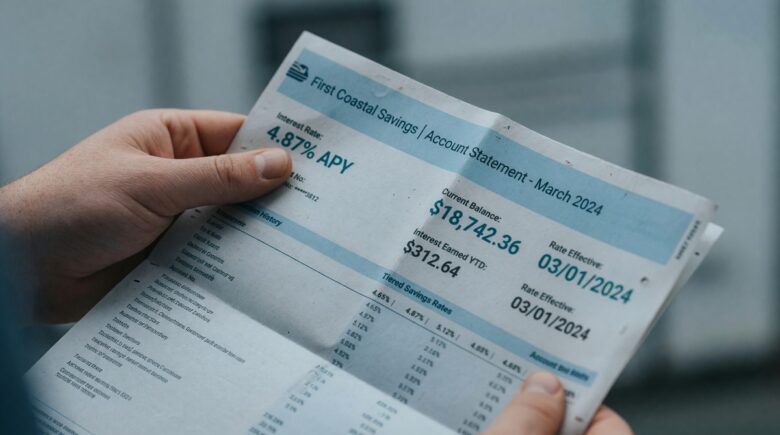
Reviewed by the MyFinancial101 Editorial Team
Our Take
For most savers in mid-2026, a no-fee high-yield savings account paying 4.00–4.15% APY beats chasing Varo’s headline 5.00% once you factor in the $5,000 balance cap and direct deposit requirements. Forbright Bank and CIT Bank offer cleaner terms for balances above $5,000, making them the better default pick for emergency funds and short-term cash. The case for Varo is narrow: savers who already meet the deposit threshold and keep $5,000 or less in savings, full stop.
The gap between what most Americans earn on savings and what they could earn has rarely been this stark. The FDIC’s national average savings rate as of June 15, 2026 sits at just 0.38% APY, while competitive high-yield savings accounts 2026 are paying more than ten times that. That spread represents real money: hundreds of dollars annually on a $10,000 balance, left on the table by inertia.
This article is for savers who want a clear answer, not a list of every account with fine print buried at the bottom. What makes the recommendation work is understanding which headline rates actually apply to your balance and habits, and which ones quietly compress the moment you clear a $5,000 threshold.
Key Takeaways
- The FDIC national average savings APY is 0.38% as of June 15, 2026, per FDIC national rate data, competitive HYSAs pay more than 10x that rate.
- Varo’s 5.00% APY applies only to balances up to $5,000 with qualifying direct deposits; above that threshold, the rate drops significantly, per NerdWallet’s June 2026 HYSA rankings.
- The FDIC national rate cap is 4.37% as of June 15, 2026, per FDIC rate cap data, any offer above this comes from institutions using it as a promotional acquisition tool.
- Rate compression has been consistent: Ally dropped from 3.30% to 3.00% APY and Marcus fell from 3.65% to 3.40% between March and June 2026, per Bankrate’s rate tracking.
- In my read of the current market, the accounts with the fewest strings attached, no monthly fees, no minimum balance, no bundled product requirements, are the ones worth holding long-term as rates continue to drift down.
Why High-Yield Savings Accounts Still Matter in Mid-2026
Most savers dramatically underestimate how much the 0.38% national average costs them. On a $20,000 emergency fund, that rate earns $76 per year. Move that same balance to a 4.10% HYSA and you’re earning $820 annually, a difference of $744 for the same zero-risk cash position. The arithmetic isn’t subtle.
The post-rate-cut cycle has shifted the conversation slightly. The Federal Reserve’s rate path through early 2026 has put modest downward pressure on deposit rates across the industry. That’s exactly why the gap between the best and worst accounts has widened. Banks cutting rates to 3.00% while others hold at 4.15% creates real selection value, the spread between top-tier and mid-tier HYSAs is now larger than it was a year ago.
Liquidity still matters here. High-yield savings accounts offer same-day or next-day access to cash without penalty, which is why they beat CDs for emergency funds even when CD rates look tempting. As saving for long-term goals gets more complicated in a shifting rate environment, keeping your liquid cash in the right account becomes foundational, not optional.
“High-yield savings accounts are ideal for money you’ll need within the next 1-3 years. I always recommend keeping your emergency fund in a high-yield savings account rather than a CD because you get competitive rates without worrying about early withdrawal penalties if an unexpected expense comes up. The rate difference compared to traditional savings accounts is too significant to ignore — we’re talking hundreds or thousands of dollars in annual interest on larger balances.”
The Highest APYs Available Right Now, and Their Real-World Limits
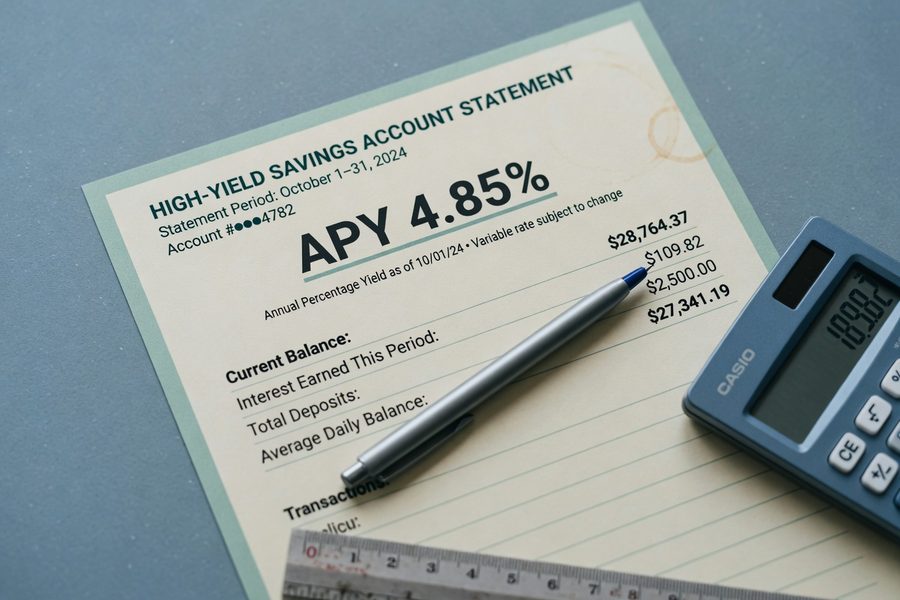
Varo’s 5.00% APY is real, but it’s a narrow offer. The rate applies only to the first $5,000 in your account and requires qualifying monthly direct deposits. Balances above that threshold earn a much lower rate, making Varo’s effective yield for a $25,000 balance far below its advertised number.
For savers holding $10,000 or more, the more honest leaders are Forbright Bank, CIT Bank, and Vio Bank, each paying in the 4.00–4.15% APY range with no tiered caps and no direct deposit hoops. A quick worked example makes this concrete: a $25,000 balance at 4.10% earns $1,025 per year. That same balance at the 0.38% national average earns $95. The $930 annual difference is why the account selection decision is worth 30 minutes of your time.
Fees, Minimums, and Hidden Costs That Eat Into Returns
The real yield on a HYSA isn’t the APY, it’s the APY minus whatever the account costs you to maintain. This is where several well-marketed accounts lose ground fast.
What to Watch on the Fee Sheet
Monthly maintenance fees are the obvious one, but paper statement fees ($1–$5/month at some institutions), excessive withdrawal fees, and requirements to hold a linked checking account are equally damaging. Under the old Regulation D rules, savings accounts were limited to six free withdrawals per month. The Federal Reserve suspended that rule in 2020, but many banks still charge fees for exceeding six withdrawals, check the fee schedule, not just the headline rate.
Direct deposit requirements deserve special attention. Some accounts, including certain tiers at Varo and SoFi, condition their best rates on you receiving a qualifying direct deposit each month. If your income is irregular, freelance, or comes from multiple sources, that requirement may not be reliably met. If you’re in that camp and want ideas for building more consistent cash flow, the rise of micro-freelancing in 2026 offers some practical options worth reading alongside this piece.
What clients often miss: The accounts that look most competitive on rate comparison sites often carry a direct deposit condition buried in footnote four. I’ve seen readers lose weeks of interest during an account switch because they didn’t confirm the deposit requirement was met before the rate kicked in.
| Account | APY (June 2026) | Balance Cap on Rate | Monthly Fee | Direct Deposit Required? |
|---|---|---|---|---|
| Varo Bank | 5.00% | $5,000 | $0 | Yes |
| Forbright Bank | 4.15% | None | $0 | No |
| CIT Bank (Platinum Savings) | 4.10% | None ($5,000 min balance) | $0 | No |
| Vio Bank | 4.00% | None | $0 | No |
| Ally Bank | 3.00% | None | $0 | No |
| Marcus by Goldman Sachs | 3.40% | None | $0 | No |
| FDIC National Average | 0.38% | N/A | Varies | N/A |
What Could Change Rates Before Year-End, and How to Prepare
Rate compression is already happening. The data from March to June 2026 is clear: Ally dropped from 3.30% to 3.00%, and Marcus fell from 3.65% to 3.40%, per Bankrate’s monthly rate tracking. Both cuts came within weeks of each other, suggesting the major players are moving in coordination with Fed signals rather than competing aggressively on deposits.
Monitoring Without Over-Reacting
The right cadence for rate monitoring is quarterly, not monthly. Switching accounts every time a competitor posts a 0.15% higher rate costs you time and briefly interrupts your FDIC coverage continuity during transfers. The CFPB’s bank account tools offer a useful checklist for evaluating new accounts before you move money, including confirming insurance coverage and understanding transfer windows.
One practical rule: if an account drops more than 0.50% below the current best available no-fee rate, it’s worth the hour to switch. Below that threshold, the friction cost isn’t worth it.
Where this gets tricky: Readers who chase every 0.10% rate bump end up with three open accounts, scattered balances, and a mess at tax time. I tell people to pick the best no-strings account, calendar a quarterly rate check, and leave it alone between reviews. The discipline pays more than the rate-hopping.
How HYSAs Fit Into a Broader Personal Finance Plan
A high-yield savings account should hold your emergency fund and any cash you need within 12–18 months. Full stop. Money earmarked for longer horizons belongs elsewhere, and conflating the two is the most common mistake I see.
Emergency Fund Sizing and Tax Basics
Three to six months of essential expenses is the standard emergency fund target, but the right number depends on income stability. A dual-income household with secure employment can sit at three months; a single-income household or anyone with irregular freelance work should push toward six. The interest you earn on a HYSA is taxable as ordinary income, you’ll receive a 1099-INT from your bank if earnings exceed $10, so plan for that at tax time. For a full picture of how savings interact with your annual filing, our tax season preparation guide is worth a read before year-end.
HYSAs vs. Money Market Funds and Short-Term Treasuries
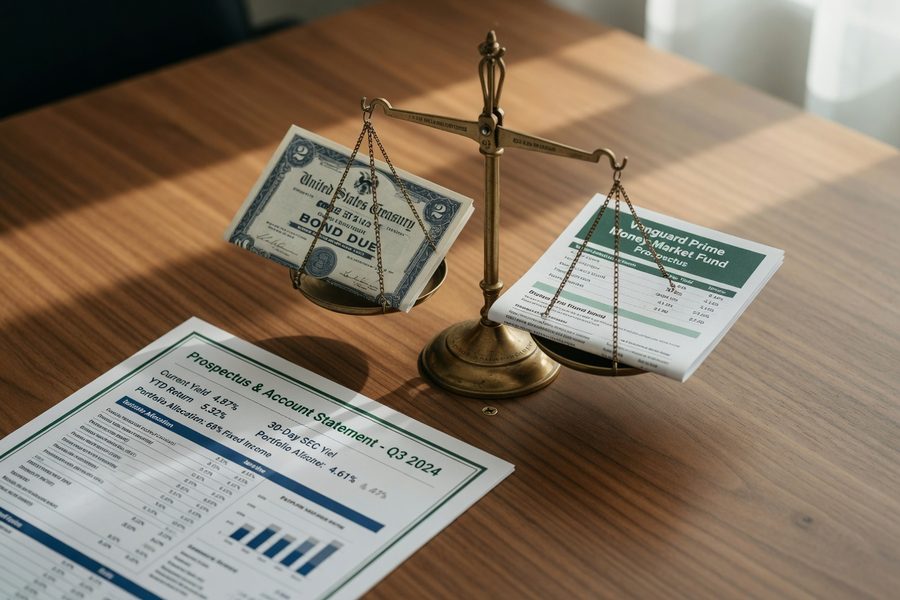
Money market funds currently yield in the 4.50–5.00% range, which beats most HYSAs on raw rate. The tradeoff: money market funds are not FDIC-insured (they carry SIPC coverage, which is different), and they sit in brokerage accounts with slightly less frictionless access than a bank savings account. For balances under $50,000 that serve as an emergency fund, FDIC-insured HYSAs win on safety and accessibility. For cash above the $250,000 FDIC limit, money market funds or Treasury bills become worth the added complexity.
If you’re also carrying high-interest debt, the math on where to prioritize cash gets more complicated. Our guide on prioritizing and negotiating credit card debt covers how to sequence debt paydown against savings contributions in practical terms.
What I see in practice: People who start investing often ask whether they should move emergency fund cash into brokerage accounts to chase better yields. The right answer is no, liquidity and FDIC coverage matter more than an extra 0.50% when the market drops 20% and you need cash in 48 hours.
Where This Recommendation Falls Short
The honest concession: recommending Forbright or CIT over Varo is the right call for most people, but it’s not the right call for everyone, and the drawback of dismissing tiered-rate accounts is real for a specific group of savers.
If you maintain a balance of $5,000 or less in savings, reliably receive direct deposits, and aren’t planning to grow that balance significantly, Varo’s 5.00% APY is the best available rate in the market right now. Telling that person to go with 4.15% instead costs them roughly $42.50 per year on a $5,000 balance. That’s not a catastrophic error, but it’s not nothing either.
The catch with the “clean terms” recommendation is that it optimizes for flexibility and scalability, not for maximum rate at small balances. Savers who are still building their emergency fund from zero, adding $500–$1,000 per month, may spend 6–9 months below the $5,000 threshold where Varo’s full rate applies. That’s a window where the tiered account genuinely wins.
There’s also a tradeoff between rate and access. Forbright Bank is a pure online institution with no branch network and no ATM access for the savings account. For savers who occasionally need to walk into a branch, whether to handle a large transaction, resolve a dispute in person, or simply feel more secure, accounts like Ally or Marcus offer hybrid digital-plus-phone-support experiences that are meaningfully better, even at their current lower rates.
The rate compression trend is also worth naming honestly. If the Fed cuts again before year-end 2026, the 4.10–4.15% accounts won’t hold those rates. The recommendation to prioritize clean terms over headline rate is partly a bet that 4.00% at a no-fee institution beats 4.15% today that becomes 3.50% in October. That’s a reasonable bet, not a guarantee.
Finally: if you’re sitting on more than $250,000 in cash savings, this entire framework changes. The FDIC insurance limit means you need a multi-account or joint-ownership strategy, and at that balance level, short-term Treasuries or money market funds deserve serious consideration alongside any HYSA. The recommendation here is built for the $5,000 to $100,000 range.
How We Sourced This
Rate data in this article comes from the FDIC’s National Rates and Rate Caps table, accessed June 15, 2026, for the national average (0.38%) and rate cap (4.37%) figures. Individual account APYs were sourced from NerdWallet, Bankrate, and Investopedia HYSA comparison pages; rates are subject to change without notice. Month-over-month rate movement data for Ally and Marcus draws from Bankrate’s rate history tracking through Q1–Q2 2026. Fee structures and qualification requirements were pulled from each institution’s disclosed account terms. Accounts were considered only if they carry FDIC insurance up to the standard $250,000 per depositor limit; brokerage sweep accounts and money market mutual funds were excluded from the primary comparison.
Related reading: I Bonds vs. Short.
Frequently Asked Questions
What is the best high-yield savings account APY available in June 2026?
Varo Bank offers the highest advertised rate at 5.00% APY, but it applies only to the first $5,000 and requires qualifying direct deposits. For savers with larger balances or no direct deposit, Forbright Bank’s 4.15% and CIT Bank’s 4.10% are the more practical top picks with no balance caps or deposit conditions.
Are high-yield savings accounts FDIC insured?
Yes, provided the account is held at an FDIC-member institution. The standard coverage limit is $250,000 per depositor, per institution, per ownership category. Joint accounts receive up to $500,000 in total coverage. You can verify any institution’s FDIC membership using the FDIC’s BankFind tool.
How much can I realistically earn on a $10,000 balance?
At 4.10% APY, a $10,000 balance earns approximately $410 per year, or about $34 per month. At the FDIC national average of 0.38%, that same $10,000 earns $38 annually. The $372 annual difference illustrates why the account choice matters even at modest balances.
Will high-yield savings rates keep falling in 2026?
Rate direction depends on Fed policy, and the recent trend has been downward, multiple major banks cut rates between March and June 2026. Rates are not guaranteed to fall further, but savers should monitor their account rate quarterly and be prepared to switch if a better no-fee option opens a gap of 0.50% or more.
Do I owe taxes on the interest I earn in a high-yield savings account?
Interest earned in a high-yield savings account is taxable as ordinary income at the federal level and in most states. Your bank will issue a 1099-INT form at tax time if your interest earnings exceed $10 for the calendar year. There’s no tax deferral benefit unless the account is held inside an IRA structure, which most standard HYSAs are not.
How is a high-yield savings account different from a money market account?
Both are FDIC-insured deposit accounts that pay interest, but money market accounts often come with check-writing privileges and debit card access, while high-yield savings accounts typically do not. Money market funds, different from money market accounts, are held in brokerage accounts, carry SIPC rather than FDIC coverage, and often yield slightly more in the current environment, but with less straightforward access for emergency use. The investing basics guide on this site covers when to move from savings into investment vehicles.
Sources
- Federal Deposit Insurance Corporation, National Rates and Rate Caps (June 15, 2026)
- Consumer Financial Protection Bureau, Bank Account Tools and Resources
- Bankrate, Best High-Yield Savings Accounts (June 2026)
- Bankrate, What Is a High-Yield Savings Account? (Hanna Horvath, CFP)
- Federal Reserve, Monetary Policy: Federal Open Market Committee
- Forbes Advisor, Best High-Yield Savings Accounts (2026)