
Fact-checked by the MyFinancial101 editorial team
Quick Answer
Tax loss harvesting is a strategy where you sell investments at a loss to offset capital gains and reduce your tax bill. High earners in the top bracket can save 23.8% (20% LTCG + 3.8% NIIT) on every dollar of gain offset. The process involves identifying losing positions, selling them, reinvesting in similar (not identical) assets, and tracking carryforward losses, all within strict IRS wash-sale rules.
The tax loss harvesting strategy works by converting paper losses into real tax savings: you sell a position that has declined in value, use that realized loss to cancel out capital gains elsewhere in your portfolio, and immediately reinvest the proceeds to maintain your market exposure. For investors in the top federal bracket, the math is compelling. Between the 20% long-term capital gains rate and the 3.8% Net Investment Income Tax (NIIT), the IRS can claim nearly a quarter of every dollar you earn on appreciated assets. Harvested losses chip directly into that bill. According to Wealthfront’s 2025 harvesting results, the firm generated an estimated $161 million in total tax savings for clients through this approach in a single year.
What makes this strategy timely in late 2025 is the market environment. Broad indices have recovered strongly from earlier volatility, yet pockets of weakness persist in sectors like clean energy, biotech, and international equities. That uneven picture creates harvesting opportunities even inside a portfolio that is overall positive. The year-end window, typically November through late December, is when most investors scramble to act, but the real advantage belongs to those who have been monitoring positions all year.
This guide is for investors with taxable brokerage accounts who are earning enough to feel the bite of capital gains taxes. Whether you are dealing with concentrated stock positions, restricted stock unit vesting, or simply a diversified portfolio that has some losers mixed in with winners, the steps below will show you exactly how to execute the strategy and where it can go wrong.
Key Takeaways
- High earners face a combined federal capital gains rate of 23.8% (20% LTCG + 3.8% NIIT), making each harvested dollar worth significantly more than for investors in the 15% bracket. (IRS Topic 409)
- Tax-loss harvesting accounts can deliver 1%–2% annual after-tax improvement as a percentage of portfolio value over a 10-year horizon, per J.P. Morgan Asset Management analysis.
- The IRS wash-sale rule disallows a loss if you repurchase the same or substantially identical security within 30 days before or after the sale, a 61-day window total. (IRS Publication 550)
- Capital losses that exceed your gains can offset up to $3,000 of ordinary income per year, with unused amounts carrying forward indefinitely under current tax law. (IRS Publication 550)
- Wealthfront clients who began using tax-loss harvesting in 2025 saw an average annual harvesting yield of 7.86% of portfolio value in a Classic portfolio at risk score 8. (Wealthfront 2025)
- Cryptocurrency is currently not subject to the wash-sale rule under existing IRS guidance, giving crypto investors more flexibility when harvesting losses, though proposed legislation could change this.
In This Guide
- What Is Tax Loss Harvesting and Why High Earners Benefit Most?
- How Do I Actually Execute a Tax Loss Harvest?
- What Are the Rules That Can Invalidate My Loss?
- Advanced Tactics: Direct Indexing, Long-Short Strategies, and Liquidity Events
- How Often and When Should I Be Harvesting?
- How Much Can I Actually Save, and What Are the Real Limitations?
- Frequently Asked Questions
Step 1: What Is Tax Loss Harvesting and Why Do High Earners Benefit Most?
Most investors assume tax loss harvesting is a defensive move you make when markets are bad. The reality is more useful than that: it is an ongoing tax management tool that works any time individual positions are down, even inside a rising portfolio. The core mechanism is simple, sell an asset that has declined, realize the loss on paper, and use that loss to cancel out capital gains generated elsewhere. You immediately reinvest the proceeds in a different but economically similar asset so your market exposure barely changes.
Why the Math Favors High Earners
The benefit scales directly with your marginal tax rate on investment income. A middle-income investor sitting in the 15% long-term capital gains bracket saves $0.15 for every dollar of gain they offset. A high earner subject to the 20% rate plus the 3.8% NIIT saves $0.238 on that same dollar. On a $100,000 gain, that is a $23,800 federal tax obligation reduced to zero if sufficient losses are available. State taxes can add another 5%–13% on top, depending on where you live; California, New York, and New Jersey residents face the steepest combined bills.
The NIIT applies to single filers with modified adjusted gross income above $200,000 and married filers above $250,000. It hits interest, dividends, and capital gains. High earners with substantial investment portfolios almost always exceed these thresholds, which is precisely why the strategy shows up in virtually every wealth management conversation at the $500,000+ portfolio level.
What to Watch Out For
Tax loss harvesting does not eliminate taxes permanently. It defers them. When you sell the replacement asset later at a gain, you will pay taxes on the appreciation from the lower cost basis you established. The real win is the time value of money: taxes paid in 20 years cost less in present-value terms than taxes paid today. If you hold the replacement until death and your heirs receive a stepped-up basis, the deferred gain disappears entirely, a scenario worth building toward if estate planning is part of your picture.
Wealthfront clients who started tax-loss harvesting in 2025 saw an average annual harvesting yield of 7.86% of portfolio value in a Classic portfolio at risk score 8, meaning nearly 8 cents of loss was harvested for every dollar invested in a single year. (Wealthfront 2025)
Step 2: How Do I Actually Execute a Tax Loss Harvest?
Execution follows four distinct actions: identify the loss, sell the position, reinvest within the wash-sale constraints, and document everything for tax reporting. Each step has a right way and a wrong way, and the wrong way can erase the benefit entirely.
How to Do This
Start by reviewing your taxable brokerage account, accounts at Fidelity, Charles Schwab, Vanguard, or similar custodians will show your unrealized gains and losses by position. Sort by “unrealized gain/loss” to surface your biggest losers. For a harvest to be worth the effort, a general rule of thumb is that the loss should be large enough to offset the transaction costs and the tax drag from triggering any dividends or other income at reinvestment.
Once you identify a candidate, sell the position and immediately deploy the proceeds into a replacement. The replacement must not be “substantially identical” to what you sold. Sell a Vanguard S&P 500 ETF (VOO) and you can buy a Schwab U.S. Large-Cap ETF (SCHX) or an iShares Core S&P 500 ETF (IVV), these track similar but not identical indexes. Sell a specific stock like Apple and you can buy a technology sector ETF immediately. The goal is to stay invested in the same asset class while the 30-day clock runs.
A Worked Example With Real Numbers
Say you are a married high earner with $50,000 in short-term capital gains from RSU vesting and $30,000 in long-term capital gains from selling appreciated stock. You also hold a clean energy ETF that is sitting at a $40,000 unrealized loss. You sell the ETF and reinvest in a comparable but non-identical fund the same day.
Your $40,000 loss first offsets your $30,000 in long-term gains (reducing that tax liability to zero), then offsets $10,000 of your short-term gains. You still owe tax on $40,000 in short-term gains instead of $50,000. At a combined federal short-term rate of 37% + 3.8% NIIT = 40.8%, that $10,000 offset saves you roughly $4,080 in federal taxes this year alone, with the state bite on top.
Note the gain-matching logic here. It is more efficient to offset a short-term capital gain with a short-term capital loss than to use that same loss against a long-term capital gain. Short-term gains are taxed at ordinary income rates (up to 37%), while long-term gains top out at 20%. A short-term loss applied against a short-term gain is worth nearly twice as much in tax savings. Sequence your offsets accordingly.
What to Watch Out For
Do not wait until the last week of December. By mid-December, bid-ask spreads on thinly traded ETFs can widen, and heavy year-end tax selling can briefly push prices down, meaning you may be selling at a worse price than necessary. Harvest as soon as the loss materializes and the opportunity is clear. If you are new to investing and want to understand the fundamentals before working through harvesting mechanics, the guide on how to start investing with zero experience covers the foundational concepts first.
Track your cost basis using the “specific identification” method, not FIFO (first in, first out). Specific identification lets you choose which tax lots to sell, so you can deliberately sell the lot with the highest cost basis, maximizing the loss you realize while holding onto lots that have appreciated.
Step 3: What Are the Rules That Can Invalidate My Loss?
The wash-sale rule is the single biggest trap in tax loss harvesting, and violating it does not just reduce your benefit, it eliminates the loss entirely for that tax year. Under IRS Publication 550, a loss is disallowed if you buy the same or a substantially identical security within 30 days before or after the sale date, creating a 61-day restricted window.
What Counts as “Substantially Identical”
The IRS has never published a complete list, but the practical guidelines are clear enough for most situations. Two funds tracking the exact same index (for example, two S&P 500 index funds from different providers) are generally considered substantially identical. A fund tracking the Russell 1000 and a fund tracking the S&P 500 are not, they hold overlapping but different securities. Individual stocks are almost never substantially identical to each other, even within the same sector.
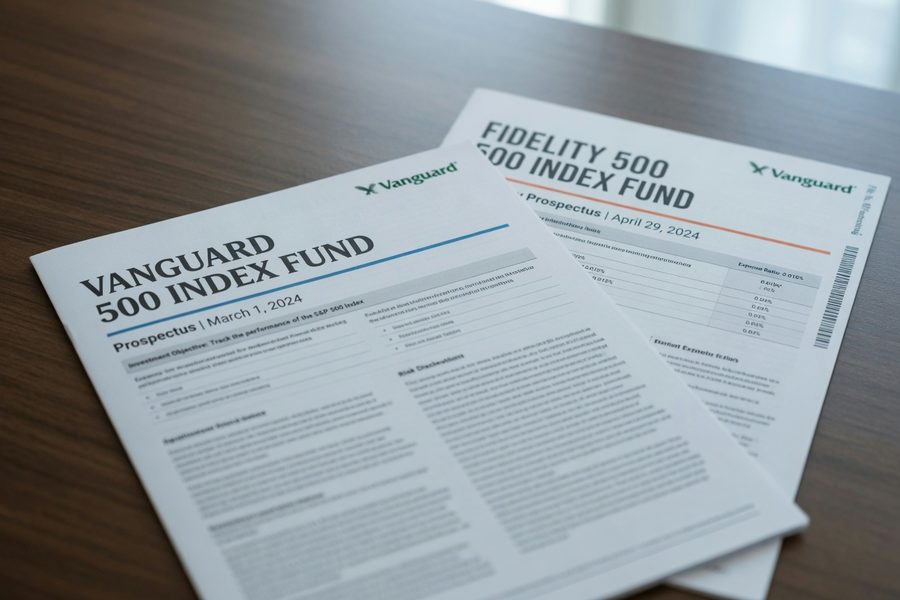
Critically, the wash-sale rule also applies across accounts. According to Forbes Investor Hub’s tax-loss harvesting guidance, selling an asset at a loss in a taxable account and then purchasing that same security (or a substantially identical one) in a retirement account will trigger the wash-sale rule just as surely as doing so in the same account. This catches people off guard. If your IRA or 401(k) is running automatic dividend reinvestment into a fund you just harvested in your taxable account, the wash-sale rule triggers. You need to coordinate across every account you control, including a spouse’s accounts.
Cryptocurrency is currently not subject to the wash-sale rule under existing IRS guidance, you can sell Bitcoin at a loss and rebuy it the same day. However, proposed legislation in recent Congressional sessions has targeted this gap. Treat the crypto exemption as a temporary opportunity, not a permanent feature.
Step 4: Advanced Tactics: Direct Indexing, Long-Short Strategies, and Liquidity Events
Standard harvesting, sell a losing ETF, replace it with a similar one, captures obvious opportunities but leaves a lot on the table for high earners with larger portfolios. The most sophisticated version of the tax loss harvesting strategy runs continuously at the individual security level, coordinated around the specific gain events that define high-income years.
Direct Indexing and Separately Managed Accounts
Direct indexing means owning the individual stocks that make up an index rather than buying a fund. Instead of holding one VOO position, you hold 503 individual stocks in the proportions VOO uses. The advantage: even when the index is up, individual stocks within it will always be down on any given day. A technology platform or SMA manager can scan those positions daily and harvest losses at the individual stock level, generating harvesting yield that a single ETF position could never produce.
Platforms including Parametric Portfolio Associates, Aperio (now part of BlackRock), and Wealthfront’s direct indexing product offer this service, typically for portfolios of $100,000 or more. The ongoing management fee, usually 0.20%–0.40% per year, can pay for itself many times over in tax savings for a high earner. J.P. Morgan’s analysis shows that continuous harvesting strategies can deliver 1%–2% annual after-tax improvement over a 10-year horizon, per their 2025 analysis.
Coordinating With Major Liquidity Events
This is a gap almost no consumer-facing article addresses: tax loss harvesting is most powerful when timed around large, one-time income spikes. RSU vesting schedules, a business sale, a real estate transaction, a large bonus, each of these creates a concentrated gain that can push your effective rate on investment income to its maximum. If you know a liquidity event is coming in Q4, the ideal time to build up a loss inventory is Q2 and Q3, when markets may be softer. Going into the event with a reserve of harvested losses is far better than scrambling to find them in December.
What to Watch Out For
Long-short strategies that deliberately hold underperforming positions to generate harvestable losses require disciplined rebalancing. There is a behavioral risk: investors become reluctant to sell “cheap” positions they have grown attached to, defeating the purpose. Set mechanical triggers, not emotional ones. Working with a CPA or financial planner who specializes in this area is worth the cost at scale. As the Forbes Investor Hub guidance notes, professional guidance helps ensure that changes align with your long-term goals and risk tolerance.
Step 5: How Often and When Should I Be Harvesting?
Year-end harvesting is not wrong, it is just incomplete. The best answer is: harvest whenever a meaningful loss is available and the reinvestment can be done cleanly within wash-sale rules. For most individual investors, that means a quarterly review at minimum and a thorough scan in October before the December crunch.
How to Do This
Set a calendar reminder for the first week of each quarter to pull up your unrealized gain/loss report. Flag any position with a loss exceeding 10% of its current value or a dollar threshold you set in advance (say, $5,000 minimum). At year-end, cross-check against any gains you have already realized during the year to see whether harvesting additional losses would meaningfully reduce your tax bill. Tax software like TurboTax and H&R Block can model this, as can dedicated investment tax tools like TaxAct’s capital gains calculator or your brokerage’s year-end planning tools.
If you are using a robo-advisor like Wealthfront or Betterment, daily automated harvesting is built into the service. Both platforms scan for harvestable losses continuously and execute trades on your behalf, which is part of why the results at scale can be striking. For investors managing their own portfolios, monthly reviews strike a reasonable balance between vigilance and trading costs.
Tax season preparation and harvesting are more connected than most investors realize. The decisions you make in October and November directly determine what appears on your Schedule D. For a primer on getting your return organized, see this guide on preparing before tax season arrives.
Step 6: How Much Can I Actually Save, and What Are the Real Limitations?
The honest framing: tax loss harvesting preserves wealth; it does not create it. Understanding that distinction matters before you decide how much energy to put into the strategy.
Order-of-Magnitude Savings Estimates
For a high earner with a $1,000,000 taxable portfolio, J.P. Morgan’s estimated 1%–2% annual improvement translates to $10,000–$20,000 in after-tax benefit per year. Over a decade, with those savings compounding at even a modest 6% return, you are looking at an additional $130,000–$270,000 in wealth, without taking any additional investment risk. That is the real argument for taking the strategy seriously.
At a smaller scale, say a $250,000 portfolio, the same percentages imply $2,500–$5,000 per year. That is still meaningful, though the complexity may argue for a robo-advisor or SMA rather than doing it manually.
Honest Limitations Worth Naming
Several real costs and constraints offset the benefit. First, every harvest resets your cost basis lower, which means more taxable gain when you eventually sell the replacement, unless you hold until death or donate the appreciated shares to charity. Second, frequent trading can generate wash-sale complications that require meticulous record-keeping; a mistake that disallows a loss can erase a year’s worth of effort. Third, harvesting in a bull market requires you to be honest about which losses are temporary dips versus genuine declines. Selling a position at a 12% loss to harvest the tax benefit, then watching it recover 30%, is a real opportunity cost even if the tax math was sound.
State taxes add another wrinkle. Nine states have no income tax, but high-earner states like California, New York, and New Jersey tax capital gains at ordinary income rates, up to 13.3% in California. Harvesting in those states amplifies the savings but also means the deferred gain will eventually be taxed at those same high rates unless you move before selling.
Finally, the Alternative Minimum Tax (AMT) can interact with harvested losses in ways that reduce the federal benefit. High earners with significant incentive stock options (ISOs) or other AMT preferences should run the numbers with a tax professional before assuming the full federal benefit applies.
Pair tax loss harvesting with charitable giving of appreciated assets. Instead of selling a winner, donating it directly to a donor-advised fund eliminates the capital gain entirely and gives you a charitable deduction. Combine that with harvested losses from your losers and you can reshape your taxable portfolio significantly in a single year.
Comparison: Harvesting Approaches by Portfolio Size and Complexity
| Approach | Best Portfolio Size | Estimated Annual Benefit | Key Requirement |
|---|---|---|---|
| Manual ETF Swaps | $50,000–$250,000 | Variable; depends on losses available | Quarterly review, wash-sale tracking |
| Robo-Advisor (Wealthfront / Betterment) | $10,000–$500,000 | Avg. 0.77%–7.86% of portfolio (Wealthfront 2025) | Full account at robo-advisor; no outside trading |
| Direct Indexing / SMA | $100,000–$5,000,000+ | 1%–2% per J.P. Morgan 10-year analysis | Account at Parametric, Aperio, or similar |
| Advisor-Led with Liquidity Event Coordination | $1,000,000+ | $10,000–$50,000+ in a high-gain year | CPA + financial planner coordination; lead time |
If you are already managing credit card debt or other high-cost obligations alongside your investment accounts, it is worth reading about how to prioritize debt before investing more aggressively. Tax savings from harvesting are real, but they rarely outpace 20%+ APR consumer debt. And if you have explored cryptocurrency as part of your taxable portfolio, understanding the full risk and benefit profile of crypto investments is relevant, especially given that crypto’s wash-sale exemption makes it uniquely flexible for harvesting purposes right now.

Frequently Asked Questions
Can I use tax loss harvesting in my 401(k) or IRA?
No. Tax loss harvesting only works in taxable brokerage accounts. Retirement accounts like 401(k)s, traditional IRAs, and Roth IRAs are tax-deferred or tax-free, so there is no capital gains tax to offset in the first place. Realizing a loss inside a retirement account has no tax effect. Keep this strategy entirely within your taxable accounts.
What is the 30-day wash-sale rule, and how do I avoid triggering it?
The wash-sale rule disallows your loss if you buy the same or a substantially identical security within 30 days before or after the sale, a total restricted window of 61 days. To avoid it, replace the sold security with something economically similar but legally distinct: a different index fund, a competitor ETF, or a sector fund. Under IRS Publication 550, the disallowed loss is not gone forever, it gets added to the cost basis of the replacement, but it delays the benefit until you sell the replacement, which may push it out of the current tax year entirely.
How much in losses do I need to make tax loss harvesting worth the effort?
A general threshold used by many financial planners is $1,000–$5,000 in realizable losses per transaction, depending on your tax rate and account size. For investors in the 23.8% combined federal rate, a $5,000 loss translates to approximately $1,190 in federal tax savings. Below $1,000, the time spent tracking and reporting may not justify the result, though automated platforms make smaller harvests cost-free in terms of effort.
Does tax loss harvesting work if I have no capital gains this year?
Yes. Harvested losses first offset any capital gains, and if losses exceed gains, up to $3,000 can offset ordinary income in the current tax year. Any remaining losses carry forward indefinitely to future years. This makes harvesting valuable even in years with no realized gains, you are building a tax asset for whenever gains do appear.
Should I use a robo-advisor or manage tax loss harvesting myself?
For portfolios under $250,000, robo-advisors like Wealthfront or Betterment offer automated daily harvesting that most self-directed investors cannot replicate manually, and the fees (typically 0.25% per year) are often lower than the tax savings they generate. For portfolios above $500,000, the case for a direct indexing SMA or advisor-led strategy grows stronger because the dollar impact of each percentage point of savings is larger and the complexity of coordinating across accounts, gain types, and events warrants human judgment.
Can I harvest losses on individual stocks and buy a sector ETF instead?
Yes, and this is one of the most common replacement strategies. Selling an individual stock at a loss and buying a sector ETF immediately does not trigger the wash-sale rule because an ETF is not substantially identical to a single stock. For example, selling Microsoft at a loss and buying a Nasdaq 100 ETF like QQQ maintains technology exposure while the clock runs. After 31 days, you can sell the ETF and repurchase Microsoft if you want the individual position back.
How does the Net Investment Income Tax affect my harvesting benefit?
The 3.8% NIIT applies to single filers with MAGI above $200,000 and married filers above $250,000, and it stacks on top of the regular capital gains rate. This is why top-bracket investors face a 23.8% combined federal rate on long-term gains rather than 20%. Every dollar of loss harvested offsets gains at that full 23.8%, not just 20%, and in states like California, the combined marginal rate including state tax can exceed 37% on long-term gains. The higher your effective rate, the more each harvested dollar is worth.
What happens to carryforward losses if I do not use them in a given year?
Capital loss carryforwards are indefinite under current U.S. tax law. You report them on Schedule D each year until they are fully used. They retain their character, short-term carryforwards remain short-term and offset short-term gains first, long-term carryforwards offset long-term gains first. There is no expiration date, so losses harvested in a high-volatility year like 2022 may still be reducing your tax bill years later.
Is tax loss harvesting worth it if I plan to retire in a low-income year?
This is a legitimate caveat. If you expect your income to drop sharply at retirement, bringing your capital gains rate down to 0% or 15%, the deferred gains you created through harvesting may eventually be taxed at a lower rate anyway, reducing the net benefit. The strategy still has value if you plan to donate appreciated assets or if you will remain in a high bracket through retirement, but the math changes. Run a multi-year projection before committing to aggressive harvesting if retirement is within 5–10 years. The guide on prioritizing retirement savings addresses related trade-offs worth considering alongside this strategy.
Sources
- IRS, Publication 550: Investment Income and Expenses (Wash-Sale Rules)
- IRS, Tax Topic 409: Capital Gains and Losses
- Wealthfront, Tax-Loss Harvesting Results 2025
- J.P. Morgan Private Bank, How to Make Your Tax-Loss Harvesting Strategy Do More for You (2025)
- Forbes Investor Hub, Top Tax-Loss Harvesting Tips (Carcone, Luscombe)
- IRS, About Schedule D (Form 1040): Capital Gains and Losses
- IRS, Publication 544: Sales and Other Dispositions of Assets