
Fact-checked by the MyFinancial101 editorial team
Your kitchen still has the laminate countertops from 1997, the master bath grout has seen better decades, and every contractor you call quotes a number that makes your stomach drop. You have equity sitting in your home, and a neighbor just told you she used hers to redo her entire first floor. So now you’re wondering whether a home equity loan renovation makes sense for you, or whether you’d be stepping into something you’ll spend the next decade regretting.
That question deserves a careful answer, because the stakes are real. According to the Mortgage Bankers Association’s 2025 home equity study, 46% of all home equity loan and HELOC volume in 2024 went toward home renovations, making it the single most common use of this type of borrowing. Homeowners collectively hold trillions in tappable equity, yet plenty of them walk away from a renovation project with more debt than they planned and results that didn’t justify it.
By the end of this guide, you’ll know how to calculate how much you can realistically borrow, how to match the right loan product to your specific project, how to build a budget that survives contact with real contractors, and how to repay the loan without torching your other financial goals. The goal is a renovation you’re proud of, paid for in a way that still makes sense five years from now.
Key Takeaways
- Renovation is the top use of home equity products: 46% of all HELOC and home equity loan volume in 2024 was used for home improvements.
- Most lenders cap combined loan-to-value at 80–85% of your home’s appraised value, so accessible equity is often less than homeowners expect.
- The average loan amount for home-improvement mortgages reached $125,100 in 2025, up significantly from prior years.
- Home equity loan rates typically run 1–3 percentage points above primary mortgage rates but are far below credit card or personal loan rates as of mid-2026.
- Interest on a home equity loan used for qualified home improvements may be tax-deductible under current IRS rules, unlike most consumer debt.
- Most major renovations exceed initial contractor estimates by 10–20%, making a contingency reserve non-negotiable in any loan-funded project.
In This Guide
- Is Tapping Home Equity the Smartest Way to Fund This Renovation?
- How Much Equity Can You Realistically Access in 2026?
- Home Equity Loan vs. HELOC: Matching the Product to Your Project
- Building a Renovation Budget That Accounts for Real-World Overruns
- Navigating the Application, Closing, and Disbursement Process
- Repaying the Loan Without Derailing Other Financial Goals
- Which Renovation Projects Actually Justify the Debt?
- Common Regrets and How to Avoid Them
- The Opportunity Cost Most Borrowers Never Consider
Is Tapping Home Equity the Smartest Way to Fund This Renovation?
Home equity borrowing is not automatically the right answer just because it’s available. The smarter question is whether it beats your realistic alternatives given your specific project, your savings, and your risk tolerance for adding a secured debt against your home.
As of mid-2026, a home equity loan typically carries a fixed rate in the range of 7–9% depending on your credit profile and lender, while an unsecured personal loan for the same amount might run 12–18%. Credit cards, of course, are even higher. For a project costing $50,000 or more, that rate gap compounds quickly. The Consumer Financial Protection Bureau explains that a home equity loan lets you borrow a lump sum at a fixed rate using the equity in your home as collateral, which is what gives it the pricing advantage over unsecured options.
When Cash Reserves Are a Real Alternative
If you have $30,000 in savings and the renovation costs $28,000, paying cash might feel like the obvious call. But there’s a nuance worth considering. Draining your emergency fund to avoid a loan payment leaves you exposed to any financial shock that comes next. Financial advisors broadly recommend keeping three to six months of expenses accessible regardless of other debt decisions. If the loan payment fits your monthly budget comfortably and your rate is reasonable, borrowing may actually be the safer move for your overall financial picture.
The Secured Debt Trade-Off
Here’s where honesty matters. A home equity loan is secured by your house. If you fall behind on payments, the lender has the right to foreclose. That’s not a scare tactic; the CFPB’s home equity guide explicitly warns that this risk exists regardless of how you spent the money. If your income is variable, your job is uncertain, or the monthly payment would stretch your budget thin, unsecured financing at a higher rate may actually be the more prudent choice.
A home equity loan is a second mortgage. Missing payments doesn’t just hurt your credit score, it can put your home at risk of foreclosure. Only borrow what you can service comfortably at your current income, not an optimistic future one.
How Much Equity Can You Realistically Access in 2026?
Homeowners tend to overestimate how much they can pull out. The common assumption is “I have $200,000 in equity, so I can borrow $200,000.” That’s not how lenders calculate it.
Most lenders in 2026 cap the combined loan-to-value ratio (CLTV) at 80–85% of your home’s appraised value. So if your home appraises at $400,000 and you have a $280,000 primary mortgage balance, your math looks like this: $400,000 × 0.85 = $340,000 maximum combined debt. Subtract your existing mortgage: $340,000 − $280,000 = $60,000 available to borrow. Even though you have $120,000 in equity on paper, the accessible portion is $60,000.
What Lenders Actually Require
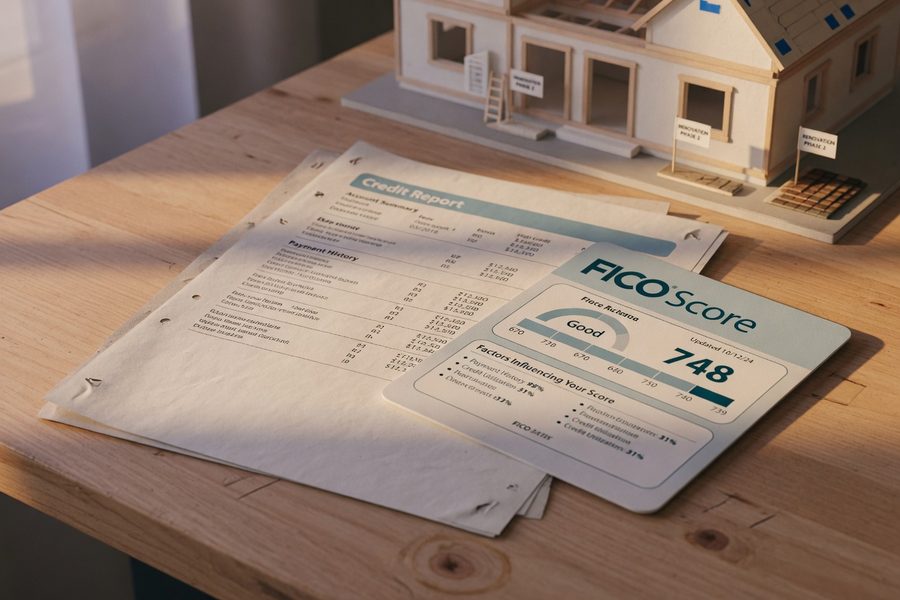
Beyond the CLTV calculation, most lenders require a minimum credit score of 620, though scores above 700 will fetch meaningfully better rates. They’ll also look at your debt-to-income ratio (DTI), typically requiring it to stay at or below 43% after the new loan payment is added. Lenders may also want to see some cash reserves remaining after closing, usually two to six months of mortgage payments.
One strategy worth knowing: some lenders will base the appraisal on your home’s post-renovation value, which could allow a larger loan. This adds complexity and typically requires a detailed renovation plan submitted to the lender upfront. It’s legitimate, but it’s not guaranteed, and the timeline extends. Don’t count on it when you’re planning your budget.
U.S. homeowners collectively held $17.8 trillion in residential real estate equity, according to housing data cited by Bankrate. Individual access, however, is capped by each lender’s CLTV policies, which typically limit borrowing to 80–85% of appraised value minus existing liens.
Home Equity Loan vs. HELOC: Matching the Product to Your Project
These two products are often mentioned in the same breath, but they work quite differently. The CFPB’s breakdown of home equity loans and HELOCs explains the core difference: a home equity loan gives you a lump sum at a fixed rate with a set repayment schedule, while a HELOC is a revolving line of credit you draw from over time, usually at a variable rate.
For a renovation with a clear, defined scope, a full kitchen gut-and-rebuild, for example, where you have contractor bids in hand, the home equity loan’s fixed rate and predictable payment make it the cleaner choice. You know the cost, you borrow that amount, and your monthly payment never changes. For phased projects where you’re doing a bathroom this year, a deck next year, and landscaping the year after, a HELOC’s draw-period flexibility can be more practical.
Rate Predictability vs. Flexibility
HELOC rates are typically variable and tied to the prime rate. If rates drop significantly, that works in your favor. If they rise, your monthly payment goes up mid-project. That unpredictability makes budgeting harder, especially when contractor costs are already moving targets. The tradeoff is real: you gain flexibility but give up certainty. For most borrowers funding a single defined renovation, the fixed-rate home equity loan is the less stressful path.
| Feature | Home Equity Loan | HELOC |
|---|---|---|
| Disbursement | Lump sum at closing | Draw as needed during draw period |
| Interest Rate | Fixed | Variable (typically prime-based) |
| Monthly Payment | Predictable from day one | Varies with balance and rate changes |
| Best For | Defined, one-time projects | Phased or ongoing work |
| Risk | Borrowing more than needed | Rate increases mid-project |
Building a Renovation Budget That Accounts for Real-World Overruns
Get three contractor bids. That’s the standard advice, and it’s good advice, but it’s not the end of the budgeting process. Industry data across multiple lender education resources consistently shows that major renovations run 10–20% over initial contractor estimates. That’s not incompetence; it’s the nature of opening walls, discovering old plumbing, hitting permit delays, and watching material prices shift.
Build a contingency of at least 15% into your loan request. If your bids average $80,000, request $92,000. The extra $12,000 in borrowed funds costs you relatively little in added interest, a few hundred dollars per year on a 7% loan, compared to the financial pain of running out of money mid-project with no contractor willing to pause work while you scramble for more.
Timing the Loan to Match the Project
A common mistake is closing the loan before a contractor is ready to start. Home equity loans begin accruing interest from the day funds are disbursed, not the day you swing a hammer. If your contractor can’t start for three months, you’re paying interest on an idle balance. Try to time your loan closing within two to four weeks of a confirmed project start date. Have signed contracts and a deposit schedule in place before you close.
Ask your contractor for a detailed, line-itemized scope of work before you finalize your loan amount. Vague contracts lead to scope creep, which leads to cost overruns that eat through contingency reserves fast. A good contractor will provide this; a reluctant one is a red flag.
Track every expense against the budget in a simple spreadsheet from day one. When you can see that permits ran $800 over estimate or tile selection cost more than planned, you can make informed decisions about where to flex. Without that visibility, you’ll hit month three not knowing whether you’re on track until the money’s gone.

Navigating the Application, Closing, and Disbursement Process
The application process for a home equity loan moves faster than a primary mortgage but still requires documentation. Expect to provide two years of tax returns, recent pay stubs or proof of income, your current mortgage statement, and a property tax assessment. The lender will order an appraisal, which typically costs $300–$600 and takes one to three weeks.
Closing costs on a home equity loan generally run 2–5% of the loan amount. On a $90,000 loan, that’s $1,800 to $4,500 added to your cost. Some lenders offer “no closing cost” options, but those fees are usually rolled into the rate. Ask explicitly: you want to know the total cost of the loan, not just the monthly payment. The average loan for home-improvement mortgages reached $125,100 in 2025, which means closing costs alone can run $2,500 to $6,000 at typical rates.
Protecting Yourself With Contractor Contracts
Tie every significant payment to a completion milestone, not a calendar date. A payment schedule that reads “30% at contract signing, 30% at rough-in completion, 30% at substantial completion, 10% at final punch-list sign-off” gives you leverage to withhold funds if work isn’t done. Never pay the final installment before you’ve walked through and formally accepted the work. This structure also helps you manage the cash flow from a lump-sum loan disbursement rather than paying it all out on day one.
Home equity loan and HELOC originations rose 7.2% year-over-year in 2024, according to the Mortgage Bankers Association, with renovation remaining the leading use of proceeds at 46% of total volume.
Repaying the Loan Without Derailing Other Financial Goals
Before you close, model the monthly payment against your real budget. A $90,000 home equity loan at 7.5% over 15 years carries a monthly payment of roughly $835. Add that to your existing mortgage and you need to verify two things: your total monthly housing costs stay below 28% of gross income (the typical front-end DTI threshold), and you can still contribute meaningfully to retirement and maintain an emergency fund.
Retirement contributions deserve special attention here. Pausing a 401(k) contribution to cover the loan payment may feel like a reasonable short-term compromise, but it has long-term costs that are easy to underestimate. If you’re already managing high-interest debt, reviewing our piece on prioritizing and negotiating credit card debt before adding a home equity loan is worth your time, eliminating high-rate balances first can improve your DTI and make the home equity product more affordable.
Tax Deductibility: A Real Benefit With Real Rules
Under current IRS rules as of mid-2026, interest on a home equity loan or HELOC is deductible if the proceeds are used to “buy, build, or substantially improve” the home securing the loan. If you use your renovation loan to redo your kitchen and bathrooms, you likely qualify. If you use it to pay off credit cards or buy a car, you don’t. Keep your records: contracts, paid invoices, and documentation tying the loan to the specific improvements matter if you’re ever audited. This deductibility benefit is one area where a home equity product has a clear advantage over personal loans or credit cards, which offer no such deduction.
For higher-budget projects costing between $50,000 and $200,000, 18% of homeowners used a secured home loan as their financing method, according to the 2025 U.S. Houzz & Home Study. It’s the most common financing tool for projects in that cost range.
Which Renovation Projects Actually Justify the Debt?
Not every renovation returns what it costs. Understanding the difference between projects that add measurable value and those that improve only your enjoyment (which matters too, but differently) helps you size the loan correctly and set honest expectations.
Kitchen and bathroom renovations consistently rank among the highest-returning projects by resale value. Roof replacements, HVAC upgrades, and window replacements also tend to perform well because buyers perceive them as avoided expenses. A finished basement or a home addition, by contrast, typically returns 60–70 cents on the dollar nationally, though local market conditions vary significantly. One underappreciated risk: over-improving relative to your neighborhood. A $150,000 kitchen in a block of $250,000 homes is unlikely to return that investment when you sell, because buyers set their ceiling based on comparable sales, not your renovation spend.
Also be aware that significant renovations can trigger a property tax reassessment in many states, which adds a recurring annual cost that doesn’t show up in your contractor bid. Kitchen additions and full-floor additions are particularly likely triggers. Check with your local assessor’s office before you finalize the project scope.

“My advice is that if you have the equity, you should explore it. Renovations will likely add value to your home, which will pay off down the road. In the meantime, you get to enjoy your home even more, thanks to the equity you’ve earned.”
Common Regrets and How to Avoid Them
Most renovation regrets follow predictable patterns. The first is scope creep funded by available credit. When you have $90,000 approved, adding “just one more thing” feels low-stakes in the moment, but every upgrade chips away at your contingency and inflates the balance you’ll be paying interest on for a decade.
The second is underestimating the loan’s effect on future borrowing. A home equity loan shows up as recurring debt on your credit profile. If you plan to refinance your primary mortgage, move in three years, or need a car loan, the added DTI from your equity loan will be a factor in every one of those decisions. Run those scenarios before you close, not after. If you’re also working to reduce other debt loads, a resource like our guide to top credit counseling services can help you see the full picture before you add another secured obligation.
The Insurance Oversight Nobody Talks About
When your home’s replacement cost increases because of renovations, your homeowner’s insurance coverage limit needs to keep pace. A $40,000 kitchen renovation that adds premium appliances and custom cabinetry means your prior coverage may no longer be enough to fully rebuild if there’s a fire or major loss. Call your insurance agent before or immediately after the renovation is complete and ask for a coverage review. It takes 20 minutes and costs nothing.
If you’re worried about how a home equity loan affects your overall debt strategy, tools like a debt payoff calculator can show you the true 10-year cost of the loan. Knowing the total interest you’ll pay, not just the monthly payment, often clarifies whether the project is actually worth financing or should be scaled back.
The Opportunity Cost Most Borrowers Never Consider
Here’s a number worth sitting with. Say you take a $90,000 home equity loan at 7.5% over 15 years. Your monthly payment is approximately $835. Over the life of the loan, you’ll pay roughly $60,000 in interest on top of the principal, bringing total repayment to about $150,000. That’s the real cost of the renovation, not the contractor’s bid.
Now consider the alternative path: if you invested that same $835 per month into a diversified index fund earning an average of 7% annually for 15 years, you’d accumulate roughly $260,000. That’s the opportunity cost, the wealth-building potential you’re redirecting toward the renovation instead. This isn’t an argument against using a home equity loan for renovations. A home that you enjoy, that’s well-maintained, and that holds or grows its value is a real asset. But the comparison makes the point that this debt carries a meaningful long-term cost, and the renovation should be worth it. If you’re new to thinking about investing in this way, our primer on how to start investing with zero experience walks through the basics of building that parallel wealth track.
The projects most likely to justify that cost are ones that combine genuine livability improvement with documented value addition: a kitchen that was functionally outdated, a bathroom that adds a needed bedroom count equivalent, or a primary system replacement that removes a known deficiency from the home. Projects driven mainly by aesthetic preference on a timeline that doesn’t match your life plans are harder to justify at $150,000 in total outlay.
Debt consolidation was the second-most-common use of home equity products in 2024, at 39% of volume, according to the Mortgage Bankers Association. If you’re tempted to fold other debts into a renovation loan, make sure you understand how that changes your total borrowing costs and collateral risk before doing so.
Your Action Plan
-
Calculate your accessible equity before you get attached to a number
Estimate your current home value conservatively (use recent comparable sales, not Zillow’s optimistic estimate), subtract your mortgage balance, then apply an 80% CLTV cap. That’s your realistic borrowing ceiling. If the result doesn’t cover your project plus a 15% contingency, the scope needs to shrink or you need to explore phasing.
-
Get three contractor bids with line-itemized scopes of work
Vague bids produce vague results. Require each contractor to break down labor, materials, permits, and subcontractor costs separately. This makes bids comparable and gives you a baseline for tracking overruns during the project. The middle bid is often the most useful data point, not the lowest.
-
Add a 15–20% contingency to your loan request
If your bids average $70,000, request $84,000. The marginal interest cost on the extra $14,000 (about $85 per month at 7.5% over 15 years) is trivial compared to the disruption of running short mid-project. Any unused contingency can be paid down immediately after the renovation is complete.
-
Shop at least three lenders and compare APR, not just rate
Closing costs, origination fees, and rate differences can add up to thousands of dollars over the loan term. Your current bank or credit union is a good starting point, but don’t stop there. Online lenders have become competitive in the home equity space. Compare the APR, not the interest rate alone, since APR incorporates fees and gives you a true apples-to-apples comparison.
-
Model the monthly payment against your full budget before you close
Add the new payment to your existing mortgage, insurance, property taxes, and current debt obligations. Verify your total housing cost stays manageable as a share of gross income. Also check that your emergency fund remains intact and that you’re not sacrificing retirement contributions to cover the payment. If the math is tight, scaling back the project scope now is far less painful than struggling with payments later.
-
Tie contractor payments to milestones, not dates
Draft or insist on a payment schedule structured around completed phases of work: demo complete, rough-in complete, drywall complete, final inspection passed. Never pay the final installment until you’ve walked through every item on the punch list. This structure protects you from paying for work that hasn’t been done and keeps the contractor motivated to complete each phase before moving to the next.
-
Update your homeowner’s insurance coverage after completion
Call your insurance agent as soon as the renovation is finished and request a replacement cost review. A major renovation increases the cost to rebuild your home, and your existing coverage limits may no longer be adequate. This step takes less than half an hour and ensures the value you added with borrowed money is actually protected if something goes wrong.
Frequently Asked Questions
What credit score do I need to qualify for a home equity loan in 2026?
Most lenders set a minimum credit score of 620, but that’s the floor, not the sweet spot. Borrowers with scores above 700 will see meaningfully lower rates and more lender options. If your score is between 620 and 680, expect tighter terms and it’s worth spending a few months improving your score before applying, even a half-point rate reduction on a $90,000 loan saves real money over 15 years.
How long does a home equity loan application take from start to funding?
Plan for three to six weeks in most cases. The appraisal is usually the longest step, taking one to three weeks to schedule and complete depending on your market and the lender’s vendor. If the appraisal comes in lower than expected, the process can extend further as you and the lender recalculate the available equity. Getting your documentation ready before you apply (tax returns, pay stubs, mortgage statement) can shave a week off the timeline.
Can I deduct the interest on my home equity loan renovation?
Under current IRS rules as of mid-2026, yes, if you use the loan proceeds to “buy, build, or substantially improve” the home that secures the loan. A kitchen remodel, bathroom addition, or new roof all qualify. Using the same loan to pay off credit cards or fund a vacation does not. Keep all documentation, signed contracts, paid contractor invoices, so you can demonstrate the connection between the loan and the qualifying improvements.
Is a HELOC better than a home equity loan for a renovation?
It depends on your project’s structure. A HELOC makes sense for phased work spread over multiple years where you won’t need all the money at once. A home equity loan is typically better for a single defined project where you have firm bids. The fixed rate on a home equity loan removes the risk of your payment increasing mid-project, which is a real advantage when contractor costs are already unpredictable.
What happens if my renovation costs more than my loan amount?
This is exactly why a 15–20% contingency should be built into your loan request from the start. If you’ve already borrowed your maximum and costs exceed the loan, your options narrow fast: you can draw from savings, negotiate with the contractor to reduce scope, or apply for additional financing, but that last option is slower, more expensive, and may not be available if your DTI is already stretched. Borrowing slightly more than you think you need upfront is almost always the smarter call.
Will a home equity loan hurt my credit score?
Taking out a new loan will cause a modest, temporary dip in your credit score due to the hard inquiry and the new debt added to your profile. Over time, making consistent on-time payments helps your score recover and often improves it. The key risk is carrying the new loan while also maintaining other debt obligations, a higher overall debt load increases your utilization and DTI ratios, both of which affect creditworthiness for future borrowing. If managing multiple debt obligations is a concern, our article on how credit card debt affects financial health provides useful context on juggling multiple payments.
Should I use a home equity loan or a cash-out refinance for my renovation?
A cash-out refinance replaces your entire primary mortgage with a new, larger one, which only makes financial sense if current rates are at or below your existing mortgage rate. As of mid-2026, many homeowners locked in rates in the 3–4% range during 2020–2021; replacing those with a new mortgage at a higher rate to access renovation funds would cost significantly more in total interest over time. A home equity loan adds a second loan without touching your existing mortgage, which preserves your low first-mortgage rate. For most homeowners in that situation, the home equity loan is the better tool.
How does a home equity loan affect my ability to sell the house later?
When you sell, the home equity loan balance is paid off from the sale proceeds, just like your primary mortgage. The renovation it funded may have increased the home’s value enough to cover both. The caution: if you’ve borrowed heavily and the market softens, you could end up in a position where the sale price barely covers your combined loan balances, leaving little net equity. This scenario is particularly relevant if you over-improved relative to neighborhood comps or if you sell sooner than expected. Think through your realistic timeline for staying in the home before committing to a large loan.
Are there alternatives to a home equity loan worth considering?
Several, depending on your situation. An FHA 203(k) loan is a government-backed option that combines purchase or refinance financing with renovation costs into one loan, useful if you’re buying a fixer-upper. Some states and municipalities offer low-interest home improvement loans or grants for energy-efficiency upgrades, which are worth checking before you borrow at market rates. For smaller projects under $15,000, a personal loan at a competitive rate may be simpler and carry less risk since it’s not secured by your home. And if you’re navigating broader financial pressures alongside a renovation, resources like the 2026 poverty guideline changes may surface assistance programs you didn’t know you qualified for.
Sources
- Consumer Financial Protection Bureau, What Is a Home Equity Loan?
- Consumer Financial Protection Bureau, Home Equity Loan vs. HELOC
- Consumer Financial Protection Bureau, Using Home Equity for Home Improvements Guide
- Mortgage Bankers Association, Home Equity Study: Increase in Originations and Debt Outstanding in 2024
- Bankrate, Using Home Equity for Home Improvement and Renovation
- HELN News, Home Improvement Mortgage Statistics 2025
- CBS News, Should You Use a Home Equity Loan for Your Spring Home Renovation?
- Internal Revenue Service, Tax Topic 505: Interest Expense