Reviewed by the MyFinancial101 Editorial Team
Our Take
For shoppers committed to their name brands, the fastest path to lower grocery bills is not switching products, it’s eliminating waste, timing purchases to promotion cycles, and stacking loyalty rewards on items you already buy. U.S. households throw away 30–40% of food purchased, and food-at-home prices climbed 2.7% year-over-year, meaning waste reduction and sale timing deliver more savings than a brand switch for most buyers. The case for switching brands is real only when a store-brand product is genuinely indistinguishable to you, otherwise, fix the system, not the cart.
Groceries now cost the average U.S. household $6,224 per year according to the Bureau of Labor Statistics’ 2024 Consumer Expenditure data, and that number keeps climbing as food-at-home inflation holds above the general CPI. The standard advice is to swap your Cheerios for the house brand and call it progress. That works if you don’t care about the brand. Most people do.
This article is for shoppers who have no interest in downgrading what’s in their cart but still need to cut spending. The grocery store spending tips below focus on behavior, timing, and system-building, not product substitution. How well they work depends on how consistently you can track and act on the patterns specific to your own list.
Key Takeaways
- The average U.S. household spent $169 per week on groceries, according to Food Marketing Institute research, a meaningful target to benchmark against your own receipts.
- Americans discard 30–40% of food purchased, costing households an estimated $1,500–$1,600 per year, with produce and dairy leading losses, these are disproportionately expensive when you’re buying name brands.
- National brands go on sale with enough regularity that 20–30% discounts are routine during promotion windows, typically every 4–8 weeks for major staples; knowing your cycle means you almost never pay full price.
- Meal planning delivers an estimated $100–$150 per month in savings for families by reducing impulse buys and duplicate purchases, according to multiple budgeting analyses, without touching your preferred brands.
- In my experience reviewing reader spending patterns, the single most underused lever is stacking manufacturer coupons with store loyalty rewards on name-brand items, most shoppers use one or the other, rarely both on the same transaction.
Know Exactly What You’re Buying Before You Change Anything
Most overspending on groceries is invisible until you look at three months of receipts, and what you find is almost never what you expected. The culprit is rarely your regular items. It’s the duplicates, the unplanned restocks, and the items that expired before you got to them.
Pull your last 12 weeks of grocery data from your bank app, store loyalty account, or a personal finance tool like Mint, your Chase or SoFi account’s category breakdown, or your credit card’s spending summary. Sort by product category: cereal, dairy, snacks, beverages, meat. The goal is to identify which name-brand categories are genuinely non-negotiable for you and which ones you’re buying on autopilot without strong preference. That distinction matters more than any single price-saving tactic.
Calculate Your True Cost Per Category
Once you have the data, do the math at the category level. If you’re spending $80 a month on snacks for a household of two, that’s $960 a year, and the question becomes whether any of those snack purchases were duplicates, impulse adds, or items that went stale. For many shoppers, 10–15% of category spend falls into one of those buckets. That’s recoverable money without switching a single product.
What I see in practice: Readers who do this exercise almost always discover one or two categories where they’re buying the same item twice per trip, either forgetting they had it or buying a backup “just in case.” On name-brand products, that habit adds up fast. Fixing it costs nothing.

Time Your Purchases to the Promotion Calendar
Name brands go on sale. Reliably, repeatedly, and on a schedule most shoppers never bother to learn, which is exactly why stores can keep full-price sales high in between. The typical promotion cycle for major grocery staples runs every 4 to 8 weeks, and that window is your buying window, not the weeks on either side of it.
The practical system: pick your top 10 or 12 name-brand staples and track when each goes on sale at your primary store over a 12-week period. You only need to do this once. After that, you have a personal promotion calendar. When your preferred brand of pasta sauce hits a loss-leader price, you buy four. When it’s full price, you don’t buy any.
Use Store Apps and Circulars to Stay Ahead
Every major chain, Kroger, Safeway, Publix, Albertsons, Target, Walmart, publishes weekly digital circulars and sends app-based alerts on sale items. Flipp aggregates circulars across multiple retailers in one place, which is useful if you occasionally shop at two or three stores without wanting to monitor each separately. The goal is not to chase deals across town; it’s to know when your usual store discounts your usual brands so you can stock up strategically.
Private-label market share grew 3.3% in 2025, which actually signals something useful for loyal name-brand buyers: retailers are using national brand promotions more aggressively to compete. That pressure works in your favor when you’re positioned to act on it.
Where this gets tricky: Stockpiling only works if your household will actually consume the product before it expires. I’ve seen readers “save” $30 on a case-price deal and then throw away half of it. Run the math on your realistic consumption rate before buying beyond 4–6 weeks of supply.
Meal Planning Is the Cheapest Discipline You’re Not Using
Planning meals before you shop is the single highest-leverage grocery store spending tip for families, and it has nothing to do with brand choice. The USDA’s Food and Nutrition Service recommends making a plan before heading to the store as a concrete way to reduce spending and improve food choices, and the data behind that guidance is credible. Families that plan meals consistently spend an estimated $100–$150 less per month than those who shop without a plan, primarily by eliminating impulse adds and duplicate purchases.
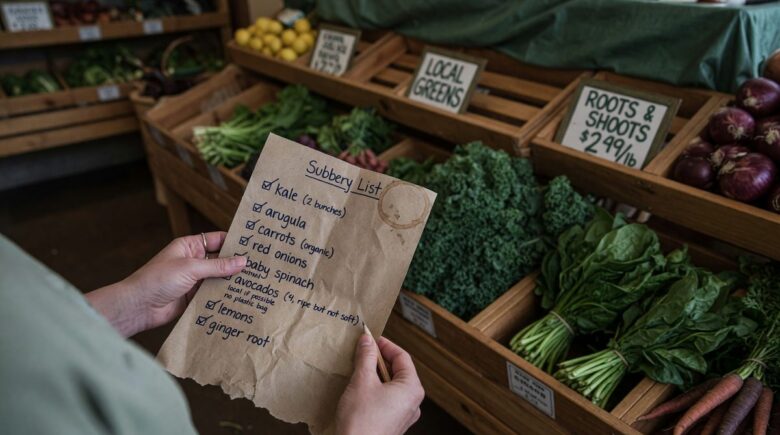
Build your weekly menus around what’s already in the pantry first, then layer in the sale items from that week’s circular, and only then fill gaps with full-price staples. Rotating 8–10 core recipes that use your regular brands keeps the list predictable and short. Shorter lists mean fewer opportunities to add items you didn’t plan on.
Stack Loyalty Rewards and Manufacturer Coupons, On the Same Transaction
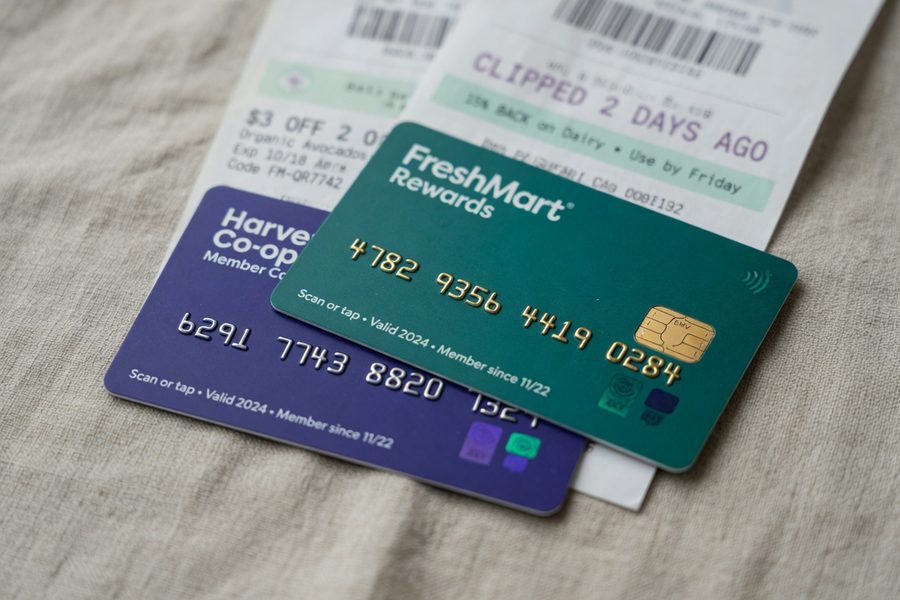
Most shoppers use store loyalty programs. Fewer use manufacturer coupons. Almost none do both on the same item in the same checkout, and that gap is where real money sits. Stacking a manufacturer coupon (clipped digitally through the brand’s app or a site like Coupons.com) with a store loyalty discount on the same name-brand product is not a loophole; it’s a standard practice most chains allow and actively support through their app infrastructure.
Comparing Loyalty Structures Across Chains
| Store | Loyalty Program | Digital Coupon Stacking | Avg. Name-Brand Discount |
|---|---|---|---|
| Kroger | Kroger Plus Card | Yes, manufacturer + store coupons | 10–25% on sale items |
| Publix | Club Publix | Yes, BOGO + digital coupons | Up to 50% on BOGO events |
| Safeway/Albertsons | Just for U | Yes, personalized + manufacturer | 15–30% on personalized offers |
| Target | Target Circle | Yes, Circle + manufacturer | 5–20% on grocery items |
| Walmart | Walmart+ / Savings Catcher | Limited, no traditional stacking | Everyday low price model |
Personalized offers deserve specific attention. Stores like Kroger and Albertsons use purchase history to generate discounts on the exact brands you already buy. If you’ve bought Tide four times in the last six months, your app will likely surface a Tide offer before a generic detergent one. Load those offers every week before you shop, it takes three minutes and applies automatically at checkout.
If you’re using a rewards credit card for grocery spend, that’s another layer. Cards from issuers like Chase, American Express, and Capital One return 3–6% back on grocery purchases depending on the product. Pair that with a store loyalty discount and a manufacturer coupon, and a $7 box of cereal can effectively cost you $4.50 without changing what’s in the box. Your FICO Score affects which of those cards you qualify for, so if you’re carrying a balance, Experian and Equifax both offer free credit report access that lets you check your standing before applying. For a deeper look at how to wring value from reward strategies while managing existing debt, our guide on credit card debt prioritization covers when rewards cards make sense and when they don’t.
The CDC also highlights coupon use as a legitimate budgeting tool for staying within grocery budgets while maintaining preferred food choices, not just for specialized dietary needs, but as a general practice worth building into your weekly routine.
Cut Waste and You Cut Spending, No Brand Switch Required
Here is the uncomfortable arithmetic: if your household discards 30% of what it buys, the USDA’s documented average for U.S. households, and you spend $169 per week on groceries, you are throwing away roughly $50.70 every week. That’s $2,636 per year leaving your kitchen in a trash bag. On name-brand products, the per-unit cost of that waste is higher than it would be on store brands, which means loyal name-brand shoppers carry a larger waste penalty than the average figure suggests.
The fix is behavioral, not brand-based. Implement a strict “eat the fridge first” rule before each shopping trip: any perishables already open or near expiration become that week’s meal priority. Freeze proteins and bread the day before their expiration date rather than the day after you notice the problem. Store produce correctly, most people refrigerate items that last longer at room temperature, and vice versa, accelerating spoilage. If you want specific guidance on reducing food costs through smarter purchasing and waste control, this breakdown of grocery cost control by season offers useful category-level tactics.
Quantify Your Waste to Find the Real Leak
For two weeks, write down every item you throw away and its approximate cost. Most households find two or three categories where nearly all of their waste clusters, typically fresh produce, deli items, and bread. That’s where to tighten your purchasing, not across the entire cart. Buy those categories in smaller quantities more frequently, or switch to larger-format options only when you have a specific plan to use the full amount.
A worked example: a household currently spending $169 per week that reduces waste by just 15%, roughly half the documented average waste rate, saves $25.35 per week, or $1,318 per year. That’s achieved without touching a single brand on the list. And it’s also worth noting that if budget pressure is severe enough that food security programs are relevant, our coverage of SNAP benefits and federal budget developments tracks changes that affect eligibility and benefit levels.
What clients often miss: The waste problem is worst in households with the most variety. Shoppers who buy 12 different fresh vegetables weekly waste more than those who buy 5 consistently. Narrowing your produce rotation doesn’t mean eating less well, it means eating what you actually bought.
Where This Recommendation Falls Short
The honest concession: these strategies require time and consistency that not every household can sustain. Tracking promotion cycles, clipping digital coupons before every trip, and meal planning weekly all represent real time costs, and for a household running on margin, that time has competing demands.
The catch with stockpiling on sale cycles is capital: you need enough cash flow to buy four units of something when the deal appears, even if that means spending more this week to spend less over the next six. For households living paycheck to paycheck, that front-loading is not always possible. In that case, the waste-reduction strategies remain high-value because they require no upfront outlay, but the promotion-cycle stacking may be out of reach until cash flow stabilizes.
The tradeoff with loyalty-program stacking is that it favors shoppers at a single primary store. If you split your shopping across three chains because of location or work schedules, managing multiple loyalty apps and promotion calendars becomes genuinely burdensome. The math still works, but the friction cost is real.
This approach also assumes your name-brand preferences are fixed. For some product categories, the quality difference between a national brand and a store brand is minimal and objectively measurable. Blind taste tests consistently show that in categories like canned tomatoes, frozen vegetables, and basic dairy, private-label products often match or exceed the national brand. If you’ve never tested your own preferences in a low-stakes category, you may be paying a brand premium that delivers no actual satisfaction. Protect the brands that genuinely matter to you; don’t defend brand loyalty as a principle across the entire cart.
Finally: these grocery store spending tips are most powerful for households already spending near the national average. If your weekly spend is already well below $100, the incremental gains from coupon stacking and sale timing are smaller in absolute dollars, and the time investment may not pencil out. Start with waste reduction first, it has the best effort-to-return ratio at any spending level.
How We Sourced This
This article draws primarily from the U.S. Bureau of Labor Statistics’ 2024 Consumer Expenditure Survey, the Food Marketing Institute’s 2024–2026 food industry research, and USDA Economic Research Service data on food-at-home spending as a share of disposable income. Food waste figures come from USDA and EPA household food loss estimates covering 2022–2024. Promotion cycle and coupon-stacking methodology references are drawn from Food Marketing Institute retailer data and publicly available loyalty program documentation from Kroger, Publix, Safeway/Albertsons, Target, and Walmart, reviewed in April–May 2026. All statistics were verified against primary source pages before publication; BLS and FMI figures reflect 2024–2026 data cycles as noted inline.
Frequently Asked Questions
How much can I realistically save without switching to store brands?
Most households can recover $1,000–$1,500 per year through waste reduction, sale-cycle timing, and loyalty stacking alone. The exact amount depends on current spending habits and how much food waste your household generates, but the $169 average weekly spend leaves meaningful room to cut without touching brand preferences.
How do I find out when my favorite name-brand products go on sale?
Track your primary store’s weekly circular for 8–12 weeks and log each time your top 10 staples are discounted. Most items cycle every 4–8 weeks. Apps like Flipp let you search a product name across multiple retailers’ circulars simultaneously, which speeds up the pattern recognition significantly.
Can I really stack a manufacturer coupon and a store loyalty discount on the same item?
At most major chains, Kroger, Publix, Safeway, and Albertsons, yes. Store policy generally allows one manufacturer coupon and one store coupon per item, and digital versions of both count. Check your specific store’s coupon policy, usually listed in the app’s help section, before assuming it applies.
Is meal planning worth the time if I have a small household?
For one or two people, the savings from meal planning are smaller in absolute dollars but the waste-reduction benefit is proportionally larger, small households discard a higher percentage of perishables because pack sizes are calibrated for families. Even a simple two-day plan before each trip cuts impulse purchases noticeably.
What if I genuinely can’t afford to stockpile on sale cycles right now?
Start with waste reduction and digital coupons, both require no upfront cash. Once you’ve recaptured $50–$75 per month through those levers, redirect a portion of that savings into a small “pantry fund” earmarked for stocking up when your staples hit promotion pricing. If budget pressure is more severe, our coverage of 2026 poverty guideline changes outlines updated eligibility thresholds for food assistance programs that may apply to your household.
Sources
- U.S. Bureau of Labor Statistics, Housing and Transportation Accounted for 50% of Household Spending in 2024
- Food Marketing Institute, Food Industry Facts (2024–2026)
- USDA Economic Research Service, Food-at-Home Share of Disposable Personal Income (2025)
- USDA Food and Nutrition Service / Nutrition.gov, Nutrition on a Budget
- Centers for Disease Control and Prevention, 6 Tips for Eating Healthy on a Budget
- Flipp, Weekly Grocery Circular Aggregator
- Coupons.com, Digital Manufacturer Coupons
- MyFinancial101, How Coupon Stackers Are Beating Inflation
- MyFinancial101, SNAP Benefits at Risk as Federal Budget Standoffs Continue