Fact-checked by the MyFinancial101 editorial team
Quick Answer
Alternative small business funding includes options such as revenue-based financing, online lenders, crowdfunding, microloans, and SBA-guaranteed loans. In 2023, 23% of small businesses applied with online lenders, and approval thresholds can be as low as a 550 credit score, though effective APRs on short-term products frequently exceed 30–80%.
Traditional bank loans reject the majority of small business applicants, and the hurdle is not going away. Strict underwriting standards, collateral requirements, and approval timelines measured in months make conventional lending impractical for businesses that need capital now, not next quarter. Alternative small business funding has moved from a last resort into a legitimate first consideration for millions of owners who do not fit neatly inside a bank’s credit box.
The evidence is clear. According to the Federal Reserve’s 2025 Small Business Credit Survey, 37% of small employer firms applied for a loan, line of credit, or merchant cash advance during 2023, and a growing share of those applications went to non-bank sources. That same report found that 23% of small businesses applied with online lenders in 2023, a figure that would have been unthinkable a decade ago.
This guide walks through every major alternative funding category, their real costs, the personal finance ripple effects owners often overlook, and the specific circumstances where each option earns a genuine recommendation or a clear warning. By the end, you will have a framework for choosing the right funding path rather than simply the most available one.
Key Takeaways
- 37% of small employer firms applied for a loan, line of credit, or merchant cash advance in 2023 (Federal Reserve, 2025), reflecting persistent demand for capital across all business sizes.
- 23% of small businesses applied with online lenders in 2023 (Federal Reserve, 2025), making fintech the second most commonly used credit source after traditional banks.
- Many online lenders approve businesses with personal credit scores as low as 550–600, compared to the 680+ typically required by conventional banks, but effective APRs on short-term products frequently reach 30–80%.
- SBA microloans go up to $50,000 through nonprofit intermediaries (U.S. Small Business Administration), often without the personal guarantee requirements common to fintech term loans.
- Crowdfunding success rates on major platforms hover below 30–40%, and campaigns require significant personal time investment that directly competes with revenue-generating business activities.
- Merchant cash advances and invoice factoring commonly deduct 20–40% of daily or periodic sales until the advance is repaid, which can materially reduce owner draws and household take-home income.
In This Guide
- Why Traditional Bank Loans Often Leave Small Business Owners Short
- What Alternative Funding Really Means for Your Personal Finances
- Revenue-Based and Invoice Financing: Matching Repayments to Cash Flow
- Crowdfunding and Peer-to-Peer Options: Raising Capital Without Traditional Debt
- Online Lenders and Fintech Lines of Credit: Speed with Strings Attached
- Grants, Microlenders, and Community Funds: Low- or No-Cost Paths Worth Pursuing
- SBA Programs: The Often-Overlooked Middle Ground
- How Alternative Funding Choices Affect Your Personal FICO Score
- Evaluating Risks and Building a Personal Safety Net Around Funding Choices
- Comparing All Alternative Funding Options Side by Side
Why Traditional Bank Loans Often Leave Small Business Owners Short
Banks say no far more than most owners expect, and the reasons rarely have anything to do with business viability. Conventional lenders typically require a personal credit score above 680, at least two years in business, consistent revenue documentation, and hard collateral, requirements that eliminate a large share of legitimate, profitable small businesses from consideration entirely.
Rejection Rates and Qualification Hurdles
Personal credit history sits at the center of nearly every bank’s small business underwriting decision, particularly for businesses without a long operating track record. An owner who carries a high personal credit utilization ratio, even one created by prior business expenses charged to personal cards, can find themselves disqualified despite healthy business revenue. This creates a frustrating circularity: the business needs capital to grow, but growth would have reduced the personal debt ratios that are blocking the loan.
The persistence of tight bank lending standards for small businesses is well documented. As the University of La Verne Small Business Development Center has noted, traditional banks’ strict lending guidelines and aversion to risk continue to limit credit access for small businesses long after the conditions that originally tightened those standards have passed.
Slow Timelines and Cash Flow Emergencies
SBA-guaranteed loans, while cheaper in the long run, carry approval timelines of 30 to 90 days on average. A seasonal retailer facing a 45-day inventory gap or a contractor waiting on a delayed client payment cannot afford that window. Traditional bank loans face similar or longer timelines for credit review, appraisal, and closing, making them structurally unsuitable for urgent operational needs. This gap is precisely where alternative small business funding has built its market.
Banks typically require a personal credit score of 680 or above for small business loan approval, yet the average small business owner’s personal score sits below that threshold in the first several years of operation.
What Alternative Funding Really Means for Your Personal Finances
Choosing an alternative lender over a bank is a personal finance decision as much as a business one. The speed advantage is real, but so is the cost gap, and that cost flows directly through to an owner’s household budget.
Most alternative funding products require a personal guarantee, which means a business default becomes a personal liability. Even products marketed as “business-only” financing frequently include personal guarantee clauses buried in the agreement. Owners who treat business and personal finances as entirely separate entities until they read a default notice are making a costly assumption. Understanding that distinction before signing is non-negotiable. If you are already managing personal debt alongside business obligations, reviewing strategies covered in our guide to prioritizing and negotiating credit card debt can help you enter funding conversations with a clearer financial picture.
Revenue-Based and Invoice Financing: Matching Repayments to Cash Flow
Revenue-based financing and invoice factoring are the most structurally honest of the alternative options, because repayments move with actual sales rather than on a fixed calendar. That alignment is genuinely useful for businesses with lumpy revenue, but the cost of that flexibility is high.
How Repayments Scale with Sales
In a revenue-based financing arrangement, the lender advances a lump sum and collects a fixed percentage of daily or weekly gross revenue until a predetermined total repayment cap is reached. A factor rate of 1.35 on a $50,000 advance means repaying $67,500 total, regardless of how long it takes. If monthly revenue is $30,000 and the lender withholds 15%, the owner is surrendering $4,500 per month to repayment, leaving $25,500 for operations and owner draws. Over the roughly 15 months it would take to clear $67,500 at that pace, that $4,500 monthly reduction is a direct hit to household income.
Invoice Factoring and Its Real Cost
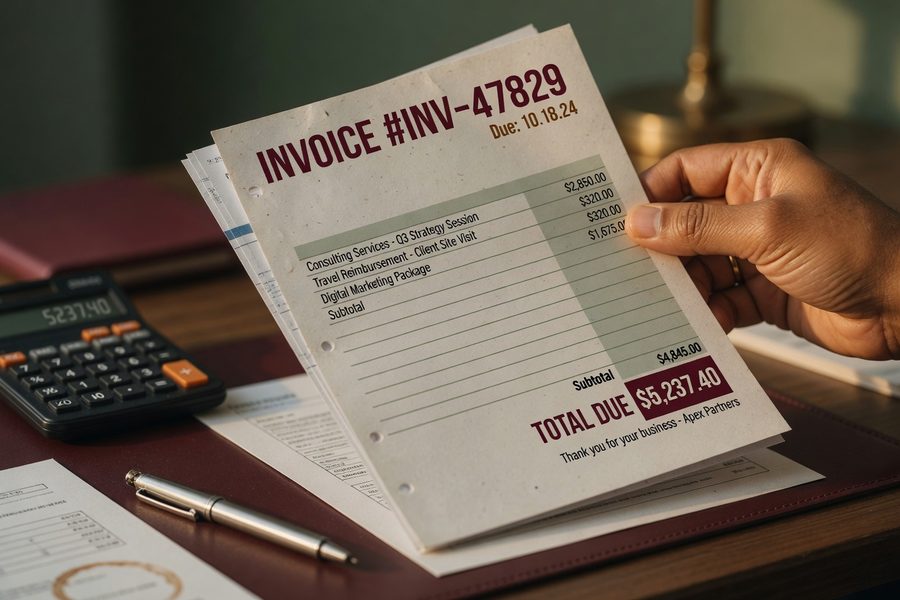
Invoice factoring works differently. A factoring company purchases outstanding invoices at a discount, typically advancing 80–90% of face value upfront and remitting the remainder, minus a factoring fee of 1–5% per 30 days, once the invoice is collected. A business with $100,000 in 60-day receivables might receive $85,000 upfront but net only $92,000–$93,000 total after fees, losing $7,000–$8,000 for the convenience of early access. Annualized, that works out to an effective APR of roughly 14–20% on a 60-day product, which is meaningfully cheaper than most merchant cash advances but still well above an SBA loan rate.
These products suit service businesses and e-commerce sellers with predictable receivable cycles. They are poor fits for early-stage businesses with no invoicing history or for retail operations where daily sales volatility is high.
Merchant cash advances and revenue-based financing commonly deduct 20–40% of daily sales until repaid, which can reduce owner draws by thousands of dollars per month in a slow season.
Crowdfunding and Peer-to-Peer Options: Raising Capital Without Traditional Debt
Crowdfunding sounds appealing because it can raise capital without interest payments or personal guarantees, but the success rate data should temper expectations before any owner invests serious time in a campaign.
Reward, Equity, and Donation Models
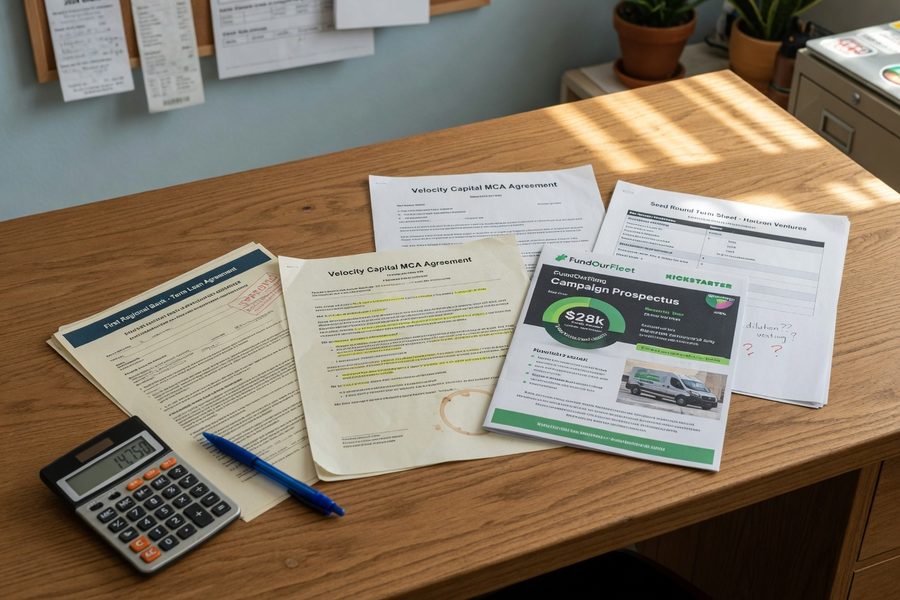
Reward-based platforms like Kickstarter and Indiegogo allow businesses to presell products or offer non-monetary perks to backers. Equity crowdfunding platforms, operating under SEC Regulation Crowdfunding (Reg CF), allow businesses to sell actual ownership stakes to non-accredited investors, with individual campaigns capped at $5 million annually. Donation-based models, common on GoFundMe, rarely make sense for for-profit businesses but work for mission-driven or community-anchored ventures.
The ownership dilution trade-off in equity crowdfunding is permanent. Unlike a loan you repay and close, equity investors remain stakeholders. That may be acceptable for growth-stage businesses, but it is a significant concession for an owner who built a business with the intent of keeping it closely held.
Time Investment and Realistic Success Probabilities
Crowdfunding success rates on major platforms hover below 30–40%, and even successful campaigns typically require 4–8 weeks of intensive promotion, email outreach, social media content creation, and backer communication. That time investment competes directly with revenue-generating business activity. Platform fees typically run 5–8% of funds raised, plus payment processing fees of 3–5%, so a $50,000 successful campaign nets roughly $43,500–$46,000 after fees. Worth it for some, but the math needs to be run before committing.
Equity crowdfunding permanently dilutes your ownership stake. Before listing on a Reg CF platform, consult a CPA or attorney about how the equity distribution will affect business control, tax treatment, and your exit options down the road.
Online Lenders and Fintech Lines of Credit: Speed with Strings Attached
Online lenders fill the gap banks leave, and they do it fast, often within 24–72 hours of application. That speed comes with a cost structure owners need to read carefully before accepting a term sheet.
Credit Score Thresholds and Repayment Structures
Many fintech lenders, including platforms like Kabbage (now part of American Express), OnDeck, and Bluevine, approve businesses with personal credit scores as low as 550–600. That accessibility is real, but so is the pricing that accompanies it. Short-term business loans from online lenders frequently carry effective APRs in the 30–80% range, and some merchant cash advance products exceed 100% APR when annualized. A $30,000 loan at 45% APR over 12 months costs roughly $7,800 in interest, compared to approximately $1,500–$2,400 on an equivalent SBA 7(a) loan at 7–9% over the same period.
Repayment structures matter as much as rates. Daily or weekly ACH debits, common with short-term fintech products, mean the lender’s repayment comes before owner draws, payroll flexibility, or any operational buffer. An owner drawing $5,000 per month who commits to $1,200 per week in loan repayment is effectively operating on a $500 monthly personal budget, with no tolerance for a slow week.
The Personal Credit Score Ripple Effect
Most fintech term loans report to business credit bureaus like Dun & Bradstreet and Equifax Business, which is a genuine benefit for building a PAYDEX score over time. However, the personal guarantee embedded in most agreements means a missed payment or default can appear on the owner’s personal credit report, damaging the same FICO score the owner is hoping to strengthen. Owners who manage this well, borrowing modestly and repaying on schedule, can use fintech loans as stepping stones to conventional bank credit within 12–24 months. Owners who overborrow often end up in a debt cycle that pushes traditional financing further out of reach.
What I see in practice: When reviewing clients’ books, I regularly find fintech loan repayments misclassified as operating expenses rather than debt service. That error distorts net income on the P&L, affects estimated tax payments, and can trigger underreporting scrutiny. Getting the accounting treatment right from day one prevents compounding headaches at year-end.
Before accepting any online lender’s term sheet, calculate the total cost of capital, not just the monthly payment. Multiply the factor rate by the principal (for example 1.40 x $25,000 = $35,000 total repaid) and divide by the loan term in months to get a true monthly cost comparison against bank alternatives.
Grants, Microlenders, and Community Funds: Low- or No-Cost Paths Worth Pursuing
Small business grants and microlenders represent the most favorable terms available to qualifying businesses, and they are consistently underused because owners underestimate their eligibility or overestimate the difficulty of applying.
Who Qualifies and What to Expect
Grant eligibility commonly ties to demographics (women-owned, minority-owned, veteran-owned businesses), geography (rural, opportunity zone, or economically distressed areas), or industry (clean energy, food access, manufacturing). Federal sources, including SBIR (Small Business Innovation Research) grants administered through the U.S. Small Business Administration, are available to businesses in technology and research sectors and can fund amounts from $50,000 to over $1 million in Phase II awards. State and local economic development offices administer separate grant pools that receive far fewer applications than federal programs, making them proportionally better bets for most Main Street businesses.
Microlenders, including SBA-approved nonprofit intermediaries, offer loans up to $50,000 with average loan sizes around $13,000. Interest rates on SBA microloans typically range from 8–13%, which is meaningfully higher than a bank line of credit but well below fintech short-term products. Critically, many microlender programs do not require a personal guarantee for smaller loan amounts, which is a significant distinction from almost every other non-grant funding source.
Grant Timelines: Honest Expectations
Realistic timelines for small business grants run 3–12 months from application to award, and many competitive grants require business plans, financial projections, and narrative statements that take 20–40 hours to prepare properly. That time cost is real, but the payoff, non-dilutive, non-repayable capital, justifies the investment for businesses that qualify. Tracking and reporting requirements post-award can affect how funds are categorized on tax returns, so coordinating with a CPA before spending grant funds is worth the effort. For owners also managing personal financial pressures while building a business, resources like updated 2026 poverty guideline information may clarify eligibility for additional federal support programs that can reduce household financial stress during the grant application period.

SBA microloan intermediaries are nonprofit organizations, not banks. They frequently offer technical assistance, mentoring, and financial coaching alongside the loan, which can be more valuable than the capital itself for early-stage businesses.
SBA Programs: The Often-Overlooked Middle Ground
SBA-guaranteed loan programs are not traditional bank loans, and owners who conflate the two miss one of the most cost-effective funding paths available. The SBA does not lend directly in most cases; it guarantees a portion of the loan made by an approved lender, reducing the lender’s risk enough to approve businesses that would otherwise be declined.
The SBA’s core loan programs include the 7(a) loan for general business purposes (up to $5 million), the 504 loan for fixed asset purchases like equipment and real estate (up to $5.5 million), and microloans up to $50,000 through nonprofit intermediaries. Rates on 7(a) loans are capped by the SBA relative to the prime rate, which in mid-2026 keeps most 7(a) rates in the 10–13% range for variable-rate products. That is higher than a conventional bank line of credit in a lower-rate environment, but the approval accessibility more than compensates for qualifying businesses. The full range of SBA funding guidance also covers self-funding strategies, venture capital introductions, and investment programs like SBIC, which are worth reviewing before assuming a loan is the only path.
How Alternative Funding Choices Affect Your Personal FICO Score
The FICO score impact of alternative business funding is one of the most underexplored dimensions of this decision, and it can follow an owner for years after the loan is repaid.
Reporting Practices Across Funding Types
Not all alternative lenders report to personal credit bureaus, but many do, and almost none advertise that fact prominently. Fintech term loans with personal guarantees typically report to Experian, TransUnion, and Equifax when the account is in good standing and when it defaults. A single missed payment on a $40,000 fintech loan can drop a personal FICO score by 60–110 points, depending on the owner’s existing credit profile. That drop can raise the cost of a personal mortgage, car loan, or even a future SBA application for 12–24 months.
Grants and equity crowdfunding, by definition, do not appear on personal credit reports. Revenue-based financing products report inconsistently, and invoice factoring typically does not report to personal bureaus at all. Owners who are actively rebuilding personal credit scores should prioritize funding types that either report positive payment history or do not report at all, avoiding any product where a revenue shortfall could trigger a negative personal credit event. If credit card debt is already a pressure point alongside business financing, our overview of how credit card debt affects household finances provides context for prioritizing which obligations to address first.
A missed payment on a personally guaranteed fintech business loan can reduce a personal FICO score by 60–110 points, with the effect lasting up to 24 months and directly affecting the owner’s personal borrowing costs.
Evaluating Risks and Building a Personal Safety Net Around Funding Choices
High-cost alternative funding creates a debt cycle risk that is specific and measurable, not abstract. An owner who takes a 12-month merchant cash advance to cover a cash flow gap, then needs another advance before the first is repaid, faces a stacking problem that dramatically increases the effective cost of both products.
Debt Cycle Warnings and Budgeting Guardrails
The clearest guardrail is a debt service coverage ratio (DSCR) check before accepting any funding offer. Divide net operating income by total debt service, including the new obligation. A DSCR below 1.25 means the business earns less than 25% more than it costs to service its debt, a thin margin that leaves no room for a slow month without drawing down owner savings or personal emergency funds. Owners who find their DSCR below that threshold should treat it as a signal to seek lower-cost alternatives, negotiate better terms, or reduce the loan amount rather than accepting the full offer.
Using Alternative Funding as a Bridge
The strongest use case for high-cost alternative funding is a defined bridge: a short-duration product used to capture a specific revenue opportunity, with a clear exit plan to refinance into cheaper capital once the business can qualify. An owner who takes a 6-month revenue-based advance to fulfill a large contract, then applies for an SBA 7(a) loan once that contract revenue is on the books, uses the expensive product exactly as designed. The owner who renews the advance repeatedly because the underlying cash flow never improves has a business problem, not a funding problem, and additional capital will not solve it.
Protecting personal finances during this process means treating owner draws as a fixed expense in the business budget, not a residual. It also means maintaining a personal emergency fund separate from business reserves. For owners juggling business debt alongside household obligations, understanding tools like credit counseling services can provide structured support for the personal finance side of the equation.
Real-World Example: Revenue-Based Financing vs. Refinancing to an SBA Loan
Consider an illustrative example: a food truck owner with $18,000 in monthly revenue and a personal credit score of 610 needs $40,000 to purchase a second vehicle and capitalize on a corporate catering contract. A bank declines the application due to the credit score. An online lender approves a revenue-based advance with a 1.38 factor rate, meaning total repayment of $55,200 on the $40,000 advance, with 20% of daily revenue withheld until repaid. At $18,000 monthly revenue, the 20% withholding equals $3,600 per month. At that pace, the advance is repaid in roughly 15.3 months ($55,200 / $3,600). The total cost of the advance is $15,200 above principal, equating to an approximate effective APR of 24–28%.
Now assume the catering contract adds $8,000 per month in revenue, bringing the business to $26,000 monthly. After 12 months of on-time repayments, the owner applies for an SBA 7(a) loan to pay off the remaining balance and fund a third vehicle. With an improved business credit profile, the SBA loan is approved at a variable rate of 11.5%. The owner reduces total interest cost on the remaining balance from approximately $4,200 (advance) to $1,800 (SBA), saving $2,400, and builds the SBA relationship that makes future conventional financing far more accessible. The math works because the bridge was short and intentional, not indefinite.
Comparing All Alternative Funding Options Side by Side
Choosing between funding types requires comparing them on terms that actually matter to your bottom line: cost, speed, credit impact, and whether the product fits your specific business model.
| Funding Type | Typical APR or Cost | Speed to Funding | Min. Credit Score | Personal Guarantee? |
|---|---|---|---|---|
| SBA 7(a) Loan | 10–13% (variable) | 30–90 days | 640–680+ | Yes |
| SBA Microloan | 8–13% | 2–4 weeks | Varies by lender | Often not required |
| Online Fintech Loan | 30–80% effective APR | 24–72 hours | 550–600 | Yes |
| Merchant Cash Advance | 40–150%+ effective APR | 24–48 hours | 500+ | Usually yes |
| Invoice Factoring | 14–40% effective APR | 2–5 days | Not primary factor | Varies |
| Reward Crowdfunding | 5–13% in platform/payment fees | 30–90 days | None | No |
| Small Business Grant | $0 (non-repayable) | 3–12 months | None | No |
One important caveat this table cannot capture: loan terms vary significantly by lender, borrower profile, and economic conditions. The figures above reflect mid-2026 market conditions and should be verified with each lender before committing.
| Funding Type | Best Suited For | Avoid If | FICO Score Impact |
|---|---|---|---|
| Revenue-Based Financing | Seasonal businesses, e-commerce | Inconsistent monthly revenue | Low (if no personal reporting) |
| Invoice Factoring | B2B service businesses with slow-pay clients | Retail or no invoicing model | Minimal |
| Online Lenders | Short-term capital needs, bridge financing | Thin margins or unpredictable revenue | High if guaranteed and defaults |
| Equity Crowdfunding | Growth-stage, consumer-facing brands | Closely held family businesses | None |
| SBA Microloan | Startups, underserved communities | Urgent needs (slow process) | Positive if repaid on schedule |
The CFPB (Consumer Financial Protection Bureau) has expanded small business lending data reporting requirements under Section 1071 of the Dodd-Frank Act. Starting in 2025, many lenders must collect and report demographic data on small business loan applications, making approval disparities by owner demographics more visible and actionable than ever before.
Your Action Plan
-
Pull your personal and business credit reports before approaching any lender
Request your personal credit reports for free at AnnualCreditReport.com (Experian, TransUnion, and Equifax each provide one free report). For business credit, check your Dun & Bradstreet PAYDEX score and Equifax Business credit file. Knowing your starting position prevents surprises during underwriting and lets you target lenders whose minimum thresholds your profile actually meets.
-
Calculate your debt service coverage ratio before accepting any offer
Divide your average monthly net operating income by the total monthly debt service the new loan would require, including all existing business debt payments. A ratio below 1.25 is a red flag that the payment may be unsustainable. Use a free DSCR calculator at the SBA’s business management resources or run the arithmetic manually before signing anything.
-
Check grant eligibility at Grants.gov and your state’s small business development center
Visit Grants.gov and search by your industry code (NAICS) and business characteristics. Separately, contact your local SBDC (Small Business Development Center) through the SBA’s local assistance locator. SBDC advisors provide free grant search assistance and can identify state and local programs not listed on federal databases.
-
Compare at least three lenders using total cost of capital, not monthly payment
For any loan offer, calculate total repayment by multiplying the factor rate by principal (for revenue-based products) or using an APR-to-total-interest calculator for term loans. Nav.com and Lendio aggregate multiple lender offers and display total costs side by side, which makes real comparisons far easier than evaluating offers individually. Never accept the first offer without comparing at least two alternatives.
-
Separate business and personal cash flows before the loan funds
Open a dedicated business checking account if you have not already, and establish a clear owner draw schedule before any new capital arrives. This prevents co-mingling that complicates tax reporting and obscures whether the business is actually cash-flow positive after debt service. The IRS and most lenders scrutinize businesses where personal and business finances are intertwined, particularly on Schedule C or during SBA underwriting.
-
Build a 90-day plan to transition toward lower-cost financing
If you accept high-cost alternative funding, set a concrete 90-day milestone to qualify for cheaper capital. That might mean reaching a revenue threshold that makes you eligible for an SBA microloan, completing 6 months of on-time payments to establish a business credit file, or resolving a personal credit dispute that was blocking bank approval. Treat the expensive product as a temporary tool with an exit date, not a permanent arrangement. For additional context on building financial resilience while managing business debt, consider reviewing guidance on starting to invest even in debt-heavy periods, since protecting personal retirement contributions alongside business obligations is a balance worth maintaining from the start.
Frequently Asked Questions
What credit score do I need for alternative small business funding?
Many online lenders approve applications with personal credit scores as low as 550–600, compared to the 680+ typically required by traditional banks. The trade-off is cost: lower credit score approvals almost always carry higher effective APRs, often in the 40–80% range on short-term products. Microlenders and grant programs generally do not use a credit score minimum as a primary eligibility criterion.
Is a merchant cash advance a loan?
Technically, no. A merchant cash advance (MCA) is a purchase of future receivables, not a loan, which means it is not subject to state usury laws that cap interest rates. That legal distinction allows MCA providers to charge effective APRs that would be illegal under traditional lending law. Treat an MCA as borrowing and evaluate it on its total cost of capital, not its nominal structure.
How long does it take to get a small business grant?
Most small business grants take 3–12 months from application to funding. Federal grants like SBIR awards move on a defined review schedule, while state and local grants vary widely. Prepare for the application to take 20–40 hours of work before submission, including financial documentation, business plans, and narrative statements.
Does taking an online business loan hurt my personal credit?
It depends on the lender and whether you sign a personal guarantee. Most fintech term loans include personal guarantees, which means the loan can appear on your personal credit report and a default will damage your personal FICO score. Revenue-based financing and invoice factoring typically do not report to personal credit bureaus, making them less risky from a personal credit standpoint, though defaults can still trigger personal liability clauses.
What is the difference between revenue-based financing and a merchant cash advance?
Both products collect repayment as a percentage of sales, but they differ in structure and target audience. Revenue-based financing is typically offered to SaaS and e-commerce companies with recurring digital revenue, uses a fixed percentage of monthly revenue, and often has longer repayment windows. Merchant cash advances deduct from daily credit card or bank receipts, are common in retail and food service, and typically carry higher factor rates and shorter effective terms.
Can a small business get funding with no revenue?
Options narrow significantly with no revenue history, but they exist. Grants, equity crowdfunding, and friends-and-family rounds do not require revenue. Some SBA microloan intermediaries work with pre-revenue startups when a strong business plan and personal credit history support the application. Most fintech lenders require at least 6 months in business and $5,000–$10,000 in monthly revenue as a baseline.
How does equity crowdfunding differ from reward crowdfunding for taxes?
Reward crowdfunding proceeds are generally taxable as business income in the year received, because backers receive something of value in return. Equity crowdfunding is treated as a capital contribution, not income, so it does not trigger immediate tax liability, though it does create ongoing reporting obligations related to the shareholders. A CPA should review either structure before you launch a campaign, as misclassification of crowdfunding proceeds is a common and costly tax error.
Our Methodology
This article evaluated alternative small business funding options across six primary criteria: effective APR or total cost of capital, minimum credit score requirements, speed to funding, personal guarantee requirements, personal credit score reporting practices, and suitability by business type and revenue profile. Rate ranges and approval thresholds reflect mid-2026 market conditions and were sourced from the Federal Reserve’s 2025 Small Business Credit Survey, the U.S. Small Business Administration’s published program guidelines, and publicly available lender terms from major fintech platforms. APR calculations for revenue-based products were derived using the factor-rate-to-APR conversion method, annualizing total repayment cost relative to the advance term. All statistics are cited with links to primary sources. This content was prepared by Camille Jourdain, CPA, and reflects professional judgment in addition to published data.
Sources
- Federal Reserve, 2025 Small Business Credit Survey: Small Employer Firms Report
- U.S. Small Business Administration, Loan Programs: 7(a), 504, and Microloans
- U.S. Small Business Administration, SBA Funding Programs Overview
- U.S. Small Business Administration, How to Fund Your Business
- University of La Verne SBDC, Alternative Financing Options for Your Small Business
- Grants.gov, Federal Grant Search for Small Businesses
- U.S. Small Business Administration, Find a Small Business Development Center (SBDC)