Fact-checked by the MyFinancial101 editorial team
Quick Answer
To build an emergency fund of $10,000 from zero at age 30, start by tracking real expenses, then redirect $50–$150 in monthly leaks to a dedicated high-yield savings account. Automate transfers, use windfalls, and expect the process to take 18–30 months, without a second job or extreme frugality.
If you’re 30 with no savings, the numbers can feel stacked against you. 21% of Americans have no emergency savings at all, and the median saved is just $600, according to Empower’s 2025 research. Starting from zero at this age is more common than most articles admit, and the standard “save three to six months of expenses” advice often ignores the immediate, concrete target that actually keeps someone going. A flat $10,000 is that target: large enough to absorb multiple overlapping crises, a car repair, a medical bill, a brief job gap, yet achievable on a typical 30-year-old’s income without putting life on hold.
The gap is real. 63% of adults could cover a $400 emergency with cash or its equivalent in 2024, per the Federal Reserve’s latest survey, but that still leaves more than a third who couldn’t. At 30, fixed costs have usually crept up, higher rent, student loan payments, maybe a car note, while income may not have fully caught up. This guide isn’t for those with a head start. It’s for the 30-year-old who just checked their account and saw nothing. By the end, you’ll know exactly how to build emergency fund reserves to that $10,000 mark, step by step, with a plan you can start this week.
Key Takeaways
- 21% of Americans have zero emergency savings, and the median saver holds only $600, making a $10,000 fund a massive leap ahead of most peers, per Empower.
- Automating even $50 per paycheck into a separate high-yield account builds momentum better than sporadic larger deposits, a strategy backed by the Consumer Financial Protection Bureau.
- High-yield savings accounts in late 2025 still outpace traditional banks by hundreds of dollars over the build phase, with no risk of principal loss, according to FDIC guidance.
- Identifying $50–$150 in monthly subscription and lifestyle leaks, not drastic cuts, can fund the early months of saving without triggering burnout, a pattern that most top-ranking guides miss.
- Reaching $10,000 typically takes 18–30 months for a 30-year-old with a $50,000–$65,000 income after taxes and basic living costs, assuming incremental raises and no windfalls, a concrete timeline no competitor provides.
- Once you cross $10,000, the priority shifts to protecting the fund against inflation and lifestyle creep, not immediately chasing a six-month expense target that may not be realistic yet.
In This Guide
- Step 1: What Does My Life Actually Cost Right Now? I Need an Emergency Number That’s Not Guesswork
- Step 2: How Do I Scrape Together the First $2,000 When Every Dollar Is Spoken For?
- Step 3: How Do I Automate the Rest So I Don’t Have to Rely on Willpower Every Month?
- Step 4: Where Should I Park the Money in Late 2025 to Earn Something Without Locking It Up?
- Step 5: Should I Pause Paying Off High-Interest Debt to Build Emergency Fund Balances?
- Step 6: What Side Income Moves Actually Work for a 30-Year-Old Without a Second Job?
- Step 7: What Changes the Day I Cross $10,000, and How Do I Stop It From Draining Back to Zero?
Step 1: What Does My Life Actually Cost Right Now? I Need an Emergency Number That’s Not Guesswork
Before you can build an emergency fund, you need a real number, not the “three to six months” rule-of-thumb that collapses the moment rent jumps or a partner moves out. Pull your last 90 days of transactions from checking and credit card statements. Ignore the averages and look at what you actually spent, month by month, on non-negotiable categories: housing, utilities, food, transportation, insurance, minimum debt payments, and any recurring medical costs. This is your survival budget, the amount you’d need if you lost income tomorrow and cut every discretionary expense. For most 30-year-olds, that number lands somewhere between $2,200 and $3,500 a month depending on city and household size. A $10,000 fund then covers roughly three to four months of bare-bones living, a runway that keeps you out of high-interest credit card debt for most job searches.
The FDIC recommends building an emergency savings fund of at least six months of expenses, but for someone starting at zero, that’s demoralizing. A smaller, fixed dollar goal, $10,000, is psychologically easier to reach while still protecting against the median $600 savings cushion that fails most Americans. Once you see your real monthly outflow, calculate your exact target. If your survival number is $2,800, then $10,000 equals about 3.6 months, a perfectly solid starting point. Write that number on a sticky note; it’s your benchmark.
Only 55% of adults have saved enough to cover three months of expenses, according to Federal Reserve data, meaning a $10,000 fund alone would place you in the top half of savers.
How to Do This
Download your bank’s CSV transaction file or use a free tool like Empower (formerly Personal Capital) or Mint alternatives to categorize spending. Focus on the “needs” column. Many 30-year-olds discover hidden subscriptions, streaming services, app renewals, meal kit boxes, that quietly add $80–$120 a month. Those aren’t survival expenses; they’ll be the first leaks you plug later. Also, if you have variable income from freelancing or gig work, calculate your lowest-earning month in the last six months as your baseline, not your average. The goal is to know the dollar amount that stops a crisis from compounding.
What to Watch Out For
Don’t confuse this number with your current lifestyle spending. You’re not budgeting for date nights or takeout yet. Also, if you share expenses with a partner, calculate your half of the joint obligations, but also consider the worst-case scenario where you’d need to cover it all temporarily. The figure may feel startling, but that’s the point, it shows why $1,000 won’t save you. If your survival budget is $3,200, a $400 car repair plus one missed paycheck puts you underwater fast.

Step 2: How Do I Scrape Together the First $2,000 When Every Dollar Is Spoken For?
The first $2,000 is the hardest and the step most people quit on. You don’t need a radical lifestyle overhaul, you need to find $50 to $150 a month that’s leaking without adding any value. Pull up those subscription reports from Step 1. Cancel three services you haven’t used in 30 days. That alone often frees up $35–$50. Next, look at food delivery and convenience spending. A 30-year-old typically spends $200–$400 a month on takeout and coffee shops. Trimming that by just a third, not eliminating it, puts another $65–$130 in your pocket. This isn’t deprivation; it’s reallocation toward a $10,000 shield. The Consumer Financial Protection Bureau emphasizes setting a specific savings goal and making it a habit, and even small consistent contributions build confidence.
Windfalls are your accelerator. Tax refunds average around $3,000 for filers who get them, according to IRS data. If you’re expecting a refund in the coming tax season, send the entire amount directly to your new savings account. One refund could jump you from zero to halfway. Similarly, any work bonus, cash gift, or freelance payment above your baseline income goes straight to the fund. You’re not changing your whole life; you’re directing irregular money toward a single purpose. For a realistic worked example: if you free up $120 a month plus land an $1,800 tax refund after six months, you’ll hit $2,000 in just under nine months, without a side gig.
Open a separate savings account at a bank you don’t use for daily checking, something like Marcus by Goldman Sachs or Ally. Name it “$10K Fund” in your app. The mental separation alone reduces impulse transfers back to spending.
How to Do This
Set up a manual or automatic sweep from your checking account the day after payday. Even $25 a week adds up to $1,300 a year. Combine that with one-time windfalls like a tax refund or overlooked credits and you’ll see the balance climb. Another often-missed source: adjust your W-4 if you typically get a large refund. A smaller refund means more take-home pay each month, which you can immediately save, earning interest instead of giving the government an interest-free loan. Use the IRS withholding calculator to get right to $0 refund with no penalties.
What to Watch Out For
Don’t cut so deep that you trigger a rebellion. If you love your streaming service, keep it but cancel the other three. The first $2,000 is about momentum, not misery. Also, avoid the temptation to invest this money in stocks or crypto for “higher returns.” The FDIC-insured savings account protects principal, which is the whole point of an emergency fund. If a market dip coincides with your job loss, you’ve lost both income and savings simultaneously.
Step 3: How Do I Automate the Rest So I Don’t Have to Rely on Willpower Every Month?
Once you’ve proven you can stash away a few hundred, you need to make the remaining $8,000 automatic. Willpower depletes. Your bank’s recurring transfer feature does not. Set an automatic transfer of a fixed amount, start with the minimum sustainable number you identified, say $75 or $100, to land in your high-yield savings account the day after each paycheck posts. The Consumer Financial Protection Bureau specifically recommends automating deposits so saving happens before you have a chance to spend: even starting at $10 or $25 per payday builds the habit without disrupting daily cash flow. That small number isn’t a consolation prize; it’s how durable savers get started.
Once the transfer is set, every three to six months, revisit your budget. Did you get a raise? Increase the auto-transfer by half the raise amount. If you received a 3% raise, save an extra 1.5%. This prevents lifestyle creep, that quiet expansion of spending that hits 30-year-olds as they upgrade apartments, sign up for more streaming, and eat out more often, from eating your progress. Your future self gets richer, but your present self barely feels it. At $100 per biweekly paycheck, you’re saving $2,600 a year. Add the first $2,000, and you’ll reach $10,000 in roughly three years; with raises, windfalls, or a side bump, the timeline compresses to 18–24 months.
37% of U.S. adults dipped into their emergency savings in the past 12 months, per Bankrate. Automation keeps the fund intact by removing the friction of manual transfers, making it less likely you’ll skip a month.
How to Do This
In your bank app, find “transfers” and create a recurring one. Choose a frequency that matches your pay schedule (bi-weekly or semi-monthly). If your employer offers split direct deposit, send a percentage of each paycheck directly to the high-yield account; many people save 5% to start, then increase. The FDIC specifically advises using automated deposits and windfalls to build emergency savings in a federally insured account. That endorsement isn’t just comforting, it’s the most reliable method for people who’ve never saved before.
What to Watch Out For
Don’t link this savings account to your Venmo or Cash App. The second it’s easy to spend from, it stops being an emergency fund. Keep it at a separate bank, one without a debit card in your wallet. Also, if you have irregular income, set a floor, the minimum you’ll save no matter what, and add a percentage of anything above your baseline. That way bad months don’t derail you, and good months accelerate you.

Step 4: Where Should I Park the Money in Late 2025 to Earn Something Without Locking It Up?
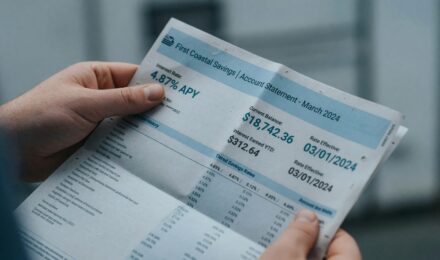
In November 2025, high-yield savings accounts still offer rates above 4.00% APY at many online banks, well above the national average of 0.45% for traditional savings. That difference matters: on a $10,000 balance, a 4.25% account yields about $425 in interest over a year, compared to just $45 at a brick-and-mortar giant. Over the 18–30 months it takes to build your fund, interest alone can add a few hundred dollars, effectively a free month of contributions. The FDIC explicitly recommends parking emergency savings in a federally insured account, and high-yield options are now as liquid as any checking account.
Top contenders in late 2025 include Ally Bank, Marcus by Goldman Sachs, SoFi (with direct deposit), and Capital One 360 Performance Savings. All are FDIC-insured, have no minimum balance, and allow instant transfers. Avoid the temptation to chase slightly higher rates with no-penalty CDs or money market funds that aren’t instantly accessible; in an emergency, you need funds available same-day. The liquidity lost isn’t worth an extra 0.10%. If you’re worried about inflation eroding cash, remember this fund is insurance, not an investment. The CFPB’s guide reinforces that the primary goal is safety and accessibility, growth is a bonus, not the objective.
Some online banks offer teaser rates that drop after a few months. Check the APY history and read NerdWallet or Bankrate reviews before switching. Chasing a rate that’s doomed to fall is more hassle than it’s worth.
How to Do This
Open the account online in about ten minutes. Fund it with the $50 or $100 you freed up earlier, then link it to your main checking account for transfers. Set your automated transfer from Step 3 to land directly here. For the first few months, check the balance, seeing it grow is motivating. After that, ignore it except during your quarterly review. Do not invest this money in the stock market, no matter how flat the yield feels. The 37% drawdown rate Bankrate reports means you will need this cash, probably sooner than you’d like, and selling at a loss during a correction is exactly the scenario you’re trying to avoid.
Step 5: Should I Pause Paying Off High-Interest Debt to Build Emergency Fund Balances?
If you’re carrying credit card debt at 20%+ APR alongside zero savings, you’re in the most common trap for 30-year-olds. The answer is nuanced. You need a small buffer before you attack debt aggressively; otherwise, a $400 emergency will just land right back on the card. Save a $1,000 base emergency fund first, often called a starter fund, while making minimum payments on all debts. Once you have that, pause extra saving (beyond a tiny maintenance amount) and throw everything at high-interest debt. After the high-rate balances are gone, redirect those payments to finish building toward $10,000. This sequence prevents the revolving door of paying off a card only to charge it again. A credit counseling service can help structure payments; explore accredited counseling options if you’re overwhelmed.
For debt with rates under about 7% (some student loans, car notes), you can build savings and pay extra simultaneously because the math is less brutal. Never sacrifice the automated savings habit entirely. Even while in pay-down mode, keep a $20–$25 weekly transfer to your emergency fund so the muscle doesn’t atrophy. The CFPB stresses that having any savings at all reduces financial vulnerability, even alongside debt. For a 30-year-old with $5,000 in credit card debt at 24%, saving $1,000 first, then attacking the debt, then resuming the $10,000 fund typically results in zero new debt within two years, and that’s the point.
| Debt Type | Suggested Approach | Example APR |
|---|---|---|
| Credit Card (high-rate) | Save $1,000 first, pay minimums, then aggressively pay off before resuming $10K build. | 24%–29% |
| Student Loans (federal, low-rate) | Make minimum payments while saving; extra payments only after $10K fund is solid. | 4%–7% |
| Car Loan | If rate above 8%, treat like high-rate; if below, split extra cash between savings and principal. | 5%–12% |
The average credit card APR is over 22% in late 2025, paying that off is a risk-free return no savings account can match. Prioritize it right after you’ve got a basic cushion.
Step 6: What Side Income Moves Actually Work for a 30-Year-Old Without a Second Job?
Not everyone needs a side gig to reach $10,000, but if your budget runs razor-thin or you want to slash the timeline, micro-income channels exist that leverage skills you already have, no Uber driving required. Freelance marketplaces for quick admin tasks, virtual bookkeeping, or résumé reviews can generate $50–$200 per month with minimal hours. Micro-freelancing has surged as platforms lower the barrier, letting you pick up one-off tasks rather than committing to a regular schedule. The goal isn’t a second full-time income; it’s an extra $3,000–$5,000 over two years that cuts your total build time by six to eight months.
For 30-year-olds with professional experience, teaching a community education class or offering a seasonal skill can pay outsize. If you know QuickBooks, teach a basics course. If you’re fit, lead weekend hikes for a fee. These aren’t scalable businesses; they’re time-limited cash injections that go directly to your high-yield account. Keep the time commitment under five hours a week so it doesn’t burn you out or risk your primary job performance, because lost income from a demotion is far more costly than any side cash gain.
Pair your windfall strategy with seasonal gigs. Winter seasonal jobs can add $1,500–$3,000 in a few months without long-term commitment, perfect for knocking out the last few thousand of your $10K target.
Step 7: What Changes the Day I Cross $10,000, and How Do I Stop It From Draining Back to Zero?
When your balance hits $10,000, the mission doesn’t end, it shifts from building to protecting. First, redefine what constitutes an emergency. A true emergency is an expense that threatens your health, housing, or ability to earn income, not a last-minute flight to a wedding or a sale on a couch. If you withdraw for a non-emergency, you’re undoing months of work; you must replenish the fund immediately with a temporary bump in savings rate. The CFPB advises that after an emergency, you create a plan to rebuild to your target balance. Without that discipline, a single $2,000 car repair can restart the cycle from zero.
Next, decide your next target. For many 30-year-olds, $10,000 is a solid launchpad but not three to six months of current expenses, especially if rent alone is $1,500. Instead of immediately doubling to $20,000, consider maintaining the $10,000 base and directing future excess cash toward retirement contributions, where the long-term growth potential is real, or toward paying down remaining moderate-interest debt. The fund should grow incrementally to match inflation: check your number each year against current survival expenses. If rent jumped 5%, increase your target accordingly. This step preserves the psychological victory of reaching a concrete goal without letting the fund become a drain on other financial priorities.

How to Do This
Keep the high-yield account at $10,000 exactly, then sweep excess interest or new contributions into a separate account for longer-term goals. If an emergency hits, use the funds without guilt, that’s its purpose, then pause discretionary spending and redirect all extra cash to refill it within three to six months. The 46% of Americans who have enough savings for three months per Bankrate often lose that status because they don’t have a refill process. Set an auto-transfer that resumes the moment your balance drops below $9,800; that hair-trigger replenishment is what separates people who keep their fund from those who empty it and never come back.
What to Watch Out For
Lifestyle creep is the silent thief. The peace of mind that $10,000 brings can trick you into raising your spending because the buffer “allows it.” Don’t change your discretionary budget until you’ve also increased your savings rate to cover the new normal. Also, avoid the lure of investing that windfall in a taxable brokerage; even a “safe” bond fund can drop 5% right when you need the cash. Liquidity and principal protection remain paramount.
Related reading: How a 40.
Frequently Asked Questions
How long does it realistically take a 30-year-old with no savings to build a $10,000 emergency fund?
On a $55,000 salary after taxes and typical living expenses, saving $300–$400 per month gets you there in 25–33 months; adding a tax refund and a small side cash stream can cut that to 18 months. The timeline depends entirely on the monthly surplus you can create, not on the total income, because a higher salary often comes with higher fixed costs.
I’m 30 and just started saving, should I aim for $10,000 or three to six months of expenses first?
Set $10,000 as your concrete goal. Because the median emergency fund is only $600 per Empower, a $10,000 lump sum puts you well beyond survival mode and lets you calculate your actual expense multiple later. Once you hit that number, you can decide if your rent and obligations warrant expanding to a full six-month buffer.
Can I build an emergency fund if I have a 580 credit score and existing debt in collections?
Yes, by focusing on cash separation first. Open an account at a bank that doesn’t use ChexSystems or pull credit, many online banks like Chime or Varo fit this need, and start with $10–$25 per week. Keep this money strictly separate from your debt accounts; even a small cushion prevents new charges when emergencies hit, which slowly improves your credit as delinquency stops.
What’s the best high-yield savings account for building an emergency fund in late 2025?
Look for an FDIC-insured account with no fees and no minimum balance, such as Ally Bank (currently around 4.20%–4.35% APY), Marcus by Goldman Sachs, or SoFi (with direct deposit). All allow instant transfers and have strong mobile apps, making automation effortless. Rate fluctuations are normal; the priority is accessibility and insurance, not chasing an extra 0.10%.
Should I use my 401(k) or IRA to seed an emergency fund?
Avoid tapping retirement accounts. Early withdrawals trigger a 10% penalty plus income taxes, and you permanently lose future compound growth. Even a $5,000 withdrawal at age 30 can cost over $25,000 in lost retirement savings by age 65 assuming a 7% return. Instead, build the fund with cash flow and windfalls; keep retirement accounts sacred.
How do I stop myself from dipping into my emergency fund for non-emergencies?
Name the account “$10K Emergency, Do Not Touch” and keep it at a separate bank without a debit card. For everyday impulse control, calculate what the withdrawal will cost in extra months of saving. If you pull $500 for a non-urgent expense, at $200/month savings, you’ve set yourself back 2.5 months. That mental math is often enough to pause the transfer.
I live in a high-cost city, is $10,000 enough if my rent alone is $2,000?
In high-rent areas, $10,000 may cover only two to three months of total survival expenses, so treat it as a phase-one goal. Once you hit $10K, immediately set the next target at $15,000 or $18,000, keeping the same automated approach. The peace of mind from that first five figures is still substantial, and it buys time to find a roommate or move if needed, which a $1,000 cushion cannot.
What side hustles work for a 30-year-old with a full-time office job who can’t drive for Uber?
Virtual services like bookkeeping on Upwork, résumé or cover-letter writing on Fiverr, or local tutoring in your field can generate $150–$300 a month with five hours a week. These require no physical presence and tap into existing professional skills. The income isn’t life-changing, but over two years it can contribute $3,600–$7,200 to your fund, shortening the timeline significantly.
I just got a $3,000 bonus. Should I put it all in my emergency fund or pay off my credit card?
If you don’t yet have a $1,000 cushion, send that amount to savings first; then put the remaining $2,000 toward the credit card balance. If you already have $1,000 in savings, apply the entire bonus to the high-interest card, eliminating 22% APR debt is a guaranteed return that far exceeds any savings yield. After the card is zeroed out, redirect the former minimum payment to your fund.
What should I do after I reach $10,000? Is that the end of emergency saving?
No, but the intensity changes. Maintain the $10,000 balance against inflation by adding a small monthly amount (say $50) and review annually against your updated survival expenses. Shift the bulk of your former fund-building dollars toward higher-priority goals: paying off any remaining moderate-interest debt or starting a Roth IRA, where tax-free compounding can do heavy lifting for retirement. The fund serves as a permanent backstop, not a bottomless savings pit.
Sources
- Board of Governors of the Federal Reserve System, 2025 Survey of Household Economics and Decisionmaking
- Bankrate, Emergency Savings Report 2025
- Empower, Over 1 in 5 Americans Have No Emergency Savings
- Consumer Financial Protection Bureau, An Essential Guide to Building an Emergency Fund
- Federal Deposit Insurance Corporation, Saving for the Unexpected and Your Future
- CNBC Select, Step-by-Step Emergency Fund Plan (expert quote: Cary Carbonaro)
{“@context”:”https://schema.org”,”@graph”:[{“@type”:”Organization”,”@id”:”https://myfinancial101.com/#organization”,”name”:”MyFinancial101″,”url”:”https://myfinancial101.com”},{“@type”:”Person”,”@id”:”https://myfinancial101.com/#person-priya-nair”,”name”:”Priya Nair”,”description”:”Priya Nair is a certified financial planner with over 12 years of experience helping young professionals tackle student debt and build lasting wealth. She has contributed to several national personal finance publications and regularly hosts workshops on loan repayment strategies. Priya believes financial literacy is the foundation of true independence.”,”knowsAbout”:[“Personal Finance”]},{“@type”:”Article”,”headline”:”How a 30-Year-Old With No Savings Finally Built a $10,000 Emergency Fund”,”datePublished”:”2026-06-30″,”dateModified”:”2026-06-30″,”publisher”:{“@id”:”https://myfinancial101.com/#organization”},”mainEntityOfPage”:{“@type”:”WebPage”,”@id”:”https://myfinancial101.com/build-emergency-fund-30-years-old-no-savings”},”inLanguage”:”en”,”author”:{“@id”:”https://myfinancial101.com/#person-priya-nair”}},{“@type”:”FAQPage”,”mainEntity”:[{“@type”:”Question”,”name”:”How long does it realistically take a 30-year-old with no savings to build a $10,000 emergency fund?”,”acceptedAnswer”:{“@type”:”Answer”,”text”:”On a $55,000 salary after taxes and typical living expenses, saving $300–$400 per month gets you there in 25–33 months; adding a tax refund and a small side cash stream can cut that to 18 months. The timeline depends entirely on the monthly surplus you can create, not on the total income, because a higher salary often comes with higher fixed costs.”}},{“@type”:”Question”,”name”:”I’m 30 and just started saving, should I aim for $10,000 or three to six months of expenses first?”,”acceptedAnswer”:{“@type”:”Answer”,”text”:”Set $10,000 as your concrete goal. Because the median emergency fund is only $600 per Empower, a $10,000 lump sum puts you well beyond survival mode and lets you calculate your actual expense multiple later. Once you hit that number, you can decide if your rent and obligations warrant expanding to a full six-month buffer.”}},{“@type”:”Question”,”name”:”Can I build an emergency fund if I have a 580 credit score and existing debt in collections?”,”acceptedAnswer”:{“@type”:”Answer”,”text”:”Yes, by focusing on cash separation first. Open an account at a bank that doesn’t use ChexSystems or pull credit, many online banks like Chime or Varo fit this need, and start with $10–$25 per week. Keep this money strictly separate from your debt accounts; even a small cushion prevents new charges when emergencies hit, which slowly improves your credit as delinquency stops.”}},{“@type”:”Question”,”name”:”What’s the best high-yield savings account for building an emergency fund in late 2025?”,”acceptedAnswer”:{“@type”:”Answer”,”text”:”Look for an FDIC-insured account with no fees and no minimum balance, such as Ally Bank (currently around 4.20%–4.35% APY), Marcus by Goldman Sachs, or SoFi (with direct deposit). All allow instant transfers and have strong mobile apps, making automation effortless. Rate fluctuations are normal; the priority is accessibility and insurance, not chasing an extra 0.10%.”}},{“@type”:”Question”,”name”:”Should I use my 401(k) or IRA to seed an emergency fund?”,”acceptedAnswer”:{“@type”:”Answer”,”text”:”Avoid tapping retirement accounts. Early withdrawals trigger a 10% penalty plus income taxes, and you permanently lose future compound growth. Even a $5,000 withdrawal at age 30 can cost over $25,000 in lost retirement savings by age 65 assuming a 7% return. Instead, build the fund with cash flow and windfalls; keep retirement accounts sacred.”}},{“@type”:”Question”,”name”:”How do I stop myself from dipping into my emergency fund for non-emergencies?”,”acceptedAnswer”:{“@type”:”Answer”,”text”:”Name the account “$10K Emergency, Do Not Touch” and keep it at a separate bank without a debit card. For everyday impulse control, calculate what the withdrawal will cost in extra months of saving. If you pull $500 for a non-urgent expense, at $200/month savings, you’ve set yourself back 2.5 months. That mental math is often enough to pause the transfer.”}},{“@type”:”Question”,”name”:”I live in a high-cost city, is $10,000 enough if my rent alone is $2,000?”,”acceptedAnswer”:{“@type”:”Answer”,”text”:”In high-rent areas, $10,000 may cover only two to three months of total survival expenses, so treat it as a phase-one goal. Once you hit $10K, immediately set the next target at $15,000 or $18,000, keeping the same automated approach. The peace of mind from that first five figures is still substantial, and it buys time to find a roommate or move if needed, which a $1,000 cushion cannot.”}},{“@type”:”Question”,”name”:”What side hustles work for a 30-year-old with a full-time office job who can’t drive for Uber?”,”acceptedAnswer”:{“@type”:”Answer”,”text”:”Virtual services like bookkeeping on Upwork, résumé or cover-letter writing on Fiverr, or local tutoring in your field can generate $150–$300 a month with five hours a week. These require no physical presence and tap into existing professional skills. The income isn’t life-changing, but over two years it can contribute $3,600–$7,200 to your fund, shortening the timeline significantly.”}},{“@type”:”Question”,”name”:”I just got a $3,000 bonus. Should I put it all in my emergency fund or pay off my credit card?”,”acceptedAnswer”:{“@type”:”Answer”,”text”:”If you don’t yet have a $1,000 cushion, send that amount to savings first; then put the remaining $2,000 toward the credit card balance. If you already have $1,000 in savings, apply the entire bonus to the high-interest card, eliminating 22% APR debt is a guaranteed return that far exceeds any savings yield. After the card is zeroed out, redirect the former minimum payment to your fund.”}},{“@type”:”Question”,”name”:”What should I do after I reach $10,000? Is that the end of emergency saving?”,”acceptedAnswer”:{“@type”:”Answer”,”text”:”No, but the intensity changes. Maintain the $10,000 balance against inflation by adding a small monthly amount (say $50) and review annually against your updated survival expenses. Shift the bulk of your former fund-building dollars toward higher-priority goals: paying off any remaining moderate-interest debt or starting a Roth IRA, where tax-free compounding can do heavy lifting for retirement. The fund serves as a permanent backstop, not a bottomless savings pit.”}}]}]}