
Reviewed by the MyFinancial101 Editorial Team
Our Take
For balances under $15,000 that you can aggressively pay off within 12–18 months, a 0% balance transfer card typically beats a personal loan on total interest paid, even after the 3–5% transfer fee. The case for a personal loan is the case where your balance is larger, your credit score sits below 670, or your monthly cash flow isn’t reliable enough to clear the debt before the promotional period expires. A fixed amortization schedule removes the temptation to coast on minimums; that discipline difference is often worth more than the rate difference.
Credit card debt is now the defining financial pressure for American households. As of early 2026, total U.S. credit card balances exceed $1.21 trillion according to the Federal Reserve Bank of New York’s Household Debt report, and the average cardholder carries a balance at an APR well above 20%. The question of balance transfer vs personal loan isn’t abstract when the interest on your existing cards is compounding faster than your payments chip away at principal.
This article is for readers carrying $5,000–$30,000 in credit card debt who have at least fair credit and want a concrete answer, not a “consult a financial advisor” shrug. The recommendation shifts based on two variables above all others: your FICO score and whether you can commit to a payoff sprint.
Key Takeaways
- The average personal loan balance in the U.S. is $19,333, according to Experian’s 2025 consumer data, meaning most borrowers are consolidating amounts where the math genuinely favors a structured repayment tool.
- A 0% balance transfer promo beats a personal loan on total interest for balances under ~$15,000 only when paid off in full before the intro period ends; missing that deadline by even one billing cycle triggers standard APRs that typically run 25–29%.
- The average personal loan rate for a borrower with a 700 FICO score, $5,000 loan, and three-year term is 12.28% as of June 10, 2026, per Bankrate’s 2026 rate tracker, a significant discount to revolving card rates, but not zero.
- Balance transfer offers in mid-2026 generally require a FICO score of 670 or higher, while personal loans are available to fair-credit borrowers in the 580–669 range, creating a clear eligibility split that often decides the choice before the rate math even matters.
- In my experience reviewing debt payoff plans, the borrowers who choose a balance transfer and fail are almost always undone by one thing: they stop using the original card during the promo period but don’t close it, then gradually rebuild the balance, ending up with two debt problems instead of one.
How Balance Transfer Cards Actually Work, And Where They Break Down
A balance transfer card moves your existing credit card debt to a new card offering a 0% introductory APR, typically for 12–21 months. The mechanics are straightforward; the risks are less so.
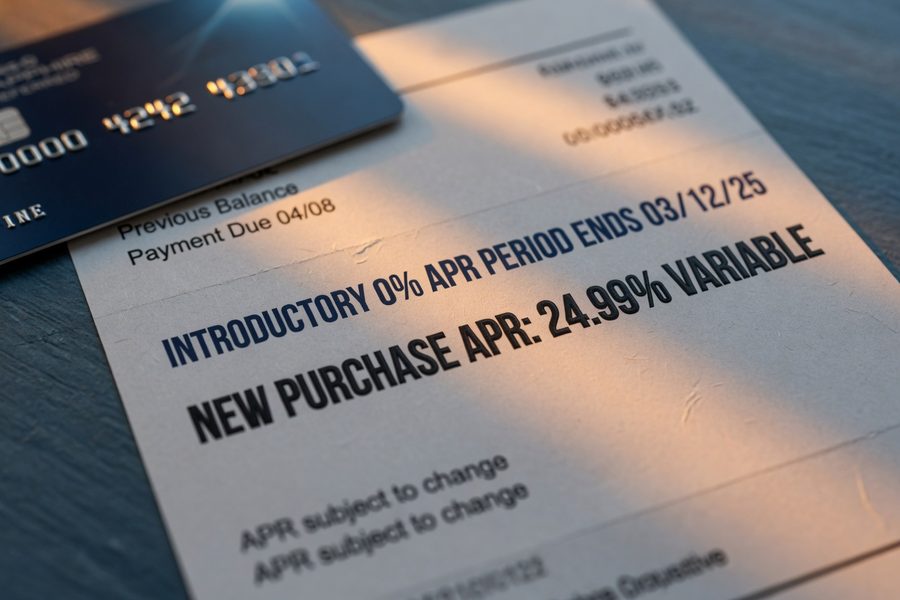
Here’s what underwriters know that most promotional materials skip: the 0% rate is a conditional offer, not a guarantee. Most issuers, including Citi, Chase, and Discover, apply the balance transfer fee (usually 3–5% of the transferred amount) upfront. On a $10,000 balance, that’s a $300–$500 charge before you’ve made a single payment. The Consumer Financial Protection Bureau (CFPB) explicitly warns that these promotional rates are temporary and that post-intro rates may rise significantly, a reality buried in the fine print.
The Post-Promo Rate Shock Problem
Most articles stop at the intro period. They don’t discuss what happens if your payoff slips by even one month. If you transfer $12,000 at 0% for 15 months and still owe $2,000 at month 16, that remaining balance immediately begins accruing interest at the standard purchase APR, which on many cards runs 26–29%. The math inverts fast. A borrower who was saving hundreds in interest can find themselves paying more over 24 months than they would have on a personal loan from the start.
Where this gets tricky: What I see repeatedly is readers underestimating the monthly payment required to clear the balance before the promo ends. On a $15,000 transfer with an 18-month promo, you need to pay roughly $833 per month, every month, no exceptions. Most people set up auto-pay for the minimum. That’s the wrong setting.
The National Credit Union Administration (NCUA) via mycreditunion.gov also flags the credit utilization risk: opening a new card and transferring a large balance can spike utilization on that new account, temporarily dragging down your score even as you’re paying down debt.
Personal Loans Force a Discipline That Balance Transfers Don’t
A personal loan for debt consolidation is structurally different in one critical way: the payment is fixed, the term is fixed, and there is no temptation variable. You borrow a lump sum, pay off the cards, and make equal monthly payments until the loan is gone.
At 12.28% APR for a well-qualified borrower, the current Bankrate average for a 700 FICO score and three-year term, a $19,333 personal loan (the Experian average balance) requires a monthly payment of roughly $642 and costs approximately $3,780 in total interest over 36 months. That same balance at a 24% credit card APR, paid at minimums, would take over a decade and cost several times that amount. The fixed amortization schedule is the feature, not just a technicality. As the Federal Trade Commission advises on debt consolidation, comparing total cost over the loan’s life, not just the interest rate, is the correct frame.
Balance Transfer vs. Personal Loan: The Break-Even Math
Run the numbers on a $10,000 balance to see where each option wins and loses.
| Scenario | Balance Transfer (0% / 15 mo.) | Personal Loan (12.28% / 36 mo.) |
|---|---|---|
| $10,000 balance | $300–$500 upfront fee (3–5%) | $0–$500 origination fee (0–5%) |
| Monthly payment to clear in promo | $667 / month for 15 months | $332 / month for 36 months |
| Total interest paid (on-track) | $0 (fee only: ~$400) | ~$1,955 |
| Total interest if promo missed by 6 months (28% post-promo APR) | ~$700+ on remaining $2,000 | $1,955 (unchanged) |
| Credit score requirement | 670+ FICO typically | 580+ FICO (fair credit) |
| Verdict | Wins if you can hit $667/mo. | Wins if cash flow is constrained |
The break-even point is clear: if you can maintain the higher monthly payment required to clear a $10,000 balance within the promo window, the balance transfer saves you roughly $1,500–$1,600 in interest over the personal loan. But if you fall even two months behind that pace, the post-promo rate shock erodes most of that advantage. On a $20,000 balance, the 3–5% transfer fee ($600–$1,000 upfront) starts competing directly with personal loan origination fees, which on some lenders like SoFi or LightStream are waived entirely.
What I see in practice: Readers with balances above $20,000 consistently do better with a personal loan. The required monthly payment on a 15-month BT promo becomes unsustainable for most household budgets, and the fee advantage shrinks. Below $10,000, the BT wins decisively for anyone with strong credit and a realistic payoff sprint.
For borrowers who have tried the balance transfer route before and found the behavioral demands too steep, particularly those who previously transferred a balance and rebuilt the original card balance within a year, that pattern is data worth taking seriously. A fixed-rate personal loan with a structured payoff plan is the more predictable tool for anyone who has tested and failed the balance transfer sprint before.
For readers who are also working to increase income while paying down debt, something that accelerates either option significantly, our coverage of jobs hiring at $19+ per hour in 2026 is worth a read alongside this one. An extra $300–$400 per month applied to principal changes the math on both tools substantially.
The Hidden Costs and Behavioral Risks Most Comparisons Ignore
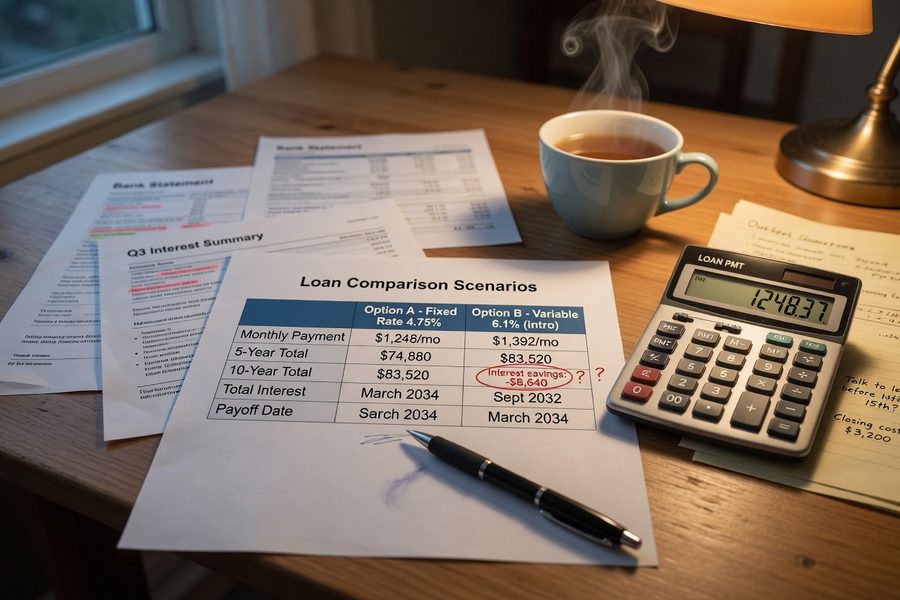
Rate comparisons miss the behavioral layer entirely, and that layer is where most debt payoff plans actually fail or succeed.
The Empty Card Problem
When you transfer a balance, your original credit card doesn’t disappear, it has a zero balance and available credit sitting there. Research on consumer behavior consistently shows that a significant share of balance transfer users accumulate new balances on those emptied cards within 6–12 months. You haven’t eliminated the debt problem; you’ve potentially doubled it. Closing the original card is the obvious fix, but that move reduces your total available credit, raises your overall utilization ratio, and can ding your FICO score by shortening your average account age. There is no clean answer here, keeping the card open preserves your score but tempts new spending; closing it protects your behavior but costs you credit score points in the short run.
What Happens to Your Credit Score
Both options affect your credit profile from Experian, Equifax, and TransUnion. A new balance transfer card adds a hard inquiry and a new account, temporarily lowering your average account age. Transferring a large balance maxes out utilization on the new card, which has its own ceiling effect. A personal loan, by contrast, adds an installment account to your mix, a different credit type that credit scoring models actually view favorably when you have primarily revolving accounts. The net score impact of a personal loan is often more neutral over six months than a balance transfer, though it requires the same hard inquiry upfront.
If you’re actively managing credit card debt and want to negotiate better terms on existing accounts before consolidating, our guide on stopping overpayment by negotiating your credit card APR can reduce your carrying cost immediately, regardless of which consolidation path you choose.
What clients often miss: The NCUA and CFPB both note this, but it bears repeating, applying for either a BT card or a personal loan while already carrying high utilization can result in denial or a higher rate than the advertised range. Check your score at AnnualCreditReport.com before applying, not after.
Borrowers whose credit has taken a hit will often find a personal loan more accessible than a 0% balance transfer card. When your score is in the 580–669 range, the best promotional offers from major issuers simply aren’t available, and a personal loan at a predictable fixed rate is the more reliable path to actually retiring the debt.
For readers whose debt situation connects to broader financial stress, our piece on how credit card debt is crushing low-income families frames the structural pressures that make high-rate revolving debt so persistent, context that changes how you think about urgency. And if you want professional help evaluating your options, our roundup of top credit counseling services covers nonprofit agencies that can review your situation at no cost.
Where This Recommendation Falls Short
The case for a balance transfer card rests on two assumptions that don’t hold for every borrower: excellent credit and genuinely consistent cash flow. If either is in question, the recommendation flips.
The most honest concession: a 0% balance transfer is the best mathematical tool for debt under $15,000 only for borrowers who qualify for the best offers, typically those with FICO scores above 700 and clean recent payment histories. Anyone in the 580–669 range either won’t qualify or will receive a card with a much shorter promo period and a higher post-intro rate, eliminating most of the advantage. For those borrowers, a personal loan isn’t the consolation prize. It is genuinely the better option.
The tradeoff on the personal loan side is real too. A 12.28% rate beats a 26% credit card APR, but it doesn’t beat 0%. If you have the credit profile and the cash flow discipline, the balance transfer is mathematically superior for smaller balances. Paying $1,955 in interest over three years on a $10,000 personal loan when you could have paid $400 in transfer fees and nothing in interest is a meaningful difference.
There is also the catch of debt size. On balances above $20,000, close to the Experian average, the BT fee of 3–5% starts to eat a significant chunk of any rate savings, origination fees on personal loans from lenders like Marcus by Goldman Sachs or LightStream are often waived or low, and the required monthly payment to clear a $20,000+ balance in 15–18 months is simply too high for most household budgets. The personal loan wins on larger balances not because the rate is better, but because the structural math becomes more realistic for actual human beings.
Finally: neither option works if the underlying spending behavior doesn’t change. A borrower who clears credit card balances through consolidation and then rebuilds those balances will end up worse off, with both the new loan or card payment and fresh revolving debt. This is an honest acknowledgment that financial products don’t fix financial habits. If overspending is the core issue, a structured strategy for prioritizing and negotiating with creditors may be a better first step before taking on any new credit product.
How We Sourced This
Rate data in this article comes from Bankrate’s personal loan rate tracker as of June 10, 2026, and from Bankrate’s balance transfer card database for mid-2026 promotional offers. Average balance figures draw from Experian’s 2025 personal loan usage statistics report. Regulatory guidance was sourced directly from the CFPB’s debt consolidation FAQ page and the FTC’s consumer debt resource, both verified. The NCUA’s mycreditunion.gov resource on debt consolidation options was reviewed for credit union-specific guidance. Arithmetic in the comparison table was independently calculated using the cited rate figures and standard amortization formulas; no derived numbers were estimated or rounded beyond two decimal places.
Frequently Asked Questions
Is a balance transfer or personal loan better for paying off $10,000 in credit card debt?
A balance transfer is better for $10,000 if you have a FICO score above 670 and can commit to paying roughly $667 per month for 15 months. At that pace, your total cost is only the transfer fee ($300–$500), versus roughly $1,955 in interest on a 36-month personal loan at 12.28% APR. If your cash flow is tighter or your credit is below 670, the personal loan is the more accessible and financially predictable choice.
What credit score do I need for a 0% balance transfer card?
Most issuers require a FICO score of 670 or higher for their best balance transfer offers, with the longest promo periods (18–21 months) typically reserved for scores above 720. Applicants in the 580–669 range are unlikely to qualify for 0% offers from major issuers like Chase or Citi and may receive limited promo periods with higher standard APRs.
What happens to my balance if I don’t pay it off before the balance transfer promo ends?
The remaining balance immediately begins accruing interest at the card’s standard purchase APR, which on many cards in 2026 runs between 26–29%. There is no grace period, the new rate applies from the day the promo expires. Borrowers who miss the payoff deadline by even one month can see their effective total cost rise sharply, particularly on balances above $2,000.
Do personal loans hurt your credit score?
Applying for a personal loan generates a hard inquiry, which typically lowers your score by 5 points or fewer. Over six to twelve months, on-time payments on an installment loan often improve your credit mix and payment history, producing a net positive effect for most borrowers. The short-term dip is real but minor compared to the long-term benefit of paying down high-utilization revolving debt.
Should I close my old credit cards after a balance transfer?
Closing them protects you from re-accumulating debt on empty cards, but it reduces your total available credit and may lower your score by raising overall utilization and shortening average account age. The better compromise for most borrowers is to keep the old card open with a zero balance, cut up the physical card, and remove it from any online payment profiles, preserving the credit history without the temptation.
Sources
- Consumer Financial Protection Bureau (CFPB), What do I need to know if I’m thinking about consolidating my credit card debt?
- Federal Trade Commission (FTC), How to Get Out of Debt
- mycreditunion.gov (NCUA), Debt Consolidation Options
- Experian, Personal Loan Usage Statistics (2025)
- Bankrate, Average Personal Loan Interest Rates (June 2026)
- Federal Reserve Bank of New York, Household Debt and Credit Report