Fact-checked by the MyFinancial101 editorial team
Buy now pay later services processed roughly $75 billion in U.S. transaction volume in 2024, yet the CFPB’s January 2025 report found that among borrowers aged 18 to 24, BNPL purchases made up 28% of their total unsecured consumer debt during months they actively borrowed. That single figure reframes the entire conversation. These are not four harmless installments on a sweater. For millions of users, BNPL has quietly become a primary debt vehicle, and most of them don’t realize it until a payment they forgot about hits an already-thin checking account.
The late-payment numbers confirm the pressure. The Federal Reserve reported that 24% of BNPL users made a late payment in 2024, up from 18% in 2023. A separate LendingTree 2025 survey put that figure even higher, at 41%. The range between those two estimates is itself meaningful: it shows how hard these obligations are to track when two or three plans run simultaneously. Meanwhile, the same CFPB report documented that 33% of BNPL borrowers took out loans from multiple providers at once in 2022, a behavior the industry has no mechanism to prevent, because lenders share no data with each other. The buy now pay later mistakes that cost people money most often aren’t dramatic. They’re structural: built into how these products work, not how recklessly people use them.
This guide breaks down the five most damaging errors BNPL users make, explains the specific financial mechanisms behind each one, and gives you a concrete framework for using these services without letting them quietly undermine your budget. By the end, you’ll know exactly what to check before you tap “confirm” at any BNPL checkout.
Key Takeaways
- 33% of BNPL borrowers held simultaneous loans across multiple providers in 2022, creating cash-flow collisions that are the direct cause of most late fees and overdraft charges.
- The Federal Reserve reported a 24% late-payment rate among BNPL users in 2024, up from 18% in 2023, a 33% increase in just one year.
- FICO announced its Score 10 BNPL model in February 2025, with rollout beginning fall 2025; Affirm began reporting to Experian in April 2025, making “BNPL doesn’t affect credit” outdated for millions of users.
- The CFPB issued credit-card-style dispute protections for BNPL in May 2024, then abandoned enforcement in May 2025, leaving consumers with weaker, inconsistent legal recourse depending on their provider.
- A Stanford GSB study of 10.6 million U.S. consumers found BNPL users incurred 4% more overdraft charges, 1.1% higher credit card interest, and 2.3% more credit card late charges than matched non-users.
- Among 18-to-24-year-olds, BNPL debt represented 28% of total unsecured consumer debt in active-borrowing months, per the CFPB’s January 2025 data.
In This Guide
- Why BNPL Feels Like Free Money
- Mistake 1: Running Multiple BNPL Loans Simultaneously
- Mistake 2: Treating “Interest-Free” as “Cost-Free”
- Mistake 3: Assuming BNPL Stays Off Your Credit Report
- Mistake 4: Financing Purchases That Expire Before the Loan Does
- Mistake 5: Expecting Credit Card Protections That No Longer Exist
- The Debt Domino Effect Nobody Warns You About
- Who BNPL Approves, and Who Gets Hurt Most
- How to Use BNPL Without It Using You
Why BNPL Feels Like Free Money
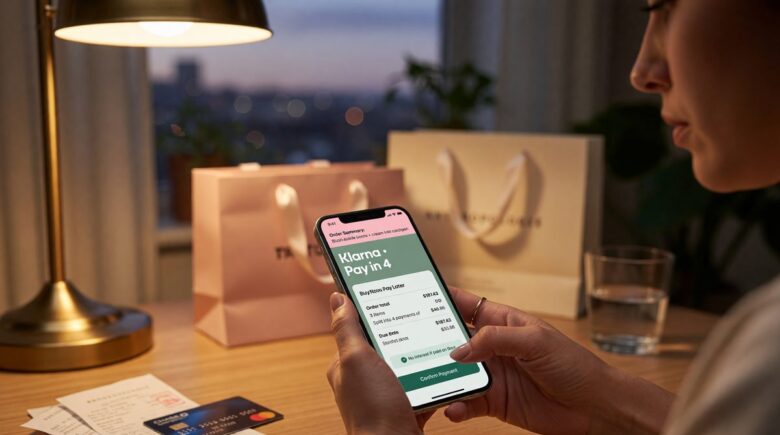
The psychology here is more precise than most people acknowledge. A $400 checkout total is a number that triggers hesitation. The same purchase reframed as four payments of $100, due two weeks apart, does not register as a $400 commitment, it registers as a $100 decision made four separate times. That cognitive split is the product’s core feature. It’s not a side effect of the design; it’s the design.
The Affordability Illusion
Nearly 60% of BNPL users have admitted using the service to finance a purchase they otherwise couldn’t have afforded, according to survey data cited by the California DFPI. That’s not a character flaw. It’s a predictable response to a checkout experience engineered to make spending feel smaller than it is. The framing shifts perceived cost, not actual cost, and that gap is where every mistake in this article originates.
The “pay-in-four” model also removes the single most effective natural brake on impulsive spending: the moment of full payment. Credit cards at least show a running balance. BNPL shows you the next installment only. Shoppers who would never put $400 on a card and carry it will approve a $400 BNPL plan without a second thought, because they’re only “spending” $100 today.
According to the California Department of Financial Protection and Innovation, one of the primary risks regulators have flagged with BNPL products is consumers getting overextended through easy credit, precisely because approval is instant and requires minimal underwriting compared to traditional loans.
Why Default Rates Don’t Tell the Whole Story
Defenders of BNPL often point to a legitimate fact: the product’s default rate was roughly 2% in 2022, far below the roughly 10% default rate on credit cards among the same user population. That’s a real number worth acknowledging. Disciplined users who would have paid full price anyway can genuinely benefit from splitting a necessary purchase at 0% interest. The product is not inherently predatory.
But default rates measure the most severe outcome. They don’t capture the 24% of users who paid late, the overdraft fees triggered by poorly timed installments, or the credit card interest accrued when a shopper borrows from Visa to cover an Afterpay payment. The real cost of BNPL mistakes shows up in adjacent accounts, and that’s exactly what the research confirms.
Mistake 1: Running Multiple BNPL Loans Simultaneously
Loan stacking happens invisibly. You use Klarna for a clothing order on Monday. A concert ticket through Afterpay on Thursday. An Affirm plan for a phone case the following week. Each approval takes seconds, each lender has no visibility into the others, and each generates its own two-week payment cycle. By the end of the month, three separate autopayments are hitting your checking account in the same week, none of which you planned for together.
The Scale of the Problem
The CFPB’s January 2025 report found that 33% of BNPL borrowers took out loans from multiple providers at once in 2022, and this figure almost certainly understates the current situation, since the market has grown significantly since then.
The mechanism behind the cash-flow collision is straightforward. A standard pay-in-four plan charges installment 1 at checkout, installment 2 two weeks later, installment 3 four weeks later, and installment 4 six weeks later. Stack two plans started a week apart, and you’ll have four payment dates from two different lenders clustered within a ten-day window. Add a third plan, and the overlap becomes almost certain.
Here’s what that looks like with real arithmetic. Suppose you have three simultaneous BNPL plans: a $200 Klarna order (four payments of $50), a $160 Afterpay order (four payments of $40), and a $120 Affirm order (four payments of $30). The total commitment is $480. But because the payment cycles overlap, you may face $120 due in a single week, $50 + $40 + $30, with no single lender alerting you to the combined exposure. Miss one payment on any plan and a late fee follows immediately.
Why Lenders Don’t Stop It
The Office of the Comptroller of the Currency flagged this directly in its 2023 guidance: BNPL lenders face “underwriting challenges” because they lack access to data on a borrower’s total BNPL obligations across providers. A lender approving your fifth simultaneous plan has no way to know it’s your fifth. This isn’t an oversight, it’s a structural feature of a market with no shared credit reporting infrastructure for short-term installment products.
Mistake 2: Treating “Interest-Free” as “Cost-Free”
The standard pay-in-four BNPL plan carries 0% interest if every payment lands on time. That’s accurate. It’s also incomplete, because the fee structure surrounding those payments can be substantial, and because “interest-free” only applies to one product category within a broader BNPL ecosystem that includes longer-term plans with rates that rival credit cards.
Late Fees and the Cascade Effect
Afterpay charges a late fee of up to $8 per missed installment, capped at 25% of the order value. On a $40 order, that cap kicks in quickly. Klarna’s fee structure varies by plan and state but follows a similar pattern. One missed payment doesn’t just generate a fee, it often triggers a hold on your account, preventing new purchases until the balance is cleared, which pushes some users toward the next mistake: paying off the BNPL balance with a credit card.
The broader financial damage extends well beyond the BNPL account itself. A Stanford Graduate School of Business study analyzing 10.6 million U.S. consumers found that BNPL users incurred 4% more overdraft charges, 1.1% higher credit card interest, and 2.3% more credit card late charges than matched non-users. These are not people who were already in worse financial shape before using BNPL, the study controlled for that. The product itself creates downstream costs in adjacent accounts.
Longer-term BNPL products, plans stretching 6 to 36 months, often carry deferred interest clauses. If you miss a payment or don’t pay the full balance by the promotional period’s end, interest accrues retroactively from the original purchase date at rates sometimes exceeding 30% APR. These products sit in the same app as the standard pay-in-four plan, but they are fundamentally different financial instruments.
The Grocery and Food Delivery Problem
22% of BNPL users used the service for food delivery in 2025, and BNPL use for groceries has grown steadily since inflation pushed food costs higher. This is the category where “interest-free” is most misleading: you’re paying installments over six weeks for a meal you ate in thirty minutes. If a late fee applies, the effective cost of that delivery order has just increased by a meaningful percentage. No one thinks of a burrito as a financed asset, but that’s exactly what it becomes.
Mistake 3: Assuming BNPL Stays Off Your Credit Report
Until recently, most BNPL plans operated outside the credit reporting system. Approvals required no hard inquiry. On-time payments went unrecorded. Missed payments, in most cases, didn’t appear on a credit file. That arrangement is ending, and the timeline is more advanced than most shoppers realize.
The Rule Change That Affects Every Active BNPL User
FICO announced in February 2025 that it had developed a new scoring model, FICO Score 10 BNPL, specifically designed to incorporate installment plan data from buy now pay later providers. Rollout began in fall 2025. Before that announcement was even finalized, Affirm began reporting account data to Experian in April 2025. The assumption that BNPL activity is invisible to lenders is now factually wrong for any Affirm user, and increasingly wrong across the industry.
40% of BNPL users said the fact that their loans did not affect their credit score was a top reason they used the service, yet 45% said they won’t change their borrowing habits even after learning that this is no longer the case, according to survey data cited by the CFPB.
The asymmetry in this new system is what makes it most dangerous. Consistent on-time BNPL payments produce a modest positive signal. A single missed payment, now reportable, carries the same negative weight as a missed payment on any other installment loan, and a derogatory mark can remain on a credit report for up to seven years. If you’re planning to apply for a mortgage or auto loan in that window, a forgotten $40 Afterpay installment from a 2025 clothing order could affect your rate.
The Honest Concession
There is one scenario where BNPL credit reporting is genuinely useful: consumers with thin or no credit files who need to build a history. If a provider reports to all three bureaus and you pay on time every cycle, BNPL can function as a credit-building tool with lower barriers to entry than a secured credit card. The catch is that not all providers report, reporting practices vary by account type, and the upside is modest compared to the downside of a derogatory mark. Use this path deliberately, not accidentally. If you’re building credit strategically, our guide to managing credit card debt and creditor relationships covers complementary strategies worth considering alongside BNPL.
Mistake 4: Financing Purchases That Expire Before the Loan Does
There is a simple rule of thumb that almost no BNPL article states directly: the useful life of what you buy should exceed the length of the repayment period. A $600 laptop financed over six weeks makes some sense, you’ll use it for years. A $45 food delivery order financed over six weeks does not. You are still paying for something that no longer exists.
The Categories That Create the Most Regret
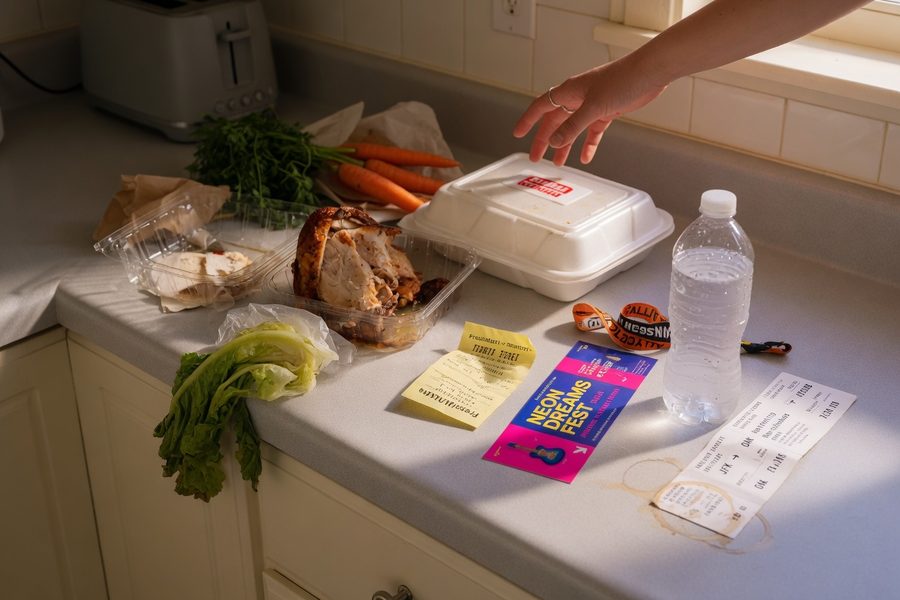
Groceries, takeout, concert tickets, festival passes, weekend travel, these are the purchases most likely to generate what financial counselors call “payment regret”: the experience of still making installment payments on something that produced no lasting value and may not even be remembered clearly. The emotional charge of the original purchase is gone; only the obligation remains.
This matters most for younger borrowers. The CFPB’s January 2025 data showed that among 18-to-24-year-olds, BNPL represented 28% of their total unsecured consumer debt in months they actively borrowed. At that age, experiential spending, concerts, travel, food, dominates discretionary budgets, and BNPL is increasingly embedded at the checkout for all of it. The math is unforgiving: three overlapping plans for experiences that are already over create cash-flow pressure with no offsetting asset to show for it.
If you’re stretching your budget to cover experiences rather than necessities, there are often cheaper alternatives. Our roundup of affordable dining ideas that still feel special shows how to cut costs without cutting the experience, no installment plan required.
Mistake 5: Expecting Credit Card Protections That No Longer Exist
This is the most important regulatory update in this article, and the one most likely to blindside shoppers who read older coverage of BNPL consumer protections.
The Rule That Came and Went
In May 2024, the Consumer Financial Protection Bureau issued interpretive guidance requiring BNPL providers to extend credit-card-style dispute rights to consumers: the right to pause payment while a dispute was resolved, the right to request refunds for returned items, and the right to receive periodic statements. By May 2025, the Trump administration’s CFPB had abandoned enforcement of that guidance entirely. The protections exist on paper in some providers’ terms of service. They are not federally enforceable.
Credit cards carry chargeback rights under the Fair Credit Billing Act, a federal statute. If a $300 item arrives damaged and the merchant refuses to cooperate, a credit card holder can dispute the charge, withhold payment, and force the card issuer to investigate. A BNPL user in the same situation has no equivalent federal right. Their recourse depends entirely on the individual provider’s voluntary policies, which vary widely and are subject to change without notice.
The Practical Failure Scenario
14% of BNPL buyers have already experienced problems returning items and getting a full refund, according to survey data from multiple consumer research sources. The failure mode is specific: a shopper buys a $250 item through a BNPL plan, the item arrives defective, the merchant offers only store credit, and the BNPL provider continues auto-charging installments on a purchase the shopper considers unresolved. Without federal dispute rights, the shopper’s only option is to escalate through the provider’s internal process, which may take longer than the remaining payment schedule. Paying off the balance to stop the installments, then pursuing a refund, is exactly how you end up having paid in full for something you returned.
For high-ticket purchases where quality, delivery, or authenticity could be disputed, electronics, furniture, luxury goods, a credit card with chargeback rights is a materially safer payment method than BNPL. The interest-free benefit of BNPL is worth less than it appears if you lose dispute protection on a $500 purchase.
The Debt Domino Effect Nobody Warns You About
One specific failure mode appears in financial counseling sessions repeatedly but almost never makes it into consumer-facing BNPL coverage: paying off a BNPL balance with a credit card. It sounds like a reasonable workaround, you clear the installment plan, stop the autopayments, avoid the late fee. What you’ve actually done is convert a 0% installment obligation into revolving credit card debt at whatever your card’s APR happens to be, often 20% to 29% as of early 2026.
The arithmetic is straightforward. A $400 BNPL balance paid off with a credit card, then carried for six months at 24% APR, generates roughly $48 in interest. The “interest-free” plan just cost you $48. Carry it for a year and the cost approaches $96. This is the debt domino: one missed BNPL payment triggers a fee, the fee triggers a credit card payment to clear the BNPL account, and the card balance grows, accruing interest that the original BNPL plan was explicitly designed to avoid. If you’re already managing revolving debt, our guide on how credit card debt compounds pressure for stretched households explains the underlying mechanics in detail.
Before using a credit card to cover a BNPL installment, calculate the interest cost of carrying that card balance for 90 days at your current APR. If that number exceeds what the BNPL late fee would have been, contact the BNPL provider directly and request a payment extension instead, many offer one without a fee for first-time requests.
Who BNPL Approves, and Who Gets Hurt Most
The CFPB’s data on BNPL originations reveals a structural mismatch that deserves direct attention: borrowers with subprime and deep-subprime credit scores made up 61% of BNPL originations in the period studied. These are the consumers who face the highest overdraft fees, the least financial cushion to absorb a missed payment, and the greatest credit-score damage from a new derogatory mark.
BNPL is not exclusively a product for financially distressed borrowers. But the approval process, instant, requiring minimal underwriting, requiring no hard inquiry, is disproportionately attractive to people who can’t qualify for traditional credit. That population also has the least margin for the cash-flow collisions that loan stacking creates. The product reaches most aggressively into the segment of the market where mistakes are most costly. That’s not an accusation; it’s the market structure, and users in that segment should weigh the risks with eyes open. If building financial stability is the goal, exploring how to start building wealth from zero provides a longer-term framework that BNPL plans don’t support on their own.
How to Use BNPL Without It Using You
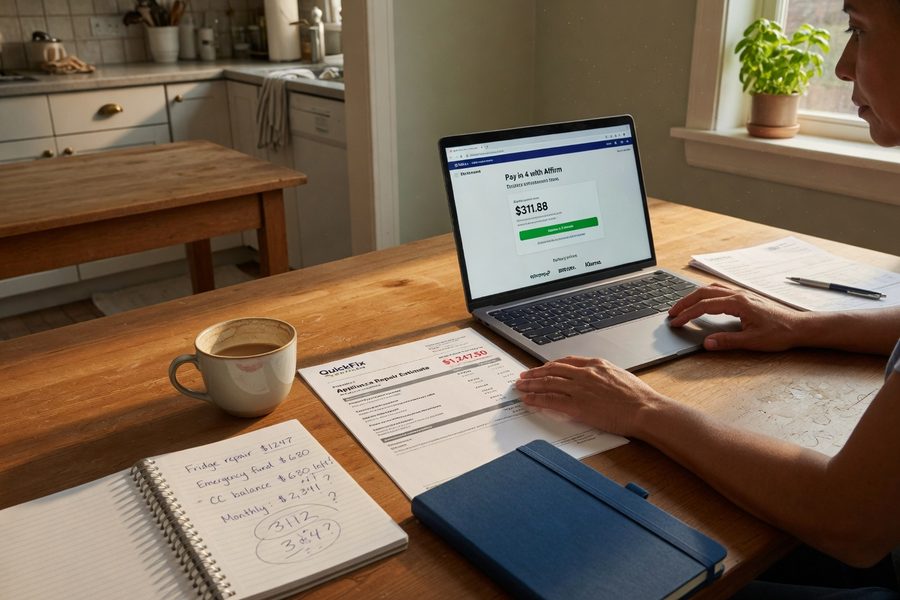
BNPL is not a product to avoid categorically. For a planned, necessary, high-ticket purchase, a laptop, a medical device, a home appliance, a single pay-in-four plan with a provider you’ve vetted is a legitimate 0% interest bridge. The discipline required is specific and manageable. The framework below turns that discipline into a decision you can make in two minutes at any checkout.
A Pre-Approval Decision Filter
Before confirming any BNPL transaction, run through three questions. First: Is this a planned purchase, or did the checkout offer create the desire to buy? Second: Does the item’s useful life exceed the full repayment window? Third: If you pull up your calendar right now and mark every upcoming installment from every active BNPL plan you currently hold, do you have the cash in your checking account to cover all of them without overdrafting?
If any answer is “no” or “I’m not sure,” pause. The BNPL offer will still be there tomorrow. The financial damage from stacking one more plan on top of plans you’ve already lost track of may not be reversible quickly. 19% of users admit they’ve lost track of upcoming BNPL payments entirely, and only 47% plan their payments in advance. A single row in a spreadsheet, provider, purchase amount, payment dates, amounts due, takes three minutes to create and eliminates most of the loan-stacking problem entirely.
When BNPL Is the Right Tool
There are specific conditions under which BNPL earns its place in a budget. The purchase is necessary, not aspirational. The amount would otherwise come from an emergency fund you’d prefer not to drain. You have no other 0% financing option. You have exactly one active BNPL plan at the time of checkout. And you’ve confirmed that the provider reports to credit bureaus only if you want that credit-building feature, and that you understand the consequences if it does report and you miss a payment.
Outside those conditions, a debit card or a credit card paid in full that month is almost always the financially superior choice. If that’s not possible because the purchase genuinely requires financing, that’s the signal to reconsider the purchase itself, or to look at whether negotiating a lower APR on your existing credit card creates a better financing path than a new BNPL obligation.
If budget pressure is driving BNPL use for everyday expenses, increasing income, even temporarily, can eliminate the need entirely. Roles paying $19 or more per hour are actively hiring in early 2026 across multiple sectors, including positions that require no prior experience.
Real-World Example: Three Plans, One Breaking Point
Consider an illustrative example: a 26-year-old retail worker earning $3,100 per month after taxes opens a Klarna plan in early January for a $240 winter coat (four payments of $60, due every two weeks). Two weeks later, she uses Afterpay for $160 in skincare products (four payments of $40). The following week, she approves an Affirm plan for a $180 pair of shoes (four payments of $45). No single plan feels unmanageable. Combined, she has committed $580 in installment payments over six weeks, from a monthly discretionary budget she estimated at roughly $400.
By week four, she has three payment dates in a single seven-day window: $60 to Klarna, $40 to Afterpay, and $45 to Affirm, $145 total. Her checking account holds $210 at that point, but rent autopays on the same day as the Klarna charge. The account goes negative by $38. Her bank charges a $35 overdraft fee. Afterpay’s autopayment fails, triggering an $8 late fee. She pays the Afterpay balance using her credit card to stop further late fees, adding $48 to a card she was already carrying a balance on at 22% APR.
Before this scenario, her financial picture was tight but manageable. After six weeks of three overlapping BNPL plans, she has paid $43 in fees she didn’t anticipate, her credit card balance has grown by $48, and she’s carrying interest on what began as a 0% installment plan. The coat, the skincare, and the shoes are worth approximately what she paid for them. The financial damage is not from any single bad decision, it’s from the structural overlap of three individually reasonable-seeming ones.
Had she used one plan at a time, waited until the first was paid in full before opening the second, and checked her full payment calendar before each approval, the coat, the skincare, and the shoes would have cost exactly what the price tags said. The difference in total out-of-pocket cost between the two approaches: $43 in fees plus ongoing credit card interest, avoidable entirely with a three-minute calendar check.
Your Action Plan
-
Audit every active BNPL plan you currently hold
Log into every BNPL app you have, Klarna, Afterpay, Affirm, Zip, PayPal Pay Later, and any others, and list every open plan, its remaining balance, and every upcoming payment date. If you discover overlapping payment dates in the same week, you have identified your most immediate cash-flow risk. Address it before opening any new plans.
-
Create a single payment calendar
Add every upcoming BNPL installment to a calendar or spreadsheet alongside your rent, utilities, and any other fixed autopayments. This takes ten minutes and prevents the single most common cause of BNPL late fees: forgetting a payment was scheduled. Update it every time you open a new plan.
-
Set a one-plan-at-a-time rule
Commit to holding no more than one active BNPL plan at any given time until you’ve verified that your cash flow can comfortably handle multiple simultaneous obligations. Most people who’ve been burned by loan stacking describe the same experience: each individual plan seemed fine. It was the overlap that created the problem.
-
Apply the useful-life test before every checkout
Ask yourself whether the item you’re financing will still be in your possession, and in use, after the final installment clears. If the answer is no (food, event tickets, travel), use a debit card instead. The purchase is fine; the financing instrument is wrong for something perishable.
-
Know which providers now report to credit bureaus
Check each provider’s current reporting policy before approving a plan. Affirm began reporting to Experian in April 2025. Other providers are following. If a provider reports, missed payments will appear on your credit file and can remain there for up to seven years. This is particularly relevant if you are planning a major credit application, mortgage, auto loan, personal loan, in the next 12 to 24 months.
-
Never pay off a BNPL balance with a credit card you can’t pay in full that month
If you’re considering using a credit card to cover a BNPL payment, first calculate the interest cost of carrying that card balance at your current APR for 60 to 90 days. If that cost exceeds the BNPL late fee, contact the BNPL provider and request an extension instead. Converting a 0% installment plan into revolving credit card debt is one of the most reliably expensive BNPL mistakes there is.
-
For high-ticket or dispute-prone purchases, use a credit card
Electronics, furniture, high-value clothing, and any item where quality or delivery could be contested belong on a credit card with federal chargeback rights, not a BNPL plan. The May 2025 rollback of CFPB enforcement means BNPL dispute protections are inconsistent across providers and unenforceable at the federal level. For purchases where you might need to dispute a charge, the zero-interest benefit of BNPL does not outweigh the loss of legal protection.
Frequently Asked Questions
Do all BNPL plans now affect my credit score?
No, but the landscape changed significantly in 2025. Affirm began reporting to Experian in April 2025, and FICO launched its Score 10 BNPL model with fall 2025 rollout. Not every provider reports to every bureau, and reporting practices vary by product type within the same provider. Check each lender’s current policy directly before opening a plan if your credit score is a concern.
What’s the safest number of BNPL plans to hold at one time?
One, unless you’ve verified your cash flow can handle multiple simultaneous payment schedules without overdraft risk. The loan-stacking problem is structural: lenders share no data, payment cycles from different providers overlap unpredictably, and 19% of users have already admitted to losing track of upcoming payments. One plan at a time eliminates the overlap problem entirely.
Can a missed BNPL payment really stay on my credit report for seven years?
Yes, if the provider reports to credit bureaus. Under standard credit reporting rules, derogatory marks, including missed or late payments on installment loans, remain on a credit file for seven years from the original delinquency date. For a provider like Affirm that now reports to Experian, a missed installment carries the same weight as a missed car payment. The timeline is not unique to BNPL; it’s the standard rule applied to a new category of debt.
Is BNPL ever actually the right financial choice?
Yes, in specific circumstances. A single, planned, necessary purchase with a clear repayment schedule, no overlapping BNPL obligations, and a provider offering genuine 0% interest on the standard pay-in-four plan is a legitimate financing tool. Splitting a $600 appliance into four payments of $150 over six weeks, when you have $150 available per cycle, costs you nothing extra and preserves cash flow. The mistake isn’t using BNPL, it’s using it habitually, for multiple simultaneous purchases, without tracking the combined payment load.
What happened to the CFPB’s BNPL consumer protection rules?
The CFPB issued interpretive guidance in May 2024 requiring BNPL providers to offer credit-card-style dispute rights, refund protections, and periodic billing statements. The Trump administration’s CFPB abandoned enforcement of that guidance in May 2025. Protections that some providers adopted voluntarily in response to the 2024 rule may remain in their terms of service, but they are no longer federally enforceable. Consumers should read each provider’s current terms before relying on any specific dispute right.
What should I do if I’m already overwhelmed by multiple BNPL obligations?
Start with a full audit: list every open plan, balance, and payment date. Then stop opening new plans immediately. Prioritize paying off plans with the smallest remaining balances first to reduce the number of active payment cycles. If overlapping payments are causing overdraft fees, contact each lender directly, many will extend a payment date once without a fee for accounts in good standing. For broader debt pressure, connecting with a nonprofit credit counselor is worth considering; our list of top credit counseling services includes free and low-cost options.
Does using BNPL hurt my chances of getting a mortgage?
Potentially, yes, and more so now than before 2025. With FICO Score 10 BNPL incorporating installment data and Affirm reporting to Experian, any missed BNPL payment can appear as a derogatory mark on the report a mortgage underwriter reviews. Even if you’ve never missed a payment, high utilization across multiple active BNPL plans may be visible to lenders who pull a full credit file. If you’re within 12 to 24 months of a mortgage application, close out existing BNPL plans and hold off on new ones.
Are BNPL apps doing anything to prevent loan stacking?
Very little, as of early 2026. The core structural problem, that no shared credit reporting infrastructure exists for short-term BNPL products across providers, has not been resolved. The OCC flagged this in its 2023 bulletin as an underwriting challenge, and it remains unresolved. Some providers have introduced spending limits or require a minimum account age before approving new plans, but there is no cross-provider visibility. The responsibility for tracking total BNPL exposure falls entirely on the consumer.
Can BNPL be a useful tool for building credit if I have no credit history?
Potentially, but only under specific conditions: the provider must report to at least one major credit bureau, you must pay every installment on time, and you must understand that a single missed payment will damage the score you’re trying to build. For consumers with truly thin files, a secured credit card or credit-builder loan may offer a more predictable and better-documented path to credit history than BNPL, where reporting practices vary and are subject to change.
How is BNPL different from a regular personal loan?
The key differences are approval speed, underwriting depth, and repayment structure. A personal loan involves a credit check, a defined interest rate, a fixed monthly payment, and a lender that reports consistently to all three bureaus. A standard pay-in-four BNPL plan involves a soft inquiry at most, no stated interest rate, biweekly installments, and inconsistent (or no) bureau reporting. BNPL is faster and easier to obtain, which is precisely why it creates problems that personal loans, with their friction and formality, tend to prevent.
Sources
- Consumer Financial Protection Bureau, Buy Now, Pay Later Report (January 2025)
- Consumer Financial Protection Bureau, BNPL Compliance Resources
- Office of the Comptroller of the Currency, OCC Bulletin 2023-37: Buy Now, Pay Later
- California Department of Financial Protection and Innovation, Buy Now, Pay Later: What Consumers Need to Know
- FICO, FICO Announces Score 10 BNPL Model (February 2025)
- Consumer Financial Protection Bureau, What Is the Fair Credit Billing Act?