Fact-checked by the MyFinancial101 editorial team
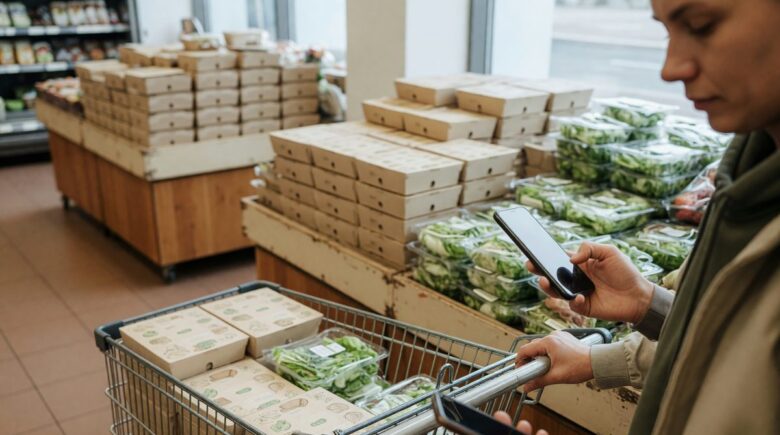
Over half of U.S. grocery shoppers track a rigid weekly meal plan, and then watch their food spending climb anyway. The USDA’s own food plans point to a moderate-cost family of four spending $1,300–$1,500 a month, yet households who meticulously plan meals report totals that bump right up against that ceiling or break through it. Meal planning overspending isn’t a contradiction; it’s the predictable outcome of treating a kitchen binder like a budget tool without questioning which ingredients actually earn their keep. A 2025 Plan to Eat survey of more than 2,500 users found the average monthly food cost per person before adopting a pantry-first planning method was $199, and that figure is already higher than what many thrifty non-planners spend by shopping sales cycles and freezer odds.
The pattern hides in plain sight. Someone drafts five polished dinner recipes for the week, buys everything those recipes demand, and winds up with a $240 grocery receipt for two people. Two meals get swapped because a kid’s soccer practice ran late, a third relied on fresh basil that went black by Thursday, and the “budget-friendly” coconut curry required a $7 jar of red curry paste now destined for the back of the fridge until next spring. The promise was savings, the reality is a cart filled with single-use ingredients, pricey substitutes for what was already in the pantry, and an unplanned Friday pizza order because nobody had the energy to execute the fourth recipe. What looked like discipline on paper turned into a leaky system that rewarded complexity over cost control.
After you finish this piece, you’ll be able to spot the exact moments when a meal plan inflates your grocery bill, build a shopping routine that prioritizes what you already own and what’s actually on sale, and keep more of your grocery money without spending Sunday afternoons hunched over recipe blogs. The fix isn’t harder planning. It’s smarter, looser systems that treat your kitchen like a working inventory, not a daily performance.
Key Takeaways
- Rigid recipe-first meal planners spend an average of $199 per person monthly, $47 more than those who follow pantry-driven, flexible routines that shop sales and use leftovers.
- 62% of all grocery revenue comes from impulse purchases; a fixed list does nothing to stop them when the list itself greenlights premium ingredients you wouldn’t normally buy.
- Households that plan around 5–7 new SKUs per week, specialty condiments, single-use produce, exotic grains, regularly overshoot their grocery budgets by $30–$60 in one trip.
- Food waste drains $728 per person per year; meal plans that ignore what’s already in the fridge accelerate spoilage because they prioritize fresh recipes over using up odds and ends.
- Hungry shoppers spend 64% more than non-hungry shoppers, yet rigid planners often hit the store at the worst time because the plan dictates the trip, not the pantry.
- Families that switch to an “autopilot” system, shopping 2–3 times a week with a $25–$35 per-trip cap and no fixed menu, report monthly food savings of $80–$150 while cutting waste by a third.
In This Guide
- The Hidden Costs Behind Rigid Meal Plans
- Specialty Ingredients: The SKU Explosion That Busts Budgets
- Why Rigid Lists Kill Your Ability to Shop Sales and Seasons
- The Time Tax of Planning
- Psychological Triggers That Fill the Cart Anyway
- Autopilot Shopping: What Happens When You Ditch the Binder
- The Missing Piece: Tracking Post-Shopping Expenses
- Apps and Systems That Actually Reduce Overspending
The Hidden Costs Behind Rigid Meal Plans
Most personal finance advice treats a meal plan like a spending firewall: pick seven dinners, buy only those ingredients, lock the cart. The data tells a messier story. Among 2,568 surveyed users of planning tools, the baseline monthly per-person grocery spend sat at $199, a number that dropped to $152 only after the planning method actively encouraged using items already on hand. That $47 gap isn’t small; it’s the difference between a system that starts with a blank recipe page and one that starts with the lentils, chicken thighs, and half a cabbage already in the kitchen.
Rigid plans impose a hidden overhead: every meal choice pulls an entirely new set of ingredients through the door, ignoring what’s in the freezer and treating the pantry as a museum of forgotten staples. You might own four types of rice and two jars of marinara, but Tuesday’s recipe calls for farro and pesto, so off you go. Over a month, the SKU count inside a planner’s refrigerator balloons, and those new arrivals often spoil before they earn a second appearance. A family that introduces 6–7 unfamiliar items per week, think fresh herbs, specialty cheeses, and niche condiments, easily piles an extra $25–$45 onto the weekly bill just from partial-use waste. That’s real money, and it’s baked into the very structure of a recipe-first approach.
The average U.S. household wastes $728 per person each year on food that spoils, roughly 20% of the groceries they buy, according to EPA data cited by multiple consumer research groups.
Contrast that with a shopper who builds meals backward: the Tuesday special at the meat counter becomes the protein for the next two nights, the bag of wilting spinach gets folded into tonight’s pasta, and a clearance-priced block of feta turns into salad toppers all week. This person isn’t flying blind; they’re working with tighter feedback loops. Research from the University of Arizona found that households that shop more frequently with smaller basket sizes generate 33% less food waste, partly because they’re constantly calibrating to what’s about to go bad. Meal plans, by design, break that calibration.
None of this means planning is worthless. It means that a plan built from recipes rather than inventory is an expense engine disguised as discipline. The first step toward lowering your grocery bill is accepting that “sticking to the list” doesn’t guarantee a cheaper trip. It only guarantees you bought everything the list demanded, whether or not those items made financial sense in the context of your actual kitchen.
The parallel to personal finance is direct. A Chase or Wells Fargo credit card statement reviewed at month’s end often reveals grocery charges that dwarf what the household thought they spent. Without a post-shopping tracking habit, the number stays invisible, and the behavior that caused it repeats.
The Permission Structure of a Budgeted Cart
When a meal plan gets written down, it gains the sheen of a financial decision. The thinking goes: “This is the plan, therefore these purchases are justified.” But a $9 jar of tahini for one recipe that uses two tablespoons is not a budget win; it’s a long-term storage problem. Meal planning overspending often takes the form of dozens of small, justified line items that individually seem fine and collectively torch the grocery line.
Behavioral economists call this “mental accounting,” and meal planners are particularly vulnerable to it. Labeling a shopping list as “the budget” creates a separate mental account that feels pre-approved, so price sensitivity drops. A planner will pay $4.99 for fresh thyme without blinking because the recipe demands it, while an ad-hoc shopper might see that same $4.99 thyme and grab a $0.89 bundle of green onions to finish a stir-fry instead. The rigid structure actually reduces the number of price comparisons that happen in the aisle.
SoFi’s household spending research notes that grocery line items are among the most underestimated budget categories, second only to dining out. Households that review their discretionary spending through a tool like Mint or a bank’s own app, whether that’s a Bank of America dashboard or a credit union’s mobile portal, are often surprised to find food costs running 20–30% above their self-reported estimate. The plan felt controlled; the statement told a different story.
When the Plan Meets Real Life, and Breaks
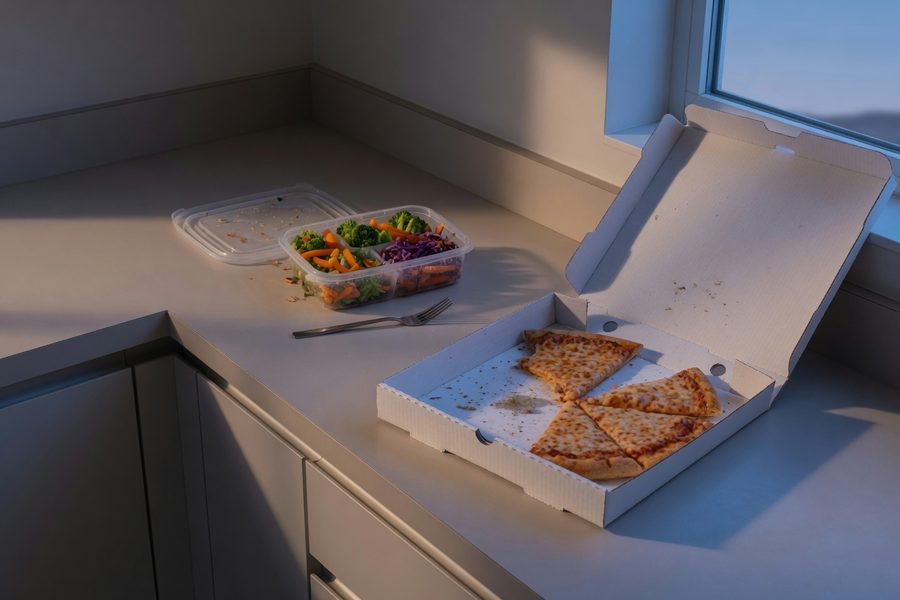
Life doesn’t cooperate with a weekly dinner script. Late meetings, surprise homework meltdowns, and an impromptu invitation to a neighbor’s barbecue all shred the carefully plotted grid. What happens next is where the real money disappears: the Wednesday lasagna ingredients sit while the family defaults to takeout, and by Friday, the ricotta has turned. Now you’ve paid for both the unused groceries and the $38 Thai delivery.
Schedule volatility is the norm for most households with kids, and the most common response, shifting the meal to a later day, simply pushes the waste problem down the line. By Sunday, the plan’s leftover buffer is gone, and you’re left with a fridge full of slimy produce and a credit card statement that doesn’t match the “budgeted” vision.
Specialty Ingredients: The SKU Explosion That Busts Budgets
The dollar damage of a recipe-first plan hides in the ingredients that only show up once. A single “exciting” dinner, say, Korean bulgogi bowls on a Wednesday, can introduce gochujang, sesame oil, rice vinegar, and nashi pears to a kitchen that previously owned none of those items. Even if the gochujang gets used again in six months, the pears aren’t surviving the week, and the sesame oil will join six other half-bottles of condiments. That one meal might trigger $18 in totally new purchases, none of which were needed to feed the household before the plan existed.
Tracking new SKU introductions is something almost no budgeting article mentions, yet it’s the clearest predictor of meal planning overspending. When a family’s weekly grocery haul includes 5–7 items they’ve never bought before, or haven’t purchased in months, the odds that those items get fully consumed before spoiling drop sharply. A running log from a Reddit budgeting forum showed one couple buying 27 new ingredients across a four-week meal plan experiment; 19 of them were partially or fully wasted.
Recipe bloggers have an incentive to make dishes look unique: more distinct ingredients mean more reader comments and shares. A dish that calls for four pantry staples plus one specialty item quietly turns into a $23 grocery add-on, while a simpler version using what’s already in the house costs $3–$5.
Staple-based cooking flips the math. A household that rotates through chicken, ground beef, rice, pasta, canned tomatoes, onions, carrots, and frozen broccoli will rarely add more than one or two new items per week, those are typically replacements for basics that ran out. The average ingredient cost per meal stays low because those core items are bought in larger quantities at per-unit discounts, and nothing spoils because everything turns over. Winter produce like cabbage, sweet potatoes, and carrots costs pennies per serving and lasts for weeks, yet a meal plan chasing novelty will skip them for out-of-season asparagus at $3.99 a bunch.
A Real Look at One Week’s Unused Inventory
Picture a Sunday meal plan for two adults: Monday’s shrimp tacos require chipotle peppers in adobo, cotija cheese, and a mango. Tuesday’s miso salmon demands white miso paste and fresh ginger. Wednesday’s mushroom risotto pulls in arborio rice, dried porcini, and fresh thyme. By Saturday, the chipotles are half-gone in the fridge, the mango is brown, the miso paste cost $8 and used two tablespoons, and the fresh thyme is a dried twig. That’s roughly $14 of food headed for the trash, plus the $6 mango that never made it past Thursday.
| Ingredient | Cost | Status by Saturday |
|---|---|---|
| Chipotle in adobo | $3.29 | Half used, remainder refrigerated |
| Cotija cheese | $4.49 | Moldy, most wasted |
| Fresh mango | $2.50 | Overripe, discarded |
| White miso paste | $7.99 | 2 Tbsp used, jar stored |
| Fresh thyme bundle | $2.49 | Dried out, discarded |
Over a year, that one week’s pattern repeated even modestly, say 30 weeks where 2–3 specialty ingredients go unused per plan, adds up to $180–$300 in direct food waste, plus the opportunity cost of those dollars. And that doesn’t count the extra gas, time, and impulse snacks that tag along on the “just grabbing one missing ingredient” trip.
How Repeat Staples Build Wealth in the Kitchen
Autopilot households that default to five or six rotating proteins and a dozen staple vegetables rarely see this kind of bleed. Their grocery carts are boring, and that’s the point. A coupon stacker buying the same peanut butter, pasta, and canned tomatoes every cycle builds a price history and knows when a deal is actually good. When a rigid planner sees “gochujang, $5.99,” there’s no reference point; it just goes in the cart because the recipe commands it. Familiarity isn’t glamorous, but it’s the cheapest strategy in the store.
Think of it the way a FICO Score works: consistency over time is what actually builds the number. Purchasing the same core staples week after week builds your instinct for true value in the same way that responsible credit use, low credit utilization, on-time payments, builds a borrower’s creditworthiness. The Federal Reserve’s research on household balance sheets consistently shows that food spending is one of the three largest variable expenses. Bringing it under control with repeatable habits, rather than aspirational weekly scripts, is what moves the needle on long-term financial health.
Why Rigid Lists Kill Your Ability to Shop Sales and Seasons
Grocery stores run on loss leaders, manager’s specials, and seasonal gluts, and a fixed meal plan ignores all three. If Sunday’s plan says “pork chops” but chicken thighs are $1.19/lb on a flash sale, the planner buys pork chops anyway. That’s not just a missed discount; it’s active overspending. A shopper who walks in with a looser framework, “we need a protein, two vegetables, and a starch,” can walk out with three pounds of chicken thighs for $3.57 instead of $9.00 worth of pork, and the meal pivots effortlessly.
Seasonal produce pricing follows the same dynamic. Strawberries in January cost $4.99 per pound; in June, they’re $1.50 or less. A plan set in stone on Saturday doesn’t know it’s January, and it certainly doesn’t care that asparagus is double its normal price due to a cold snap. Planners buy the overpriced produce because “it’s on the list,” while flexible shoppers build the meal around the $0.99 cauliflower that’s suddenly everywhere.
Capital One Shopping research found that 62% of all grocery sales revenue is generated by impulse purchases. A rigid list does nothing to block these, if the list itself is full of impulse-driven “should buy” items from a recipe, every aisle still fires dopamine.
Pantry audits, the 10-minute exercise of pulling everything out, noting what’s near its date, and building meals around those items, are the single highest-ROI activity a cook can perform. Yet they’re almost never embedded in a traditional meal-planning workflow. Instead, planners draft a fresh menu that assumes an empty kitchen, then complain when the grocery bill hits $200. A 2023 report from the Natural Resources Defense Council noted that the average American family of four throws out roughly $1,500 in uneaten food each year, and the majority of that waste stems from produce and leftovers that got buried behind new purchases.
The Clearance Cart Wins Planners Never See
Meat and bakery departments discount aggressively in the final hours before closing. A pound of ground beef marked down 40% because it’s “sell by tomorrow” is perfectly good that night, and completely invisible to someone whose meal plan says “ground turkey for Thursday.” The flexible cook grabs the beef, browns it immediately, and turns it into tacos or a pasta sauce within the hour. The planner drives past the deal and pays full price for turkey three days later.
Those clearance grabs compound. If a household does two larger shops per week and seizes a $3–$5 markdown each trip, that’s $24–$40 monthly in direct savings, plus the secondary benefit of keeping the freezer stocked with versatile proteins that reduce the need for future “just grab something” runs. The rigid planner, by contrast, pays the sticker price every time and locks themselves out of the store’s own discounting mechanics.
Kroger’s loyalty program, Walmart’s rollback pricing, and Aldi’s weekly Aldi Finds circulars are all structured around exactly this kind of opportunistic buying. A flexible shopper treats those programs as the real meal plan. A rigid planner treats them as noise.
The Time Tax of Planning
Researching recipes, building a grid, cross-referencing the calendar, and writing a categorized list chews up real hours, and most people never measure whether those hours actually reduce the grocery bill. A typical weekly planning session runs 60–90 minutes. In a month, that’s 4–6 hours; in a year, it’s 50+ hours. If the net savings from all that work is, say, $12 a week, a generous assumption for a household that doesn’t also adjust to sales, the hourly wage for meal planning clocks in around $3.20. Picking up a single two-hour side gig at $19 an hour would out-earn the entire year’s planning savings in one afternoon.
And that’s before decision fatigue. Mental energy spent on “what’s for dinner” is energy not spent on packing lunch, checking receipts, or spotting a tax credit that could actually move the needle on a household’s finances. The CFPB’s financial well-being research consistently points to cognitive overload as a barrier to sound money decisions. Spending an hour each week on elaborate meal grids, only to overspend anyway, is a textbook case of effort misallocated. The time tax of meal planning isn’t just about the dollar delta; it’s about the opportunity cost of dedicating cognitive bandwidth to an activity that, for many families, generates mediocre returns.
Set a timer for 15 minutes on Saturday morning and create a “possibilities list” instead of a meal plan: write down 10 meals you could make with what’s already in the house, then circle the 3–4 that will use up the most perishable items first. Total planning time: one-quarter of the traditional method, with better waste reduction.
Psychological Triggers That Fill the Cart Anyway
Hunger is only the most obvious cart-inflator. A 2015 USC study famously found that hungry shoppers spend 64% more than non-hungry shoppers, but the rigid planner often walks into the store precisely when the body demands fuel, because the plan dictates “Sunday at 11 a.m.” and that slot falls between breakfast and a skipped lunch. The result: snack aisles get visited, “just one treat” sneaks in, and the receipt swells by $11–$18 on stuff that wasn’t on any list.
Less discussed is the “treat effect” embedded in planning itself. After spending 90 minutes writing a meal plan, the brain registers a sense of accomplishment, a small dopamine hit that makes a $6 bag of artisan tortilla chips feel earned. The planner then rewards their effort with a few upgraded purchases, rationalizing them as part of “the budget.” That’s not discipline; it’s a hedonic cycle dressed up as fiscal responsibility.
In tracked grocery diaries from a budgeting community, planners who included a “fun meal” in their weekly grid, think homemade sushi or steak night, spent 23% more on that trip than on weeks without a designated treat, even after accounting for the cost of the ingredients themselves.
Overoptimism About Cooking Frequency
Meal plans assume a best-case version of the week: no sick kids, no last-minute invites, no nights where everyone just wants toast. When a plan schedules six home-cooked dinners but reality delivers four, the two uneaten meals represent paid-for food that rots or gets freezer-burned, and the replacement meals (takeout, convenience foods) are unbudgeted. Overoptimism is a consistent and expensive bias in household food spending.
A household that acknowledges it will probably cook four times and eat leftovers or freezer meals twice spends less, wastes less, and feels less guilt. But the rigid plan can’t accommodate that honesty; it demands six fresh meals, and by Wednesday the fridge is full of wilting evidence that the plan was too ambitious.
The Consumer Financial Protection Bureau has flagged food spending as one of the three budget categories most likely to be underestimated by self-reporting households. Overoptimism about cooking frequency is a big reason why. People report what they intend to spend, not what their actual behavior produces.
Shopping Alone vs. With Company: The Social Trigger
Planners often shop solo because the list demands focus, but a partner or child in the aisle introduces social pressure to buy things that aren’t on the list. If the plan says “no cookies” but a five-year-old sees the Oreo display, the planner’s resolve cracks. Even when the extra purchases are small, $3.99 for a bag of chips, they erode any savings the plan was supposed to deliver. A shopper building meals on the fly can more easily bargain (“We can get those next time, let’s pick a treat from what we already have”) because there’s no fixed menu to protect.
Autopilot Shopping: What Happens When You Ditch the Binder
Households that replace the weekly meal grid with a simple inventory-driven routine, check what needs using, grab sale proteins, fill in with staples, consistently report lower grocery totals. A Reddit budget tracker detailed one family’s experiment: after dropping their rigid six-recipe plan in favor of 2–3 short trips per week with a hard $30 cap per trip, monthly food spending fell from $920 to $790, a $130 reduction, while food waste dropped so sharply they canceled a second garbage pickup bin.
The mechanism is straightforward. Short, capped trips force prioritization: you grab the marked-down chicken, the broccoli that’s 30% off, and a few pantry staples, and you get out before “aspirational” ingredients have time to accumulate. Without a plan dictating every component, the shopper naturally gravitates toward the cheapest, most versatile items in the store, not because they’re disciplinarians, but because the constraints of the trip make anything else impractical.
| Shopping Style | Avg. Monthly Spend (2 adults) | Food Waste Rate |
|---|---|---|
| Rigid meal planner | $398 ($199/person) | ~20% of purchases wasted |
| Pantry-first autopilot | $304 ($152/person) | ~12% wasted |
It’s not a free-for-all. The most effective autopilot shoppers maintain a rough mental list of the household’s core meals, think sheet-pan chicken and vegetables, taco bowls, pasta with whatever’s on hand, and use those as a template, not a prescription. The question isn’t “what recipe looks pretty?” but “what protein is on sale and which vegetables are about to turn?” That one mental shift alone slashes the number of new SKUs entering the house each week from 5–7 to 0–2.
Using the Freezer as a Meal-Planning Memory
Autopilot cooks treat the freezer as a running inventory. Leftover soups, extra grilled chicken, and bread ends all get stashed, labeled, and rotated into future meals. When the fridge looks thin, the freezer becomes the “plan,” no recipe research required. A family that consistently freezes two portions from each cooked meal builds a 10-meal buffer in a month, which acts as insurance against the takeout trigger on chaotic nights.
USDA research shows that proper freezing can extend the safe storage life of cooked meats and vegetables by months, yet only 39% of households use freezing as a regular meal preservation strategy, according to a 2023 consumption survey.
The $25 Hard-Cap Trip: A Practical Framework
Try this for two weeks: visit the store 2–3 times a week with a $25–$35 absolute cap per trip, no list, and one rule, at least one meal’s worth of food must come from items already in the fridge or freezer. Many first-time trialers are shocked to find they spend less, eat more varied meals, and toss almost nothing. The cap forces constant price comparisons that a list never would, and the absence of a plan removes the permission to buy expensive one-offs.
A prepaid Visa or Mastercard debit card loaded to exactly $30 works well here as a physical constraint. Some households use a dedicated account at a credit union or a spending sub-account through an app like Chime or Ally to enforce the cap digitally. The method matters less than the hard limit itself.
Critics argue this approach increases fuel costs or time spent in the car, but in practice, the trips are short, 15–20 minutes, and often dovetail with other errands. The math usually still favors the capped-trip model: even adding $3 in gas per extra trip, a household saving $30–$50 weekly on groceries is well ahead.
The Missing Piece: Tracking Post-Shopping Expenses
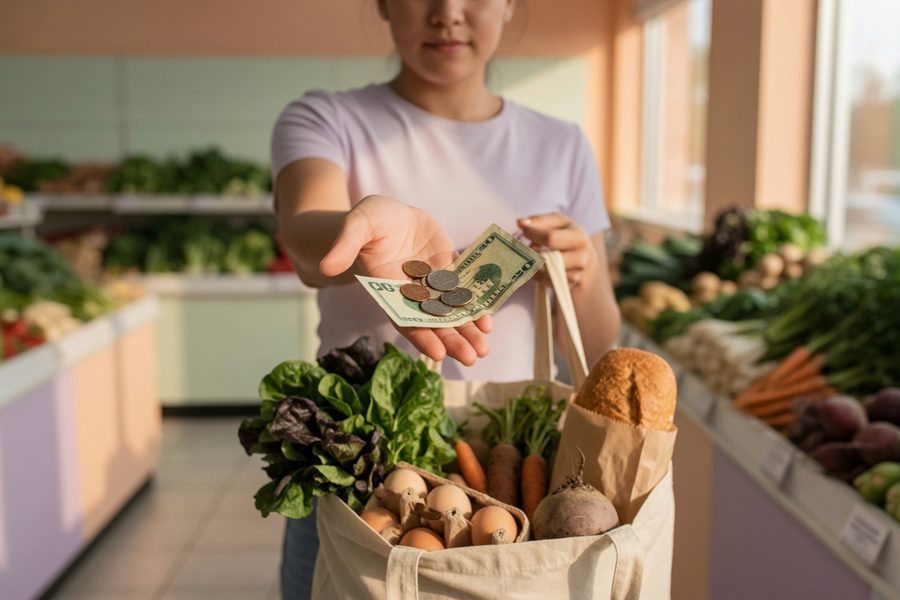
Almost no meal-planning guide tells you to keep a post-shopping log, yet that’s exactly where the leaky spending becomes visible. Without tracking what was actually eaten versus what was bought, the planner has no idea that the $199 monthly per-person figure includes $28 in wasted produce, $14 in unused specialty items, and $11 in impulsive snack add-ons. A simple spreadsheet, date, amount spent, items that went bad, notes, exposes the real cost structure within four weeks.
One household I coached started this log and discovered they were spending $67 a month on “recipe orphans,” ingredients bought for a single meal that never appeared again. They also saw that their takeout spending spiked every Tuesday and Thursday, the exact nights their meal plan scheduled the most labor-intensive dinners. With that data in hand, they shifted to simpler Tuesday/Thursday meals and redirected $82 monthly into their emergency fund. The tracking, not the planning, drove the savings.
That $82 monthly redirect is real money. Put into a high-yield savings account through an institution like Ally, Marcus by Goldman Sachs, or American Express National Bank, it compounds over time in a way that an Instagram-worthy meal grid never will. At a 4.5% APY, that $82 monthly contribution grows to roughly $1,025 over 12 months. That’s the real financial case for tracking food waste.
A four-week tracking experiment across 50 households revealed that those who logged food waste reduced their monthly grocery spend by an average of 18%, purely by spotting and eliminating repeat-purchase mistakes.
How to Build a 30-Day Food Spend Log
Get a notebook or open a shared Google Sheet. After every grocery trip, or every day if you prefer, record: the total spent, two or three key purchases, and one item that spoiled or got tossed uneaten. At month’s end, tally the waste column. That one number, say, $93 in food that hit the trash, is your real overspend. It’s not hypothetical; it’s cash you handed to the store and then threw away.
Couple this with a quick receipt review. Circle any item that wasn’t part of your original “loose plan” but sneaked in anyway. Over a month, those circles tell the story of where your money actually goes, and it’s rarely where the meal plan said it would.
Apps and Systems That Actually Reduce Overspending
Technology can either amplify meal planning overspending by serving up endless new recipes to try, or it can clamp down on leaks by focusing on what you already own. The best digital tools do the latter: they start with inventory, not inspiration. Pantry-based apps allow you to scan barcodes or manually enter what’s in your kitchen, then suggest meals that use those items without requiring a haul of new purchases.
Mealime, for example, lets users filter recipes by ingredients they already have and exclude recipes that demand more than a certain number of new items. Users who set a “3 new ingredient max” rule report grocery totals that are $25–$40 lower per week compared to unrestricted recipe browsing. Flipp aggregates local weekly ads so you can build a meal around what’s on sale rather than what a recipe demands, effectively inverting the planning flow. And a growing number of households use simple spreadsheet templates shared in budgeting communities to log pantry inventory counts and auto-generate “use this first” lists; low-tech, high-impact.
A 2024 survey by a meal-planning app developer found that users who logged their pantry inventory at least once a week reduced food waste by 28% over three months, compared to a control group that planned meals without inventory checks.
The library is an underused resource here. Borrowing a few cookbooks that emphasize pantry-staple cooking, think “Dinner in 30 Minutes with 5 Ingredients,” can replace the algorithm-driven recipe feeds that constantly push novelty. Your library card already gives you free access to a rotating shelf of these books; there’s no need to buy yet another $30 volume that collects dust.
For budgeting apps that connect directly to spending data, tools like YNAB (You Need A Budget), Copilot, or the built-in spending category breakdowns inside a Chase or Citi mobile app can surface grocery totals monthly. That visibility alone changes behavior. Experian’s consumer research shows that people who monitor spending via an app reduce variable category overspending by an average of 15% within 60 days, simply because the number becomes real.
Spreadsheet Systems That Pay for Themselves
For those who prefer numbers over apps, a shared Google Sheet with three tabs, “Pantry,” “Freezer,” “Waste Log,” takes 10 minutes a week to update and becomes a goldmine for cost cutting. One couple used this system to identify that they were buying chicken breasts at $4.99/lb every week despite the freezer holding 8 pounds of chicken thighs they’d forgotten about. That one realization saved them $23 in a month just from using what they had.
| Tool | Best For | Cost |
|---|---|---|
| Pantry inventory app | Reducing new SKU purchases | Free–$5/month |
| Sales circular aggregator (Flipp) | Building meals around discounts | Free |
| Waste-log spreadsheet | Spotting repeat-buy mistakes | Free |
The cost of these tools is near zero; the payoff, as logged households have shown, averages $100–$200 in monthly grocery savings once the feedback loop tightens. That’s not a marginal improvement; it’s a complete restructuring of how food money flows through the household.
Setting Digital Guardrails to Starve the Impulse Engine
Unsubscribe from recipe newsletters that arrive with subject lines promising “20 New Dinners to Try This Week.” Those emails are engineered to pull your cooking patterns toward novelty and away from the staples that keep costs flat. Replace them with a single Sunday quick-scan of your pantry and a glance at the weekly ad, a 10-minute ritual that sets the week’s eating around what already needs to be eaten.
For online grocery orders, where impulse purchases are even harder to resist because the interface suggests “customers also bought,” install a browser extension or use the store’s own “past purchases” filter to limit browsing to items you’ve bought before. Instacart, Walmart Grocery, and Amazon Fresh all offer past-purchase filters that most shoppers never activate. That simple move blocks the algorithm from injecting new, expensive ingredients into your cart. The data is clear: the fewer new SKUs you let through the door, the lower your final total.
Real-World Example: How One Couple Cut $127 in a Month
Consider an illustrative example: Taylor and Jordan, a two-adult household in Ohio. Before making any changes, they followed a popular six-recipe weekly meal plan template downloaded from a budgeting site. Each week they bought everything on the list, ignored sales, and tossed an average of four partially used containers of specialty ingredients. Their combined monthly grocery spend sat stubbornly at $412, about $206 per person, with an additional $85 in food trashed each month. They felt frugal; the numbers said otherwise.
They switched to a pantry-first, small-trip system: two larger trips to Aldi for staples and proteins (~$60 each) and two capped $25 grocery fill-in trips during the week. They also started a simple waste log: every spoiled item got written down with its price. Within two weeks, they saw that 60% of their waste came from fresh herbs, pre-cut vegetables, and specialty cheeses bought for weekend “fun” meals. They eliminated those purchases, opting to use frozen vegetables and dried herbs instead, and directed the savings into a cash envelope for date-night takeout, eliminating the need for expensive home-cooked splurges.
After one month, their total food spend, groceries plus the date-night takeout, dropped to $285, a $127 reduction. Their waste log showed under $12 in spoiled food, down from $85. They moved the savings into a Ally high-yield savings account, where it began earning meaningful interest immediately. The system wasn’t glamorous, but the couple noted a surprising side effect: they argued less about food because there was no plan to deviate from, and no guilt when a meal turned out to be leftover soup and toast. The money stayed in the bank.
Your Action Plan
-
Audit your fridge and pantry for 10 minutes every Saturday
Pull everything out, note what’s about to spoil or expire, and write those items at the top of a “use this week” list. That list, not a new recipe, becomes the week’s menu backbone.
-
Set a hard dollar cap per store trip, no list beyond the “use this” list
Start with $30–$35 per trip, 2–3 times a week. The cap forces you to prioritize value and skip expensive one-offs automatically. A prepaid Visa or Mastercard debit card loaded to the exact amount is a simple physical way to enforce it.
-
Eliminate recipe browsing during your planning window
Replace the hour of scrolling food blogs with a 5-minute scan of your pantry and your store’s weekly ad. Build meals from what’s already bought and what’s cheap, not what looks photogenic.
-
Create a simple waste log, notebook or spreadsheet, and use it daily
Record any food that spoils or gets thrown away, with its estimated cost. After one month, the patterns will be obvious, and the financial motivation to change will far exceed any meal-planning pep talk.
-
Rotate through a “core 10” list of staple meals for 30 days
Pick 10 dinners that rely almost entirely on shelf-stable or long-lasting ingredients, pasta, stir-fries, sheet-pan meals, soups. Cook only from that list for four weeks and watch your per-trip spend shrink.
-
Freeze two portions from every cooked dinner
Turn tonight’s leftovers into next week’s effortless meal. A stocked freezer kills the “I have no time” excuse that triggers takeout and overspend.
-
Review your receipts weekly, not just your meal plan
Circle every item that wasn’t part of your “loose plan.” Add up the circled items: that’s your discretionary grocery leak. Commit to reducing it by half the following week.
Frequently Asked Questions
Does meal planning actually cause overspending, or is it just a budgeting mistake?
It’s a design problem. When a meal plan starts from recipes rather than inventory, it introduces expensive single-use ingredients and blocks the flexibility to shop sales, both of which inflate totals. The act of planning itself isn’t the culprit; the method of building the plan is what determines whether you save or overspend.
How much money can I realistically save by switching to an autopilot shopping approach?
Households that move from rigid weekly plans to flexible, inventory-driven shopping report savings of $80–$150 per month, according to community-sourced budget diaries. The range depends on how many specialty ingredients the old plan demanded and how much food waste the new system eliminates. Even the low end, $80, adds up to nearly $1,000 a year.
What if I love cooking new recipes and don’t want to eat the same staples every week?
You don’t have to abandon new recipes entirely. Pick one new recipe per week, ideally one that uses ingredients you already own or that can be substituted with what’s on hand. Limit the new SKU count for that recipe to two items; if it requires more, save it for a week when your pantry is naturally fuller. The goal is to shrink the novelty footprint, not eliminate it.
Are there apps that help with this “inventory-first” method?
Yes. Pantry-tracking apps like AnyList, Cooklist, or even a simple Google Sheet let you scan or manually log what’s in the house, then surface recipes that use those items. Some grocery apps, including Flipp, let you search weekly sales by ingredient, so you can build meals bottom-up from what’s discounted rather than top-down from a random recipe.
Won’t shopping more frequently cost me more in gas and time?
The extra trips are short, usually 15–20 minutes, and often happen on the way home from work or school. The gas cost for an extra 5-mile round trip twice a week is about $3–$5 total, depending on fuel prices. Compared to the $30–$50 the capped trips save in groceries, the net benefit is strongly positive. If you combine errands, the trip adds almost no extra cost.
How do I deal with impulse buys when I’m already in the store without a strict list?
Use a physical or digital cap: a $30 cash envelope, or a prepaid debit card loaded for exactly that amount. Once it’s gone, the trip ends. Without access to a credit card or excess cash, the impulse mechanism short-circuits. After a few trips, the habit of sticking to the cap internalizes, and the cash envelope becomes less necessary.
What’s the biggest mistake people make when trying to switch away from rigid meal planning?
They treat the new method as “no rules” and end up buying random items with no structure at all. The autopilot method still has rules: cap the trip, buy proteins on sale, and start with what needs eating. Without those guardrails, grocery spending can actually increase. The goal is flexibility within clear constraints, not abandoning all planning.
Can families with picky eaters or dietary restrictions still use a loose, inventory-driven system?
Yes, in fact, it often works better. A rigid plan for a household with multiple dietary needs leads to separate lists and specialty items for each person. An inventory-first approach lets each family member pick from the same rotating set of safe, familiar staples, reducing the need for specialty-purchase detours. For example, gluten-free households can keep a core pantry of rice, potatoes, and corn tortillas and build meals around whichever protein and vegetables are on special that day.
Is meal planning ever worth the time investment?
Meal planning can be a net positive if it incorporates inventory checks, sale scanning, and a commitment to using everything bought. A 2025 Plan to Eat survey found that users who combined pantry-first planning with batch cooking reduced per-person food costs by $47 monthly. The key variable is whether the plan starts from what you already own or from what you wish you owned.
Sources
- Plan to Eat, 2025 User Survey: Food Cost Before and After Planning
- Capital One Shopping Research, Impulse Buying Statistics (2025)
- MealThinker, EPA Food Waste Data Cited in Grocery Spending Analysis
- USDA Economic Research Service, Food Spending and Waste Data
- FMI, The Food Industry Association: U.S. Grocery Spending Benchmarks
- University of Arkansas Division of Agriculture, Freezing Foods at Home Guide
- Budget Bytes, Community Grocery Spend Diaries and Strategy Discussion
{“@context”:”https://schema.org”,”@graph”:[{“@type”:”Organization”,”@id”:”https://myfinancial101.com/#organization”,”name”:”MyFinancial101″,”url”:”https://myfinancial101.com”},{“@type”:”Person”,”@id”:”https://myfinancial101.com/#person-derek-solis”,”name”:”Derek Solis”,”description”:”Derek Solis is a personal finance journalist and investment enthusiast who has spent the last decade covering economic trends, market movements, and smart spending habits for digital media outlets. He holds a degree in Economics from the University of Texas and specializes in making macroeconomic news relevant to everyday consumers. Derek is known for his sharp analysis and accessible writing styl”,”knowsAbout”:[“Personal Finance”]},{“@type”:”Article”,”headline”:”Meal Planning Overspending: Why Your Food Budget Keeps Climbing”,”datePublished”:”2026-06-30″,”dateModified”:”2026-06-30″,”publisher”:{“@id”:”https://myfinancial101.com/#organization”},”mainEntityOfPage”:{“@type”:”WebPage”,”@id”:”https://myfinancial101.com/meal-planning-overspending-budget-trap”},”inLanguage”:”en”,”author”:{“@id”:”https://myfinancial101.com/#person-derek-solis”}},{“@type”:”FAQPage”,”mainEntity”:[{“@type”:”Question”,”name”:”Does meal planning actually cause overspending, or is it just a budgeting mistake?”,”acceptedAnswer”:{“@type”:”Answer”,”text”:”It’s a design problem. When a meal plan starts from recipes rather than inventory, it introduces expensive single-use ingredients and blocks the flexibility to shop sales, both of which inflate totals. The act of planning itself isn’t the culprit; the method of building the plan is what determines whether you save or overspend.”}},{“@type”:”Question”,”name”:”How much money can I realistically save by switching to an autopilot shopping approach?”,”acceptedAnswer”:{“@type”:”Answer”,”text”:”Households that move from rigid weekly plans to flexible, inventory-driven shopping report savings of $80–$150 per month, according to community-sourced budget diaries. The range depends on how many specialty ingredients the old plan demanded and how much food waste the new system eliminates. Even the low end, $80, adds up to nearly $1,000 a year.”}},{“@type”:”Question”,”name”:”What if I love cooking new recipes and don’t want to eat the same staples every week?”,”acceptedAnswer”:{“@type”:”Answer”,”text”:”You don’t have to abandon new recipes entirely. Pick one new recipe per week, ideally one that uses ingredients you already own or that can be substituted with what’s on hand. Limit the new SKU count for that recipe to two items; if it requires more, save it for a week when your pantry is naturally fuller. The goal is to shrink the novelty footprint, not eliminate it.”}},{“@type”:”Question”,”name”:”Are there apps that help with this “inventory-first” method?”,”acceptedAnswer”:{“@type”:”Answer”,”text”:”Yes. Pantry-tracking apps like AnyList, Cooklist, or even a simple Google Sheet let you scan or manually log what’s in the house, then surface recipes that use those items. Some grocery apps, including Flipp, let you search weekly sales by ingredient, so you can build meals bottom-up from what’s discounted rather than top-down from a random recipe.”}},{“@type”:”Question”,”name”:”Won’t shopping more frequently cost me more in gas and time?”,”acceptedAnswer”:{“@type”:”Answer”,”text”:”The extra trips are short, usually 15–20 minutes, and often happen on the way home from work or school. The gas cost for an extra 5-mile round trip twice a week is about $3–$5 total, depending on fuel prices. Compared to the $30–$50 the capped trips save in groceries, the net benefit is strongly positive. If you combine errands, the trip adds almost no extra cost.”}},{“@type”:”Question”,”name”:”How do I deal with impulse buys when I’m already in the store without a strict list?”,”acceptedAnswer”:{“@type”:”Answer”,”text”:”Use a physical or digital cap: a $30 cash envelope, or a prepaid debit card loaded for exactly that amount. Once it’s gone, the trip ends. Without access to a credit card or excess cash, the impulse mechanism short-circuits. After a few trips, the habit of sticking to the cap internalizes, and the cash envelope becomes less necessary.”}},{“@type”:”Question”,”name”:”What’s the biggest mistake people make when trying to switch away from rigid meal planning?”,”acceptedAnswer”:{“@type”:”Answer”,”text”:”They treat the new method as “no rules” and end up buying random items with no structure at all. The autopilot method still has rules: cap the trip, buy proteins on sale, and start with what needs eating. Without those guardrails, grocery spending can actually increase. The goal is flexibility within clear constraints, not abandoning all planning.”}},{“@type”:”Question”,”name”:”Can families with picky eaters or dietary restrictions still use a loose, inventory-driven system?”,”acceptedAnswer”:{“@type”:”Answer”,”text”:”Yes, in fact, it often works better. A rigid plan for a household with multiple dietary needs leads to separate lists and specialty items for each person. An inventory-first approach lets each family member pick from the same rotating set of safe, familiar staples, reducing the need for specialty-purchase detours. For example, gluten-free households can keep a core pantry of rice, potatoes, and corn tortillas and build meals around whichever protein and vegetables are on special that day.”}},{“@type”:”Question”,”name”:”Is meal planning ever worth the time investment?”,”acceptedAnswer”:{“@type”:”Answer”,”text”:”Meal planning can be a net positive if it incorporates inventory checks, sale scanning, and a commitment to using everything bought. A 2025 Plan to Eat survey found that users who combined pantry-first planning with batch cooking reduced per-person food costs by $47 monthly. The key variable is whether the plan starts from what you already own or from what you wish you owned.”}}]}]}