Fact-checked by the MyFinancial101 editorial team
The Verdict
Building an emergency fund on low income is worth doing, even aggressively, if your take-home pay allows you to set aside at least $250–$300 per month after essential expenses. It is not realistic as a solo sprint if high-interest debt is consuming more than 20% of your income. Automate savings first, attack debt second, and treat $1,000 as your first real milestone.
Building an emergency fund on low income is less a discipline problem and more a strategy problem. The single factor that swings whether a single mom on a teacher’s salary actually reaches $10,000 is not motivation, it is whether she has a savings system that runs without her making a daily decision. According to the Federal Reserve’s 2024 Survey of Household Economics and Decisionmaking, only 55% of U.S. adults had set aside enough to cover three months of expenses, and 37% could not cover a $400 emergency using cash or its equivalent.
Those numbers matter right now because inflation has stayed stubbornly elevated through 2025 and 2026, and the federal safety net is under pressure. A teacher earning a starting salary in a low-paying state has almost no cushion for a car repair or a medical bill. Getting to $10,000 in 18 months is not a fantasy, but it requires a plan built for a single income, not generic advice designed for dual-earner households with room to spare.
| Factor | Reasons to Build This Fund | Reasons to Pause or Adjust |
|---|---|---|
| Financial Security | Single moms have no backup earner; one job loss or illness is a full income shock | If high-interest debt (above 20% APR) is active, pay that down first |
| Credit Impact | CFPB research shows even one month of savings cuts delinquent debt rates by more than half | Saving while carrying credit card debt at 24%+ APR may cost more in interest than the fund earns |
| Tax Refund Opportunity | Depositing 50–100% of an IRS refund covers 1–2 months of the savings target in one move | If you consistently owe taxes at filing, this lever is not available |
| Income Stability | Teacher salaries are predictable; consistent income makes automation reliable | 10-month pay schedules create a summer income gap that can drain a fund before it grows |
| Side Income | Tutoring 5 hours per week at $30–$60/hour adds $600–$1,200/month directly to savings | If childcare costs consume side-income gains entirely, the net benefit may be near zero |
| Benefit Eligibility | Most state SNAP and Medicaid asset tests have been relaxed; saving does not automatically disqualify you | Some state TANF programs still cap savings around $2,000 for individuals, verify before you exceed that threshold |
Key Takeaways
- Your take-home pay is at least $3,000/month after taxes, allowing $300–$556 per month to go toward savings without cutting essential expenses below their floor
- You have set up a separate high-yield savings account (ideally at a different bank than your checking) and automated a direct deposit split so money moves before you see it
- Your highest-interest debt carries an APR below 20%, meaning the psychological and practical value of the emergency fund outweighs the interest cost of carrying that balance
- You have verified your current benefit eligibility and confirmed that your state’s asset limit (if any) is above $2,000 before building past that threshold
- You have calculated your actual lean monthly budget, rent, utilities, groceries, childcare, transportation, and know your real essential-expenses number to within $50
- You have identified at least one income lever, such as tutoring, summer school pay, or a tax refund deposit, that can accelerate savings by at least $1,000 in the first six months
- You are on a 12-month pay schedule, or you have a plan for covering the summer income gap if your district pays over 10 months only
Is a Teacher’s Salary Actually High Enough to Save $556 a Month?
The honest answer depends heavily on career stage and geography. The national average public school teacher salary was $74,495 in the 2024–25 school year, but that number hides a wide range. The average national starting salary sits around $46,526, and in states like Montana and Missouri, entry-level teachers earn closer to $37,000–$41,000. A single mom early in her career is not saving on $74K; she may be working with $42K before taxes.
Run the real math. A teacher grossing $47,000 in a state with no income tax might take home roughly $3,200–$3,500 per month after federal taxes and benefits deductions. Saving $556 per month to hit $10,000 in 18 months represents about 16–17% of that net pay. That is tight, but it is not impossible, especially when combined with even modest supplemental income. A teacher grossing $60,000 takes home closer to $4,000–$4,400, which drops the savings burden to 13–14% of net income, a range most financial planners consider aggressive but achievable for a disciplined sole earner.
The important reframe: the $10,000 target is not an elite goal. It is roughly the median emergency fund balance in the U.S., meaning reaching it puts a single mom at the statistical midpoint of financially stable households, not ahead of the curve.

Does Your Pay Schedule Make or Break the Plan?
Whether your district pays you over 10 months or 12 months is the single most overlooked variable in teacher savings advice. Most generic emergency fund articles completely ignore it. If you receive your annual salary in 10 paychecks from September through June, your June-through-August cash flow looks like a sudden income loss, and a savings plan built in the fall can collapse by July if you have not prepared for it.
The fix is deliberate, not complicated. During the school year (September through May), save more aggressively, targeting $650–$700 per month rather than $556. This builds a buffer that covers the summer gap and keeps the 18-month timeline intact. If your district offers a 12-month pay option, take it. Spreading income evenly eliminates the summer cliff entirely and makes automated savings reliable year-round.
Summer school and tutoring are natural complements here. If you pick up a summer school assignment or five hours of private tutoring per week at $30–$60 per hour, that adds $600–$1,200 per month during the exact period when your regular paycheck is absent. That money should go directly and entirely into the emergency fund. If you want to explore other ways to bring in income during the school year, local school and event jobs are one option that fits a teacher’s existing schedule without requiring new credentials.
The Federal Reserve Bank of St. Louis has noted that households with unstable or seasonal income need a larger cushion than those with steady year-round paychecks, precisely because the gap between a bad month and a crisis is narrower. For a teacher on a 10-month schedule, that observation is not abstract; it describes the month of July.
Does Where You Put the Money Actually Matter?
Yes, and the account type and the transfer method are not afterthoughts. They are structural decisions that determine whether the fund grows automatically or stays a goal you keep meaning to start. The Consumer Financial Protection Bureau recommends automating a paycheck split as the single most reliable savings habit for consistent earners. Set up direct deposit so a fixed dollar amount lands in a dedicated savings account before the remainder hits your checking account. You cannot spend what you never see.
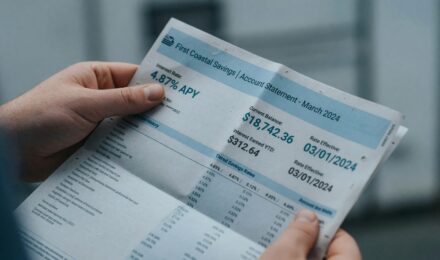
A high-yield savings account (HYSA) held at a separate institution from your primary checking is the right vehicle. In mid-2026, top HYSAs at institutions like Ally Bank, Marcus by Goldman Sachs, and American Express National Bank are offering APYs in the 4–5% range on accessible balances. On a $5,000 balance, that earns roughly $200–$250 per year in interest, a small but real contribution toward the goal. The FDIC recommends keeping emergency savings in a separate, FDIC-insured account and emphasizes that consistent small automatic contributions grow substantially over time even on a limited income.
The psychological argument for the separate bank is underrated. When your emergency fund sits one tap away in the same app as your checking account, it is too easy to justify a transfer for something that is not an emergency. A small amount of friction, logging into a different app, waiting one to two business days for a transfer, is enough to prevent casual withdrawals without locking up access you might genuinely need.
Are There Teacher-Specific Tools That Generic Advice Misses?
There are, and almost no competing article on this topic mentions them. The National Education Association (NEA) Member Benefits program negotiates group rates on auto insurance that reportedly average $611 per year in savings for members who switch. The American Federation of Teachers (AFT) offers Union Plus discounts on phone plans, hotel stays, and car rentals. Redirecting even $400–$600 per year in insurance savings directly into a high-yield savings account adds the equivalent of nearly one full month of the required savings contribution.
Beyond union benefits, the federal Earned Income Tax Credit (EITC) can deliver a meaningful lump sum at tax time for a single mom with one or more qualifying children, potentially several thousand dollars, depending on income. Earmarking 50–100% of any federal tax refund as a direct deposit to the emergency fund can cover one to two months of the savings target in a single transaction. If you have not used the IRS Free File program or a VITA (Volunteer Income Tax Assistance) site to maximize your refund, that is the place to start. Our guide on free IRS tax help and one credit families overlook covers this in detail.
On the expense side, childcare costs are often the largest variable for single mothers and the hardest to reduce. The federal Child Care and Development Fund (CCDF), administered through state Child Care Assistance Programs (CCAP), can significantly reduce or eliminate out-of-pocket childcare costs for income-eligible families. A teacher earning $47,000 may qualify in several states. Checking eligibility takes about 20 minutes and could free up $200–$600 per month that goes directly to savings. For single mothers navigating tight monthly budgets, resources like updated 2026 poverty guidelines can clarify which federal programs you are now eligible for.

Will Saving Money Cost You Benefits You Need?
This concern is real, and almost no mainstream personal finance article addresses it honestly. Historically, some means-tested programs including SNAP, TANF, and certain state Medicaid categories imposed asset or savings limits, sometimes as low as $2,000 for individuals, that could technically disqualify a recipient for building emergency savings. For a single mom on a beginning teacher’s salary who also relies on SNAP or childcare subsidies, that is not a hypothetical barrier; it is a concrete reason people have avoided saving.
The good news is that this has shifted considerably. Most states have eliminated or significantly raised asset tests for SNAP, and many Medicaid programs do not count savings balances against eligibility at all. TANF rules vary more widely by state and can still impose limits in some jurisdictions. The key action: do not assume saving disqualifies you. Verify the specific asset rules for your current programs through your state’s benefits agency before you surpass $2,000 in savings. The ongoing changes to SNAP benefit rules make it worth checking your status annually rather than assuming last year’s rules still apply.
This is one area where the generic “$10,000 emergency fund” advice actively fails low-income readers. The goal is right. The path requires one extra verification step that higher-income earners never need to take.
Who Should and Who Should Not
Good candidates
This strategy works best for teachers and single-income parents who have a predictable paycheck and at least some room in their monthly budget to automate savings.
- A mid-career teacher earning $55,000–$65,000 gross with one child, steady childcare costs, and no high-interest credit card debt, the math works and the automation is reliable
- A first-year teacher on a 12-month pay schedule earning $46,000 who has verified SNAP eligibility and confirmed the state has no savings asset cap, building past $2,000 is safe and the fund provides critical protection against income shocks
- A teacher whose district pay is spread over 10 months and who plans to work summer school or tutor during June through August, directing that extra income entirely to savings
- Any single mom who receives a federal tax refund exceeding $1,500 and has not yet designated it for emergency savings, a single deposit can provide a significant early milestone
Who should skip it
Building an emergency fund aggressively is the wrong priority if other financial fires are burning hotter.
- A teacher carrying $8,000 in credit card debt at 24% APR, the interest cost of that debt outpaces nearly any HYSA return, and a $1,000 starter fund is enough while the debt gets paid down. See our resource on how to prioritize and negotiate credit card debt for a structured approach
- A single mom currently on TANF in a state that caps savings balances below $2,000, saving beyond that limit without verifying the rules first creates a real eligibility risk
- A teacher whose essential expenses (rent, utilities, groceries, childcare, transportation) already consume 95% or more of net pay, there is no margin to automate, and the priority shifts to increasing income before saving
- Anyone in the middle of a financial crisis such as an eviction proceeding or utility shutoff, stabilizing housing and utilities comes before emergency savings
Related reading: How a Single Parent in Ohio Built a 6.
Frequently Asked Questions
How long does it realistically take to save $10,000 on a teacher’s salary as a single mom?
At $556 per month, you reach $10,000 in exactly 18 months. That figure is tight but achievable for a teacher taking home $3,400–$4,200 per month, especially when combined with a tax refund deposit or occasional tutoring income. The timeline stretches to 24–30 months if you can only save $333–$417 per month, which is still worth doing.
Should a single mom save an emergency fund or pay off debt first?
Build a $1,000 starter fund first, then focus on high-interest debt (above 20% APR), then return to growing the full fund. This hybrid approach, endorsed by most fee-only financial planners, prevents a single unexpected expense from forcing you back onto credit cards while you are paying them down. Once high-rate debt is cleared, redirect those payments to savings.
What is the best savings account for a low-income emergency fund?
A high-yield savings account at an online bank is the best option for most single-income earners. Look for accounts with no minimum balance requirement, no monthly fees, and an APY above 4% as of mid-2026. Keep it at a different institution from your checking account to reduce the temptation to dip into it casually.
Can saving money disqualify a single mom from SNAP or Medicaid?
In most states, no. Most SNAP programs have eliminated savings asset tests, and most Medicaid categories do not count savings balances. TANF rules vary more widely and can still impose limits in some states. Verify your specific state’s rules before surpassing $2,000 in savings to avoid any eligibility risk.
How do teachers handle saving during summer when their paycheck stops?
The most effective approach is to over-save during the school year, targeting $650–$700 per month from September through May, to build a buffer that covers summer expenses without touching the emergency fund. Teachers on a 10-month pay schedule should also request their district’s 12-month pay option if available, which distributes the annual salary evenly and eliminates the summer income gap entirely.
Is $10,000 enough for a single mom’s emergency fund, or should it be more?
$10,000 is a strong starting goal, but the right number depends on your monthly essential expenses. If your lean monthly budget is $2,500, then $10,000 covers four months, solid, but not at the high end of the three-to-six-month range most financial planners recommend for single-income households with dependents. Once you reach $10,000, assess whether your expenses warrant pushing toward $12,000–$15,000. You can learn more about how to think about saving beyond the basics in our guide on balancing savings priorities.
Sources
- Federal Reserve Board of Governors, Report on the Economic Well-Being of U.S. Households in 2024 (SHED), May 2025
- Consumer Financial Protection Bureau, An Essential Guide to Building an Emergency Fund
- Federal Deposit Insurance Corporation, Saving for the Unexpected and Your Future, January 2025
- CFPB Office of Research, Emergency Savings and Financial Security Report, 2022
- National Education Association, Educator Pay and Student Spending: Rankings and Estimates, April 2026
- SingleMotherGuide.com, Single Mother Statistics (citing U.S. Census Bureau 2024 data)
- Bankrate, 2026 Emergency Savings Report
- Federal Reserve Bank of St. Louis, Page One Economics: When the Unexpected Happens, Be Ready with an Emergency Fund, 2025