Quick Answer
Cancelling flood or hurricane insurance is extremely risky. Over 5.5 million NFIP policies were in force, covering over $1.28 trillion in property. Without coverage, homeowners face full financial liability for storm damage, potentially losing everything. Even with high premiums, the cost of rebuilding without insurance often exceeds the policy’s long-term expense. For example, a $120,000 repair bill would cost over 100 times the average $1,200 annual NFIP premium, making cancellation financially irrational for most.
Updated August 2026
Key Takeaways
- Flood insurance is mandatory for homes in high-risk zones with federal loans, and failure to maintain it can result in forced coverage by lenders like Chase or Bank of America.
- Over 5.5 million National Flood Insurance Program (NFIP) policies were active, according to Cambridge University Press.
- Homeowners’ insurance does not cover flood or hurricane damage, only specialized policies do. This includes major carriers like Progressive and Allstate.
- Under FEMA, recipients of federal disaster aid for flood damage must keep flood insurance for as long as they own the home.
- Insurers such as SoFi and Experian track credit and loan performance; cancellation of required insurance could trigger loan default risk.
- Over $1.28 trillion in total coverage was provided by NFIP policies, highlighting the systemic importance of flood insurance in national risk management.
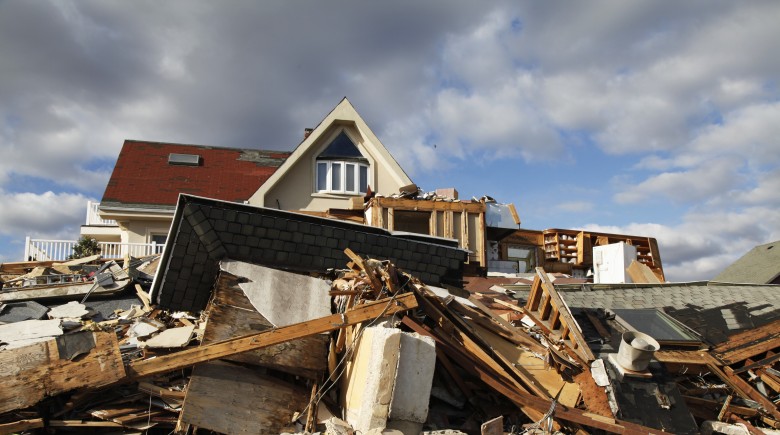
Flood insurance premiums keep climbing across the country, and two forces are driving it: changes to the federal flood insurance program and the long financial hangover from major hurricanes like Sandy. That 2012 storm tore through the East Coast, triggered a wave of claims, and forced insurers and regulators to rethink their risk models from the ground up. The Federal Reserve reported that home insurance pricing trends were adjusting rapidly in coastal and flood-prone regions. Hurricane insurance premiums in Florida, Louisiana, and Texas have climbed for a similar reason: insurers expect worse storms ahead, and they’re pricing accordingly. Facing these costs, some policyholders are asking whether it’s time to just walk away from coverage entirely.
Don’t. Canceling flood or hurricane insurance isn’t a decision to make on a whim, and the financial fallout can be brutal. Maybe you’re not sitting in a high-risk zone today. That doesn’t mean much anymore, since climate patterns are shifting fast enough that historical flood maps no longer predict tomorrow’s risk with any confidence. The U.S. Customs and Border Protection has observed increased flooding in inland areas due to intense precipitation events, a trend mirrored in data from the National Centers for Environmental Information. Brush off these risks and you could end up losing the house, the savings, and your credit standing right along with it, especially if a mortgage default follows.
Why You Shouldn’t Cancel Flood Insurance If It’s Required
Got a mortgage backed by the federal government, or one through a private lender like Wells Fargo, Citigroup, or Huntington Bank? Flood insurance is frequently non-negotiable in that case. The Federal Emergency Management Agency (FEMA) mandates that properties in designated flood zones must carry insurance if they have received federal financial assistance or are subject to mandatory purchase requirements for the life of the loan.
Drop a required policy without your lender’s sign-off, and you’ll trigger something called force placement. Your lender buys a policy on your behalf, through whichever third-party insurer it uses, and bills you for it. That coverage tends to cost more than anything you’d find shopping on your own. According to the Consumer Financial Protection Bureau (CFPB), force-placed insurance can cost two to three times more than standard policies. Lenders aren’t obligated to hunt for a good rate here, only to make sure something is in place.
Once a lender force places insurance, the premium gets folded into your loan costs. Skip payment on that, and you’ve breached your loan agreement, plain and simple. The Federal Deposit Insurance Corporation (FDIC) has warned that repeated failures to cover forced insurance can lead to foreclosure proceedings. This isn’t theoretical. Dozens of cases have played out this way in recent years, particularly in flood-prone states like Mississippi and South Carolina.
Run the numbers on a typical case: a homeowner in a mid-risk zone pays $1,200 a year for an NFIP policy, which adds up to $12,000 over a decade. A storm rolls through and does $120,000 in damage. With the policy, it’s covered, full stop. Without it, that homeowner needs a $120,000 lump sum on hand, more than 100 times what ten years of premiums would’ve cost. Even in low-risk areas where premiums run cheaper, the odds of a total loss are still too steep to gamble on.
Homeowners’ Insurance Does Not Cover Flood or Hurricane Damage
Plenty of people cancel specialized coverage because they assume their regular homeowners’ policy already handles this. It doesn’t. Standard homeowners’ insurance, whether from MetLife, State Farm, or ACE Global, explicitly excludes flood and hurricane-related damage. Insurers classify these as “named perils,” and only a policy written specifically to cover them will actually pay a claim.
Say a hurricane collapses your roof, or floodwater fills your basement. Your standard policy sits on the sidelines for either scenario. The National Flood Insurance Program (NFIP) exists precisely because private insurers do not offer broad flood coverage at scale. No NFIP policy and no private flood coverage means the rebuilding bill lands entirely on you.
Here’s some context worth sitting with: average repair costs for storm damage on a single-family home top $50,000, and in high-risk coastal areas that figure climbs past $150,000. Someone with a FICO Score of 720 might land a 4.5% APR mortgage through SoFi, yet that same household could end up in bankruptcy court if the house is destroyed and reconstruction comes entirely out of pocket. Personal finances rarely have room for a loss that size.
What Happens If You Cancel and a Disaster Strikes?
Cancel your flood or hurricane coverage, and a storm hits? No payout is coming. Every dollar of recovery, structural repairs, replacing furniture and belongings, temporary housing while you rebuild, comes from your own pocket. Even a modest flood can turn into years of financial strain once insurance is off the table.
FEMA data shows that in the aftermath of Hurricane Sandy, over 250,000 individuals filed claims under the NFIP. Anyone without a policy had to lean on savings, federal aid, or charity instead. The U.S. Department of Homeland Security provides disaster assistance, but it is not a substitute for insurance. That aid arrives as grants, not loans, and it’s meant to cover basic needs, not fund a full rebuild.
FEMA requires that anyone who receives federal disaster aid for flood damage must maintain flood insurance for as long as they own the property. There’s no wiggle room on this condition. Cancel your coverage and later apply for aid, and you’ll get turned down unless you reinstate the policy first. That sets up a nasty loop: no insurance, then disaster, then aid, then forced insurance, then a bigger bill down the road.
Comparing the True Costs of Canceling vs. Keeping Coverage
| Scenario | Annual Premium | Claim Cost (if disaster occurs) | Long-Term Financial Impact |
|---|---|---|---|
| Keeping flood insurance (NFIP) | $1,200 | $0 (covered by policy) | Stable budget, no risk of total loss |
| Canceling flood insurance | $0 | $120,000 (average repair cost) | Loss of equity, credit damage, possible foreclosure |
| Force-placed insurance | $3,600 | $0 (covered) | Higher cost, less flexibility, lender control |
| Rebuilding from savings | $0 | $120,000 | Complete depletion of emergency fund, financial ruin |
Look at the math above and one thing becomes obvious: dropping coverage doesn’t actually save anyone money over time. It just shifts the risk onto the homeowner and raises the odds of a genuine financial wipeout. The CFPB notes that 40% of households without insurance cannot cover a $500 emergency expense. Stretch that same household to cover a $120,000 loss, and the math simply doesn’t work.
One caveat deserves mention here. Homeowners outside a federally designated flood zone, with no federally backed mortgage attached to the property, can legally drop their NFIP policy without penalty. Risk doesn’t disappear just because a policy does, particularly with flood zones being redrawn and inland flooding on the rise thanks to climate change. Nothing guarantees that a currently unzoned area stays that way. Cancellation might make sense for homeowners sitting on substantial savings with minimal storm exposure, but even in that narrow case, it’s a gamble with real stakes.
Frequently Asked Questions
Can I cancel my flood insurance if I’m not in a flood zone?
Even if your area is not officially designated as a flood zone, you may still be required to carry insurance if you have a federally backed mortgage. FEMA mandates coverage for properties receiving federal assistance. Skip it, and your lender may force place insurance at a higher rate.
How much does NFIP flood insurance cost?
The average NFIP premium runs around $1,200 a year, though the number swings widely depending on location, property value, and risk level. Some homes in high-risk zones pay over $5,000 annually. The Journal of Policy History reports that over 5.5 million policies were active in December 2012.
Does hurricane insurance cover wind and water damage?
Yes, a standalone hurricane insurance policy covers both wind and water damage, unlike standard homeowners’ insurance. It won’t extend to storm surge flooding, though, unless that’s specifically added. FEMA clarifies that flood and hurricane damage are separate perils with different coverage needs.
Can I get a refund if I cancel my policy?
Refund policies vary by insurer and depend heavily on timing. Most companies offer pro-rated refunds for mid-year cancellations. Cancel after filing a claim, or during peak storm season, and you may get nothing back. Confirm the details with your insurer before pulling the trigger.
What happens if I don’t pay for force-placed insurance?
Skip payment on a force-placed policy, and your lender may send the account to collections. That can hammer your credit score and open the door to foreclosure. The FDIC warns that borrowers who skip premiums on forced insurance are more likely to default on their loans.
Is it safe to cancel insurance during hurricane season?
No, and this is one of the worst times to try it. Storms can form with little warning, leaving almost no time to react. The National Hurricane Center tracks tropical systems year-round, but the peak season (June to November) is when most storms develop. Drop coverage during that window and your exposure jumps immediately.
Can I get cheaper coverage through private insurers?
Private insurers like Allstate, Progressive, and AAA sometimes beat NFIP rates. Just watch for exclusions and higher deductibles buried in the fine print. Compare rates through platforms like Insurance.com or Policygenius before committing.
Does FEMA offer any help if I cancel and lose my home?
FEMA may provide disaster assistance, but it is not a substitute for insurance. Grants are limited and tied to income and damage assessments. FEMA requires that recipients of such aid maintain flood insurance for the life of the property. Cancel after taking that aid and penalties follow.
Can my credit score be affected by canceling insurance?
Not directly, but there’s an indirect hit waiting. Cancel your coverage, and later apply for a loan, and lenders may flag your history as higher risk. The Experian credit reporting system tracks insurance status when evaluating loan applications. A lapse could ding your FICO Score or your debt-to-income ratio.
Is flood insurance part of the National Flood Insurance Program (NFIP)?
Yes. The NFIP is the federal program that offers flood insurance to homeowners, renters, and business owners in participating communities. FEMA administers it, and it covers damage from flooding specifically. At its peak count referenced here, the NFIP insured over 5.5 million policies, totaling $1.28 trillion in coverage.
Homeowners who receive federal disaster assistance for flood damage must maintain flood insurance coverage for as long as they own the property.
says Federal Emergency Management Agency (FEMA).
The National Flood Insurance Program requires maintenance of flood insurance on structures that have received federal financial assistance or are subject to mandatory purchase requirements for the life of the loan.
says Federal Emergency Management Agency (FEMA).
Sources
- Journal of Policy History (Cambridge University Press), 2012 data on NFIP policies and coverage
- Federal Emergency Management Agency (FEMA). Flood Insurance Requirements
- FEMA, NFIP Guidance Unit 9: Mandatory Purchase Requirements
- National Centers for Environmental Information. Climate Data
- U.S. Customs and Border Protection. Climate and Infrastructure Reports
- Federal Reserve Board. Interest Rate and Insurance Pricing Trends
- Consumer Financial Protection Bureau (CFPB). Force-Placed Insurance Guidelines
- Federal Deposit Insurance Corporation (FDIC). Mortgage and Loan Risk
- USA.gov. Disaster Assistance Programs
- SoFi. Loan and Credit Products
- Experian. Credit and Financial Health
- MetLife. Insurance Products and Claims
- State Farm. Homeowners Insurance
- ACE Global. Insurance Risk Management


