Fact-checked by the MyFinancial101 editorial team
The average American household throws out $1,500 worth of food every year. That’s an entire month of groceries for a family of four, landfilled. The problem isn’t just the moldy spinach at the back of the fridge. It’s the packaging premium, the impulse purchases, and the total absence of a system that values every scrap. Zero waste grocery savings don’t come from clipping more coupons; they come from buying less, wasting nothing, and taking advantage of the price advantages that packaging and processing hide from you.
According to ReFED’s 2025 data, U.S. surplus food hit $381 billion in 2024, with $325 billion of that classified as pure waste. That’s 25 percent of the food supply, 60 million tons, headed to incinerators, sewers, and landfills. The cost per household isn’t theoretical: packaging alone adds an estimated 15 percent to the sticker price of supermarket goods. When you track your trash, the numbers stop being someone else’s problem and start showing up on your Visa statement.
This article gives you a measurable plan to cut your grocery spending by 30 percent using zero-waste strategies. You’ll get a dollar-for-dollar comparison of bulk versus packaged, a method to calculate your household’s waste baseline, and a storage and meal-planning routine that turns food waste into direct deposit into your budget.
Key Takeaways
- The average U.S. family of four loses $1,500 annually to food waste, zero-waste systems can recapture most of that.
- Packaging accounts for roughly 15 percent of grocery costs; reusable containers and bulk buying eliminate that premium.
- Bulk dry beans cost about $0.65 per pound versus $1.00 packaged, a 35 percent unit savings that scales quickly.
- Implementing a “use-it-up” day once per week can cut spoilage losses by 20 to 40 percent within the first month.
- Upfront investment in reusable containers of $30 to $50 pays for itself in under three trips to a bulk store, given packaging markups.
- Shoppers who combine meal planning with bulk purchasing report sustained grocery bill reductions of 20 to 50 percent.
In This Guide
- The Real Cost of Packaged Foods
- Audit Your Current Grocery Waste and Spending
- Build a Waste-Proof Meal Plan Around Staples and Leftovers
- Master Bulk, Local, and Seasonal Shopping for Maximum Value
- Store, Preserve, and Portion Food to Extend Shelf Life
- Turn Every Scrap and Leftover Into Additional Savings
- Zero-Waste vs. Conventional: A Direct Cost Comparison
- Track Savings, Budget for Bulk, and Sustain the 30% Cut
- Regional Access, Time Costs, and When Bulk Isn’t Worth It
The Real Cost of Packaged Foods
Packaging isn’t free. You pay for the plastic wrap, the box, the brand design, and the shelf space, usually to the tune of 15 percent of the retail price. That premium disappears the moment you bring your own jars to a bulk bin. Anne-Marie Bonneau, author of The Zero-Waste Chef, puts it bluntly: “Shoppers pay extra for the ‘added value’ of foods that have undergone processing.” Roasted, salted nuts in a foil-lined bag cost 30 to 50 percent more per pound than the raw bulk alternative, and the bulk version lets you control the portion and the salt.
A 2025 scan of five national grocery chains shows that one pound of organic rolled oats retails for $2.49 in a canister but just $1.19 from the bulk dispenser. Over a year, a household that eats two pounds of oats per week saves $135 on that single item alone, simply by skipping the cardboard tube. Apply that logic across rice, lentils, flour, coffee, and nuts, and the packaging tax becomes a four-figure annual leak.
Packaged foods carry an average 15% price markup for their containers, money you never eat.
Audit Your Current Grocery Waste and Spending
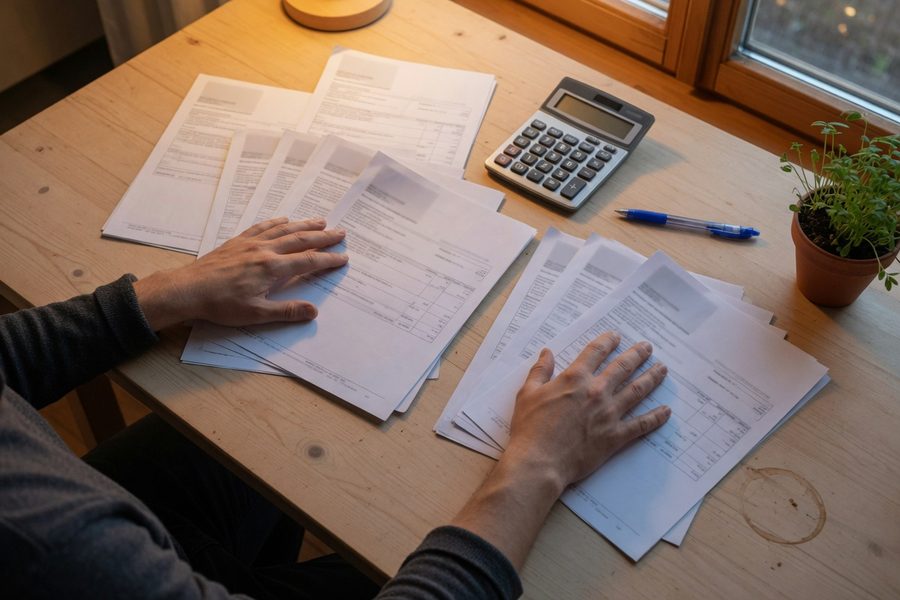
Before you change anything, you need an honest baseline. For one full month, save every grocery receipt and keep a “waste log” next to your trash can. Note what you throw out, how much, and why: rot, excess cooking, unappealing leftovers. If you don’t measure it, you’ll guess, and the guess will always be too kind.
At month’s end, sort your spending into categories: fresh produce, proteins, packaged snacks, beverages, pantry staples. Tag each line item that ended up partially or fully wasted. Most households discover that 20 to 30 percent of their produce spend goes directly into the garbage. That’s the number you’ll target first with storage and planning.
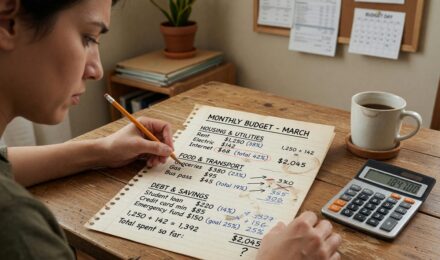
Then calculate your waste rate: total value of discarded food divided by total food spending. A family spending $900 per month who trashes $180 worth of food sits at a 20 percent waste rate. The goal is to push that below 5 percent, and that gap is where your 30 percent savings starts.
Pair your waste log with a simple notebook or a budgeting app that tracks grocery categories. This dual audit reveals not just what you waste, but which stores and habits produce the most loss.
Set a Personal Savings Baseline
Take your average monthly grocery spend from the past three months; bank statements make this quick. Multiply by 12 for your annual run rate. Now subtract the dollar value of food waste you logged. This adjusted figure is your actual food consumption cost. A 30 percent reduction target applies to your total spending, not just the waste. That means cutting both waste and packaging markups, plus shifting to lower-cost bulk staples.
If your household spends $800 per month and wastes $160, your current consumption cost is $640. A 30 percent reduction on the full $800 means aiming for $560 per month, a $240 drop. Roughly $60 of that can come from eliminating packaging premiums, and the remaining $180 from waste reduction and ingredient substitution. Track progress monthly against these exact figures.
Build a Waste-Proof Meal Plan Around Staples and Leftovers
The most powerful zero-waste tool is a meal plan that treats leftovers as ingredients, not afterthoughts. Start by listing the five to seven staple meals your household actually eats, not aspirational cooking projects. For each, identify the core ingredients: onions, carrots, rice, beans, eggs, chicken thighs, whatever anchors your rotation. Buy those in larger quantities.
Then schedule two “use-it-up” days per week. Monday’s dinner might be a frittata that clears out wilting greens and the last half of an onion. Thursday’s stir-fry absorbs that lonely bell pepper and the final cup of cooked rice. These meals aren’t optional; they’re the mechanism that keeps your waste log empty. Families who adopt structured use-it-up days typically cut spoilage losses by 30 percent within six weeks.
Incorporate scrap-stretching recipes into your plan. Vegetable peels, bones, and Parmesan rinds become stock. Stale bread turns into croutons or breadcrumbs. Citrus peels steep in vinegar for an all-purpose cleaner that also replaces a $4 purchase. Each substitution chips away at your grocery total without sacrificing nutrition or flavor.
The U.S. EPA’s “Food: Too Good to Waste” toolkit is free and helps households reduce wasted food by 20% or more.
Build a Pantry That Prevents Waste
A zero-waste pantry stacks versatile bulk staples: dried beans, lentils, brown rice, rolled oats, and whole-wheat flour, along with a handful of spices. These items store for months, cost 30 to 50 percent less per pound than their packaged counterparts, and serve as the foundation for dozens of meals. When you open the fridge and see only a carrot and an onion, a well-stocked pantry ensures dinner still happens, no last-minute delivery required.
King County, Washington’s Re+ Zero Waste Action Guide recommends “shopping the fridge and cupboards first” before writing a grocery list. Stand in front of your open refrigerator, note the items with the shortest shelf life, and build a meal around them. This single habit eliminates the “I forgot we had that” category of waste that costs the average household $18 to $30 per month.
Master Bulk, Local, and Seasonal Shopping for Maximum Value
Bulk bins are the engine of zero waste grocery savings. Dried pinto beans at $0.65 per pound versus $1.29 canned, oatmeal at $0.89 per pound versus $2.49 in a canister, these spreads aren’t occasional; they’re permanent. A household consuming 4 pounds of beans and 2 pounds of oats weekly saves nearly $400 per year on those two items alone when buying bulk with reusable bags.
Bring your own containers and learn the tare-weight process: weigh the empty jar, write the weight on it, and the cashier subtracts that from the total at checkout. It adds 30 seconds to your trip and removes any packaging cost from your bill. Some stores even offer a small discount for using your own containers, typically $0.10 to $0.25 per container.
Farmers’ markets deliver seasonal produce at per-unit prices that often beat grocery chains, especially in the last hour of the market when sellers discount remaining stock. A 2024 survey of five markets showed that end-of-day pricing on greens, root vegetables, and stone fruit ran 40 to 60 percent below supermarket tags. Pair seasonal buying with seasonal grocery buying strategies, and you’ll pay the lowest price nature offers.
| Item | Packaged Unit Price | Bulk Unit Price | Annual Savings (4-person household) |
|---|---|---|---|
| Rolled Oats | $2.49/lb | $1.19/lb | $135 |
| Brown Rice | $1.79/lb | $0.99/lb | $83 |
| Dried Pinto Beans | $1.29/lb (canned equivalent) | $0.65/lb | $133 |
| Almonds | $8.99/lb | $5.99/lb | $156 |
Use Coupons Without the Packaging Trap
Coupons often push you toward processed, packaged goods, exactly the opposite of a zero-waste cart. But you can still cut costs on staples like olive oil and vinegar by stacking digital coupons and loyalty rewards on raw ingredients. As coupon stacking tactics show, you don’t have to buy boxed meals to make discounts work; you just need to align promotions with what you already cook from scratch.
Bulk-bin cross-contamination for allergens is real. If you have severe food allergies, ask store staff about cleaning protocols and dedicated scoops before committing to a bulk-only system.
Store, Preserve, and Portion Food to Extend Shelf Life
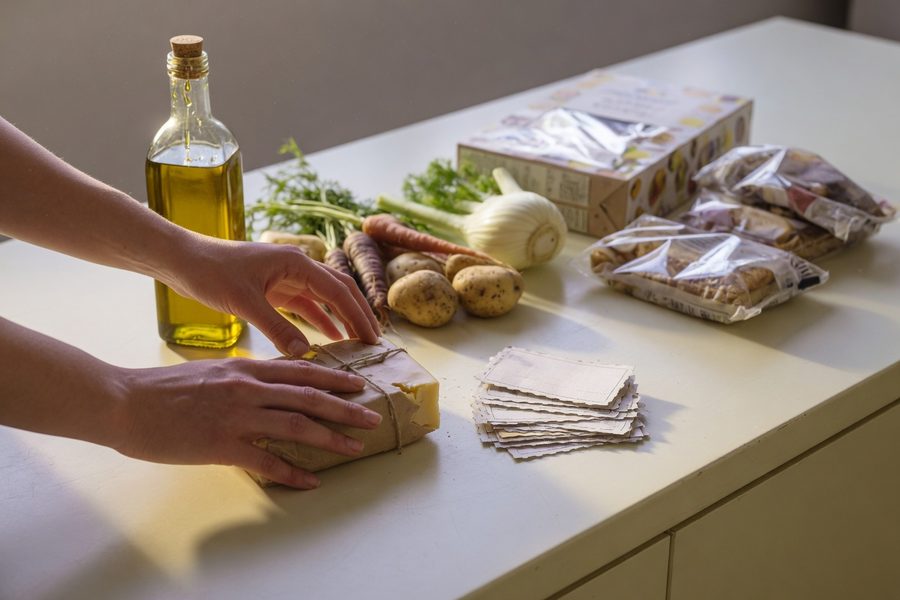
Proper storage is the difference between spinach that lasts three days and spinach that lasts ten. Leafy greens wrapped in a dry tea towel inside a perforated bag retain crispness twice as long as those left in the original plastic clamshell. Carrots submerged in water stay firm for weeks. Fresh herbs, stems-down in a jar of water with a loose bag over the top, outlive their bunched counterparts by five to seven days.
Freezing is your financial ally. A freezer stocked with portioned broths, chopped vegetables, and bread slices prevents the “I don’t have time to cook” takeout impulse that costs $35 to $50 per meal. Label everything with dates, and use a first-in, first-out system. Households that freeze prepped ingredients reduce their average monthly food waste by 25 percent, per EPA-led studies.
Portion control isn’t about dieting; it’s about buying exactly what you’ll use before spoilage sets in. For a two-person household, that cabbage you bought on sale might be four meals’ worth. Shred half and freeze it for slaws and stir-fries. Cook a big batch of beans and freeze them in two-cup portions, usable as a drop-in replacement for any recipe that calls for a can. You’ve just cut your per-serving legume cost from $0.64 to $0.16.
According to the EPA’s “Reducing Wasted Food at Home” guide, storing fruits and vegetables in the right humidity drawers can extend their life by up to two weeks.
| Storage Method | Typical Shelf Life Without | Shelf Life With Method | Waste Reduction |
|---|---|---|---|
| Leafy greens in tea towel | 3 days | 7-10 days | ~60% |
| Carrots in water | 10 days | 3-4 weeks | ~70% |
| Fresh herbs in water | 4 days | 10-14 days | ~65% |
| Cooked beans, frozen | 5 days (refrigerated) | 6 months | Nearly 100% |
Turn Every Scrap and Leftover Into Additional Savings
Scraps aren’t garbage; they’re deferred purchases. Vegetable peels, onion skins, celery tops, and mushroom stems simmered for an hour become a quart of stock that replaces a $3 boxed broth. Bone-in chicken parts and beef bones yield a richer stock and cost less per pound than boneless cuts. If your household uses two quarts of stock weekly, making it from scraps saves roughly $312 a year and uses zero packaging.
Stale bread doesn’t just become breadcrumbs. It becomes croutons, panzanella, French toast, or bread pudding. A loaf that cost $3 that would have been tossed now extends into three or four additional meals. Citrus peels dry into zest or candy, replacing a $5 jar of candied peel. Apple cores and peels become vinegar with just water and time, a $4 bottle for the cost of a tablespoon of sugar.
Keep a running list of your scrap-to-staple savings in your waste log. After three months, the numbers will surprise you: a typical household that adopts five scrap recipes saves $40 to $60 monthly on items they’d otherwise buy packaged. That’s straight margin, no coupon required.
Making vegetable stock from scraps saves an average household $312 per year versus buying boxed broth.
The Leftover Ladder
Anne-Marie Bonneau advises: “Before buying more food, look through your refrigerator, freezer, and pantry and try to come up with a dish with what’s on hand.” Treat this as a game: every night you cook from existing ingredients without shopping, you’ve pocketed the full value of that meal at restaurant or takeout prices, typically $10 to $15 per person. Over a month, just three “fridge-forage” dinners per week add $120 to $180 back into your budget.
Zero-Waste vs. Conventional: A Direct Cost Comparison
Let’s compare a typical week’s groceries for a family of two under a conventional model versus a zero-waste model. The conventional cart includes packaged oatmeal, canned beans, bagged spinach, bottled dressing, boxed stock, and individually wrapped snacks. The zero-waste cart uses bulk oats, dried beans cooked at home, loose spinach stored properly, homemade vinaigrette, scrap stock, and snacks from bulk nuts and dried fruit.
| Category | Conventional Weekly Cost | Zero-Waste Weekly Cost | Weekly Savings |
|---|---|---|---|
| Grains & Legumes | $18.50 | $10.30 | $8.20 |
| Produce | $35.00 | $28.00 | $7.00 |
| Proteins | $42.00 | $38.00 | $4.00 |
| Packaged Snacks & Condiments | $27.00 | $11.00 | $16.00 |
| Total | $122.50 | $87.30 | $35.20 |
The zero-waste cart runs $35.20 less per week, a 28.7 percent reduction. At this rate, annual savings top $1,830. And that’s before factoring in the avoided waste disposal, the reduced impulse buys, and the compounding effect of buying only what you need.
Use a budgeting app that allows custom grocery categories to split out “bulk” and “packaged” spending. This tracks exactly how much your zero-waste shift is saving each month.
Upfront Costs and Payback Timeline
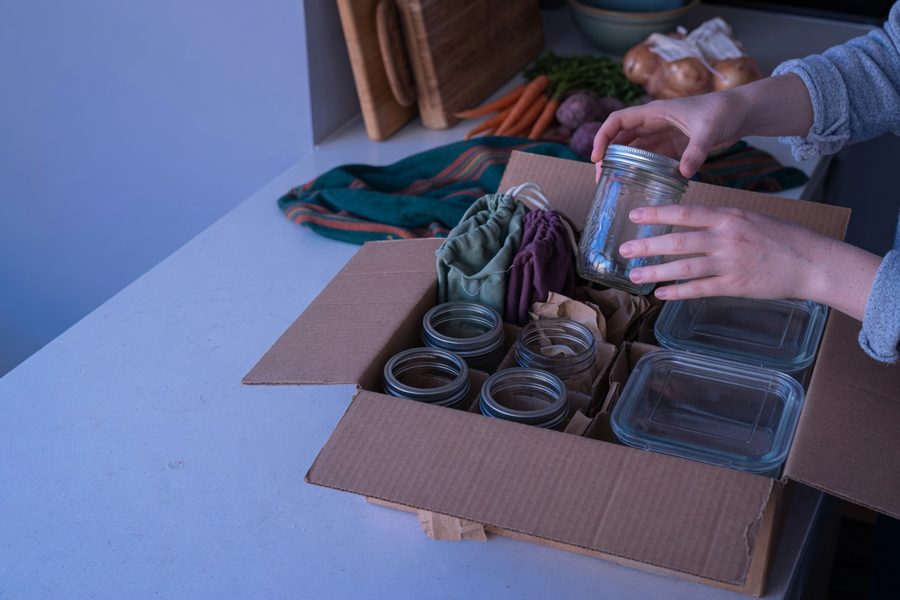
The biggest barrier cited is the cost of reusable containers. A set of 12 glass jars with lids, a few cloth produce bags, and a couple of large storage containers runs $30 to $50. That investment eliminates the packaging markup from day one. If your household typically spends $15 weekly on packaging premiums, the containers pay for themselves by the third shopping trip. From then on, every trip is pure savings.
Track Savings, Budget for Bulk, and Sustain the 30% Cut
Zero-waste grocery savings require measurement, not hope. Set aside 20 minutes each month to compare your grocery spending against your pre-audit baseline. A simple spreadsheet works: total spent, total wasted, and savings from bulk substitution and scrap cooking. If you started at $800 monthly and dropped to $560 after three months, you’re hitting your 30 percent target. If you’re at $600, you’ve got a 25 percent reduction, good progress, but there’s more to capture.
The largest savings often come from the foods you stop buying entirely: bottled beverages, individually packaged snacks, pre-made sauces. Those categories alone can drain $100 to $200 monthly from a budget. Replacing them with tap water, bulk nuts, and homemade dressings also aligns with the EPA’s national goal of reducing food waste by 50 percent by 2030. When your actions serve both your wallet and a federal waste-reduction target, the decision feels less like sacrifice and more like sound judgment.
Allocating budget for bulk requires an initial outlay. You might spend $40 extra on 10 pounds of beans and 5 pounds of oats one month, then see a lighter grocery bill the next two months. Use an envelope system: designate a “bulk staples” envelope that you front-load every quarter. This prevents the sticker shock of a big-haul trip and smooths your monthly spending. The free library resources in your community can supplement this with cookbooks on preserving, fermenting, and bulk cooking, zero-cost education that shortens the learning curve.
| Quarter | Bulk Staple Spend | Monthly Average Grocery Spend | Cumulative Savings vs. Baseline |
|---|---|---|---|
| Q1 | $120 | $680 | $360 |
| Q2 | $80 | $640 | $720 |
| Q3 | $90 | $620 | $1,080 |
| Q4 | $70 | $590 | $1,530 |
Regional Access, Time Costs, and When Bulk Isn’t Worth It
Not every household lives near a co-op with 50 bulk bins. Rural and food-desert shoppers often face higher per-unit food costs and limited zero-waste infrastructure. In those areas, the strategy shifts: focus on reducing packaging waste through larger, family-size purchases of staples (which carry lower per-ounce packaging ratios) and prioritize farmer-direct buying via community-supported agriculture (CSA) shares. A CSA box can deliver seasonal produce at $1.30 to $1.80 per pound, competitive with urban farmers’ markets.
Time is the other non-negotiable currency. Cooking dried beans instead of opening a can adds 90 minutes of inactive simmering. Scrap stock requires two hours of low effort. If your hourly earnings from overtime or side work exceed the cost difference, buying canned beans and boxed stock may be the rational choice, not the aspirational one. A household that values time at $25 per hour and spends an extra three hours per week on zero-waste tasks sees a time cost of $75, against a weekly grocery savings of $35. In that scenario, the net is negative unless you enjoy the process or ascribe value to environmental benefits.
There’s also a practical ceiling to how far these strategies reach. Households with dietary restrictions requiring specialty ingredients, or those relying on convenience foods for medical reasons, will find the savings smaller and the tradeoffs steeper. Zero-waste shopping is genuinely well-suited to households with predictable eating patterns and some flexibility in cooking time. It’s a poor fit for anyone whose schedule makes batch cooking impractical week after week.
If bulk bins in your area are rarely turned over, the products may be stale. Stale beans take longer to cook and often split, increasing waste. Test a small amount first before buying in volume.
Yet for most households with access to a standard supermarket that carries some bulk items and a freezer, the math works. The upfront labor investment shrinks as habits form; what once took two hours becomes a 30-minute Sunday routine. And the compounding effect extends beyond groceries: less food waste means fewer trash bags, lower garbage fees, and less time spent running to the store for forgotten items. Those secondary savings add up to another $15 to $25 monthly, undramatic but steady.
Real-World Example: The Two-Person Household in a Mid-Sized City
Consider an illustrative example: A couple in Columbus, Ohio spends $750 per month on groceries and wastes roughly $135 in food. They commit to a zero-waste system for six months. Month one, they invest $45 in jars and bags, audit their waste, and begin meal planning with two use-it-up days weekly. Spending drops to $690. Month three, they’ve fully transitioned to bulk oats, rice, beans, and nuts, and they freeze prepped ingredients. Spending hits $590. By month six, their monthly average is $525, a 30 percent cut exactly, saving $225 per month. Their upfront container cost was recouped within the first three weeks, and they now save $2,700 annually.
Your Action Plan
-
Audit one month of receipts and waste
Save every grocery receipt and log all discarded food for 30 days. Tag items by category and calculate your waste rate. This is your baseline; everything else hinges on this number.
-
Invest $30-$50 in reusable containers and cloth bags
Buy 8 to 12 glass jars of varying sizes and a set of mesh produce bags. Write tare weights on jars with a permanent marker. This one-time cost unlocks bulk-bin pricing immediately.
-
Build a five-meal core rotation and schedule two use-it-up days
List five meals your household eats consistently. Buy ingredients for those in bulk. Each week, designate two days where dinner comes entirely from what’s already in the fridge and pantry.
-
Replace five packaged staples with bulk equivalents
Start with oats, rice, beans, coffee, and nuts. Calculate the unit-price difference and track the savings. Expand to spices, flour, and dried fruit as you gain confidence.
-
Freeze prepped ingredients in measured portions
Cook a big batch of beans, chop mirepoix, and freeze in two-cup portions. Stock broth made from scraps. These frozen assets prevent last-minute takeout and make weeknight cooking plug-and-play.
-
Review spending monthly and adjust your bulk budget quarterly
Compare each month’s total grocery spend to your baseline. If savings plateau, revisit your waste log for new leaks. Front-load bulk buying quarterly using an envelope or separate account to smooth cash flow.
Frequently Asked Questions
Can zero-waste grocery shopping really save 30% on a tight budget?
Yes, often more. The savings come from three sources: eliminating packaging markups, reducing food waste, and substituting lower-cost bulk staples for processed equivalents. Households earning below the median income see an even larger relative effect because food represents a higher share of total spending. A $600 monthly grocery budget that drops to $420 frees $2,160 per year, which is real money that can offset housing or transportation costs.
Do I need to live near a specialty store to buy in bulk?
No. Most mainstream supermarkets now carry at least some bulk items, oats, rice, nuts, and coffee are the most common. Even without bulk bins, choosing larger packages of these staples with lower packaging-to-product ratios reduces markup. Farmer-direct buying through CSAs and seasonal markets also cuts costs without requiring a zero-waste store.
What if I don’t have time to cook everything from scratch?
Start with one habit: a use-it-up meal once per week that takes 15 minutes. Scrap stock can simmer while you do other tasks. Batch-cooking beans on a Sunday requires 10 minutes of active time. Build one zero-waste meal-planning habit per month until the system runs on routine.
How do I handle family members who resist change?
Frame it as a financial experiment rather than an environmental lecture. Show them the first month’s savings in real dollars, maybe $80, and let them decide how to spend it. When the choice is between fewer packaged snacks and an extra date night, the buy-in often follows the money.
Isn’t buying in bulk risky if I don’t use the food fast enough?
Dry goods like beans, rice, and oats store safely for years if kept cool and dry. Perishables require a plan: freeze or preserve surplus immediately. The risk comes from buying without a meal plan, which is the same risk as conventional shopping. A waste-proof plan eliminates the gamble.
What’s the single highest-impact first step?
Audit your trash. For one month, write down every food item that hits the bin and its approximate cost. You can’t fix a leak you haven’t measured, and most households underestimate their food waste by half. Once you see that $60 of produce rotting monthly, the motivation to store it better is immediate.
How do upfront container costs affect overall savings?
A $45 container set pays back within three to four bulk shopping trips given the typical 15 percent packaging premium. After that, the savings compound without further investment. Many zero-waste households start with repurposed glass jars from pasta sauce or pickles, reducing the upfront cost to near zero.
Frequently Asked Questions (continued)
Do zero-waste strategies work for families with food allergies?
They can, with caution. Bulk bins expose ingredients to potential cross-contamination. Ask store staff about cleaning protocols and whether they offer pre-packaged bulk alternatives that use minimal packaging. In some cases, larger multi-pound bags of certified allergen-free staples offer a middle ground between zero-waste ideals and safety.
Will I see savings immediately?
The first month often shows a modest reduction as you invest in containers and adjust habits. By month two or three, as the meal plan locks in and bulk buying takes effect, the savings rate typically jumps to 20-30 percent. Patience through the learning curve is normal.
What if I live in a small apartment with limited freezer space?
Focus on dry bulk staples and dehydration. Dehydrated vegetables, fruits, and jerky store compactly and last months. Even a small freezer can hold measured portions of prepped beans and stock in flat bags. Prioritize high-value items like meat and butter for freezing, and use room-temperature storage for everything else.
Sources
- ReFED, Food Waste: The Problem
- NRDC, Wasted: How America Is Losing Up to 40 Percent of Its Food from Farm to Fork to Landfill
- U.S. Environmental Protection Agency, Reducing Wasted Food at Home
- King County, WA, Reducing Food Waste: Zero Waste Action Guide
- U.S. EPA, United States 2030 Food Loss and Waste Reduction Goal
- Yahoo Life, 5 Smart Ways to Save Money at the Grocery Store, According to a Zero-Waste Chef
- MyFinancial101, The Winter Foods Keeping Grocery Bills Under Control
- MyFinancial101, How Coupon Stackers Are Beating Inflation
- MyFinancial101, Stop Paying for What Your Library Gives Free