Fact-checked by the MyFinancial101 editorial team
Quick Answer
To start couponing without wasting hours, pick one store, download its loyalty app, and add a single cashback app like Ibotta. Most beginners spend 3–4 hours per week in month one, dropping to under 2 hours per week by month four. Focus on digital coupons first: they cover the majority of available savings with no clipping, no binder, and no Sunday paper required.
Learning how to start couponing is simpler than most people expect, provided you ignore the extreme-couponing playbook that defined the hobby a decade ago. The average household that uses digital coupons consistently can save up to $1,465 per year according to Capital One Shopping’s 2025 coupon research, but more than one-third of digital coupon users report saving a more modest $10–$25 per month in practice. Both figures are honest, and where you land depends almost entirely on how focused your system is.
As of early 2026, the coupon landscape has shifted decisively toward mobile. 43% of grocery shoppers now redeem coupons through smartphone apps in-store, compared to only 23% who still cut paper coupons from printed circulars, per a UNFI and Swiftly survey reported by Supermarket News. That shift makes a paper-free beginner system not a shortcut but the current norm. The challenge is no longer finding coupons; it is building a habit that stays efficient as the novelty wears off.
This guide is for anyone who wants real grocery and household savings without turning coupon-hunting into a part-time job. By the end, you will have a working digital system, a clear weekly routine, and an honest picture of where couponing pays off and where it does not.
Key Takeaways
- 169.2 million Americans redeemed digital coupons in 2025, according to Capital One Shopping Research, making digital couponing mainstream rather than a niche habit.
- Beginners typically invest 3–4 hours per week in month one, but that time drops to 1–2 hours per week by month four as the learning curve flattens, a timeline almost no competing guide acknowledges.
- The highest-yield coupon categories are personal care and beauty (up to 8.6% savings on spend) and groceries, which account for roughly $316 in average annual household savings.
- The overspending risk is real: 31% of American consumers buy more than they intended when they have a coupon, so savings only count on items already on your list.
- A three-layer digital stack, store loyalty coupon, manufacturer cashback app (Ibotta or Fetch), and a cashback portal (Rakuten), can be applied to the same item and requires zero paper.
- 57% of U.S. adults use digital coupon codes at least a few times per year, per a 2024 CivicScience poll, confirming that the basic skill is already widespread, the differentiator is doing it systematically.
In This Guide
- Step 1: Get an Honest Picture of What Couponing Actually Takes
- Step 2: Pick One Store and Learn It Before Adding Others
- Step 3: How Do I Find Coupons Without Falling Down a Rabbit Hole?
- Step 4: What Is Coupon Stacking and How Do I Actually Do It?
- Step 5: Build a Minimal Weekly Routine That Stays Under 30 Minutes
- Step 6: What Should I Coupon First? The Categories Where It Really Pays Off
- Step 7: How Do I Know If My Couponing Is Actually Working?
- Frequently Asked Questions
Step 1: Get an Honest Picture of What Couponing Actually Takes
Before you clip a single coupon, set accurate expectations about time and money, because the two biggest reasons beginners quit are overestimating savings and underestimating the learning curve. Most top-ranking guides skip this conversation entirely.
The Time Investment by Phase
Beginners typically spend 3–4 hours per week during the first month. That sounds like a lot because it is, you are simultaneously learning a new store’s app, figuring out which coupon apps to trust, and understanding what “stacking” means in practice. By month two, that time usually drops to around 2–3 hours. By month four, most people with a consistent digital-only system are under 2 hours per week, often closer to 30–45 minutes.
The decay curve is real, but it does not happen automatically. It happens because you stop exploring and start executing a routine. If you approach couponing as a system to build rather than a deal to chase, the time cost becomes manageable.
The Honest Savings Range
A modest, consistent couponer saves $10–$25 per month. A household that uses loyalty apps, cashback apps, and occasional stacking on a targeted list can reach $100+ per month. The Capital One Shopping 2025 data puts the annual ceiling for active digital coupon users at around $1,465 per year, but that figure reflects households who are strategic and consistent, not casual users.
Think of your savings as an hourly rate. If a 30-minute prep session saves you $15 at the register, that is a $30-per-hour return. That framing makes it a personal finance skill with measurable ROI, not just a hobby. For more ways to find incremental savings across your budget, see our coverage of how coupon stackers are beating inflation.
What to Watch Out For
The single biggest threat to your savings is the coupon-triggered impulse buy. 31% of American consumers buy more than they intended when they have a coupon in hand, and 38% of shoppers admitted to spending more than planned specifically because of a coupon offer. Savings only count on items already on your list. If a $1.50 coupon causes you to buy a $6 product you would not have purchased otherwise, you spent $4.50 more than you would have without the coupon.
Coupon users, on average, spend 18–25% more per shopping trip than non-coupon users. The habit is profitable only when it is paired with a pre-written shopping list. Never browse coupons first and build your list around what is on offer; that is the impulse-spend trap in its most common form.
Step 2: Pick One Store and Learn It Before Adding Others
The single most time-saving move a beginner can make is committing to one store for the first 60 days. Every retailer has its own loyalty program logic, stacking rules, sale cycle timing, and digital coupon quirks. Trying to master three stores at once is the primary reason beginners burn out inside the first month.
Which Stores Are Most Beginner-Friendly
Three retailers consistently offer the clearest beginner experience in 2026:
- Target (Circle app): Target Circle offers percentage-off coupons on specific items, and the app allows stacking a Circle offer on top of a manufacturer coupon from the app’s barcode scanner. The rules are explicit and the app is intuitive.
- Kroger and Kroger-banner stores (Kroger app): Kroger loads personalized digital coupons directly to your loyalty card. You clip in the app, scan your card at checkout, and discounts apply automatically. No paper required.
- CVS (ExtraCare app): CVS runs a rolling rewards system called ExtraBucks. Personal care and health items frequently have manufacturer coupons that stack cleanly with ExtraBucks offers, and the savings percentages in those categories are among the highest you will find anywhere.
Pick whichever of these is closest to where you already shop. The point is not to find the theoretically best store, it is to reduce friction so you actually follow through.
What to Watch Out For
A common beginner mistake at Kroger-family stores: the store will automatically apply your clipped digital coupon at checkout, and in some cases this will block a higher-value paper manufacturer coupon from being accepted on the same item. The register sees two manufacturer discounts on one product and rejects the second one. Know this before you stand at a self-checkout lane confused about why your paper coupon is not scanning.
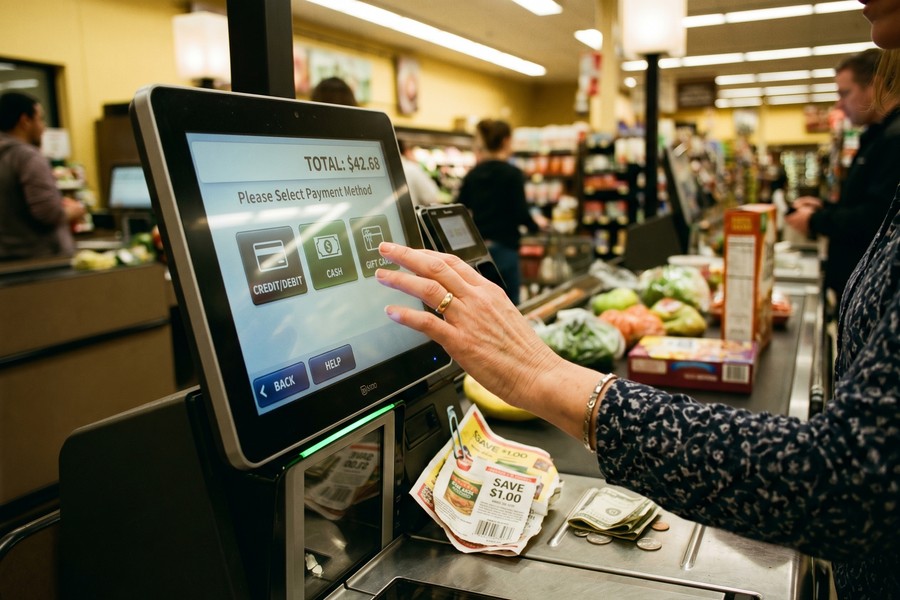
Before your first couponing trip, read the store’s coupon policy page on its website. Target, Kroger, CVS, and most major chains publish their stacking rules explicitly. A 10-minute read before your first trip prevents 90% of checkout-lane confusion.
Step 3: How Do I Find Coupons Without Falling Down a Rabbit Hole?
The most efficient source of coupons for most working adults in 2026 is the store’s own loyalty app, clipped two minutes before you leave for the store. That single step captures the majority of available savings with the least time investment.
Ranking Sources by Time-to-Savings Ratio
Not all coupon sources are worth your time equally. Here is a practical ranking for beginners:
- Store loyalty app: Clip personalized offers in 2–5 minutes. Discounts apply automatically at checkout. No physical coupons to track.
- Ibotta: A manufacturer cashback app where you select rebates before shopping, buy the item, and submit a photo of your receipt. Works across most major grocers and drug stores.
- Fetch Rewards: You scan any grocery receipt after shopping and earn points redeemable for gift cards. Less targeted than Ibotta but requires zero pre-planning.
- Rakuten: A cashback portal useful for online grocery orders and drugstore purchases made through a retailer’s website.
- Sunday newspaper inserts: Still a source of manufacturer coupons, but sorting, clipping, and remembering to bring paper coupons takes 3–4 times longer than digital alternatives for comparable savings.
According to Capital One Shopping’s 2025 research, 34% of U.S. consumers find coupons through social media, while 51% source them from couponing blogs and social media accounts. That said, following coupon influencers is a time sink for beginners, start with two apps before adding any external sources.
The Three-Layer Digital Stack
The most powerful no-paper setup involves three layers that can all apply to the same item: a store digital coupon, a manufacturer cashback rebate through Ibotta, and a cashback portal if you are ordering online through Rakuten. Each layer is offered by a different party (store, manufacturer, and cashback network), so they do not conflict with each other. Walk through one example: a box of cereal is $4.99, with a $0.75 store digital coupon clipped, a $1.00 Ibotta rebate available, and 3% cash back through Rakuten on an online grocery order. Your net cost is approximately $3.09 on a $4.99 item.
Americans redeemed 871 million coupons in 2024, with 465.5 million of those being digital, up 10.8% year-over-year, according to Capital One Shopping Research citing Inmar Intelligence data. Digital is not the future of couponing; it is the present.
Below is a comparison of the most useful beginner coupon sources so you can choose the two-app setup that fits your shopping habits.
| Source | Type | Avg. Setup Time | Avg. Monthly Savings (casual use) | Paper Required |
|---|---|---|---|---|
| Store Loyalty App (Kroger/Target/CVS) | Store digital coupon | 5 min to sign up | $10–$20 | No |
| Ibotta | Manufacturer cashback | 10 min to set up | $10–$30 | No |
| Fetch Rewards | Points/cashback | 5 min to set up | $3–$10 in gift cards | No |
| Rakuten | Online cashback portal | 10 min to set up | $5–$15 (online orders) | No |
| Sunday Newspaper Inserts | Paper manufacturer coupon | 30–60 min/week to clip and sort | $5–$20 | Yes |
| Coupons.com / RetailMeNot | Printable/digital codes | 10–20 min/week to search | $5–$15 | Sometimes |
Step 4: What Is Coupon Stacking and How Do I Actually Do It?
Coupon stacking means applying more than one discount to the same item in a single transaction. When done correctly, it is the most significant multiplier available to a home shopper, and it is largely misunderstood by beginners because the rules differ by store and by coupon type.
A Concrete Stacking Example
Here is how a real stack works on a bottle of shampoo priced at $6.99:
- Store sale price reduces it to $4.99.
- A store digital coupon (Target Circle, for example) removes another $1.00, bringing it to $3.99.
- A manufacturer coupon (paper or digital from the manufacturer’s own app) removes $1.50, bringing it to $2.49.
- An Ibotta rebate of $1.00 posts to your account after submitting your receipt, making your effective cost $1.49.
That is a savings of $5.50 on a $6.99 item, or about 79%. The compounding effect is why experienced couponers focus on personal care items: the category consistently offers both store coupons and manufacturer rebates on the same products.
The Rules That Trip Beginners Up
Two manufacturer coupons can never be used on a single item. One coupon must come from the store (a store brand offer or loyalty discount) and one from the manufacturer. Mixing two manufacturer coupons, whether both paper or one digital, is the most common stacking mistake at checkout. Most POS systems reject it automatically, but knowing the rule in advance prevents confusion.
The Kroger-specific conflict mentioned earlier is worth repeating here: when Kroger auto-applies a clipped digital coupon at checkout, the register treats it as a manufacturer discount. If you also present a paper manufacturer coupon for the same item, one will be rejected. In that situation, use whichever coupon has the higher face value and leave the other off the transaction.
“One coupon per transaction” means the coupon is good once per checkout, regardless of how many qualifying items are in your cart. “One coupon per purchase” means it applies to each individual qualifying item. Reading that fine print takes five seconds and prevents checkout-lane frustration.
Digital coupons now represent 26.5% of all coupons issued in the U.S., a figure that rose 68.8% year-over-year in 2024, according to Capital One Shopping Research. The shift is structural, not cyclical, which is why building a digital-first stacking system has a longer shelf life than any paper-based approach.
Step 5: Build a Minimal Weekly Routine That Stays Under 30 Minutes
A sustainable couponing habit requires a fixed routine, not daily browsing. The beginner who checks deal sites every morning will burn out within a month. The beginner who follows a three-checkpoint weekly schedule will still be saving money a year from now.
The 30-Minute Weekly Routine
This routine works for a digital-only system and requires no paper or binder:
- Sunday evening (10–15 minutes): Open your store’s loyalty app and clip all relevant coupons for items on your shopping list. Open Ibotta and add rebates for the same items. Resist clipping or adding anything not already on your list.
- Wednesday check (5 minutes): Many stores, including Kroger and Target, refresh digital coupons mid-week. A quick scan takes five minutes and occasionally surfaces a relevant offer you missed on Sunday.
- In-store (0 extra minutes): Scan your loyalty card or open the app at checkout. Everything you clipped applies automatically. Submit your receipt to Ibotta or Fetch when you get home, which takes under two minutes.
Paper Coupons: When They Are Worth It
If you shop at a store like Walgreens or a regional grocery chain that still offers strong paper manufacturer coupons, a simple accordion file sorted by expiration date is all the organization you need. Elaborate binder systems with plastic sleeves and category tabs add significant time without proportionate savings for anyone saving less than $100 per month. The binder method belongs to a category of couponing advice that is still widely circulated but rarely reflects how most people actually shop in 2026.

For broader budget-management ideas that pair well with a couponing routine, our guide on winter foods that keep grocery bills under control covers seasonal purchasing strategies that work alongside digital coupons rather than competing with them.
Set a recurring 10-minute calendar reminder for Sunday evenings labeled “grocery prep.” That single habit change, more than any app or strategy, is what separates people who save consistently from those who save occasionally. The reminder removes the decision fatigue of remembering to do it.
Step 6: What Should I Coupon First? The Categories Where It Really Pays Off
Not all product categories offer the same coupon yield, and beginners who spread attention across every department tend to save less, not more. Concentration on two or three high-return categories is more efficient than chasing deals everywhere.
Where the Savings Are Actually Largest
Personal care and beauty items consistently offer the highest percentage savings, up to 8.6% of spend, and the category is routinely targeted by both store loyalty programs and manufacturer cashback apps simultaneously. Shampoo, body wash, razors, toothpaste, and vitamins are where stacking delivers the most dramatic results relative to normal retail price.
Grocery staples, canned goods, cereal, frozen meals, dairy, account for roughly $316 in annual savings for the average household that coupons consistently. The per-item savings are smaller, but the purchase frequency is high enough that small discounts accumulate quickly over 52 weeks.
Household cleaning products fall in the middle: coupons are widely available, product prices are moderate, and the 12-week sale cycle (described below) applies reliably.
The 12-Week Sale Cycle
Most grocery and household products rotate through a sale price roughly every 12 weeks. This is one of the most practical planning concepts in couponing, yet almost no beginner guide covers it. Once you know the cycle, you have two options when a product goes on sale: buy enough to last until the next sale cycle, or combine the sale price with a coupon for maximum savings. Either way, you stop buying items at full price.
The practical implication: if you miss a sale on laundry detergent this week, waiting is almost always better than using a small coupon on a full-price item. A $0.50 coupon on a $12 bottle saves you less than buying the same bottle at $7.99 on sale in two months with no coupon at all.
What to Watch Out For
Electronics, apparel, and travel are low-yield coupon categories. Travel coupons average savings of only around 2.2% of spend, a fraction of what personal care items return. Beginners who spend time hunting for electronics deals are investing effort in a category that rarely rewards it. Focus on consumables you buy every month.
If grocery savings are a central goal for your household, our article on budget-friendly meal planning shows how strategic shopping and couponing can combine to bring even special occasions in under budget.
Step 7: How Do I Know If My Couponing Is Actually Working?
Tracking your savings does not require a spreadsheet in the first month. Most major grocery receipts already print a “You Saved” total at the bottom. For four consecutive weeks, write that number down or photograph the receipt. At the end of the month, add the four totals and compare it to the time you spent.
Setting a Minimum Threshold
If you are spending 2 hours per week on couponing and saving $20 per month, the hourly return is about $2.50. That may be worth it to some people and not to others. The honest answer is that couponing is a tool, not a mandate, and if the return does not justify the time given what else you could do with those hours, it is reasonable to scale back or stop.
A more realistic target for a beginner who follows a digital-only system for 60 days is $30–$60 per month in verified savings, which at 1–2 hours per week represents a return most people find worthwhile. If you are not approaching that range after two months, the most common causes are: buying items not already on your list, using coupons in low-yield categories only, or skipping the Ibotta/cashback layer entirely.
When to Scale Up
Once the one-store routine runs on autopilot, meaning you can execute the weekly routine in under 20 minutes, adding a second store is reasonable. Add only one at a time. The same logic applies to adding new apps: master Ibotta before adding Fetch, and add Fetch before exploring Rakuten. Each addition adds a small amount of overhead, and stacking too many systems too quickly is how the habit collapses.
For households managing tighter budgets where every dollar counts, it is worth knowing about programs that can supplement your savings. Our guide to SNAP benefits and current eligibility changes and the overview of 2026 poverty guideline updates cover assistance programs that work alongside, not instead of, smart shopping habits.
Frequently Asked Questions
How much money can a beginner realistically save per month with coupons?
A beginner using a digital-only system consistently can expect to save $10–$25 per month in the first few months, with the ceiling closer to $50–$100 per month once stacking is part of the routine. The Capital One Shopping 2025 data puts the annual maximum for active digital coupon users at around $1,465, but that figure applies to highly consistent households, not casual beginners. Setting a realistic target of $30–$60 per month after 60 days of practice is fair and achievable.
Do I really need a coupon binder to start couponing?
No. A coupon binder is only necessary if you rely heavily on paper manufacturer coupons, which most beginners do not need to do in 2026. 57% of U.S. adults already use digital coupons at least a few times per year, per a 2024 CivicScience poll, and the digital systems available through store loyalty apps and cashback apps cover the majority of savings opportunities with no physical organization required. If you later add paper coupons, a simple accordion file is enough.
Is Ibotta actually worth it, or is it just another app taking up phone space?
Ibotta is worth it for anyone who shops at a major grocery chain or drug store at least twice a month. The app offers manufacturer cashback rebates that layer on top of store digital coupons, meaning they apply to the same item without conflicting. Most casual users earn $10–$30 per month through Ibotta alone. The time cost after setup is roughly two minutes per shopping trip: select relevant offers before you shop, submit your receipt afterward.
Can I use a coupon and a store sale price at the same time?
Yes, and you should. Combining a sale price with a coupon is the foundation of effective couponing. A manufacturer coupon applied to a sale-price item stacks both discounts automatically at checkout. This is legal, expected by retailers, and the standard practice that makes the personal care and grocery categories so high-yield for couponers. The only restriction is that you cannot stack two manufacturer coupons on a single item.
What is the easiest way to start couponing for groceries specifically?
Download your primary grocery store’s loyalty app, create an account, and spend five minutes clipping digital coupons for items on your next shopping list before you leave the house. That single action is the easiest and most time-efficient entry point into couponing for groceries. Adding Ibotta as a second step after your first trip gives you a manufacturer cashback layer on top with no additional in-store effort.
Should I use paper coupons or digital coupons as a beginner?
Start with digital coupons only. Paper coupons require clipping, sorting, and remembering to bring them, which adds 30–60 minutes of weekly overhead for savings comparable to what a loyalty app delivers in five minutes. Once the digital routine runs smoothly, paper coupons can be added selectively for high-value manufacturer offers on items you already buy. The UNFI and Swiftly survey found that 43% of grocery shoppers now use digital coupons in-store versus only 23% using paper, which reflects the practical reality of how most people shop today.
How do I avoid spending more money because of coupons?
Write your shopping list before opening any coupon app, and commit to clipping only for items already on the list. Shopping with a pre-written list and then checking for applicable coupons is the safest behavioral pattern. Browsing coupons first and building your list around deals is the habit that drives impulse spending. Research shows 31% of consumers buy more than intended when they have a coupon, so the discipline of list-first is the single most important rule for keeping couponing profitable.
Which cashback apps work best together without overlapping?
Ibotta (manufacturer cashback), your store’s loyalty app (store digital coupons), and Rakuten (cashback portal for online orders) operate through different parties and do not conflict with each other. Fetch Rewards also works alongside all three because it operates as a points system rather than a coupon. The practical limit for most beginners is two to three apps: store app plus Ibotta covers the majority of in-store savings without adding management overhead.
How long before couponing stops feeling like a chore?
Most people find the weekly routine feels routine rather than effortful by the end of month two. The first month involves a learning curve, understanding your store’s app, learning which categories offer the best rebates, and making a few checkout-lane mistakes. By month three, the workflow is familiar enough that it runs in the background of a normal pre-shopping routine. The key is committing to one store and two apps for the first 60 days rather than experimenting with multiple systems simultaneously.