Fact-checked by the MyFinancial101 editorial team
Quick Answer
To build an emergency fund paycheck to paycheck, start with a $500–$1,000 target rather than the standard 3–6 months, and automate transfers of even $10–$25 per paycheck to a separate high-yield savings account. At $25 per paycheck on a biweekly schedule, you reach $1,000 in roughly 20 months without changing anything else.
Building an emergency fund paycheck to paycheck feels contradictory when every dollar is already spoken for, but the data makes a case for starting anyway. According to Bankrate’s 2026 Emergency Savings Report, 24% of Americans have no emergency savings at all, and just 47% say they could cover a $1,000 unexpected expense with cash on hand. A tight budget does not disqualify you from building a cushion; it makes the stakes higher.
Economic uncertainty in 2026 is doing households no favors, and the absence of even a small cash buffer is what turns a flat tire or a missed shift into a cycle of debt. This guide covers how to set a realistic first goal, find room in a budget that already feels maxed out, earn small amounts on the side without burning out, and automate the process so it happens whether or not you remember to act on it.
Key Takeaways
- 24% of Americans carry zero emergency savings, leaving them one unexpected bill away from debt (Bankrate, 2026).
- Only 46% of Americans have enough savings to cover three months of expenses, meaning most households are already operating without a full safety net (Bankrate, 2026).
- 58% of U.S. adults report having less or the same emergency savings as a year ago, reflecting how persistent financial pressure stalls progress (Bankrate, 2026).
- Automating just $10 per paycheck produces $520 in savings over one year with no other lifestyle change beyond setup.
- The Consumer Financial Protection Bureau recommends splitting direct deposit and holding funds in a separate, accessible bank account as the most reliable method for building savings on any income level (CFPB Emergency Fund Guide).
In This Guide
Why an Emergency Fund Matters More When Money Is Already Tight
For households with no financial buffer, a single $400 setback is not an inconvenience, it is a decision between paying rent and paying it late. The Federal Reserve’s 2026 survey found that 63% of adults could cover a hypothetical $400 emergency with cash or its equivalent, according to the Board of Governors of the Federal Reserve System’s 2026 household report. That means roughly 37% could not, and for that group, the alternative is a credit card, a payday loan, or a missed bill, each of which compounds the original problem.
Why Even $500 Changes the Math
Standard personal finance advice calls for three to six months of expenses in reserve. For someone earning $2,800 a month after taxes, that’s $8,400 to $16,800, a figure so distant it can make starting feel pointless. The more defensible position: a $500 to $1,000 fund eliminates the most common financial emergencies for most households. Car repairs under $600, a co-pay for an urgent care visit, a broken appliance, these are the events that derail paycheck-to-paycheck budgets and push people toward high-interest debt.
Carrying credit card debt while trying to save is a genuine tension. If your interest rate is high, paying down debt aggressively makes mathematical sense. But keeping zero savings while doing so leaves you exposed to the very shocks that caused the debt in the first place. The more practical approach, endorsed by the Consumer Financial Protection Bureau, is to build a small starter fund first, then accelerate debt payments. Even $500 in a separate account can prevent a setback from becoming a new debt spiral. If you’re also managing existing balances, our guide to credit card debt prioritization and creditor negotiation covers how to sequence both goals without sacrificing either.
Only 46% of Americans have enough emergency savings to cover three months of expenses, and 58% report having less or the same savings as a year ago, according to Bankrate’s 2026 Emergency Savings Report. The majority of U.S. households are already in a fragile position.
Set a Realistic Starting Goal, Not an Overwhelming One
$1,000 is the standard first milestone because it covers the most statistically common emergency expenses without requiring years of sacrifice to reach. For households with highly variable income, gig workers, hourly employees with inconsistent schedules, or single parents, an even smaller initial target like $250 or $500 makes sense. The goal is to create any buffer before expanding it.
Micro-milestones matter more than most advice acknowledges. Celebrating $100 saved, then $250, then $500 builds the behavioral habit the same way any repeated action does: through small, visible wins. A household that feels progress is more likely to continue than one staring at a $10,000 target with $47 saved. If your income is irregular, set your goal as a dollar amount per pay period rather than a monthly target, that way, a slow week does not feel like a failure against a fixed number.

How Do You Find Money in a Budget That’s Already Maxed Out?
Most paycheck-to-paycheck budgets do contain discretionary spending, it just rarely feels discretionary. The honest starting point is a spending audit, not a lecture about lattes. Pull three months of bank and credit card statements and separate every transaction into two categories: fixed obligations (rent, utilities, loan minimums, insurance) and everything else. The “everything else” column almost always contains redirectable dollars.
Identifying Invisible Leaks
Subscription fees are the most common culprit. A gym membership used twice a month, a streaming service duplicated across two accounts, or a free trial that rolled into a paid plan, these are recurring charges that survive on inertia rather than active choice. Bank fees are the next target: overdraft fees, monthly maintenance charges, and out-of-network ATM fees can run $10 to $35 per occurrence, money that evaporates before it can be redirected. Switching to a no-fee checking account or a credit union eliminates these entirely.
Grocery spending is genuinely variable even when it feels fixed. Meal planning around weekly sales and buying store-brand staples consistently shaves 15% to 20% off the average grocery bill without requiring deprivation. Using loyalty programs, digital coupons, and cashback apps compounds the savings. For deeper tactics on this, see how coupon stackers are beating inflation with strategies that work even on a minimal budget.
The average overdraft fee in the U.S. has historically run between $25 and $35 per transaction. A household that overdrafts twice a month is paying up to $840 per year in fees alone, enough to fund a meaningful emergency starter fund if those charges are eliminated by switching account types.
Planning for Zero-Surplus Weeks
Some weeks genuinely leave nothing over. This is especially true for hourly workers, gig economy participants, and anyone supporting dependents on a single income. Rather than abandoning the savings habit during lean periods, plan for them deliberately: set your automated transfer amount at a level that clears even on a low-income week, and use higher-income weeks to make optional top-up contributions. A $10 baseline transfer per paycheck that occasionally jumps to $40 or $50 during a strong week is more sustainable than a fixed $30 that triggers overdrafts.
| Savings Amount Per Paycheck | Annual Total (Biweekly) | Months to Reach $1,000 |
|---|---|---|
| $10 | $260 | 38 months |
| $25 | $650 | 20 months |
| $50 | $1,300 | 10 months |
| $100 | $2,600 | 5 months |
Practical Ways to Free Up or Earn Small Amounts Consistently
Cutting expenses has a ceiling; earning more does not. The constraint for paycheck-to-paycheck households is usually time and energy, not the absence of options. The most sustainable income boosts are low-barrier and do not require a long-term commitment.
Low-Effort Income Sources Worth Considering
Selling unused items is the fastest one-time injection of cash. Electronics, clothing, furniture, and sports equipment listed on Facebook Marketplace or OfferUp regularly generate $100 to $500 from a single cleanout, enough to hit a first savings milestone without any ongoing effort. For households open to irregular gig work, micro-freelancing platforms have expanded significantly, offering short tasks like data labeling, transcription, or delivery that can be picked up in gaps between shifts. Our coverage of the micro-freelancing surge explains which platforms are currently paying the most for low-skill tasks.
Tax season is an underused savings opportunity for low-to-moderate income households. The Earned Income Tax Credit (EITC) can return thousands of dollars to qualifying filers, and routing even half of a refund directly to a savings account is one of the highest-impact actions available once per year. The IRS Free File program makes this accessible without preparation fees. If you’re looking for additional income sources, jobs paying $19 or more per hour with current openings are one route to faster savings progress without requiring a degree or years of experience.
Windfalls deserve a rule, not a decision. When a bonus, a gift, or a tax refund arrives, the absence of a pre-committed plan means it disappears into general spending. A simple rule, 50% to savings and 50% discretionary, applied before the money lands in checking prevents this without feeling punishing.
Allocate windfalls before they hit your checking account. If your employer allows it, direct a portion of any bonus straight to your savings account at the payroll level. What you never see in checking, you rarely miss, and you never have to negotiate with yourself about spending it.
Automate and Protect Your Savings So It Actually Happens
Automation is not a convenience feature for people with comfortable margins. It is the mechanism that makes saving possible when willpower and memory are already stretched thin. The Consumer Financial Protection Bureau advises building the savings habit through consistent, automatic contributions, specifically by splitting direct deposit or scheduling automatic transfers and keeping those funds in a safe, accessible account that is separate from daily spending.
Choosing the Right Account
A high-yield savings account (HYSA) is the right home for an emergency fund at any balance. As of mid-2026, many online banks and credit unions are still offering 4.00% to 5.00% APY on savings accounts with no minimum balance and no monthly fees, a meaningful improvement over the near-zero rates at traditional banks. On a $500 balance, the dollar difference may seem small (roughly $20 to $25 per year at 4.5% APY), but the more important benefit is the psychological separation from checking. Money in a different account, ideally at a different institution, requires deliberate action to access, which reduces the temptation to raid it for non-emergencies.
Protecting What You Build and Knowing When to Use It
An emergency fund has a specific purpose: genuine financial emergencies. A broken furnace in January qualifies. Concert tickets do not. A car repair that lets you keep working qualifies; a car upgrade does not. The rule is not about being rigid, it is about preventing the account from becoming a secondary checking buffer that never grows.
When you do use the fund, rebuild it immediately. Redirect the same automated transfer that built it the first time, and treat the replenishment as non-negotiable for three to six months. If your income changes, a raise, a job change, a shift to freelance work, revisit the transfer amount within the same pay cycle. The fund should grow proportionally when income grows, not stay static at a $500 level while expenses increase.
Gig workers and households with variable income face a specific challenge here: income spikes in good months can create false confidence, while slow months feel catastrophic. A useful adjustment is to calculate your lowest monthly income from the past 12 months and treat that as your baseline budget. Any income above that baseline is partially redirected to savings before it enters spending calculations. This approach protects against the feast-or-famine pattern that disrupts savings consistency far more reliably than any market event. For additional ways to manage utility costs during lean months, programs like LIHEAP can provide direct assistance with heating and cooling bills, reducing the pressure on your cash reserves during seasonal spikes.
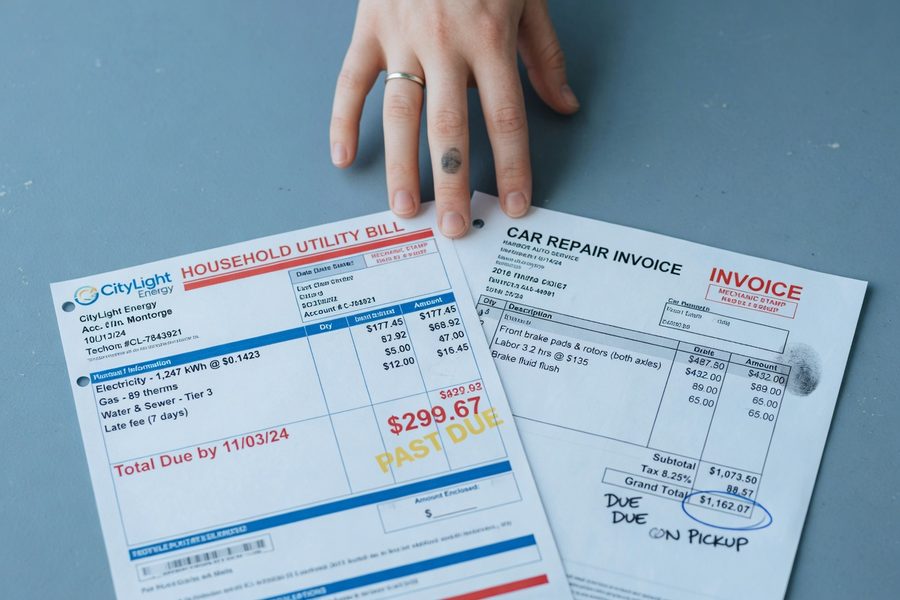
Government assistance programs can reduce the monthly expenses that compete with your savings goal. If you are income-eligible, benefits like SNAP can free up grocery dollars that would otherwise crowd out any savings margin. Checking eligibility costs nothing and can meaningfully shift your monthly cash flow.
Frequently Asked Questions
How much should I save in an emergency fund if I live paycheck to paycheck?
Start with a target of $500 to $1,000 rather than the conventional three to six months of expenses. That first milestone covers the most common financial emergencies, a car repair, a medical co-pay, an appliance replacement, without requiring years to reach. Once you hit $1,000, expand toward one month of essential expenses, then build from there.
Where should I keep my emergency fund?
A high-yield savings account at an online bank or credit union is the best option for most people. As of mid-2026, these accounts offer 4.00% to 5.00% APY with no minimum balance and no monthly fees. Keep it at a separate institution from your checking account to reduce the temptation to spend it on non-emergencies.
Can I build an emergency fund while paying off debt?
Yes, and doing both simultaneously is often the wiser approach. Eliminating savings entirely in favor of debt payoff leaves you exposed to the shocks that caused the debt in the first place. A common method is to build a small starter fund of $500 to $1,000 first, then direct additional cash toward high-interest debt while maintaining a minimal ongoing savings contribution.
What counts as a real emergency?
A genuine emergency is an unexpected, necessary expense that threatens your ability to work, meet basic needs, or maintain housing, a car repair needed to commute, a medical bill, or a sudden loss of income. Planned expenses like holiday gifts, vacations, or predictable annual bills do not qualify and should be budgeted separately if possible.
How do I build an emergency fund on a variable or gig income?
Set your automated savings transfer based on your lowest expected paycheck, not your average. During high-income weeks or months, make an additional voluntary contribution above the baseline. This approach protects your savings habit during slow periods and accelerates progress when income improves, without creating overdraft risk on a low week.
What if I use my emergency fund, how do I rebuild it?
Restart the same automatic transfer that built the fund originally, and treat rebuilding as a non-negotiable budget line for the next three to six months. If you have a windfall available, a tax refund, a bonus, or proceeds from selling an item, allocate at least half toward replenishment before spending the rest.
Sources
- Bankrate, 2026 Annual Emergency Savings Report
- Consumer Financial Protection Bureau, An Essential Guide to Building an Emergency Fund
- Board of Governors of the Federal Reserve System, Report on the Economic Well-Being of U.S. Households (2026)
- IRS, Earned Income Tax Credit (EITC) Overview
- IRS, Free File: Do Your Federal Taxes for Free
- FDIC, Savings Education: The Importance of Saving
- National Credit Union Administration, Personal Finance Resources: Savings
- USA.gov, Building an Emergency Fund
- U.S. Department of Health and Human Services, Low Income Home Energy Assistance Program (LIHEAP)
- USDA Food and Nutrition Service, Supplemental Nutrition Assistance Program (SNAP)
- Urban Institute, Financial Health of Low-Income Households
- FINRA Investor Education Foundation, 2022 National Financial Capability Study
- Pew Charitable Trusts, The Role of Emergency Savings in Family Financial Security
- JPMorgan Chase Institute, Weathering Volatility: Big Data on the Financial Ups and Downs of U.S. Individuals
- National Bureau of Economic Research, Precautionary Savings, Illiquid Assets, and the Aggregate Consequences of Shocks to Household Income Risk