
Fact-checked by the MyFinancial101 editorial team
The U.S. personal saving rate stood at just 4.5 percent of disposable personal income in January 2026, according to the Bureau of Economic Analysis, a figure that tells you most Americans are spending nearly every dollar they earn. Against that backdrop, the spending freeze challenge looks less like a financial gimmick and more like a controlled experiment in what your money is actually doing. The premise is deceptively simple: for 30 days, you stop buying anything that isn’t essential. No new clothes, no restaurant meals, no impulse Amazon orders, no streaming upgrades. Just the fixed bills you can’t avoid and the groceries you genuinely need.
The numbers behind discretionary spending explain why a one-month pause can move the needle so dramatically. Housing alone consumed 33.4 percent of total U.S. household spending in 2024, per the Bureau of Labor Statistics, and housing is largely non-negotiable. But the remaining two-thirds of the average budget is where discretionary choices compound quietly. Daily coffee shop visits, takeout two or three nights a week, subscription services that run on autopilot: these categories don’t feel large individually, yet they frequently add up to $400–$800 a month for a single person. A 30-day freeze doesn’t touch the fixed costs. It targets everything else.
By the end of this guide, you will know exactly how to structure a 30-day no-spend challenge, what financial changes are realistic to expect, how to handle the social pressures and genuine emergencies that test the rules, and how to turn a short-term experiment into lasting habits. You will also get an honest look at where these challenges fail, because the rebound spending risk is real, and pretending otherwise sets people up for disappointment.
Key Takeaways
- The U.S. personal saving rate was 4.5% in January 2026, meaning most households have significant room to redirect discretionary spending toward savings or debt.
- Housing and transportation together account for roughly 50% of household spending, leaving about half the average budget subject to discretionary choices a freeze can target.
- Cutting daily coffee shop visits (~$7/day) and two takeout meals per week (~$40–$60 each) can save $200 or more in a single week without touching fixed expenses.
- Most participants see $300–$800 in redirectable cash after 30 days, depending on income level and pre-freeze discretionary habits.
- Rebound spending is the top post-challenge risk; research on habit formation suggests 30 days is enough to begin rewiring automatic purchase behaviors if a follow-up budget is in place.
- Downgrading or canceling subscriptions during the freeze generates compounding savings of $20–$60 per month that continue long after Day 30.
In This Guide
- What Exactly Is a 30-Day Spending Freeze Challenge?
- Why People Commit to a Month-Long Freeze
- How to Prepare and Set Rules Before Day 1
- Tracking Progress and Daily Realities During the Challenge
- Financial Changes You Can Expect After 30 Days
- How Outcomes Differ by Income Level and Debt Load
- Navigating a Spending Freeze With a Partner or Family
- Common Pitfalls, Failures, and Honest Adjustments
- What Happens Next: Sustaining or Evolving the Habits
- Integrating the Freeze With Broader Debt Reduction Tools
What Exactly Is a 30-Day Spending Freeze Challenge?
The name sounds absolute, but a spending freeze is rarely a total spending blackout. The working definition that most practitioners use draws a clear line between essential spending and discretionary spending. Essentials: rent or mortgage, utilities, insurance premiums, minimum debt payments, groceries, prescription medications, and gas for commuting. Discretionary: dining out, clothing, entertainment, subscription boxes, online shopping, coffee shops, personal care splurges, and anything else you want but don’t strictly need to function.
The phrase “nothing new” is deliberate. It distinguishes the challenge from a starvation budget and makes the rules manageable. You still buy groceries, you just stop buying the $14 bottle of specialty hot sauce because it looked interesting. You still pay your phone bill, you just don’t upgrade to the new handset that launched last week. That precision matters, because an overly rigid interpretation (literally zero spending) collapses within days for most people and produces shame instead of insight.
Rule Variations Worth Knowing
Different versions of the challenge adjust the strictness based on lifestyle. A “hard freeze” bans all non-essential purchases without exception. A “soft freeze” allows one or two planned exceptions per week, such as a single dining-out meal or one social event. Some participants limit the challenge to specific categories, a “clothing freeze,” a “food delivery freeze”, rather than going broad. According to Experian, a no-spend challenge is “a way to refresh your spending habits and turn saving into a game by cutting all nonessential spending for a set period.” That framing, a game with rules you set, is what separates this from deprivation.
The 30-day window is the most common format because it’s long enough to break automatic habits but short enough to feel survivable. Seven-day and 14-day versions exist and are often recommended for first-timers who want to test the concept before committing to a full month. The mechanics are the same; only the duration changes.
Habit research suggests it takes anywhere from 18 to 254 days to form a new automatic behavior, with 66 days being the average. A 30-day freeze won’t fully automate new spending habits, but it provides enough repetition to make conscious choosing feel more natural.
Why People Commit to a Month-Long Freeze
The most common entry point isn’t financial crisis, it’s financial fog. People look at their bank statement at the end of a month and genuinely can’t account for $300 or $400 that slipped away on things they barely remember buying. The freeze is, at its core, a forced audit. You can’t ignore spending when you’re actively blocking it.
Some participants arrive with aggressive goals. A person targeting a 70% savings rate, for example, uses the freeze not as a permanent lifestyle but as a reset: a month-long exercise in separating genuine needs (therapy, business tools, commuting costs) from reflexive purchases (new kitchen gadgets, another streaming tier). The freeze answers the question “what do I actually miss?” with real data instead of guesswork.
Short-Term Boost vs. Long-Term Reset
For others, the motivation is purely numerical. They have a specific savings target, a $1,000 emergency fund, a debt payoff milestone, a vacation fund, and the freeze is the fastest path to a lump sum without taking on extra work. This is a legitimate use of the tool. Redirecting $400–$600 of discretionary spending in a single month can close a meaningful gap in a savings goal that had stalled for months. If you’re also exploring ways to increase income alongside the freeze, resources like jobs paying $19 or more per hour can accelerate the timeline considerably.
There’s also a psychological motivation that rarely gets named directly: the freeze proves to yourself that you have agency over your money. Many people operate with a passive relationship to spending, money comes in, money goes out, the balance drifts. Completing 30 days of intentional non-spending is evidence that you can control the outflow. That’s not a trivial feeling, and it often outlasts the month itself.
Housing and transportation together consumed roughly 50% of average U.S. household spending in 2024, per the Bureau of Labor Statistics. That means roughly half of the average budget is already flexible, and a spending freeze targets exactly that half.
How to Prepare and Set Rules Before Day 1
The difference between a successful freeze and one that collapses by Day 8 is almost always preparation. Specifically: do the work before the start date, not after. Pull the last 30 days of transactions from your bank and credit card accounts and categorize every purchase as essential or discretionary. The goal isn’t judgment, it’s clarity. Most people discover at least one or two spending categories they forgot existed entirely.
Stock Up Strategically
In the week before the freeze starts, buy the consumables you know you’ll need: pantry staples, toiletries, cleaning supplies, any medications. This isn’t cheating, it’s responsible preparation. The freeze is about stopping impulse and lifestyle spending, not manufacturing artificial scarcity. If you run out of coffee on Day 12 and have to buy more, that’s fine; the point is you’re not stopping at the coffee shop instead.
Remove friction points proactively. Unsubscribe from retail email lists. Delete shopping apps from your phone. Turn off one-click purchasing on Amazon. These small actions reduce the number of on-the-spot decisions you need to make during the month, and every on-the-spot decision is a potential failure point. Decide in advance where the money you save will go: a named savings account, a credit card balance, or a specific goal. Money without a destination has a way of disappearing.
Downgrading Subscriptions: The Overlooked Leverage Point
Before Day 1, audit every recurring subscription. Streaming services, gym memberships, software subscriptions, premium app tiers, list them all with monthly costs. During a 30-day freeze, cancel or downgrade to free tiers wherever possible. Canceling two or three subscriptions often saves $20–$60 per month, and because those cancellations continue after the freeze ends, the savings compound every month going forward. That’s a structural change, not a temporary sacrifice.
Before your freeze starts, search for free alternatives to your paid subscriptions. Many public libraries provide free access to streaming services, audiobooks, and digital magazines, your library card is worth more than most people realize, and using it during the freeze turns a spending cut into a lasting habit.
Tracking Progress and Daily Realities During the Challenge
Day 1 through Day 5 are usually the easiest. The novelty helps. The challenge feels like an adventure. Days 6 through 14 are where the real test begins, because the novelty wears off and the habitual triggers, the afternoon coffee run, the Thursday takeout order, the weekend browsing session, reassert themselves.
Meal planning is the single most important tactical tool during a freeze. Without it, the path of least resistance on a tired Wednesday night is a delivery app. With a week of meals planned and the ingredients already in the house, the decision is already made. The same principle applies to social situations: identify which weekend plans involve spending and propose free alternatives, hiking, cooking together, a board game night, before the invitation arrives in a context where you’d feel obligated to say yes to a restaurant.
Handling Social Pressure
Social spending is the hardest category to freeze, because it carries emotional stakes. Saying no to a birthday dinner or a friend’s happy hour invitation feels like saying no to the relationship, not just the bill. Two approaches work well. The first is transparency: tell the people around you that you’re doing a 30-day challenge. Most people respond with curiosity or support, not judgment. The second is redirection: suggest a free or low-cost alternative rather than declining outright. A picnic instead of a restaurant, a movie night at home instead of the theater. Both protect the relationship without breaking the freeze.

Studies on consumer behavior show that payment friction, slowing down the purchasing process by even a few seconds, significantly reduces impulse purchases. Deleting shopping apps from your phone creates exactly this friction, with no willpower required.
Financial Changes You Can Expect After 30 Days
The arithmetic on a spending freeze is more concrete than most people expect. Consider a worked example using real spending patterns: someone who stops a $7 daily coffee shop habit saves $210 over 30 days. Add two fewer takeout meals per week at $40 each, and that’s another $320. Total: $530 in 30 days from two categories alone. One documented participant reported saving approximately $200 in a single week by making coffee at home and swapping restaurant meals for frozen alternatives, consistent with exactly this math.
For a single person spending $600–$800 per month on discretionary items, a strict freeze typically redirects $300–$600 to savings or debt. For a household with two incomes and broader discretionary spending, the number can reach $800–$1,200. These aren’t projections, they’re the practical upper bounds given what the average American spends on non-essential categories. The actual result depends on how aggressively you define essentials and how well you hold the line during the month.
Changes in Cash Flow and Awareness
The financial impact isn’t only the dollar amount saved. Something less measurable but equally important happens: people develop an accurate mental model of their spending for the first time. Before the freeze, most people underestimate their discretionary spending by 30–40%. After tracking 30 days of intentional non-spending, the real numbers are impossible to ignore. That awareness alone tends to produce lower spending in the months that follow, even without a formal budget in place.
If you carry high-interest credit card debt, the most powerful use of the money saved during a freeze is accelerated debt payoff. At an 18–24% APR, every extra $100 applied to the principal during the freeze saves $18–$24 per year in interest, indefinitely, until the balance reaches zero. The freeze becomes a catalyst, not just a temporary windfall.
Cutting a $7 daily coffee shop visit and two $40 takeout meals per week adds up to $530 in savings over 30 days, without touching a single fixed bill.
How Outcomes Differ by Income Level and Debt Load
A spending freeze doesn’t produce the same result for everyone, and pretending otherwise misrepresents the tool. For households with comfortable incomes and no consumer debt, the freeze primarily accelerates savings and sharpens spending awareness. For households carrying high-interest debt, the same 30-day discipline has a multiplied effect because the saved dollars attack balances that are growing at 20% or more per year.
For lower-income households where discretionary spending is already minimal, the freeze works differently. The gains are smaller in absolute terms, but the awareness benefits are often larger, because tight budgets leave less room for invisible spending, and the freeze surfaces exactly where the small leaks are. It’s also worth acknowledging that some households can’t safely freeze spending for 30 days because their budgets already leave no buffer for the unexpected. In those cases, a 7-day or category-specific freeze is a more honest starting point.
| Household Situation | Expected Monthly Savings | Best Use of Saved Funds |
|---|---|---|
| Single earner, no debt | $200–$500 | Emergency fund or investment account |
| Single earner, high-interest debt | $200–$500 | Extra debt payment (highest APR first) |
| Dual-income household, no debt | $500–$1,200 | Savings goal or retirement contribution |
| Dual-income, significant debt | $500–$1,200 | Debt payoff + debt management plan |
| Low-income household | $50–$200 | Emergency buffer or utility arrears |
Navigating a Spending Freeze With a Partner or Family
Solo freezes are logistically simple. A shared freeze is a negotiation. When two people share a budget and one wants to freeze while the other doesn’t, the challenge becomes a source of friction rather than a shared project. The solution is a structured pre-freeze conversation, not a unilateral declaration.
The Pre-Freeze Conversation
Sit down together before Day 1 and answer three specific questions out loud: What counts as essential in our household? What categories are we each most reluctant to cut? And what will we do with the money we save? Getting agreement on these three points converts the freeze from a constraint imposed by one partner into a shared goal both people have chosen. Disagreements on what counts as essential, one partner considers dining out a social necessity, the other considers it discretionary, surface now, not on Day 10 when emotions are higher.
For families with children, the freeze requires age-appropriate communication. Telling a 10-year-old that the family is “saving money for a goal” and involving them in choosing free activities (parks, library events, board games) works far better than unexplained restrictions that feel arbitrary. Children who understand the goal often become enthusiastic participants rather than resistant obstacles. Framing it as a family challenge with a named reward at the end gives everyone a stake in the outcome.
Handling Emergency Expenses During the Freeze
One practical gap most spending freeze guides skip entirely: what happens when an unplanned expense hits during the 30 days? A car repair, a medical copay, a broken appliance. The answer is straightforward: emergencies are not discretionary, and paying for them does not break the freeze. The freeze targets wants, not genuine necessities. What matters is that you don’t use the emergency as psychological cover to also restart discretionary spending. Pay the repair, record it, and continue. If you’re finding that genuine emergencies are frequent enough to derail every savings attempt, that’s a signal that building a small buffer (even $300–$500) is the priority before attempting a freeze.
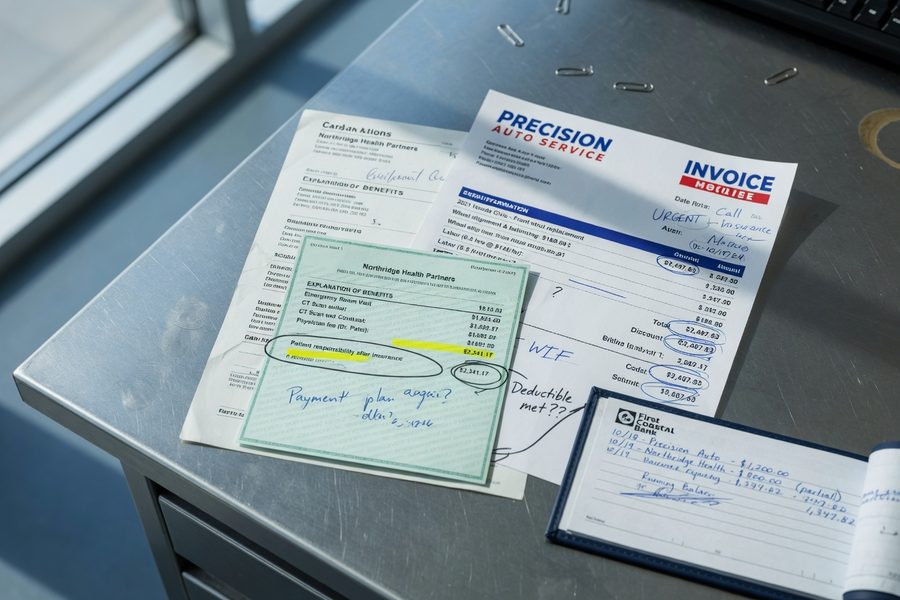
If you share finances with a partner and attempt the freeze without a prior agreement on the rules, spending conflicts will likely surface within the first two weeks. Unilateral freezes in shared households have a high failure rate and can damage financial trust. Set the rules together before Day 1.
Common Pitfalls, Failures, and Honest Adjustments
The most common failure mode isn’t a dramatic collapse, it’s a slow accumulation of small exceptions that erode the challenge without anyone formally declaring it over. One justified purchase leads to another, and by Day 20 the freeze exists in name only. Awareness of the specific triggers that produce exceptions is the best defense.
When “Failures” Are Actually Value-Aligned Choices
Not every deviation from the rules is a failure. One documented participant during a freeze spent $50 on a charitable donation and $30 on a family lunch. Neither fit the strict definition of essential. But both were conscious decisions aligned with personal values, and the participant reported greater satisfaction with those choices made deliberately than with equivalent amounts spent on autopilot in a normal month. The insight: a deviation you chose intentionally, knowing the trade-off, is categorically different from a deviation you drifted into out of boredom or habit.
The goal isn’t perfect adherence, it’s deliberate spending. If you make a purchase during the freeze and can articulate clearly why it mattered, that’s information. If you make a purchase and feel vague guilt about it an hour later, that’s also information. Both are part of what the challenge is designed to surface.
The Rebound Spending Risk
The most serious pitfall comes after Day 30, not during it. After a month of restriction, the psychological pressure to reward yourself can trigger a spending surge that undoes the financial gains within a week. This is well-documented in behavioral finance and mirrors the same rebound pattern seen after restrictive diets. The mitigation is straightforward: on Day 1 of month two, allocate the saved money immediately to its destination (the savings account, the debt payment, the named goal) before the rebound impulse has a chance to act. Money that’s already moved is much harder to spend impulsively than money still sitting in a checking account.
Rebound spending after a strict 30-day freeze is one of the most consistent patterns observed in behavioral finance. Without a plan for where the savings go on Day 31, many participants spend the accumulated surplus within two weeks, eliminating most of the financial gains.
What Happens Next: Sustaining or Evolving the Habits
The freeze’s long-term value is almost never the 30-day dollar amount, it’s the categories it clarifies. After the month ends, most participants can identify two or three spending categories they genuinely missed and two or three they didn’t think about at all. The ones they missed are worth budgeting for consciously. The ones they didn’t miss are strong candidates for permanent elimination or reduction.
Building a Post-Freeze Budget
Use the freeze data to build a forward budget that reflects actual preferences rather than default habits. Allocate a specific monthly amount to the categories you chose to miss and set a lower ceiling on the ones you didn’t. This is structurally different from the pre-freeze situation, where spending in every category defaulted to whatever was convenient. The freeze creates the data; the post-freeze budget acts on it.
Consider maintaining one or two freeze-derived habits indefinitely. Making coffee at home rather than buying it daily saves roughly $150 per month. Meal planning twice a week rather than defaulting to delivery saves another $150–$300. These two habits alone, sustained for 12 months, total $3,600–$5,400 in annual savings. If you’re working toward longer-term goals like retirement contributions or investment accounts, resources on how to start investing with no prior experience are a natural next step once the savings habit is established.
Subscription cancellations made during a freeze continue generating savings indefinitely. Canceling $40 per month in unused subscriptions during a 30-day challenge saves $480 in the first year after, with no ongoing effort required after the initial cancellation.
Integrating the Freeze With Broader Debt Reduction Tools
For households carrying significant consumer debt, a 30-day spending freeze is a starting point, not a solution. At an average credit card APR of 20–24%, even $500 freed up during a freeze and applied to a high-interest balance makes a measurable dent, but the interest clock keeps running on the remaining balance. The freeze buys momentum; a structured repayment strategy sustains it.
When the freeze alone isn’t enough because interest charges are outpacing the savings, debt management plans (DMPs) and nonprofit credit counseling services offer the next level of intervention. A DMP typically negotiates reduced interest rates (sometimes to 6–9%) with creditors in exchange for a structured monthly payment plan. Used in combination with the spending discipline the freeze builds, DMPs can cut total repayment time dramatically compared to minimum payments alone.
| Strategy | Best For | Timeline | Key Risk |
|---|---|---|---|
| 30-Day Spending Freeze | Building savings awareness and lump-sum momentum | 1 month | Rebound spending post-challenge |
| Debt Avalanche Method | Minimizing total interest paid on multiple balances | 12–48 months | Slow early progress can reduce motivation |
| Debt Snowball Method | Psychological momentum through quick wins | 12–48 months | Higher total interest cost than avalanche |
| Debt Management Plan | High APR situations where interest outpaces payments | 36–60 months | Requires closing enrolled credit accounts |
| Freeze + DMP Combined | Large balances with high rates and limited income | 24–60 months | Requires sustained lifestyle adjustment |
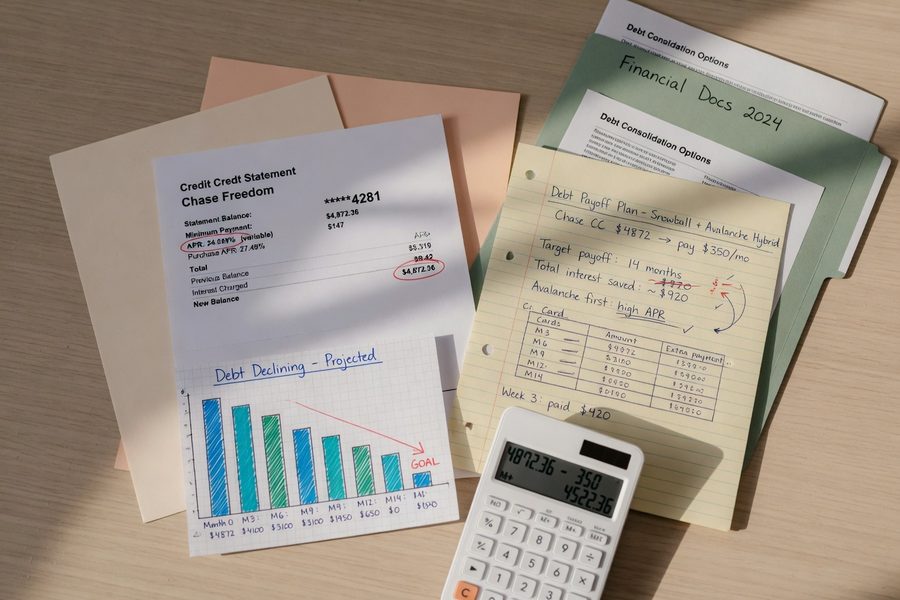
At a 20% APR, applying an extra $500 per month to a $5,000 credit card balance (instead of paying only the minimum) reduces the payoff timeline from roughly 9 years to under 12 months and saves approximately $2,800 in interest charges.
Real-World Example: A 30-Day Freeze on a Single Income
Consider an illustrative example: a 34-year-old living alone in a mid-sized city, earning $52,000 per year after taxes (roughly $4,333 per month take-home). Fixed monthly costs, rent, utilities, insurance, and minimum credit card payments, total $2,600. That leaves $1,733 in theoretically flexible spending each month. Before the freeze, that $1,733 was distributed across dining out ($320), grocery overspend and convenience purchases ($180), entertainment and streaming ($95), clothing and personal care ($210), and various small impulse purchases ($150), with the remaining $778 going to savings. Nothing alarming in isolation, but no intentional allocation either.
During the 30-day freeze, the participant eliminates dining out entirely, cuts streaming services from four to one (saving $47/month ongoing), stops all clothing and personal care splurge purchases, and reduces convenience purchases by cooking from a meal plan. The impulse-purchase category drops to near zero. Total discretionary spending for the month: $290 (groceries at a slightly higher level, one essential toiletry restock). The remaining $1,443 of the flexible budget goes directly to the highest-interest credit card balance.
Before the freeze, the monthly surplus going to debt was $150 above the minimum payment. During the freeze month, it became $1,443, a 9.6x increase. At the card’s 22% APR, that single month’s extra payment saves an estimated $430 in future interest charges and shortens the payoff timeline by approximately 4 months.
After the freeze, the participant reinstates dining out at a budgeted $120/month (down from $320), keeps two streaming services instead of four, and maintains the meal-planning habit. Net permanent monthly savings versus pre-freeze: $395. Over 12 months, that’s $4,740 redirected to debt and savings, from a single 30-day challenge that created the clarity to make permanent adjustments.
Your Action Plan
-
Pull 30 days of transaction history before you start
Download every transaction from your bank and credit card accounts for the past month. Categorize each one as essential or discretionary. Total both columns. This number, your current discretionary spend, is your baseline and your savings target. Without it, you’re guessing.
-
Write your rules in plain language before Day 1
Define exactly what counts as essential in your household: which bill categories, which grocery types, which medical expenses. Write the list down. Share it with anyone who shares your finances. Ambiguity is what kills freezes mid-month, a clear written ruleset eliminates most gray-area decisions before they arise.
-
Stock up strategically in the week before launch
Buy pantry staples, toiletries, and any consumables you know you’ll need during the 30 days. Audit every recurring subscription and cancel or downgrade the ones you can live without. These cancellations, unlike the freeze itself, generate savings every month indefinitely, even if it’s only $20–$40, that’s $240–$480 per year for one decision made once.
-
Remove purchase friction from your environment
Delete shopping apps from your phone. Unsubscribe from retail email lists. Turn off one-click purchasing on Amazon. Disable autofill on your browser’s payment forms. These changes don’t require willpower, they shift the default from “easy to buy” to “have to make an effort to buy,” which is enough to derail most impulse purchases.
-
Name the destination for your savings before the freeze begins
Open a separate savings account if you don’t already have one and give it a label (Emergency Fund, Debt Payoff, Travel Fund, anything specific). Set up an automatic transfer for the amount you expect to save each week. Money with a named destination is dramatically less likely to disappear into unplanned spending. If you carry credit card debt, prioritize extra payments over a savings account, the interest rate math almost always favors debt payoff first.
-
Track every day and review every week
Keep a simple daily log, a phone note or a spreadsheet, of every purchase made during the freeze. Review it each Sunday. Look for patterns: which days are hardest, which categories produce the most “close calls,” which social situations create the most pressure. This weekly review converts the freeze from a willpower contest into a self-education project, and the data will shape a more accurate budget once the 30 days end.
-
On Day 31, act before the rebound window opens
Move your accumulated savings to their designated destination on the morning of Day 31, before any other financial decisions. Then build a post-freeze budget that incorporates what you learned: budget consciously for the categories you genuinely missed, eliminate or reduce the ones you didn’t. If debt is a major part of your situation, consider combining the momentum from the freeze with a structured repayment plan to keep the discipline working for you past the challenge period.
Related reading: The Real Cost of Late Payments: What Credit Scores Really Lose After 30 Days.
Frequently Asked Questions
Does a spending freeze mean I can’t spend any money at all for 30 days?
No. A spending freeze targets discretionary spending, dining out, entertainment, clothing, impulse purchases, and non-essential subscriptions. Fixed essential expenses like rent, utilities, insurance, groceries, and medications continue unchanged. The freeze is about eliminating wants, not blocking needs.
What if I have an emergency expense during the 30 days?
Pay it and keep going. Genuine emergencies, a car repair, a medical copay, a necessary appliance replacement, are not discretionary, and handling them doesn’t break the challenge. Record the expense and note that it was unplanned, then continue. What matters is that you don’t use the emergency as a psychological permission slip to restart discretionary spending across the board.
How much money can I realistically save in 30 days?
It depends heavily on your current discretionary spending, but a single person with typical urban spending habits can realistically redirect $300–$600. Someone who spends $7 per day on coffee and orders takeout twice a week at $40 per meal would save roughly $530 from those two categories alone, based on straightforward arithmetic. Dual-income households with broader discretionary budgets can see $800–$1,200 in 30 days.
What if I live with a partner or family who doesn’t want to do the freeze?
This is the most common structural challenge with shared-household freezes. The most effective approach is a pre-freeze conversation that defines shared rules (which household expenses count as essential), agrees on what each person is willing to freeze, and names a shared goal for the savings. A freeze imposed unilaterally in a shared household almost always creates conflict by Week 2. You can also do a partial freeze, freezing your personal spending categories while the shared budget continues as normal, which produces smaller financial gains but avoids household friction.
Is 30 days long enough to actually change my spending habits?
Thirty days is enough to interrupt automatic spending patterns and generate real data about your actual preferences. Whether it produces lasting change depends on what you do on Day 31. A freeze followed immediately by a post-freeze budget that locks in the new lower spending in unnecessary categories can produce permanent change. A freeze followed by unrestricted spending tends to rebound within two weeks. The 30 days creates the opportunity; the follow-up plan determines whether it sticks.
Can I do a shorter version, like 7 or 14 days, and still see results?
Yes, and for first-timers, starting shorter is often smarter. A 7-day freeze produces less in raw savings but enough awareness to understand which categories are hardest to cut and which disappear without being missed. Many people use a 7-day version as a trial run before committing to a full month. The behavioral benefits, tracking spending, removing purchase friction, naming savings goals, apply at any duration.
Should I freeze spending or find ways to earn more money during this period?
Both work, and the strongest outcomes often combine them. A spending freeze immediately reduces outflow; a side income immediately increases inflow. If your situation allows for extra work, freelance projects, gig work, part-time hours, the 30 days when you’re already focused on financial discipline is an ideal time to add income. Platforms offering micro-freelancing opportunities are a low-barrier starting point for generating supplemental income alongside the freeze.
What should I do with the money I save during the freeze?
Decide before Day 1, not after. The three best destinations, in order of financial priority for most people: first, build or complete a $500–$1,000 starter emergency fund if you don’t have one; second, apply savings to high-interest debt (anything above 10% APR); third, direct the remainder to a savings or investment goal. Having a named, pre-decided destination for the savings is what separates a freeze that produces lasting financial improvement from one that just delays spending by 30 days.
What counts as a “failure” during the freeze, and what should I do if I slip?
A slip is a single unplanned discretionary purchase. A failure is using one slip as permission to abandon the challenge entirely. The research on habit formation consistently shows that what matters most isn’t perfect adherence, it’s how quickly you return to the intended behavior after a deviation. If you buy something you didn’t plan to, note it, examine why it happened, and continue. A $30 lapse that you examined and learned from is worth more than a perfect month you weren’t paying attention to.
Sources
- U.S. Bureau of Economic Analysis, Personal Income and Outlays, January 2026
- U.S. Bureau of Labor Statistics, Housing and Transportation Accounted for 50 Percent of Household Spending in 2024
- Experian, How to Do a No-Spend Challenge
- Consumer Financial Protection Bureau, Credit Card Key Terms
- Federal Reserve, Consumer Credit Statistical Release
- National Foundation for Credit Counseling, Financial Education Resources
- U.S. Bureau of Labor Statistics, Consumer Expenditure Surveys
- American Psychological Association, How Habits Are Formed and Changed
- Federal Deposit Insurance Corporation, Money Smart Financial Education Program