Fact-checked by the MyFinancial101 editorial team
Quick Answer
The cash envelope system still works in 2025, but it now lives mostly in apps. To build a cash envelope system digital style, you’ll need to pick a bank-integrated tool like Qube Money or YNAB, set up spending categories with hard limits, and commit to checking balances before every purchase. Most people can get a working digital envelope setup running in under two hours, and the shift eliminates the friction of hunting down ATMs while preserving the core discipline that makes envelope budgeting effective.
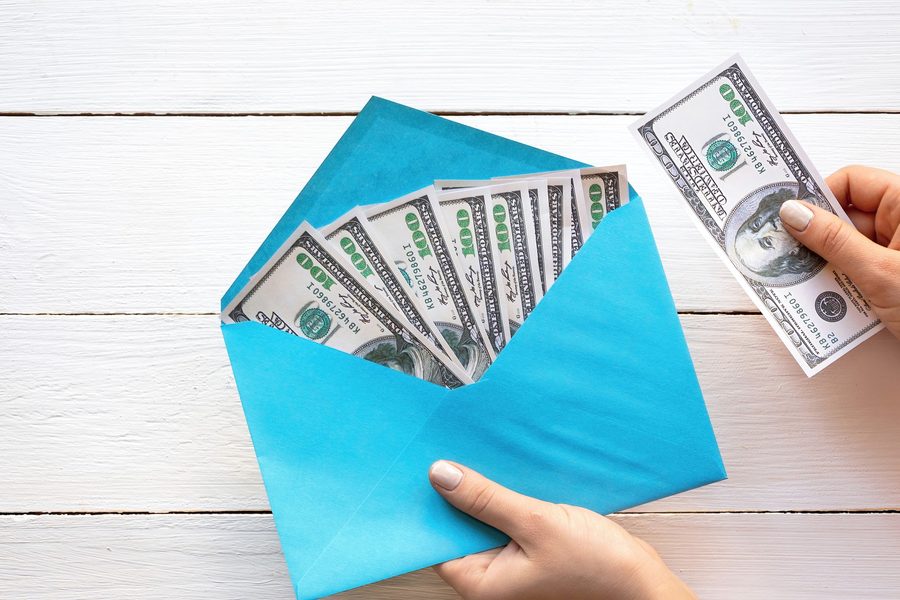
Only 14% of all U.S. consumer payments were made with cash in 2024, according to the Federal Reserve’s 2025 Diary of Consumer Payment Choice. That number has been sliding for years, and the practical result is straightforward: a budgeting method built entirely around physical dollar bills now collides with a world where most transactions happen through a screen. The classic envelope system, withdraw cash, stuff it into labeled envelopes, spend only what’s there, didn’t suddenly become bad advice. The environment around it shifted, and walking around with a wallet full of paper categories feels increasingly forced when the corner store, the utility company, and your landlord all expect digital payment.
This isn’t about abandoning the method; it’s about adapting it. The underlying mechanism that makes envelope budgeting work, partitioning money into dedicated buckets with hard stopping points, translates into digital tools with surprising fidelity. After following this guide, you’ll know which apps actually lock spending categories instead of just tracking them, how to replicate the psychological friction of cash in a tap-to-pay world, and when it still makes sense to pull out physical envelopes for specific categories. If you’ve been tightening your grocery budget using coupon-stacking strategies that stretch every dollar, adding a digital envelope layer gives you an exact ceiling on what leaves your account.
Key Takeaways
- Cash now accounts for only 14% of all U.S. consumer payments, down sharply from prior years, making physical-only envelope systems impractical for most households, according to the Federal Reserve’s 2025 payment choice data.
- The average U.S. consumer made 48 total payments per month in 2024, roughly 11 of those via mobile phone, meaning even committed cash users face a majority-digital transaction environment, per the same Federal Reserve study.
- Only 55% of U.S. adults had set aside enough savings to cover three months of expenses in 2024, underscoring why envelope-style discipline, physical or digital, remains a critical budgeting tool, according to the Federal Reserve’s 2025 economic well-being report.
- 63% of U.S. adults said they would cover an unexpected $400 expense using cash, savings, or a credit card paid off immediately, which highlights that a meaningful share of households still lack the buffer envelope systems are designed to build, per the Federal Reserve Board’s 2025 household survey.
- Banking-integrated apps like Qube Money and zero-based budgeting platforms like YNAB replicate the hard-stop function of physical envelopes by allocating real deposited funds into locked spending categories, rather than merely tracking expenses after the fact.
- Digital envelope systems eliminate cash-specific risks, theft, loss, ATM fees, while preserving category discipline; shared digital envelopes also allow couples to manage joint budgets in ways physical cash cannot support.
In This Guide
- Step 1: Why the Cash Envelope System Feels Broken in a Cashless World
- Step 2: What a Digital Envelope System Actually Looks Like in 2025
- Step 3: Does the “Pain of Paying” Survive Without Physical Cash?
- Step 4: The Real Advantages Digital Envelopes Hold Over Cash
- Step 5: Where Digital Envelope Systems Fall Short
- Step 6: Should You Go Cash, Digital, or Hybrid? Matching the Method to Your Money
Step 1: Why the Cash Envelope System Feels Broken in a Cashless World
The cash envelope system didn’t fail, the payments infrastructure around it changed so completely that forcing physical cash into every spending category now creates more friction than discipline. When 14% of all U.S. consumer payments used cash in 2024, per the Federal Reserve’s payment choice data, the average person made roughly 7 cash transactions out of 48 total monthly payments. That means nearly 41 transactions every month happen through debit cards, credit cards, mobile apps, or online portals, none of which accept an envelope stuffed with twenties.
The practical annoyances stack up fast. You drive to an ATM, pay a fee to access your own money, and then carry hundreds of dollars in labeled paper envelopes. One lost envelope wipes out an entire category. Online bill payments, subscription services, and even many farmers’ market vendors now expect digital payment. The friction isn’t just inconvenient; it actively discourages people from sticking with a budgeting method that would otherwise work. If you’re already managing credit card balances carefully, you know that prioritizing and negotiating debt requires precision that paper envelopes can’t easily track across multiple accounts and due dates.
How This Shift Happened
Contactless payments accelerated during the pandemic and never reversed. Mobile wallet adoption, Apple Pay, Google Pay, Samsung Pay, moved from novelty to default for millions of users. The Federal Reserve’s data shows mobile phone payments rose to 11 per month for the average consumer in 2024, a figure that barely registered a decade ago. Meanwhile, cash acceptance at merchants continued its slow decline, particularly among national retailers and service providers who prefer the speed and record-keeping of digital transactions.
What to Watch Out For
The danger isn’t that cash stops working entirely; it’s that clinging to a 100% cash envelope system when your actual spending is 86% digital creates a parallel reality. You end up budgeting with envelopes for groceries and gas while a separate, untracked digital spending life runs alongside it, subscriptions, online orders, utility autopay. That split is where the method breaks, not in the envelope logic itself.
Step 2: What a Digital Envelope System Actually Looks Like in 2025
You have two fundamentally different types of digital envelope tools: apps that control your spending by partitioning real money before transactions happen, and apps that track spending after the fact while showing you virtual envelope balances. Knowing the difference determines whether your digital envelope system works or just becomes another dashboard you ignore.
The control-focused category includes Qube Money, which links directly to a debit account and requires you to open a specific “Qube” (envelope) before each purchase. Money sits in locked categories; swiping your card without selecting the right Qube first results in a declined transaction. This mimics the physical envelope hard stop, you literally cannot spend grocery money on takeout without consciously moving funds between categories first. The tracking-focused category includes Goodbudget and YNAB (You Need A Budget), which sync with your bank accounts and let you allocate dollars into virtual envelopes, then compare actual spending against those allocations. YNAB explicitly markets itself as a digital envelope method, requiring every dollar to be assigned a job before the month begins.
Qube Money is structured as a full bank account through Choice Financial Group, not just a third-party overlay. The money sitting in your digital envelopes is FDIC-insured up to $250,000, the same protection as any checking account. This matters if you’re moving significant monthly income through the system.
How to Choose Between Control and Tracking Apps
If you need a hard barrier, the digital equivalent of an empty envelope that physically stops you from spending, pick a control app like Qube Money. These require the most setup but provide the strongest guardrails. If you already have decent spending discipline and want a system that illuminates where your money goes while keeping you accountable to category limits, YNAB or Goodbudget will feel less restrictive. Many people find that negotiating a lower credit card APR works best alongside a tracking-based envelope system, since the two strategies together reduce both interest costs and overspending triggers.
What to Watch Out For
Not every app that calls itself an “envelope system” actually partitions money. Some are just expense categorizers with envelope-themed labels. Before committing to any tool, test whether it prevents overspending in one category from automatically draining another, or whether it merely shows you a red number after the damage is done.
Step 3: Does the “Pain of Paying” Survive Without Physical Cash?
Yes, but it takes a different form. Behavioral economists have long observed that handing over physical bills triggers a measurable psychological discomfort, the “pain of paying”, that tapping a card or phone does not. Cash feels real; digits on a screen feel abstract. A digital envelope system cannot fully replicate the visceral experience of watching a $50 bill leave your hand, but it can substitute a different mechanism: real-time balance visibility that shrinks immediately after every purchase.
The key is frequency of exposure. When you check your grocery envelope balance before walking into the store and see $87.43 remaining, then check again after checkout and see $34.21, that delta registers. It’s not the same neural pathway as physical cash, but repeated exposure to shrinking balances, especially when the app sends a push notification that you’re down to 20% of a category, creates its own accountability loop. The apps that work best force this visibility; the ones that fail bury envelope balances behind menus you never open.
Set your digital envelope app to send a balance notification every time a transaction clears in a discretionary category like dining out or entertainment. The immediacy, “Dining Out: $28.50 remaining this month” moments after the charge posts, mimics the empty-envelope realization better than a weekly summary ever will.
What the Research Suggests
Multiple behavioral finance studies across the past two decades confirm that payment method tangibility correlates with spending restraint. Cash hurts to spend, so people spend less of it. Debit cards sit in the middle, the money leaves your account immediately, which provides some friction. Credit cards, and to an even greater extent buy-now-pay-later services, decouple the purchase from the payment so thoroughly that spending increases measurably. A digital envelope system with a linked debit card occupies that middle ground, and adding the pre-purchase Qube selection step, where you actively choose which category funds a transaction, reintroduces deliberate decision-making at the point of sale.
Step 4: The Real Advantages Digital Envelopes Hold Over Cash
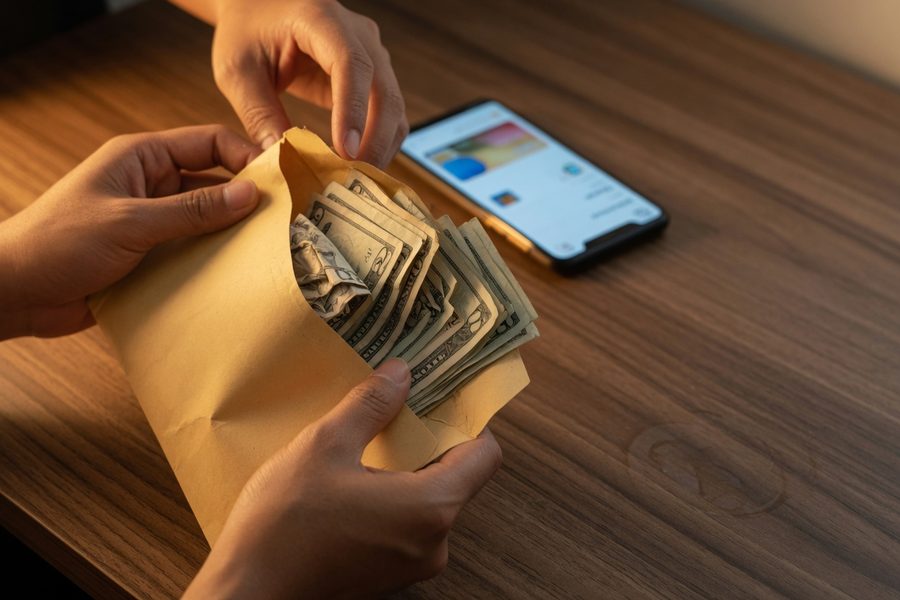
Digital envelopes solve the three structural problems that make physical cash stuffing impractical at scale: safety, shared access, and integration with non-discretionary spending. Cash gets lost or stolen with no recourse; a digital envelope balance is FDIC-insured and recoverable. Cash can’t be in two places at once, but a shared digital envelope lets partners see and spend from the same grocery budget in real time, Goodbudget and YNAB both support this across multiple devices. And cash simply doesn’t work for auto-paid bills, which is why so many physical envelope users end up with a rogue checking account that operates outside the system entirely.
The integration piece matters most in practice. When your paycheck arrives via direct deposit, a control-based app like Qube Money can automatically distribute it across envelopes according to your preset percentages, mortgage gets 30%, groceries 12%, and so on, before you ever see the balance. There’s no weekend ATM run, no fee, and no mental math about how much cash to withdraw. For families tracking irregular expenses, digital envelopes also make seasonal grocery budgeting shifts easier to implement, since you adjust the allocation with a slider rather than re-stuffing envelopes.
| Feature | Physical Cash Envelopes | Tracking Apps (YNAB, Goodbudget) | Control Apps (Qube Money) |
|---|---|---|---|
| Hard spending stop | Yes, cash runs out | No, shows red after overspend | Yes, card declines if category is empty |
| Shared access with partner | No, one physical envelope | Yes, syncs across devices | Yes, joint accounts with individual Qubes |
| Works for online bills | No | Yes, tracks after payment | Yes, dedicated Qube for each biller |
| Monthly cost | $0 plus ATM fees | $0–$14.99/mo | $0–$8/mo depending on plan |
| FDIC insured | No | No, app is not a bank | Yes, through partner bank |
Step 5: Where Digital Envelope Systems Fall Short
No digital envelope system perfectly replicates the finality of an empty paper envelope, and three specific gaps create trouble for users who don’t anticipate them. First, subscription billing and buy-now-pay-later services can bypass category limits entirely. When a streaming service auto-charges a card linked to your digital envelope app, and that payment exceeds the entertainment category balance, a tracking app simply shows a negative number, but the money already left your account. Control apps handle this better by declining the charge, but then you face a late payment or service interruption.
Second, the ease of moving money between digital envelopes, a feature designed for flexibility, becomes the very loophole that undermines the system’s discipline. Physical envelopes force you to physically walk to another room, open a different envelope, and move bills. That friction is the point. A digital transfer between categories takes three seconds and a thumbprint, which is convenient in an emergency and dangerously frictionless when you’re rationalizing a splurge. Qube Money addresses this by logging every transfer and making the movement visible, but it cannot replicate the psychological weight of handling physical cash.
Many digital envelope apps require full bank account linking via Plaid or similar services, which means you’re granting a third party read-and-transaction access to your checking account. Read the app’s data-sharing policy carefully, some monetize anonymized spending data, and the privacy profile of a tool that sees every transaction is fundamentally different from anonymous cash.
The Long-Term Adherence Problem
A third, less-discussed shortcoming is envelope fatigue. User forums and app reviews consistently show a pattern: enthusiastic adoption for 3–6 months, then gradual category neglect as the novelty wears off. Physical envelopes sit on a shelf and demand attention; digital envelopes hide inside a phone among dozens of other apps. Push notifications help, but they’re also easy to dismiss. The solution for most long-term users is to automate the non-discretionary envelopes (rent, utilities, debt payments) and reserve manual attention for exactly 3–4 discretionary categories, typically groceries, dining out, entertainment, and a catch-all personal spending category. That narrower focus reduces the cognitive load enough to sustain the habit past the one-year mark.
Step 6: Should You Go Cash, Digital, or Hybrid? Matching the Method to Your Money
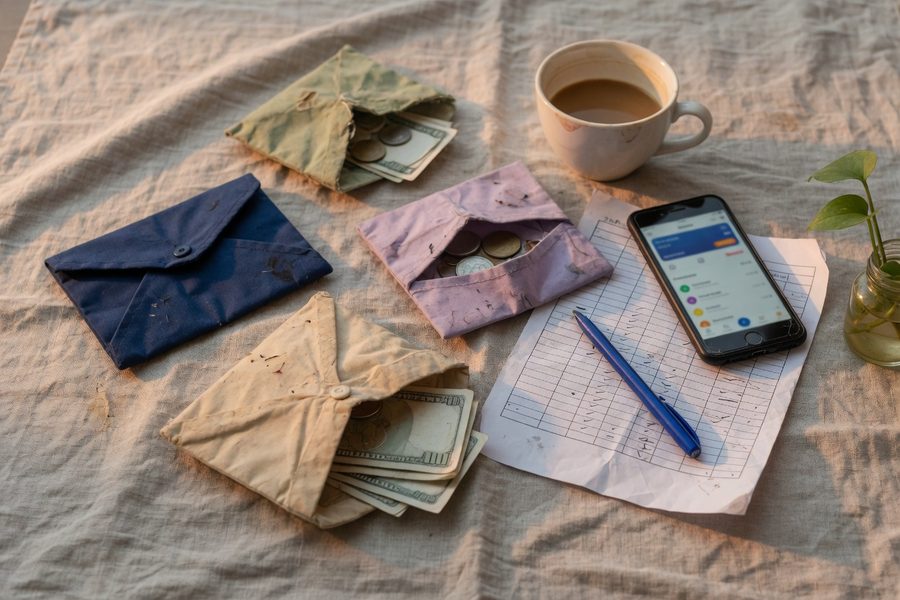
The right answer depends on exactly two variables: your income stability and your highest-impulse spending categories. Stable income with direct deposit and a handful of swipe-heavy temptation categories? A control-based digital system like Qube Money with spending locks on dining out and entertainment will serve you better than cash. Irregular income, gig work, freelancing, seasonal employment, where payouts arrive unpredictably? A hybrid approach using physical cash for the 2–3 most impulse-prone categories and a flexible tracking app for everything else often works best.
Here’s the worked example using the Federal Reserve’s data. The average consumer makes 48 payments per month. If you shift the 7 cash transactions (14% of payments) into a digital envelope system and keep the remaining 41 digital transactions within category limits, you’ve eliminated the cash-handling friction without losing discipline on any payment type. For a household spending $3,200 monthly on variable expenses, groceries, gas, dining, entertainment, personal care, the difference between tracking every dollar in digital envelopes versus letting those categories float unmonitored is often $250–$400 saved per month, simply from the visibility effect. Annualized, that’s $3,000–$4,800 that stays in the bank rather than evaporating into unmonitored spending.
When Physical Cash Still Wins
Cash maintains an edge in exactly one scenario: categories where you consistently overspend and have tried, and abandoned, digital guardrails. If dining out is your budget killer and you’ve ignored every app notification for six months, pulling $200 in cash for restaurants at the start of the month and leaving the card at home creates an unbeatable hard stop. Pair that with budget-friendly meal strategies that don’t feel like deprivation, and the combination of physical limits plus satisfying alternatives changes behavior faster than any app can. The same logic applies to discretionary shopping, entertainment, and any category where swiping feels painless until the statement arrives.
37% of U.S. adults, roughly 95 million people, could not cover an unexpected $400 expense without borrowing or selling something in 2024, according to the Federal Reserve Board’s latest survey. A functioning envelope system, digital or physical, closes that gap by revealing exactly how much margin exists after fixed expenses.
How to Build a Hybrid System That Lasts
Start with three categories in physical cash, the ones where you overspend most, and move everything else into a tracking app that syncs with your bank. Run that split for 90 days. If you find yourself consistently respecting the digital envelope limits, you can migrate the cash categories into the app. If the cash envelopes keep saving you from yourself, keep them. The method exists to serve your spending patterns, not the other way around. For many households, that means using cash for weekend discretionary spending while relying on digital envelopes for the predictable monthly rhythm. If credit card interest is compounding your budget strain, explore credit counseling services that can help restructure payments while the envelope system handles future spending.
Frequently Asked Questions
Can I use a digital envelope system if my income is completely irregular?
Yes, but you’ll need to run the system differently than someone with a steady paycheck. Instead of allocating a fixed monthly amount to each envelope, deposit all income into a “holding” category and distribute it to envelopes based on priority, rent and utilities first, then groceries, then discretionary, until the holding balance hits zero. YNAB handles this well because its methodology is built around allocating only money you actually have right now, not projected future income. The key discipline: never fill a discretionary envelope until every non-negotiable category is fully funded for the current cycle.
What happens when a subscription charge hits and my digital envelope for that category is empty?
In a tracking app like YNAB or Goodbudget, the charge still goes through and your envelope shows a negative balance, which you’ll need to cover by moving money from another category. In a control app like Qube Money, the transaction is declined unless you’ve designated a specific Qube for that subscription with sufficient funds. The practical fix for either system is to treat recurring subscriptions as fixed expenses with their own permanently funded envelope, refilled at the same priority level as rent, rather than lumping them into a broader entertainment or miscellaneous category where they get crowded out.
Are digital envelope apps safe if they require my bank login credentials?
Most reputable apps use Plaid, Yodlee, or MX as intermediaries, they never see or store your actual bank password. These services create a secure token that allows read-only access (or limited transaction access, depending on the app) without exposing your credentials. You’re still granting a third party access to your transaction history, and the privacy tradeoff is real. Check whether the app sells anonymized data (Goodbudget’s free tier does; YNAB does not) and whether the connection is read-only or transactional. Qube Money avoids the linking issue entirely by operating as the bank itself, which eliminates the third-party data pipeline but means you’re banking with a fintech rather than layering an app over your existing account. FDIC insurance applies either way, so long as the underlying institution is member-insured.
Do people actually stick with digital envelope systems for more than a year?
Long-term adherence data is sparse, none of the major envelope apps publish retention statistics, but user community patterns suggest a drop-off spike around the 6-month mark and a smaller second wave around 12 months. The users who persist past a year almost universally do two things: they automate fixed-category funding and they limit active envelope management to 3–5 discretionary categories. Trying to manually manage 15 digital envelopes every month burns people out. Narrow the scope and the habit sticks.
How do buy-now-pay-later purchases fit into an envelope system?
Poorly, and that’s by design, BNPL services and envelope budgeting are philosophically at odds. An envelope system forces you to have the money before you spend it; BNPL lets you spend first and pay later. If you use Afterpay, Klarna, or Affirm, treat the full purchase amount as spent the moment you commit, deducting it from the relevant envelope immediately. Then track the installment payments as transfers from that same envelope back to your checking account so you don’t double-count the spending. For most envelope users, the cleaner approach is to disable BNPL options at checkout and only buy what the envelope balance supports, which is, after all, the entire point of the method.
Which banks let me create sub-accounts that function like digital envelopes?
Ally Bank’s checking and savings accounts allow multiple “buckets” within a single account; SoFi offers “Vaults” inside its savings product; and some credit unions, including Alliant Credit Union, support sub-accounts labeled by category. These aren’t full envelope systems, they lack the spending-control features of Qube Money or the zero-based methodology of YNAB, but they provide a free, FDIC-insured way to partition money without adopting a new app. The limitation is that you need to manually transfer funds before spending from the right sub-account, which adds a step that many people skip when they’re in a hurry.
What’s the real difference between a tracking app and an app that controls my spending?
A tracking app shows you what you already spent and compares it to your plan. A control app intervenes before the transaction completes. Tracking apps are cheaper or free, work with any bank account, and provide excellent visibility, but they cannot stop an overspend in progress. Control apps can decline a transaction, but they usually require you to switch your direct deposit and spending to their platform. The right choice depends on whether your primary problem is awareness (you don’t know where the money goes) or impulse control (you know exactly where it goes and can’t stop in the moment). Most people need awareness tools for the first year and only graduate to control tools if impulse spending persists after the awareness gap closes.
Can my spouse and I share digital envelopes and both see what’s left in real time?
Yes, and this is one area where digital envelopes clearly outperform physical cash. Goodbudget’s paid tier and YNAB’s family plan both sync envelope balances across multiple devices instantly, so when one partner spends from the grocery envelope at 10 a.m., the other sees the reduced balance at 10:01 a.m. Qube Money supports joint accounts where both users can open and spend from shared Qubes. The communication benefit matters as much as the technical feature, couples who budget together in a shared digital envelope system report fewer “I thought we had more in that category” arguments, simply because the balance is always visible and always current.
Will using a digital envelope system actually save me money compared to just tracking expenses?
For most people, yes, and the mechanism is pre-commitment, not tracking. When you allocate $500 to groceries in an envelope before the month starts, you’ve made a decision about what “enough” looks like. When you only track expenses, you discover what “enough” was after the money is gone. The savings come from the decisions you make differently when you see a shrinking balance before each purchase rather than a categorized total after the fact. A household spending $800 monthly on groceries and dining out might realistically cut that to $600–$700 within 60 days of envelope adoption, purely from the visibility effect, though the exact amount depends entirely on how much slack existed in the first place and how tightly you set the initial limits.
Sources
- Federal Reserve Financial Services, 2025 Findings from the Diary of Consumer Payment Choice
- Board of Governors of the Federal Reserve System, Economic Well-Being of U.S. Households in 2024: Savings and Investments
- Qube Money, Digital Cash Envelope Banking Platform
- YNAB (You Need A Budget), Zero-Based Budgeting Software
- Goodbudget, Digital Envelope Budgeting App
- Federal Deposit Insurance Corporation, Deposit Insurance Coverage Information
- Plaid, How Bank Account Linking and Data Security Works