
Fact-checked by the MyFinancial101 editorial team
Key Takeaways
- The average new parent spends $20,384 on baby-related items in the first year, excluding childbirth costs, according to BabyCenter’s 2025 survey.
- Diapers and wipes cost an average of $86 per month, $1,032 annually, but switching to cloth can slash total diapering costs to under $500 for the entire first year.
- All U.S. car seats must meet identical federal safety standards, so a $150 seat protects your baby just as well as a $400 one.
- Formula runs $222 per month ($2,664 a year), while breastfeeding can eliminate that expense entirely, and many families qualify for free formula through WIC.
- Child care alone averages $13,184 per year, yet a dependent care FSA and the Child Tax Credit can reclaim thousands of dollars.
- Baby costs consume roughly 31% of average parental income in the first year, making every spending cut directly protective of family financial stability.
The first year of a baby’s life costs parents an average of $20,384, before childbirth. Not a down payment on a house, not a luxury car. Just diapers, formula, a crib, some onesies, and a car seat. And that number, pulled from BabyCenter’s 2025 survey of new parents, doesn’t even include the real budget-breaker: child care, which added another $13,184 on average last year. For smart spending new parents, the pressure is real, and the noise from marketing, registries, and well-meaning relatives only makes it worse.
But here’s the thing most “must-have” lists won’t tell you: a big chunk of that $20,384 is moveable. Not with sketchy shortcuts or expired gear, with data-backed choices that preserve safety and gut the fat. What follows is a compilation of the latest public cost data, federal safety standards, and real-dollar trade-off calculations. Every number is sourced. Every cut respects the one rule that matters: don’t compromise protection.
Methodology
This analysis aggregates publicly available 2025 cost data from BabyCenter’s first-year expense survey and Child Care Aware of America’s annual price report, alongside safety standards published by the U.S. Consumer Product Safety Commission (CPSC) and the American Academy of Pediatrics (AAP). Figures represent national averages; actual costs vary by region, personal choices, and individual eligibility for assistance programs. No original data collection was conducted. The goal is to show exactly where safe savings exist and how much they can add up to.
1. The True Cost Breakdown of Baby’s First Year
The $20,384 figure from BabyCenter covers baby-specific goods and services, formula, diapers, clothing, furniture, gear, and medical copays not covered by insurance. It excludes the cost of giving birth itself. When you layer on full-time infant care at the national average of $13,184, the combined outlay easily surpasses $33,000. For a family earning the median household income, that’s over half their annual take-home pay.
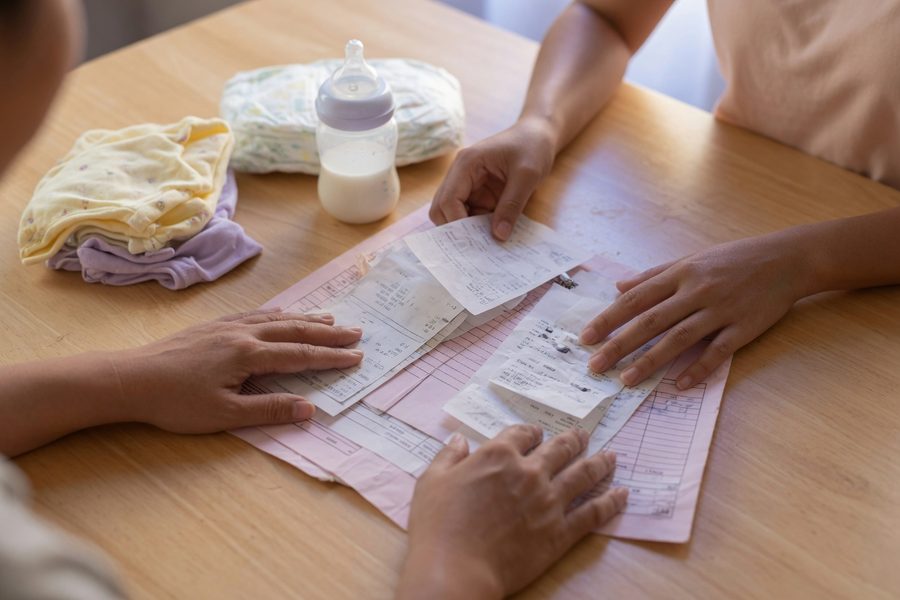
Recurring costs drive the majority of damage. Formula alone averaged $222 per month in the BabyCenter study; diapers and wipes added $86. Over twelve months, those two line items total $3,696, more than a high-end convertible crib. The remaining $16,688 went to one-time purchases (furniture, strollers, car seats) and semi-discretionary categories like clothing and toys. That split is critical: $3,696 is predictable and highly reducible. The one-time costs, however, are full of traps that marketing inflates.
Baby-related expenses consume roughly 31% of average parental income in the first year, per BabyCenter’s 2025 findings.
Understanding this breakdown is the first act of smart spending new parents can take: target the recurring line items first, then squeeze the big-ticket purchases where safety standards make price irrelevant.
2. Safety Non-Negotiables: What to Buy New, and Why
Car seats, cribs, and mattresses. These three are your non-negotiables.
The U.S. Consumer Product Safety Commission requires every infant car seat sold to meet Federal Motor Vehicle Safety Standard 213. That standard is binary, it passes or it fails. No grayscale. A $150 car seat from a discount retailer meets the same crash-test thresholds as a $400 model with a cupholder and nicer fabric. The same logic applies to cribs: any full-size crib sold new in the U.S. must conform to CPSC’s stringent slat-spacing, corner-post, and mattress-support standards. Buy new, but buy the simplest compliant version and ignore price.
The American Academy of Pediatrics advises parents to create a safe sleep environment using firm, flat surfaces meeting CPSC standards and notes that organizations can provide low-cost or free compliant sleep surfaces if needed.
Where used gear gets risky, a secondhand crib may have been recalled, have loose hardware, or not meet current standards. You can check any model at CPSC’s recall database before purchasing, but for sleep surfaces, the safe bet is new. Ironically, that’s also the one category where you can spend very little: IKEA cribs consistently meet federal rules for under $120. The markup on prestige cribs buys aesthetics, not safety.
3. Cutting Feeding and Diapering Costs Without Risk
Feeding: $2,664 a year for formula disappears if you breastfeed exclusively. That’s not a moral point, it’s arithmetic. The BabyCenter data shows formula costs $222 per month. Over twelve months, exclusive breastfeeding avoids that entire sum, though many families need a combination approach. Even partial formula feeding cuts costs proportionally.
For families who formula-feed, WIC (the Special Supplemental Nutrition Program for Women, Infants, and Children) provides free infant formula to income-eligible households. Eligibility thresholds vary by state, but many working families qualify, gross income up to 185% of the federal poverty level, which for a family of three in 2025 is about $51,000. If you qualify, that’s $2,664 you don’t have to spend. Not applying is leaving money on the table.
| Feeding Method | Monthly Cost | Annual Cost | Safety Note |
|---|---|---|---|
| Exclusive Formula | $222 | $2,664 | Use only FDA-approved formulas; store brand is nutritionally equivalent. |
| Exclusive Breastfeeding | $0 (food cost) | $0 | Breast pump covered by insurance under ACA; lactation support often free. |
| WIC-Eligible Formula | $0–$50 | $0–$600 | Free to qualified families; partial coverage reduces grocery spend sharply. |
Diapering: $86 a month adds up to $1,032 a year. Cloth diapers invert the equation. A full one-size pocket diaper set (24–30 diapers with inserts) costs roughly $250 new and lasts from the newborn stage to potty training. Add $0.25 per wash load, two to three loads a week, and you’re looking at $39 in annual laundry costs. Total first-year outlay: about $300. That’s a $732 savings over disposables, and the diapers work for subsequent children. A used cloth stash can be acquired for half that price, bringing the first-year cost below $200.
Hygiene and safety? No issue. Cloth diapers meet the same sanitary needs as disposables; you just wash them. For parents who want the convenience of disposables, store-brand options (Target’s Up&Up, Walmart’s Parent’s Choice) consistently perform as well as Pampers and Huggies in absorbency tests and cost 25% to 40% less. Bulk buying on Amazon Subscribe & Save can push the price down to $0.13 per diaper, well under the $0.25–$0.40 of premium brands.
$732: approximate savings from switching to cloth diapers in the first year, based on national disposable averages vs. a $250 cloth starter set.
4. Clothing, Gear, and Nursery on a Budget
Babies outgrow clothes faster than you can fold them. The resale market is flooded with nearly-new onesies, sleepers, and jackets that cost $1–$3 apiece at consignment stores and online marketplaces like Kidizen or Facebook Marketplace. Clothing is the single safest category to buy secondhand: no federal safety standard applies, and fabric items are easily washable.
For gear, the rule flips: never buy a used car seat unless you personally know its history and can confirm it has never been in a crash, is not expired, and has all parts. For strollers, swings, and bouncers, check the CPSC recall database, inspect for damage, and scrub thoroughly. A $600 stroller bought used for $100 delivers identical function.
| Item | New Price (Typical) | Secondhand Price | Savings |
|---|---|---|---|
| Stroller (full-size) | $400 | $80–$120 | $280–$320 |
| Crib (new, compliant) | $120 | Not recommended used | Safety priority |
| Baby clothing (0–12m lot) | $500 | $75–$150 | $350–$425 |
The nursery itself doesn’t need the coordinated “look.” Your baby won’t remember the wallpaper. A firm, flat sleep surface, a correctly installed car seat, and a few sleepers are the essentials. Skip the wipe warmer, the designer mobile, and the $200 video monitor, audio monitors work and cost $20. Smart spending new parents know that every dollar redirected from nursery decor to an emergency fund is a dollar that actually protects the baby.
5. Free and Low-Cost Resources Most Parents Overlook
Hospitals send new parents home with a bag of supplies, diapers, sample formula, bulb syringes, blankets, and postpartum care items. Those “freebies” can total $30 to $40 in retail value. Ask for extra: most nurses are happy to load you up. Your insurance also likely covers a breast pump at 100% under the Affordable Care Act; if you haven’t been told, call your insurer and request one before delivery.
Beyond the hospital, free car seat programs run by state health departments and Safe Kids coalitions install certified seats at no charge. Many libraries now lend toys, baby carriers, and even simple gear, a little-known hack that can save hundreds when you need something for just a few weeks. Your library card is a financial superpower that extends far beyond books.
Government assistance programs are under-enrolled in most states. WIC covers formula and nutritious foods. The Child Tax Credit provided up to $2,000 per qualifying child in 2025, refundable up to $1,700. That credit alone can offset months of formula or diapers. Claiming it properly is worth a direct IRS review of your filing status before you submit.
6. Building a Parents’ Fund: The Sinking Fund That Keeps You Out of Debt
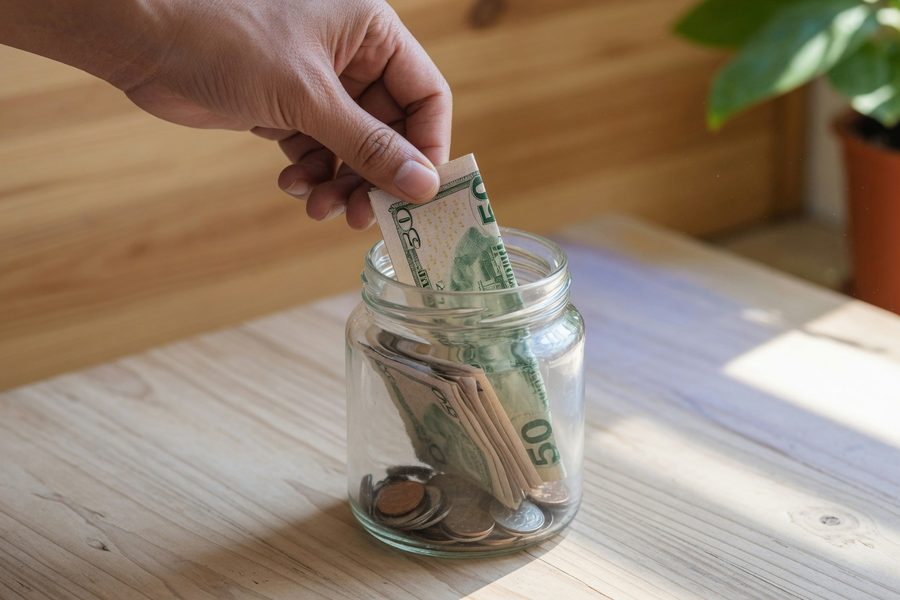
Financial stress during the postpartum period is a documented mental health risk, and unexpected baby costs, a cracked breast pump flange, a rash that requires prescription cream, a formula shortage that forces a brand switch, hit hardest when the budget is already stretched. The fix is a dedicated “parents’ fund”: a sinking fund of $500 to $1,000 set aside before birth, earmarked only for baby-related surprises.
Building that fund is simpler than it sounds. Redirect the savings from the first few clothing consignment hauls or the Christmas cash gift from relatives. Automate $50 a month from your checking account during pregnancy, and you’ll have $450 by month nine. The goal isn’t a massive sum; it’s a buffer that prevents a $200 pediatric copay from becoming credit card debt at 22% interest. That’s real protection, and it costs nothing but discipline.
$500 in a dedicated baby slush fund can prevent a single unexpected expense from triggering months of high-interest debt.
7. Strategic Credit Card Use for Baby Purchases
Cashback and 0% APR cards, used precisely, can turn unavoidable big-ticket buys into discount engines, but only if you pay the balance in full every month. A card offering 2% cash back on a $400 stroller and a $200 crib returns $12. That’s not life-changing, but combined with a registry completion discount (usually 15% off items left on the registry after the shower), the total discount on those two items can hit 17%. Over a full year of targeted baby spending, cashback rewards on essentials can refund $150 to $300.
The trap, however, is that new parents are prime targets for overspend. Sleep deprivation erodes impulse control. Registry suggestions and targeted ads inflate the “necessity” list. The rule: never carry a balance. If you can’t pay it off immediately, the 20%+ APR will swallow every cent of rewards and then some. Negotiating your APR before a large purchase is a proactive move if you anticipate carrying a balance, but the safest path is debit, or a pre-funded parent fund.
8. Your Action Plan for Smart Spending in Baby’s First Year
Here is a step-by-step roadmap, grounded in the numbers above. Each step directly removes cost without touching safety.
- Calculate your personal first-year cost estimate. Use the $20,384 national average as a baseline, then adjust: will you breastfeed? Will you use cloth diapers? Will you need full-time infant care? Get a real number.
- Buy only three items new: car seat, crib, and mattress. Each must meet current CPSC standards. Buy the simplest compliant version, no embellishments.
- Choose a feeding method based on your reality, not pressure. If formula, check WIC eligibility immediately. If breastfeeding, claim your free pump through insurance.
- Switch to store-brand or cloth diapers. Even mixing one cloth diaper a day cuts annual disposables cost by 20%.
- Source all clothing and non-safety gear secondhand. Consignment sales, Facebook Marketplace, and local parent swaps can outfit a baby for under $200 total.
- Open a dedicated parents’ fund with at least $500 before delivery. Automate deposits and treat it as untouchable until a genuine surprise strikes.
- Claim the Child Tax Credit and, if your employer offers one, max out a dependent care FSA. For childcare costs, an FSA lets you pay with pre-tax dollars, saving roughly 22% to 37% depending on your bracket.
- Review spending monthly and cut whatever isn’t protecting or feeding your baby. Cancel the diaper subscription that sends too many, return the gadget you never opened, and ignore registry guilt.
9. What This Means for Your Family’s Finances
The data is blunt: baby’s first year will cost thousands, but how many thousands is largely under your control. The distinction between $20,000 and $12,000 isn’t luck; it’s the cumulative effect of skipping brand premiums, buying used where safe, using free programs, and letting tax policy do its job. Those $8,000 in saved cash are the difference between building an emergency fund and draining one.
This isn’t about deprivation. It’s about ruthless prioritization. A $40 audio monitor works as well as a $200 video one. A $14 onesie from a consignment store isn’t less soft. And the hours you’d spend earning the money to buy those markups? That’s time you could spend with your child. Smart spending new parents understand that financial margin is a parenting asset. Protect it.
The scariest baby-related stat isn’t the $20,384. It’s that 31% of income figure. When one-third of a family’s earnings go to a single member’s first-year needs, financial strain becomes a health issue. Cutting costs where safety permits isn’t optional, it’s a protective measure for the whole household.
Frequently Asked Questions
What is the average cost of a baby’s first year?
The BabyCenter 2025 survey pegs it at $20,384, excluding childbirth costs. That includes recurring items like formula, diapers, and wipes, plus one-time purchases like furniture and gear.
Is it safe to buy a used car seat?
Only if you can personally verify it has never been in a crash, is not expired, and all original parts are intact. Otherwise, buy new, any new seat that meets FMVSS 213 is equally safe regardless of price.
How much can I save by using cloth diapers?
Switching to cloth diapers can save around $732 in the first year compared to the national average of $86/month for disposables. A one-size set costs roughly $250 and lasts until potty training.
Does breastfeeding really eliminate feeding costs?
It eliminates the formula expense of $222/month, or $2,664 annually. However, there may be ancillary costs like pump accessories or lactation consultant fees, though insurance covers many of those.
What is the WIC program and how can it help with baby costs?
WIC provides free infant formula and nutritious foods to income-eligible families. Eligibility is up to 185% of the federal poverty level, many working families qualify, potentially saving over $2,600 a year.
Are store-brand formulas safe?
Yes. All infant formula sold in the U.S. must meet FDA nutritional standards. Store brands are nutritionally equivalent to name brands and cost 25–40% less.
How does the Child Tax Credit reduce baby expenses?
For 2025, the credit is worth up to $2,000 per qualifying child, with up to $1,700 refundable. That cash directly offsets diapers, formula, or childcare costs.
Can I use a dependent care FSA for infant daycare?
Yes. A dependent care flexible spending account lets you set aside up to $5,000 pre-tax for child care expenses, effectively a 22–37% discount on that big-ticket cost.
What baby items should I never buy used?
Car seats, cribs, and crib mattresses. Car seats may have unseen crash damage; cribs may not meet current CPSC standards. Buy these new but choose the least expensive compliant options.
How do I build a baby emergency fund quickly?
Set up automatic transfers of $50–$100 per month from your checking account. Aim for $500 by delivery. Use savings from secondhand gear and tax refunds to boost it further.
Sources
- BabyCenter, First Year Baby-Related Expenses (2025 Survey)
- Child Care Aware of America, Price and Supply 2025 Report
- U.S. Consumer Product Safety Commission, Safe Sleep Guidance
- American Academy of Pediatrics, Safe Sleep Guide
- IRS, Publication 503, Child and Dependent Care Expenses
- CPSC, Recall Database