
Fact-checked by the MyFinancial101 editorial team
Most financial advice assumes you have a boss depositing money into your 401(k) every two weeks. For the 16.75 million self-employed workers in the United States, that assumption misses the mark entirely. Freelancer retirement savings requires a different playbook, one built around variable income, self-directed accounts, and a tax strategy that works in your favor instead of against you. The good news is that the tools available to freelancers are, in several ways, more powerful than anything a typical employer plan offers.
Only 22% of self-employed individuals have a written retirement plan, according to Transamerica Institute research published in 2025. That gap is costly. Without a structured plan, irregular income becomes an excuse to perpetually delay saving, and years of compounding quietly disappear. The IRS allows self-employed workers to contribute up to $69,000 per year across certain retirement accounts, a ceiling most salaried workers can’t come close to touching.
By the end of this guide, you’ll know exactly which accounts to open, how to fund them on an unpredictable income, how retirement contributions cut your tax bill, and how to automate the whole system so it works even when client payments arrive at random. No employer required.
Key Takeaways
- There are 16.75 million self-employed workers in the U.S. as of Q1 2024, yet only 22% have a written retirement plan.
- Solo 401(k) plans allow total contributions up to $69,000 per year (2024 limit), far exceeding the $7,500 annual IRA cap.
- SEP IRAs accept contributions up to 25% of net self-employment earnings with minimal paperwork and no government filing requirement.
- The estimated median total household retirement savings among self-employed workers is just $87,000, well below what most retirement benchmarks recommend.
- Automating a 15–20% transfer of every client payment overcomes irregular income far better than setting a fixed monthly dollar amount.
- HSAs offer a triple tax advantage: deductible contributions, tax-free growth, and tax-free qualified withdrawals, and after age 65, the use-it-or-lose-it rule disappears entirely.
In This Guide
- The Freelancer Retirement Reality Check
- Your Main Retirement Account Options in 2026
- Setting Up and Funding Accounts Without the Employer Headache
- Automating Savings When Paychecks Are Unpredictable
- Layering in HSAs, Taxable Accounts, and Other Levers
- Navigating Taxes, Deadlines, and Self-Employed Traps
- ACA Health Insurance and Your Retirement Deductions
- Realistic Catch-Up Strategies for Late Starters
- Tracking Progress and Adjusting Over Time
The Freelancer Retirement Reality Check
Here’s a counterintuitive truth: freelancers are actually in a better position to build retirement wealth than many salaried workers, if they act deliberately. The obstacle is not the account options. It’s the false belief that retirement saving has to wait until income stabilizes.
Social Security does cover self-employed workers, but the benefit alone rarely covers basic living costs., the average monthly Social Security retirement benefit was roughly $1,907. For a freelancer who spent decades with variable earnings and no employer match, that number may be even lower. Relying on it as a primary income source in retirement is a plan that runs out fast.
The Median Savings Gap
According to the Transamerica Institute’s 2025 workforce outlook, the estimated median total household retirement savings among self-employed workers is $87,000. That figure sounds modest until you run it against a 20- or 30-year retirement. At even a conservative 4% withdrawal rate, $87,000 generates about $290 a month. That’s a savings gap, not a retirement plan.
The gap exists largely because irregular income creates a psychological out. When a slow month hits, the retirement contribution feels optional. That’s where structure, accounts, automation, and deadlines, does the work that motivation can’t sustain.
The estimated median household retirement savings for self-employed workers is $87,000, compared to significantly higher figures for traditionally employed households. At a 4% withdrawal rate, that covers roughly $290 per month in retirement income.
Your Main Retirement Account Options in 2026
Four account types dominate the conversation for self-employed savers: the Solo 401(k), the SEP IRA, the SIMPLE IRA, and the Traditional or Roth IRA. They differ in contribution limits, administrative complexity, Roth availability, and who can use them. Picking the right one depends on your income level, whether you have employees, and how much complexity you’re willing to manage.
Side-by-Side Comparison
| Account Type | 2024 Contribution Limit | Roth Option? | Best For |
|---|---|---|---|
| Solo 401(k) | Up to $69,000 ($76,500 if 50+) | Yes | High-income solos with no employees |
| SEP IRA | 25% of net earnings, max $69,000 | No (traditional only) | Simple setup, variable income earners |
| SIMPLE IRA | $16,000 ($19,500 if 50+) | No | Freelancers with 1–100 employees |
| Traditional/Roth IRA | $7,000 ($8,000 if 50+) | Yes (Roth) | Low-income years or supplemental savings |
The Solo 401(k) is frequently the most powerful option for sole proprietors. In 2026, you can contribute as both employee (up to $24,500, including catch-up if you’re 50+) and employer (up to 25% of net self-employment earnings), pushing the combined total well beyond $69,000 for higher earners. The SEP IRA is simpler to open and maintain, no annual IRS Form 5500 filing until assets exceed $250,000, making it a practical first account for newer freelancers. According to the U.S. Department of Labor, SEP plans require no government filing and accept contributions only from the employer, which for a sole proprietor means you.
The Solo 401(k) is the only self-employed retirement account that allows Roth contributions at the plan level, letting high earners build a tax-free bucket even when Roth IRA income limits would otherwise disqualify them.
The Roth Question
Roth contributions make sense in lower-income years or early in a freelance career when your tax rate is relatively modest. Paying taxes now on a small amount beats paying taxes later on a much larger one. A Solo 401(k) with a Roth feature is the clearest path for self-employed workers who want that flexibility at contribution levels above the standard IRA cap.
If you’re already investing but unsure whether your current approach is working, the guide on how to start investing with zero experience covers the core mechanics without assuming a background in finance.
Setting Up and Funding Accounts Without the Employer Headache
Opening a Solo 401(k) has one hard deadline: December 31 of the tax year in which you want contributions to count. You must establish the plan by year-end, though you can make the actual contribution up until your tax filing deadline (including extensions, so typically October 15 for the following year). The SEP IRA is more forgiving, you can open and fund it as late as your tax filing deadline, extensions included.
How to Calculate Your Contribution
This is where many freelancers stumble. The IRS requires self-employed individuals to use a special formula that accounts for the self-employment tax deduction before applying the plan’s contribution rate. You do not simply take 25% of gross revenue. The process works like this: start with net self-employment income, subtract half the self-employment tax, then apply the plan contribution rate to that adjusted number.
Quick worked example: Say your net self-employment earnings are $80,000. You deduct half of your self-employment tax (roughly $5,652 at the 15.3% rate on 92.35% of earnings). That leaves an adjusted net of approximately $74,348. At 25%, your maximum SEP IRA contribution for the year would be about $18,587. Under a Solo 401(k), you could add the employee deferral on top of that employer contribution, potentially reaching $43,087 or more. The arithmetic matters, run it before assuming you can hit the maximum.
Use the IRS’s own worksheet (Publication 560) or a fee-only CPA to calculate your exact Solo 401(k) contribution. The formula is circular, your contribution affects your deduction, which affects your taxable income, and small errors compound at tax time.
Provider Options and Admin Costs
For sole proprietors with no employees, the Solo 401(k) and SEP IRA differ meaningfully in ongoing administration. A SEP IRA at Fidelity, Vanguard, or Schwab carries essentially zero annual fees and zero paperwork until assets cross $250,000. A Solo 401(k) at those same providers is also free to maintain, but some smaller or specialty providers charge $100–$300 per year in plan administration fees. If you’re considering a provider offering “checkbook control” Solo 401(k)s for alternative investments, admin costs can run $500–$1,500 annually. For most straightforward freelancers, the major discount brokerages offer the best cost-to-feature ratio for both account types.
Automating Savings When Paychecks Are Unpredictable
Fixed monthly transfers don’t work well when income swings from $3,000 one month to $12,000 the next. The more reliable system is percentage-based: every time a client payment arrives, a set percentage moves to a designated savings account earmarked for retirement funding.
Linking Payment Platforms to Your Savings Workflow
If you receive payments through Stripe or PayPal, both platforms allow automatic transfers to a connected bank account. From there, you can set a standing transfer rule, say, 15–20% of every deposit above a threshold, to a high-yield savings account labeled specifically for retirement. Once that bucket reaches a meaningful amount, typically $1,000 or more, you manually execute the contribution to your Solo 401(k) or SEP IRA. Some freelancers use a second checking account at a separate bank as a friction buffer: the money is out of sight but accessible, which reduces the temptation to spend it during a slow month.
This workflow does require one prerequisite: a genuine emergency fund sitting separately. Without 3–6 months of expenses in cash, retirement contributions will get raided the moment an unexpected expense arrives. Build the emergency cushion first, then layer in the retirement automation. If you’re thinking through ways to generate additional cash flow while building that buffer, the piece on how micro-freelancing is creating new income streams is worth a read.
Automating even a fixed 15% of every client payment, rather than waiting until year-end to make a lump-sum contribution, can result in significantly more invested over time, simply because the money never sits in a checking account long enough to be absorbed by expenses.
Layering in HSAs, Taxable Accounts, and Other Levers
Once a core retirement account is funded, two additional vehicles deserve attention: the Health Savings Account (HSA) and a standard taxable brokerage account. Most people think of the HSA as a healthcare tool. It’s also one of the most tax-efficient savings vehicles available to anyone on a qualifying high-deductible health plan.
The HSA as a Retirement Account
Contributions to an HSA are tax-deductible, the money grows tax-free, and qualified medical withdrawals are tax-free, that’s the triple advantage. After age 65, you can withdraw HSA funds for any reason and simply pay ordinary income tax on non-medical expenses, identical to a traditional IRA withdrawal. There is no required minimum distribution, and the balance carries over indefinitely. The 2024 contribution limits are $4,150 for individuals and $8,300 for family coverage, with a $1,000 catch-up if you’re 55 or older.
For freelancers already contributing to a Solo 401(k) or SEP IRA, an HSA stacks on top of those contributions without reducing the retirement account limits. It’s a legitimate fourth tax bucket: pre-tax contributions, tax-free growth, and a long runway for spending in retirement when medical costs typically peak.
Taxable Brokerage Accounts
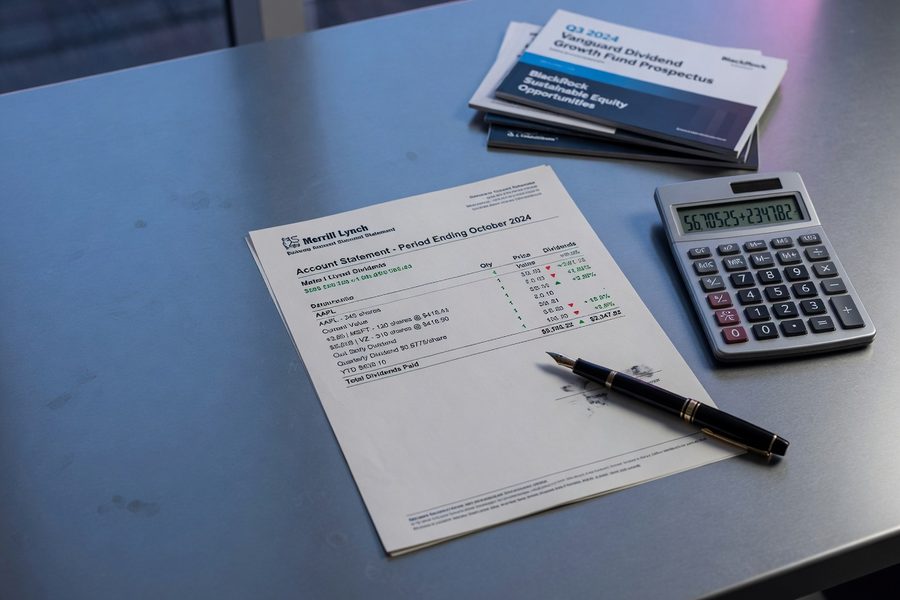
When you’ve maxed your retirement accounts and HSA, a taxable brokerage account fills the remaining gap. You won’t get a deduction on contributions, and dividends and realized gains are taxable each year. But there’s no contribution limit, no penalty for early withdrawals, and no RMD rules. Long-term capital gains rates (0%, 15%, or 20% depending on income) are often lower than ordinary income rates, which makes a taxable account reasonably efficient for long-term compounding even without the shelter of a tax-advantaged wrapper.
Navigating Taxes, Deadlines, and Self-Employed Traps
Retirement contributions directly reduce your taxable income, and for freelancers already paying both halves of self-employment tax (15.3% on the first $168,600 of net earnings in 2024), that deduction has real weight. A $20,000 SEP IRA contribution for a freelancer in the 22% federal bracket saves roughly $4,400 in federal income tax alone, plus potential reductions in state tax and the qualified business income (QBI) deduction threshold.
Quarterly Taxes and Contribution Timing
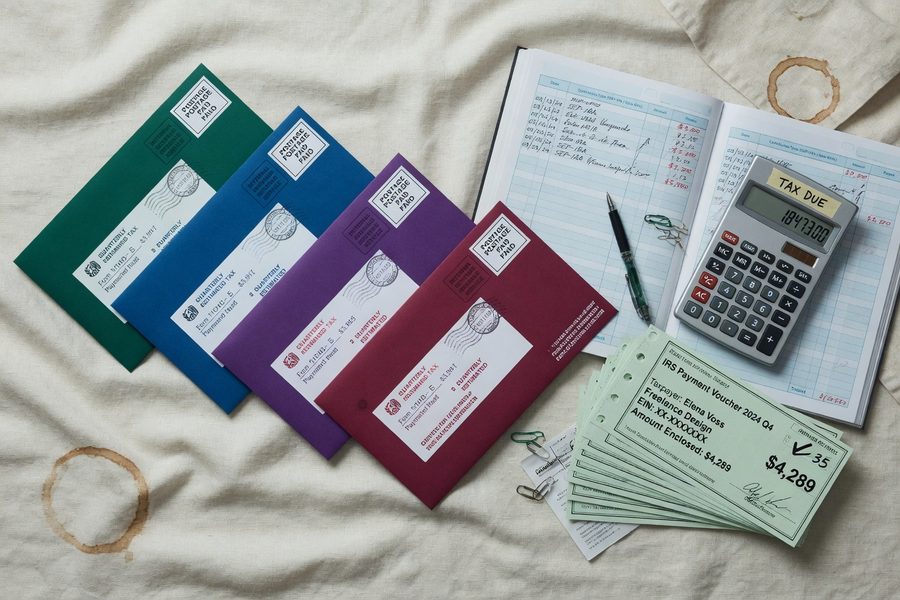
Freelancers pay estimated taxes four times a year: April 15, June 15, September 15, and January 15. Retirement contributions made during the year don’t directly reduce quarterly estimated tax payments, those are based on prior-year liability or current-year income projections. But the year-end contribution lowers your actual tax bill when you file, which can generate a refund or reduce a balance owed. The key is not to over-contribute late in the year without confirming your net earnings first, since the IRS contribution formula is income-dependent.
Two traps catch freelancers repeatedly. First, the pro-rata rule: if you have pre-tax money in a traditional IRA and attempt a backdoor Roth conversion, all your IRA balances are considered together. A large SEP IRA balance can make the backdoor Roth inefficient or fully taxable. Second, early withdrawal penalties: pulling from a retirement account before age 59½ triggers a 10% penalty plus ordinary income tax. During a slow business year, that temptation is real, and expensive. For a broader look at managing debt that might be competing with your retirement contributions, the guide on credit card debt prioritization and creditor negotiation addresses how to sequence those decisions.
If you have a SEP IRA and want to execute a backdoor Roth conversion, the pro-rata rule requires the IRS to treat all your traditional IRA balances as one pool. A $50,000 SEP IRA can make a $7,000 backdoor Roth almost entirely taxable. Consider rolling the SEP into a Solo 401(k) before attempting the conversion.
ACA Health Insurance and Your Retirement Deductions
Here’s an angle most retirement guides skip: your retirement contributions and your health insurance premiums interact through the Affordable Care Act’s premium tax credit system. ACA subsidies are based on modified adjusted gross income (MAGI). When you contribute to a SEP IRA or Solo 401(k), those contributions reduce your MAGI, which can push you into a more favorable subsidy tier or prevent a clawback if your income lands above the threshold mid-year.
For example, a freelancer with $65,000 in net income who contributes $18,000 to a SEP IRA now has a MAGI of roughly $47,000. That reduction can translate directly into hundreds of dollars per month in lower marketplace premiums. The effect is most pronounced for freelancers whose income hovers near 400% of the federal poverty level, above that threshold, premium tax credits phase out sharply. Retirement contributions can be the precise lever that keeps you in the subsidy zone. This interaction is real enough that some self-employed workers deliberately time and size their retirement contributions in part around their projected health insurance costs. The tax savings from doing this correctly can rival the retirement tax deduction itself. You can review how rising poverty guidelines in 2026 affect income-based benefit thresholds for additional context on where those cutoffs stand.
Realistic Catch-Up Strategies for Late Starters
Starting after 40 is not a disqualifying condition. It does change the math, and the account sequencing. The IRS offers catch-up contribution limits for workers 50 and older: an extra $7,500 in a Solo 401(k) and an extra $1,000 in a traditional or Roth IRA for 2024. That’s real money. A 50-year-old freelancer maxing a Solo 401(k) can put away $76,500 in a single year, more than most people save in a decade during their thirties.
The sequencing that tends to work best for late starters: first eliminate high-interest debt (anything above 7–8%), then fund an emergency reserve, then prioritize the Solo 401(k) for its higher limits and Roth flexibility, then stack the HSA if eligible. Taxable accounts come last. The goal is maximizing tax-sheltered contributions during the years remaining before retirement, because the tax drag on a taxable account compounds the shortfall when time is already limited. If retirement savings are genuinely competing with other financial obligations, the post on why prioritizing retirement over college savings often makes financial sense covers the core trade-off directly.
Tracking Progress and Adjusting Over Time
A retirement plan you never look at is not a plan, it’s a wish. The simplest tracking system uses two benchmarks: a contribution target (the percentage of income you’re putting away each year) and a balance milestone (roughly 1x annual income saved by 35, 3x by 45, 6x by 55, as a general rule of thumb). These are not guarantees; they’re checkpoints that surface a problem early enough to correct it.
Tools and Annual Reviews
Free projection tools from Fidelity, Vanguard, and Schwab let you model contribution scenarios and see estimated outcomes at different retirement ages. Run the projection at least once a year, ideally in October or November, before year-end, so you still have time to adjust contributions. Key things to reassess annually: Did contribution limits increase? (The IRS adjusts them for inflation periodically.) Did your income change enough to affect which account type makes most sense? Did Congress pass any new legislation affecting contribution rules or Roth conversions? A 30-minute annual review is enough to stay current.
One honest caveat: projections assume consistent contributions and market returns that rarely materialize so cleanly in practice. Use them as a directional guide, not a precise forecast. The value is in catching a significant shortfall, say, you’re on track for $400,000 when you need $800,000, early enough to act on it. For a deeper look at how different investment vehicles fit into a retirement strategy, the overview of cryptocurrency investment risks and benefits is useful context if you’re considering alternative assets within a taxable account.
The IRS adjusts contribution limits for retirement plans periodically based on inflation. Between 2019 and 2024, the Solo 401(k) total contribution limit increased from $56,000 to $69,000, a 23% jump that disproportionately benefits self-employed workers who max their plans each year.

Your Action Plan
-
Open the right account before December 31
If you want a Solo 401(k) contribution to count for this tax year, the plan must be established by December 31. A SEP IRA can be opened as late as your tax filing deadline (with extensions). Choose based on your income level and whether you want Roth contribution access, if you do, the Solo 401(k) is the only self-employed option that offers it at the plan level.
-
Calculate your maximum contribution using the IRS formula
Do not guess. Use IRS Publication 560 or consult a fee-only CPA to run the self-employment contribution formula. Net self-employment income minus half of self-employment tax is the base figure. Apply your plan’s contribution rate to that number. Running the arithmetic in October leaves time to fund the account before year-end if needed.
-
Set up a percentage-based transfer system
Designate a separate savings account for retirement funding and set a rule to transfer 15–20% of every client payment into it. Do this through your bank’s automatic transfer feature or manually after each deposit. Fixed dollar amounts fail during slow months; percentages scale with income. Keep the emergency fund in a different account so the two pools don’t blur.
-
Stack an HSA if you’re on a qualifying health plan
If your health insurance has a deductible of at least $1,600 for individual coverage (2024 threshold), you qualify for an HSA. Contribute the maximum, $4,150 for self-only or $8,300 for family in 2024. Invest the balance rather than spending it for current medical expenses if you can afford to cover those out of pocket. The account compounds tax-free and becomes a supplemental retirement vehicle after age 65.
-
Model the ACA interaction before finalizing contributions
If you buy insurance through the ACA marketplace, estimate how your retirement contributions will affect your MAGI and therefore your premium tax credit. A straightforward spreadsheet or a session with a tax professional can show whether increasing your retirement contribution by $5,000–$10,000 saves more in health insurance premiums than it costs in reduced take-home pay. For many freelancers near the 400% poverty level threshold, this interaction is worth real money.
-
Schedule an annual review each October
Block 30–60 minutes each October to revisit your contribution level, check for IRS limit adjustments, and run a projection from your brokerage’s planning tool. Confirm your account beneficiary designations are current, verify you haven’t over-contributed if income came in lower than expected, and decide whether a Roth conversion makes sense before year-end given your income that year. Small annual adjustments prevent large course corrections later.
Related reading: How a 40.
Frequently Asked Questions
Can I contribute to both a SEP IRA and a Solo 401(k) in the same year?
Generally, no, not as a sole proprietor with no employees. Both accounts share the same $69,000 total annual limit for self-employed contributions, and the IRS contribution rules treat them together. Most advisors recommend choosing one or the other based on your needs: the Solo 401(k) for maximum flexibility and Roth access, the SEP IRA for simplicity. If you have two separate businesses structured differently, the rules get more complex and a CPA’s guidance is worth the cost.
What happens to my retirement accounts if I go back to a traditional salaried job?
Nothing bad. You can no longer contribute to a Solo 401(k) or SEP IRA without self-employment income, but the accounts remain open and your investments keep growing. You can roll a SEP IRA into a new employer’s 401(k) if the plan accepts rollovers, or simply leave the money in place. A Solo 401(k) with no new contributions and assets under $250,000 requires no annual IRS filing. The accounts don’t disappear when your employment status changes.
How much should I realistically save for retirement as a freelancer?
The common benchmark is to replace 70–80% of your pre-retirement income annually. For a freelancer earning $75,000, that’s roughly $52,500–$60,000 per year in retirement. Using a 4% withdrawal rate as a baseline, you’d need approximately $1.3–$1.5 million saved. Social Security helps, but calculating your projected benefit at SSA.gov gives you a more precise number to plan around. The gap between that benefit and your income target is what your retirement accounts need to cover.
Is a Roth IRA better than a traditional IRA for freelancers?
It depends almost entirely on your current versus expected future tax rate. Roth contributions make the most sense in lower-income years, early in your career, during a business slowdown, or in years when aggressive retirement plan contributions push your taxable income into a lower bracket. Traditional IRA contributions reduce your taxable income now, which matters more when you’re in a higher bracket. Many freelancers use both over time, shifting between them based on each year’s income. The IRS retirement plans overview for self-employed workers lays out the eligibility rules for both.
Do I still owe self-employment tax on money I contribute to a retirement account?
Yes. Retirement plan contributions reduce your federal and state income tax, not self-employment tax. Self-employment tax (15.3% on the first $168,600 of net earnings in 2024) is calculated on your net self-employment income before the retirement deduction applies. You do get to deduct half of the self-employment tax paid as an above-the-line deduction, which slightly reduces the income base for your retirement contribution calculation, but the SE tax itself is not eliminated by contributing to a retirement plan.
Can I take a loan from my Solo 401(k)?
Yes, Solo 401(k) plans can permit loans up to 50% of the vested account balance or $50,000, whichever is less. This is one feature that sets the Solo 401(k) apart from the SEP IRA, which does not allow loans. Whether to take one is a separate question. Loans must be repaid with interest (to yourself, which sounds appealing), but if you leave self-employment or fail to repay on schedule, the outstanding balance becomes a taxable distribution with a 10% penalty if you’re under 59½. Use this feature as a last resort.
When do required minimum distributions (RMDs) kick in for self-employed retirement accounts?
For Solo 401(k)s, SEP IRAs, and traditional IRAs, RMDs begin at age 73 under current law (as set by the SECURE 2.0 Act). The distribution amount is based on your account balance and IRS life expectancy tables. Roth IRAs have no RMD requirement during the owner’s lifetime, which is one reason high-income freelancers sometimes convert traditional IRA or SEP IRA balances to Roth in lower-income years, to reduce future forced distributions and the tax bill that comes with them.
Sources
- Internal Revenue Service, Retirement Plans for Self-Employed People
- Internal Revenue Service, Self-Employed Individuals: Calculating Your Own Retirement Plan Contribution and Deduction
- U.S. Department of Labor, SEP Retirement Plans for Small Businesses
- Transamerica Institute, Retirement in the USA: Workforce Outlook Survey Report 2025
- Abacus Wealth Partners, I’m Self-Employed: How Do I Save for Retirement?
- Internal Revenue Service, Publication 560: Retirement Plans for Small Business
- HealthCare.gov, Health Coverage for Self-Employed Individuals
- Bureau of Labor Statistics, Employment Situation Summary