Fact-checked by the MyFinancial101 editorial team
Quick Answer
A grocery bill audit means reviewing 4-8 weeks of receipts, categorizing every purchase into essentials, discretionary items, and waste-prone buys, then comparing what you bought against what you actually ate. Most households waste 29% of their food supply, and targeted audits consistently cut monthly grocery bills by $50-$300.
The fastest way to reduce your grocery bill has nothing to do with coupons. It starts with measuring what you already throw away. According to ReFED’s 2024 food waste data, 29% of the entire U.S. food supply went unsold or uneaten that year, representing $325 billion in wasted food value. Households are the single largest contributor. That pattern shows up clearly in individual grocery receipts once you know where to look.
A grocery audit is not about deprivation. It is about diagnosing exactly where your money leaks before you try to fix anything.
Key Takeaways
- U.S. households contribute to $325 billion in annual food waste, according to ReFED’s 2024 analysis, making them the single largest source of food loss in the country.
- 29% of the U.S. food supply went unsold or uneaten in 2024, per ReFED, a share that maps directly onto typical household receipt patterns.
- Beverages and snacks routinely account for 15-22% of a weekly grocery bill and are the most consistently overlooked waste category in household spending.
- Online grocery delivery fees and service markups can silently add $60-$80 per month to food costs that shoppers rarely flag as part of their grocery total.
- A four-minute pantry walkthrough before each shopping trip can cut 8-12% from staple overbuys, per the EPA’s food waste prevention framework.
- Store-brand swaps on snacks and drinks deliver 20-40% savings on equivalent items, per the Bureau of Labor Statistics Consumer Expenditure Survey, with no meaningful change in consumption volume.
Why Your Grocery Bill Feels Bloated
Most household overspending at the store is invisible. The obvious problem is paying too much per unit. The real problem is buying food that never gets eaten.
The math compounds fast. If a household spends $250 per week on groceries and wastes even 20% of that through spoilage, uneaten leftovers, and forgotten pantry items, that is $50 per week, or roughly $2,600 per year, going directly into the trash. The ReFED 2024 analysis pegged total U.S. food waste at $325 billion, which is 85% of all surplus food value. Individual households are not outliers in this picture. They are the norm.
Two types of waste appear in every audit: visible and invisible. Visible waste is the bag of spinach you threw out on Thursday. Invisible waste is the brand-name snacks you bought because they were on an end cap, the second bottle of salad dressing added without checking if you had one at home, or the six-pack of sparkling water that sat untouched for three weeks. Invisible waste rarely appears on any single receipt as an obvious problem. It only surfaces when you look across multiple weeks at once.
Beverages and snacks are a particularly overlooked category. In household spending breakdowns tracked by the Bureau of Labor Statistics Consumer Expenditure Survey, drinks alone, including juice, soda, sparkling water, and specialty coffee creamers, regularly account for 15-20% of a weekly grocery total without anyone noticing. That figure rarely shows up in generic grocery-saving advice, which focuses almost entirely on produce and proteins.
Key Takeaway: U.S. households contribute to $325 billion in annual food waste, and a large share of that loss is invisible: repeat impulse buys, forgotten pantry duplicates, and beverages that drive up totals by 15-20% without triggering any single obvious red flag.
How to Conduct Your First Grocery Bill Audit
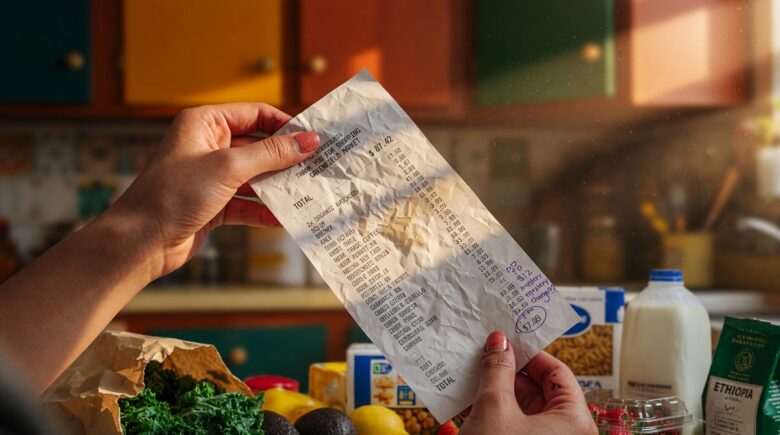
Collect every grocery receipt or bank transaction from the past 4-8 weeks. Digital receipts, store apps, and credit card statements all work; the goal is a complete picture, not a perfect one. If you use a Chase or Citi credit card for grocery purchases, both banks offer spending category breakdowns inside their apps that can accelerate this step considerably.
Once you have the data, sort every line item into three buckets:
- Essentials: proteins, staple vegetables, dairy, grains, cooking oils
- Discretionary: snacks, beverages, specialty condiments, premade meals
- Waste-prone: fresh produce bought without a specific recipe plan, bulk items that historically go half-used, perishables with short shelf lives
Then do one calculation: divide your total weekly spend by the number of meals your household actually ate at home. If a family of three spent $210 in a week and ate 18 meals at home, the true cost per meal is $11.67. If that number surprises you, the audit is already working. For context, a well-planned household can typically bring that figure below $6-7 per meal through waste reduction alone, without switching stores or clipping a single coupon.
The EPA’s guidance on preventing wasted food at home specifically recommends planning meals for the week before shopping, checking what you already have in the fridge and freezer first, and buying only what you need. That sequence is the mechanism that makes audits translate into actual bill reductions, not an aspirational suggestion.
The EPA’s Sustainable Management of Food program frames it directly: conducting a waste audit helps measure and identify wasted food, creating concrete strategies to prevent it and save money. That framing matters because it positions the audit as a diagnostic tool, not a guilt exercise.
One area most audits skip entirely: delivery fees, service charges, and subscription boxes. If you order groceries online twice a week with a $5 delivery fee and a 10% service markup, that adds up to roughly $60-$80 per month in overhead costs that never appear in a standard per-item analysis. Instacart, Walmart+, and Amazon Fresh each structure these fees differently, but all of them belong in your audit. Those costs are part of your food budget whether or not your bank categorizes them that way.
Key Takeaway: Sorting 4-8 weeks of receipts into essentials, discretionary, and waste-prone buckets, then dividing total spend by meals eaten at home, consistently reveals preventable waste. Delivery fees and markups from services like Instacart or Amazon Fresh can silently add $60-$80 per month to bills that shoppers never flag as groceries.
The Hidden Waste Categories Most Shoppers Miss
| Waste Category | Typical Share of Weekly Bill | Primary Cause |
|---|---|---|
| Fresh Produce | 10-18% | Bought without a specific use in mind |
| Beverages & Snacks | 15-22% | Impulse buys, end-cap placement, brand loyalty |
| Bulk/Staple Overbuys | 8-12% | Perceived savings, poor pantry inventory |
| Premade & Convenience Items | 12-20% | Time pressure, no meal plan |
| Delivery Fees & Markups | 5-12% | Online ordering habits, subscription overlap |
Produce spoilage tops every audit because it combines good intentions with poor planning. Shoppers buy kale for a salad they never made, berries because they looked good, and a second bag of carrots before the first one was finished. The solution is not to buy less produce. It is to buy produce tied to a specific meal plan for that week.
Snacks and drinks are the category most advice ignores. A single household stocking two types of chips, a variety of sparkling waters, flavored coffee creamers, juice, and sports drinks can easily spend $40-$60 per week in that category alone. None of those items feel expensive individually. Collectively, they rival the protein budget. If your audit shows beverages and snacks exceeding 20% of your weekly total, that is your primary target, not produce.
Bulk buying deserves a specific callout. Buying a large container of something you use rarely is only a saving if it gets fully consumed before it expires or goes stale. For households that audit honestly, half-used bags of specialty grains, jumbo jars of condiments, and warehouse-store quantities of perishables are frequent loss leaders. The foods that actually keep grocery bills under control tend to be flexible staples with long shelf lives, not large-format specialty items.
Key Takeaway: Beverages and snacks routinely represent 15-22% of a weekly grocery bill and are the most consistently overlooked waste category. Auditing this line item first, before touching produce or proteins, often delivers the fastest measurable reduction in total spend.
Targeted Fixes That Actually Reduce Your Grocery Bill
Fixes should match the waste type your audit found. Generic tips applied without that diagnosis tend to produce short-term savings followed by a return to baseline.
For Produce Waste
Attach every fresh item on your list to a named recipe or meal before you shop. “Salad greens” is not a plan. “Arugula for Wednesday’s pasta” is. This single change, buying produce with a committed use, is the intervention the EPA explicitly recommends for reducing household food waste. Freeze produce that is approaching its limit rather than watching it spoil. Blanched greens, overripe bananas, and cut herbs all freeze cleanly and extend usability by weeks.
For Beverage and Snack Overspending
Set a fixed weekly dollar cap for this category and treat it as non-negotiable. If the cap is $20, the first items to go are the second sparkling water variety and the brand-name crackers. Store-brand swaps on snacks and drinks consistently deliver 20-30% savings on equivalent items with no change in consumption volume. That is not a theory; it shows up in receipt comparisons across multiple households and is reinforced by strategies coupon stackers use to beat inflation. Retailers like Kroger, Aldi, and Trader Joe’s have built their private-label programs precisely around this gap, and the quality on staple items has narrowed considerably over the past decade.
For Bulk and Pantry Overbuys
Do a full pantry inventory before every shopping trip. This takes four minutes. It prevents buying a third can of chickpeas and a second bottle of fish sauce. The EPA’s meal-planning framework starts with what you already have precisely because most households are shopping over a layer of existing food they have forgotten. If your audit revealed repeat purchases of the same staples, the pantry walkthrough alone may cut 8-12% from your weekly total.
For households managing tight budgets, the current uncertainty around SNAP benefits makes this kind of waste reduction more urgent, not optional. SNAP, administered by the USDA’s Food and Nutrition Service, has faced recurring funding debates that affect millions of households; knowing exactly what you are spending and where gives you a clearer picture of what a benefit change would actually cost you. And if you are looking to offset grocery costs with additional income, hourly jobs currently hiring above $19 are one direct way to add margin to a tight food budget.
One honest caveat: audit-based savings work best when the household’s income and size are stable. A sudden change in either, a new baby, a grown child moving out, or a job loss, will invalidate your prior receipt patterns entirely. Re-audit from scratch after any significant household change rather than applying the same targets to a different reality. The same discipline applies to your broader personal finance picture: personal finance tools from SoFi and budgeting platforms like YNAB or Mint can help you slot grocery spending into a total monthly budget framework, but they work only if your input data reflects current household conditions, not a six-month-old baseline.
Key Takeaway: Fixing produce waste requires tying every fresh purchase to a named recipe before shopping. Fixing snack and beverage overspend requires a hard weekly cap. A four-minute pantry walkthrough before each trip can cut 8-12% from staple overbuys alone, per the EPA’s waste-reduction framework.
Frequently Asked Questions
How long does a grocery bill audit actually take?
The initial setup takes 30-60 minutes if you have 4-8 weeks of digital receipts or bank statements ready. After the first audit, a weekly 10-minute review is enough to maintain the pattern. Most of the time investment is front-loaded.
How much can I realistically save by auditing my grocery spending?
Documented examples from 2025-2026 households report monthly savings of $50 to $300, with the higher end achieved through waste reduction and meal planning rather than couponing. Your starting point matters: households with significant snack and beverage spending or frequent produce spoilage tend to see the largest early gains.
Should I include restaurant meals and food delivery in my audit?
Yes, and most audits miss this entirely. Delivery fees, platform markups, and restaurant spending are part of your total food budget, not a separate category. Including them often reveals that eating out is subsidizing poor grocery planning rather than supplementing it. For a broader budget perspective, the same principles apply to cutting costs on special-occasion meals without sacrificing the experience.
Do store brands actually save money, or is the quality difference real?
Store brands consistently deliver 20-40% savings on staples like canned goods, grains, dairy, and condiments with no meaningful quality difference on most items. The quality gap is real in a narrow set of categories, mainly specialty items and some proteins, but it is overstated as a reason to avoid private-label products across the board.
What if my household size or income changes after I complete an audit?
Any significant change in household size, including a new child, a teenager leaving, or a partner moving in, invalidates your prior receipt patterns. Re-audit from scratch using the new baseline rather than applying old targets to changed circumstances. Seasonal produce price swings and regional store differences are smaller variables, but worth noting when comparing week-to-week totals across seasons.
Sources
- ReFED, The Problem: U.S. Food Waste Data (2024)
- U.S. EPA, Preventing Wasted Food at Home
- U.S. EPA, Prevent Wasted Food Through Source Reduction
- U.S. Bureau of Labor Statistics, Consumer Expenditure Survey
- USDA, Food Waste FAQs
- USDA Food and Nutrition Service, Supplemental Nutrition Assistance Program (SNAP)
- Consumer Financial Protection Bureau (CFPB), Budgeting Tools and Resources
- Federal Reserve, Consumer Credit Report (G.19)
- USDA Economic Research Service, Food Security in the U.S.
- USDA ERS, Food Prices and Spending
- NRDC, Wasted: How America Is Losing Up to 40% of Its Food
- U.S. Food and Drug Administration (FDA), Food Loss and Waste
- USDA National Agricultural Library, Food Waste Resources
- Federal Trade Commission (FTC), Consumer Protection Topics
- World Wildlife Fund, Food Waste Overview