Fact-checked by the MyFinancial101 editorial team
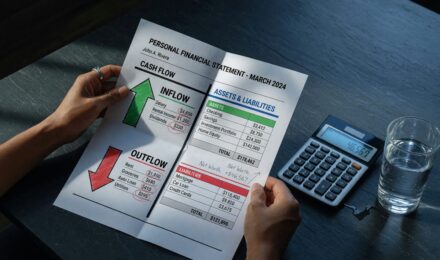
The average American household spent $519 per month on groceries in 2024, a 3% increase from the prior year according to the U.S. Bureau of Labor Statistics Consumer Expenditure Survey. That figure alone is striking, but what makes it genuinely alarming is what sits underneath it: a significant portion of that spending never delivers a single meal. Researchers, federal agencies, and consumer watchdogs have spent years documenting the same core finding, that most households are not just victims of grocery price increases, they are also making grocery shopping mistakes that silently compound the damage month after month.
Food costs 19.1% more in 2026 than it did four years ago, according to BLS CPI data. That kind of structural price pressure is real and largely outside any individual’s control. But USDA Economic Research Service data also shows that food-at-home price growth has slowed to 2.3% annually, meaning the sharpest inflation is behind us. What remains is a combination of habit, store psychology, and a few specific behaviors driving far more overspending than most shoppers realize. More than half of Americans report that grocery expenses are a major source of financial stress, according to an AP-NORC survey conducted in July 2025, yet the average individual simultaneously wastes $728 worth of food per year that they bought and never ate, per the EPA. The stress is real. But part of its source is fixable.
This guide walks you through five specific, documented mistakes that inflate grocery bills beyond what inflation alone can explain. By the end, you will know exactly where your budget is leaking, why each mistake happens in the first place, and what practical changes will actually stick.
Key Takeaways
- The average U.S. household spent $519 per month on groceries in 2024, up 3% from the prior year, giving households a concrete baseline to measure against.
- A four-person household throws away an estimated $2,913 worth of food per year ($243 per month), making food waste a larger monthly budget drain than most checkout overspending, according to the EPA’s 2025 cost-of-food-waste report.
- Meal planning and a proper shopping list can reduce grocery spending by 20–30%, according to USDA research, at $519/month, a 20% reduction equals roughly $104/month or $1,248 per year.
- Store brands consistently save shoppers one-third or more compared to national brand equivalents, per the Private Label Manufacturers Association’s 2025 retail price audits.
- Doubling cart size has been shown to increase purchases by approximately 40%, according to consumer behavior research, a store design choice most shoppers have never consciously connected to their own bill.
- In April 2026, the FTC issued a formal notice warning that hidden fees in online grocery delivery platforms “distort competition and harm consumers,” signaling that delivery-app overspending is now a recognized policy concern, not just a personal finance tip.
In This Guide
- Why Your Grocery Bill Keeps Climbing Even When You’re Trying
- Mistake 1: Shopping Without a List, or With the Wrong Kind
- Mistake 2: Letting Food Waste Quietly Eat Your Budget
- Mistake 3: Ignoring Unit Price and Getting Fooled by Package Size
- Mistake 4: Being Loyal to One Store and One Brand
- Mistake 5: Falling for the Store’s Psychological Architecture
- The Real Cost of These Mistakes: What the Numbers Add Up To
- A Realistic Fix: Small Habit Changes That Actually Stick
Why Your Grocery Bill Keeps Climbing Even When You’re Trying
Before identifying what is fixable, it helps to be honest about what is not. Grocery prices in 2026 are genuinely higher than they were in 2022, and no amount of coupon clipping fully reverses that. The USDA’s Food Expenditure Series tracks long-term shifts in how Americans spend on food at home versus away from home, and the trend is clear: food-at-home spending has grown substantially in both nominal and real terms over the past four years. For households already stretched thin, that context matters.
What most people miss is that inflation and behavioral overspending are two distinct problems that pile on top of each other. Inflation is the floor. Your habits determine how far above that floor your actual bill lands. The distinction matters because conflating the two leads to helplessness. If you believe every dollar over your old budget is inflation, you stop looking for the leaks.
The Geographic Factor Most Budget Advice Ignores
Not all grocery inflation is equal across the country. A ConsumerAffairs analysis found that grocery inflation has varied by as much as 5% from state to state over the past 12 months, and shoppers in Hawaii pay roughly 35% more per person than shoppers in budget-friendly states like Missouri or Arkansas. If you live in a high-cost metro, a portion of what feels like overspending is genuinely structural. Misdiagnosing inflation-driven cost increases as personal budget failures is a real and common frustration that honest personal finance writing should name directly.
That said, even shoppers in expensive markets can reduce their bills by correcting the five specific behaviors outlined below. The starting point is just higher, not immune to improvement.
Americans spent an average of $519 per month on groceries in 2024. At the same time, food-at-home prices rose 2.3% in 2025 compared to 2024, according to the USDA Economic Research Service. That combination means a household spending at the average rate paid roughly $143 more per year simply due to price growth, before accounting for any behavioral spending changes.
Mistake 1: Shopping Without a List, or With the Wrong Kind
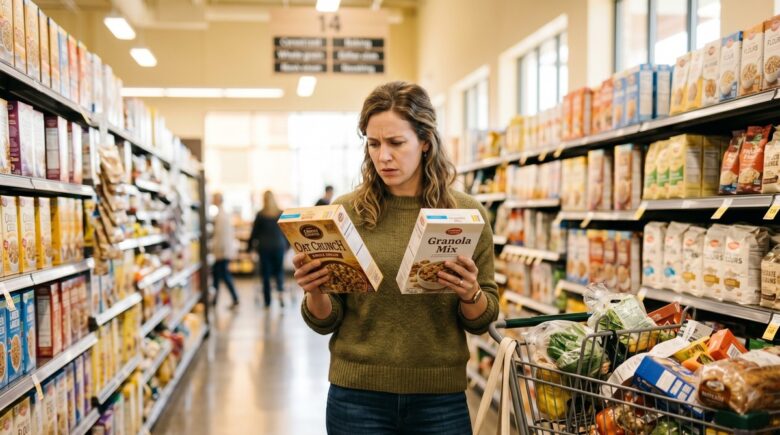
Most personal finance articles tell you to make a shopping list. The advice is sound, but the framing misses where the actual problem lives in 2026. The real issue is not whether you write a list. It is whether you audit your refrigerator and pantry before writing it, and whether that list is built around specific planned meals or just a general inventory of things that “might be useful.”
Why People Have Stopped Making Lists (And Why That’s Costing Them)
A meaningful behavioral shift has occurred in the past two years. Subscription platforms like Instacart, Amazon Fresh, and many grocery chain apps now remember your purchase history and suggest reorders automatically. Shoppers increasingly treat these suggestions as a substitute for a list. The problem is that those platforms are designed to drive purchase volume, not to reflect what you already have at home. Relying on them without checking your pantry first is one of the most common ways households double up on items they already own and overspend by $20–$40 per trip without realizing it.
USDA research consistently finds that households who plan meals before shopping and build lists from those plans reduce their grocery spending by 20–30%. At an average of $519 per month, a 20% reduction equals roughly $104 per month. Over a year, that is $1,248, recovered not by switching stores or clipping coupons, but by doing 10 minutes of planning before leaving the house.
Family budgeting experts and financial planning services, including tools offered by SoFi and budget-tracking platforms endorsed by the CFPB, consistently flag unplanned grocery trips as one of the top three drivers of household budget overruns. The fix is not complicated. Without a list grounded in what you actually have and what you actually plan to cook, your budget estimate is as untethered as the shopping trip itself. The list is not a nicety; it is the only concrete reference point that prevents every item in the store from becoming a candidate for your cart.
The “I’ll Just Remember It” Trap
Shopping without a written or digital list reliably produces impulse purchases. The mechanism is well documented in consumer psychology: without a concrete reference point to return to, every item you pass is evaluated freshly in the moment, and moment-by-moment decisions in a stimulating retail environment are heavily influenced by hunger, marketing, and proximity. The store is designed for exactly this. You are not.
The fix is specific: make your list in the kitchen, not the parking lot. Walk through your fridge and pantry before writing a single item. Build the list around the meals you will actually cook in the next five to seven days, not around aspirational recipes you might get to. That gap between “meals I intend to cook” and “meals I actually cook” is where a large share of household food waste originates, which connects directly to the next mistake.
Keep a running list on your phone or a notepad on the fridge that household members update throughout the week as items run out. When shopping day arrives, you are building from a live inventory rather than reconstructing it from memory in the cereal aisle.
Mistake 2: Letting Food Waste Quietly Eat Your Budget
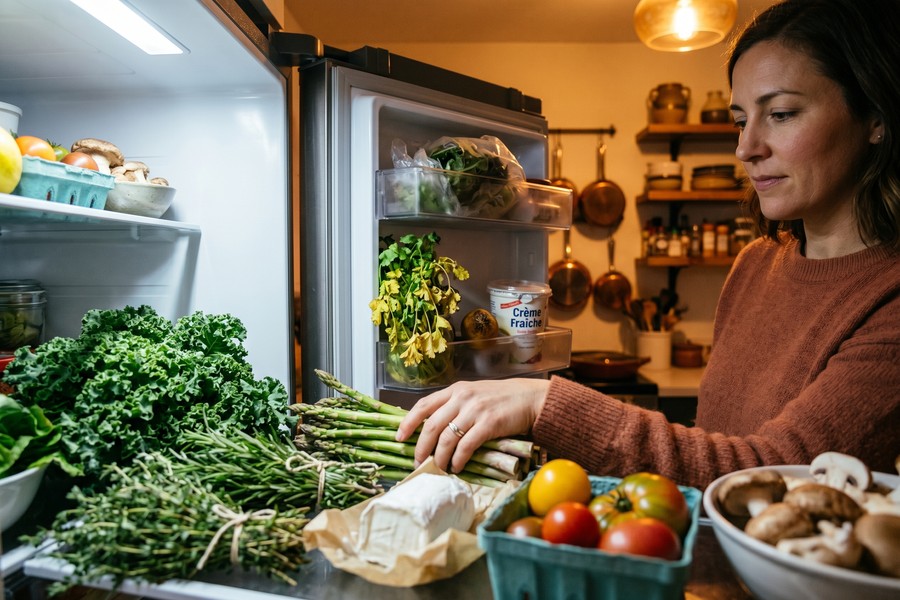
Of all the grocery budget leaks covered here, food waste is the one most people never see coming because it does not happen at the register. It happens on Thursday when you throw out the spinach you bought on Saturday, or when the chicken thighs you bought “for meal prep” are still unopened four days later. The loss is real. It is just invisible at the point of decision.
The Dollar Figure Is Larger Than Most People Believe
The EPA’s 2025 cost-of-food-waste report estimates that food waste costs each individual U.S. consumer $728 per year. For a household of four, that figure climbs to $2,913 annually, or $243 per month going straight into the trash. ReFED’s 2026 U.S. Food Waste Report puts the figure slightly higher at $762 per consumer per year. Both estimates are strikingly consistent: waste at the household level represents roughly 11% of total food expenditures.
Put that alongside the average monthly grocery bill of $519. A family of four spending roughly $2,076 per month on groceries is wasting $243 of it, an 11.7% loss rate before accounting for any checkout overspending. If you are stressed about your grocery bill and have not specifically addressed food waste, you have not yet addressed the biggest single leak.
The EPA estimates that food waste costs a four-person U.S. household $2,913 per year, or roughly $56 per week. That is more than most households spend on a full week of groceries in many budget-conscious regions of the country.
Why This Mistake Feels Invisible
The psychology here is counterintuitive. Shoppers who buy the most fresh produce, lean proteins, and specialty ingredients, people genuinely trying to eat well, often generate the most food waste, because those items have shorter shelf lives and require more specific preparation. Buying “healthy” feels virtuous at the register. The cost only appears days later in a compost bin or garbage bag.
The most effective fix is not to buy less fresh food. It is to buy to a meal plan rather than to an aspiration. That means committing, before you shop, to three or four specific meals for the week, buying only what those meals require, and scheduling the most perishable items for earlier in the week. The concept is simple. The execution requires overriding the optimism that leads most people to buy seven portions of fresh vegetables for a household that realistically cooks four nights a week.
For more strategies on keeping costs down while eating well, the winter foods approach to grocery budgeting at MyFinancial101 covers seasonal buying patterns that reduce both waste and unit cost.
Mistake 3: Ignoring Unit Price and Getting Fooled by Package Size
Most shoppers compare sticker prices. That is a reasonable starting point, but it is not enough, and in many cases, it actively leads to paying more while believing you are paying less. The unit price (cost per ounce, per pound, or per count) is the only comparison that actually tells you which option is cheaper. Package sizes vary enormously between brands and between sizes within the same brand, and those variations are not accidental.
The “Big Package” Illusion
The intuition that larger packages are always cheaper per unit is wrong often enough to matter. Retailers periodically price mid-size packages at a lower per-unit cost than the largest available size, either to move inventory or as a deliberate pricing tactic. Shoppers who grab the biggest package without checking the unit-price label on the shelf tag are sometimes paying a small premium rather than saving one. The shelf tag’s unit price is the number to check, not the front-of-package claim, not the comparative size of the box.
End-cap displays compound this problem. Studies on retail shelf behavior have found that end-cap product placements drive sales increases of 30% or more, and the primary mechanism is perception: shoppers routinely assume that items placed on end caps are on promotion or sale. Many are not. The placement alone manufactures a sense of value that has no relationship to the actual price.
| Package Scenario | Sticker Price | Unit Price (per oz) | Actual Better Deal? |
|---|---|---|---|
| Small (12 oz) | $2.49 | $0.208 | No |
| Medium (24 oz) | $4.29 | $0.179 | Yes |
| Large (40 oz) | $6.99 | $0.175 | Marginally |
| End-Cap “Sale” (24 oz) | $4.79 | $0.200 | No, not actually cheaper |
The practical rule: always check the shelf’s unit-price label before putting any item in the cart. Most U.S. grocery stores are required to display this figure, though the formatting varies and it is often printed small. If the unit price is not displayed, divide the price by the weight or count yourself. Thirty seconds of arithmetic can easily save $3–$5 per shopping trip.
Bulk buying only saves money if you use the entire quantity before it expires or spoils. A “50% savings” on a gallon of olive oil means nothing if half of it goes rancid. Factor shelf life and your household’s realistic consumption rate into every bulk purchase decision.
Mistake 4: Being Loyal to One Store and One Brand
Convenience is genuinely valuable. The time cost of shopping at three different stores every week is real, and for most households it is not a sustainable strategy. But there is a meaningful difference between “I shop here because it is efficient” and “I shop here because I have never seriously compared prices elsewhere.” The second version costs money, often more than people expect.
The Store-Switching Math
Consumer Reports pricing analysis found that Aldi and Lidl prices run more than 8% lower than Walmart’s on comparable grocery baskets, and Walmart is typically the price benchmark that “budget-conscious” shoppers treat as the floor. For a household spending $519 per month, an 8% difference is $41.52 per month, or nearly $500 per year. That is before accounting for the fact that the typical Aldi or Lidl basket skews even cheaper when store-brand products make up most of the cart, which they do at both chains.
The counterargument to store-switching is valid: if you have to drive significantly out of your way, the gas and time costs erode the savings. A practical middle ground is to identify one or two categories where your regular store is consistently expensive (meat, specialty items, organic produce) and price-check those specifically at alternatives. You do not need to overhaul your entire shopping routine to capture meaningful savings.
The Brand Loyalty Tax
Store brands consistently save shoppers one-third or more compared to name-brand equivalents, according to ongoing retail price audits by the Private Label Manufacturers Association (PLMA). More than 90% of Aldi’s products are store-branded, and the chain’s customer satisfaction scores are consistently high. The quality gap between store brands and national brands that shoppers imagine is largely a marketing artifact. Many store-brand products come from the same manufacturing facilities as the name brands they sit next to on the shelf.
Financial wellness programs offered through institutions like Chase and SoFi increasingly point members toward store-brand substitution as one of the fastest, lowest-effort ways to trim monthly food spending without restricting diet quality. The USDA’s own consumer guidance echoes the same finding. PLMA’s data puts average store-brand savings between 33% and 57% depending on the category, figures that are consistent year over year.
| Product Category | National Brand (avg. price) | Store Brand (avg. price) | Estimated Savings |
|---|---|---|---|
| Pasta (1 lb) | $2.29 | $0.99 | 57% |
| Canned Tomatoes (28 oz) | $2.79 | $1.49 | 47% |
| Greek Yogurt (32 oz) | $7.49 | $4.99 | 33% |
| Orange Juice (64 oz) | $5.99 | $3.99 | 33% |
| Paper Towels (6-roll) | $8.99 | $5.49 | 39% |
The Loyalty Program Paradox
Store loyalty programs are a genuine source of savings. Personalized digital coupons, points-based discounts, and sale-price access are all real benefits. But loyalty programs also generate detailed behavioral data that grocers use to serve higher-margin promotions back to the enrolled shopper. The program knows what you buy, how often you buy it, and how price-sensitive you are. That information is used to offer discounts on items where you have demonstrated inelastic demand (meaning you would have bought them anyway), while surfacing high-margin impulse items that fit your purchase profile.
This does not mean you should avoid loyalty programs. It means you should use them tactically rather than passively. Clip the coupons for items already on your list. Ignore the personalized offers for items not on your list, regardless of how good the discount looks. The program works best for the shopper when it is a tool, not a shopping guide. You can find more about how coupon stackers are beating inflation, including which stacking strategies actually work, at MyFinancial101.
Mistake 5: Falling for the Store’s Psychological Architecture
Supermarkets are not designed for your convenience. They are designed to maximize the dollar value of every minute you spend inside them. Most shoppers understand this in the abstract, but the specific mechanics are rarely named, and unnamed, they are far more effective.
The Layout Is Not Accidental
The placement of staples like milk, eggs, and bread at the far back of the store is a deliberate design choice. To reach these items, shoppers must traverse the full store, passing displays engineered to generate unplanned purchases. The path is not random; it routes traffic past the highest-margin categories. Fresh bakery counters near the entrance use aromas that stimulate appetite and trigger impulse buying before a single item has gone into the cart. These are documented retail architecture strategies, not coincidences.
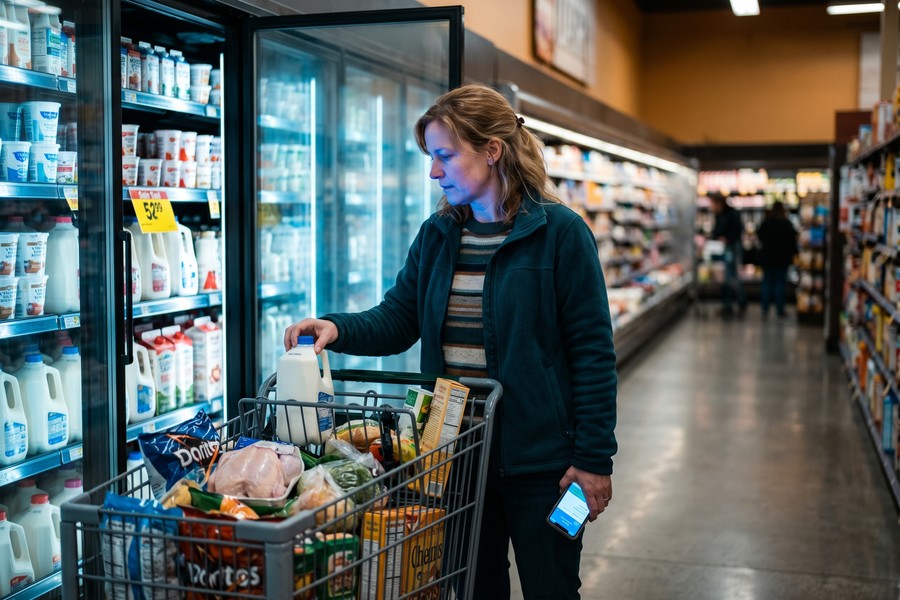
Cart size is another variable most shoppers have never consciously connected to their bills. Consumer behavior researcher Martin Lindstrom documented that doubling cart size increases purchases by approximately 40%. Stores gradually increased standard cart sizes over the past two decades, and the effect on average transaction sizes tracked accordingly. If you walk in with a large cart and a loose list, the visual psychology of a cart that looks only one-third full does measurable work against your budget.
Doubling cart size increases purchases by approximately 40%, according to consumer behavior research by Martin Lindstrom. Standard cart sizes in U.S. supermarkets have grown significantly since the 1970s, and that growth is not driven by customer requests.
Mental Partitioning: Why Grocery Spending Feels Different
There is a behavioral finance concept called mental partitioning that explains why grocery overspending is so persistent even among financially disciplined people. Shoppers tend to treat grocery spending as a psychologically separate, low-scrutiny category. A $12 impulse snack purchase at the supermarket registers differently in the mind than a $12 impulse purchase at a clothing store or bookshop, because food feels like a need rather than a want. This categorical difference reduces the psychological friction that would otherwise stop the purchase.
The Federal Reserve’s consumer finance research and CFPB budget guidance both point to discretionary food spending, including unplanned grocery items, as one of the categories most resistant to self-correction precisely because of this low-scrutiny effect. Recognizing the mechanism does not eliminate it, but it creates enough conscious friction to pause and ask: is this on my list? The answer to that question is the most reliable filter available at the point of purchase.
Decision Fatigue at the Register
After 30 minutes of navigating a grocery store and making dozens of small choices (which brand, which size, which option), your decision-making capacity is measurably depleted. The high-margin candy bars, magazines, and snacks positioned at the checkout lane are placed there specifically to capture purchases from shoppers in that depleted state. This is not speculation; it is a standard retail strategy that relies on documented cognitive patterns. The candy at checkout exists because it sells better there than anywhere else in the store, and it sells better there because of when in the shopping trip it is encountered.
The most direct counter is to arrive with a firm list and commit to it as a rule rather than a suggestion. When the list is treated as a boundary rather than a starting point, checkout-lane impulse buys lose most of their pull.
In April 2026, the FTC issued a formal advance notice of proposed rulemaking warning that hidden and misleading fees in online grocery delivery services “distort competition and harm consumers.” If you regularly use delivery apps, review your order summaries carefully. Service fees, tip defaults, and marked-up item prices can add 20–30% to the effective cost of a delivery order compared to shopping in-store.
The Real Cost of These Mistakes: What the Numbers Add Up To
Individually, each mistake on this list looks manageable. Together, they stack in ways that explain why so many households find their grocery bills persistently higher than they expect, even when they believe they are being careful.
Stacking the Losses
| Mistake | Estimated Monthly Cost (4-person household) | Annual Impact |
|---|---|---|
| Food Waste | $243 | $2,913 |
| No List / Impulse Buying | $50–$100 | $600–$1,200 |
| Ignoring Unit Price | $15–$30 | $180–$360 |
| Brand Loyalty (vs. store brand) | $40–$80 | $480–$960 |
| Store Psychology / Impulse | $20–$50 | $240–$600 |
| Total Estimated Overspend | $368–$503 | $4,413–$6,033 |
These estimates overlap in some cases (food waste and impulse buying are connected, for example), so the total is not simply additive. But even discounting for overlap, the compounding effect is significant. A household that addresses all five areas realistically can expect to recover $150–$300 per month, based on comparable household budget studies and USDA meal-planning research.
An Honest Benchmark
If 20–30% of your combined take-home pay is going toward food (groceries plus dining out combined), there is almost certainly a correctable behavioral leak in your budget. The USDA’s Thrifty Food Plan sets a monthly reference budget of roughly $900–$1,000 for a family of four, while the Liberal Food Plan runs closer to $1,500. Most households fall somewhere in between and have room to reduce spending without compromising nutrition or quality of life.
One honest caveat: no set of habit changes fully offsets a genuinely inadequate food budget. For households facing real income shortfalls, resources like SNAP benefit updates and 2026 poverty guideline changes at MyFinancial101 explain what federal assistance programs may be available and how eligibility thresholds have shifted this year.
More than half of Americans say grocery expenses are a major source of financial stress, according to an AP-NORC Center for Public Affairs Research survey conducted in July 2025. Yet the average individual simultaneously wastes $728 worth of food per year, per EPA data. Addressing waste alone could reduce that stress significantly without requiring any change to what you buy or where you shop.
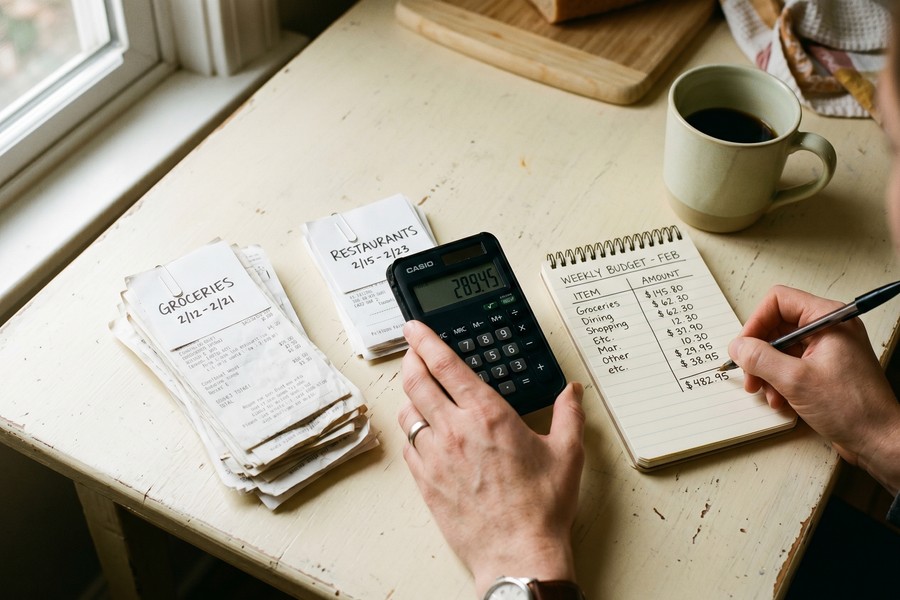
A Realistic Fix: Small Habit Changes That Actually Stick
The five mistakes covered above share a common thread: they are all driven more by default behavior than by deliberate choice. The fixes do not require radical lifestyle changes, extreme couponing, or shopping at four different stores every week. They require changing a small number of specific habits at specific decision points.
Prioritizing the Highest-Leverage Changes
Not all fixes are equal in effort-to-savings ratio. Auditing your pantry before every trip, checking unit prices on every comparison, and reviewing your receipt before leaving the store are three habits that cost zero dollars, take under five minutes each, and address three of the five mistakes directly. Start there before doing anything more time-intensive.
Switching to store brands on even half of your regular purchases will likely reduce your monthly bill by $40–$80 based on PLMA pricing data. That is the second tier: a one-time decision that does not require ongoing effort once you have identified which store-brand alternatives you are satisfied with.
Meal planning is the highest-leverage single habit available, but it requires the most consistent effort. Personal finance platforms like SoFi and CFPB-endorsed budgeting tools often recommend starting small: three planned dinners per week rather than a full weekly overhaul. Three planned meals means a specific list for those ingredients, which means less impulse buying and less waste on perishable items purchased without a plan.
The Time Objection, Addressed Honestly
Strategies like shopping multiple stores for loss leaders, clipping every available coupon, or price-matching at the register can meaningfully reduce grocery bills. They are also not realistic for households with limited time. A working parent with two kids is not going to drive to three stores every Saturday morning, and prescribing that as “the solution” produces an approach that collapses under first contact with a real week.
The better frame is: what is the highest-value change you will actually sustain? For most households, that is meal planning plus a firm list, combined with a shift to store brands in a handful of categories. If you want to go further, strategic coupon stacking can layer additional savings on top of those baseline changes. But the baseline comes first.
The FTC’s April 2026 advance notice on grocery delivery fees is a reminder to audit your delivery app spending regularly. Service fees plus item markups on popular apps can add 20–30% to your effective grocery cost compared to in-store shopping. For households trying to close a $100–$200 monthly budget gap, switching even two or three delivery orders per month to in-store trips produces immediate, meaningful savings.
Real-World Example: A Family of Four Closes a $290/Month Gap
Consider an illustrative example: a four-person household in a mid-size Midwestern city spending $2,150 per month on food, roughly $1,800 on groceries and $350 on takeout and delivery. They shopped almost exclusively at one regional chain, relied on a delivery app two to three times per week for convenience, and did not track food waste or plan meals in advance. Their grocery bill had risen 18% over two years, and they attributed the entire increase to inflation.
After working through a budget audit, the household identified three specific changes: they committed to meal planning four dinners per week and building the shopping list from that plan; they switched to store-brand equivalents for their 12 most-purchased packaged goods; and they eliminated delivery app orders on weekdays, replacing them with a single weekly in-store trip. They did not change stores, did not start coupon clipping, and did not restrict any food categories.
In the first month, food waste dropped noticeably. They estimated $120–$150 less in spoiled produce and unused proteins compared to a typical month. The shift to store brands saved approximately $55 on the same basket of goods. Eliminating three delivery orders per week saved roughly $90 in fees and markups. Total reduction: approximately $265–$295 per month.
Results varied month to month. A birthday, a holiday, or a busy work week could push spending back up temporarily. But over a rolling three-month average, the household maintained a reduction of roughly $240–$260 per month, a $2,880–$3,120 annual improvement from three behavioral changes that required no additional income and no major lifestyle sacrifice.
Your Action Plan
-
Audit your pantry and fridge before every shopping trip
Walk through your kitchen before writing a single item on your list. Note what proteins, produce, pantry staples, and condiments you already have on hand. This single step eliminates the most common source of duplicate purchases and reduces the raw material available for food waste. It takes four minutes and costs nothing.
-
Build your shopping list around specific planned meals
Commit to three to five specific dinners for the coming week before you shop. Write your list from those meals, buying only what each recipe requires. Place perishable items in meals scheduled for the first half of the week. The gap between meals you intend to cook and meals you actually cook is where most household food waste originates, and closing that gap is the most direct path to reducing it.
-
Check the unit price on every size and brand comparison
Before placing any item in your cart, look at the per-unit price on the shelf tag, not the sticker price and not the front-of-package claim. Never assume the larger size is cheaper per unit, and never assume an end-cap item is on sale. This habit alone can save $15–$30 per month with no change to what you buy.
-
Switch to store brands in your top 10 most-purchased packaged categories
Identify the 10 packaged goods you buy most frequently and try the store-brand version on your next trip. Store brands save one-third or more on average versus national brand equivalents, per PLMA data. If you are satisfied with the quality (and research consistently shows most shoppers are), make the switch permanent. This is a one-time decision that requires no ongoing effort.
-
Treat your shopping list as a rule, not a suggestion
Before entering the store, commit mentally to buying only what is on your list plus any genuine immediate need you identify inside. This discipline addresses store psychology, impulse purchases, and decision fatigue at checkout simultaneously. If something not on the list seems appealing in the store, add it to next week’s list rather than buying it on the spot.
-
Review your receipt before leaving the store
Pricing errors, missed sale prices, and loyalty-card discounts that did not apply are more common than most shoppers realize. Spending 90 seconds reviewing your receipt at the customer service desk or before pulling out of the parking lot catches these errors while they are still easy to correct. Over time, this habit also gives you a clearer picture of where your money is actually going each trip.
-
Audit your grocery delivery app costs quarterly
If you use delivery apps regularly, compare the total cost of a recent delivery order (including fees, tips, and any item markups) against the same basket purchased in-store. The FTC’s 2026 warning about misleading delivery fees reflects a documented and significant price gap. If the all-in cost is 20% or more above in-store prices, consider reducing delivery orders to once per week or fewer. The convenience is real, but the cost is often underestimated.
-
Set a monthly grocery budget based on what you actually spend, then reduce it by 10%
Picking a budget figure without knowing your baseline is almost guaranteed to fail. Track your actual grocery spending for one full month, every receipt, every delivery order, and use that as your real starting point. Then set a target 10% below that number. A data-anchored budget is far more achievable and more motivating than an aspirational one with no relationship to your actual habits. CFPB’s budgeting resources and tools offered by financial institutions like Chase can help you track spending by category if you prefer a structured approach.
Frequently Asked Questions
How much should a family of four spend on groceries per month?
The USDA’s Thrifty Food Plan puts the benchmark at roughly $900–$1,000 per month for a family of four, while the Liberal Food Plan runs closer to $1,500. Most households fall between these figures. The national average across all household sizes translates to roughly $519 per person per month based on 2024 BLS data, though that figure includes households of all sizes and income levels. A more useful benchmark is to track your own spending for one month and then compare it against the USDA’s plan for your household size and composition.
Is it worth shopping at multiple stores to save money?
For households with time and proximity, yes, the savings can be meaningful. Consumer Reports data shows Aldi and Lidl run more than 8% below Walmart on comparable baskets, and Walmart is already the price benchmark most budget shoppers use. For a household spending $1,800 per month on groceries, that gap is roughly $144 per month. However, multi-store shopping is not realistic for every household. A practical middle ground is to do most shopping at a lower-cost store and visit a secondary store for specific categories where the price difference is largest, such as meat, produce, or specialty items.
Do store loyalty programs actually save money?
Yes, but with an important caveat. Loyalty programs offer genuine savings through personalized coupons, points-based discounts, and member pricing. The caveat is that these programs also generate detailed behavioral data that grocers use to surface higher-margin promotions designed to increase your total spend. Use loyalty programs tactically: clip coupons only for items already on your list, and ignore personalized offers for items that were not already planned purchases. The program should serve your list, not replace it.
What is the single most effective way to reduce grocery overspending?
Based on the available evidence, meal planning with a list built around specific planned meals is the highest-leverage single change. USDA research finds a 20–30% reduction in grocery spending among households that plan meals and shop from a list. At an average of $519 per month, a 20% reduction is $104 per month or $1,248 per year. The qualifier is that it requires consistent weekly effort, which not every household can sustain. If meal planning is too demanding to maintain, the next-best single change is switching to store brands on your 10 most-purchased packaged items, a one-time decision with ongoing savings and no required weekly effort.
How can I reduce food waste without changing what I buy?
The most effective approach is scheduling. Place perishable items in meals planned for the first two to three days of the week. Store items at eye level in the fridge so they are seen and used rather than pushed to the back. Freeze proteins, bread, and other freezable items at or before their sell-by date rather than letting them spoil. These changes do not require buying different foods; they require managing what you buy differently. The EPA’s data showing $2,913 in annual food waste for a family of four reflects habits around storage and planning, not necessarily what is being purchased.
Are delivery apps always more expensive than shopping in-store?
Not always, but frequently. The total cost of a delivery order includes service fees, delivery fees, tip, and in many cases marked-up item prices that are higher than in-store shelf prices. When you add all of these together, the effective cost of a delivery order can run 20–30% above the equivalent in-store purchase. The FTC’s April 2026 notice specifically named these hidden and misleading fees as a consumer harm. If you use delivery apps, compare your last order total against the in-store equivalent periodically. The gap may be larger than you realize.
Is grocery inflation still a major problem in 2026?
Grocery price growth has slowed significantly from its 2022–2023 peak. The USDA Economic Research Service reports food-at-home prices rose 2.3% in 2025 compared to 2024, down from the 5–8% annual increases seen during the peak inflation period. Prices are still higher than they were four years ago, roughly 19.1% higher in aggregate according to BLS CPI data, but the rate of increase has normalized. This means a larger share of current grocery overspending is now behavioral rather than driven by structural price forces, which is a more solvable problem.
How do I know if I’m overspending on groceries versus just dealing with inflation?
Compare your spending against the USDA’s reference food plans for your household size. If your spending is consistently above the USDA’s Liberal Food Plan figure for your household composition, behavioral factors are likely contributing. Food waste, impulse purchases, and brand loyalty costs are the most common culprits. Also consider your geographic context: shoppers in Hawaii, California, and the Northeast face structurally higher food costs than shoppers in the Midwest or South. A household in a high-cost state spending above the USDA benchmark may be facing a real cost-of-living challenge, not a behavioral one.
Can I realistically save $1,000 or more per year on groceries?
For many households, yes, but the path looks different depending on where the biggest leaks are. If your household is generating significant food waste, addressing that alone could recover $500–$1,000 per year (the EPA’s estimate for a two-person household is $1,456). If you are buying primarily national brands, switching to store brands on your most-purchased items could save $480–$960 annually based on PLMA pricing data. If you are using delivery apps multiple times per week, reducing that frequency produces immediate savings. The realistic expectation is that addressing two or three of the five mistakes covered in this article will produce $100–$300 per month in recovered spending for most four-person households.
What if my grocery budget is already very tight and I still can’t make ends meet?
Behavioral changes help at every income level, but they do not solve an income shortfall. If your grocery budget is genuinely inadequate even after correcting behavioral leaks, federal assistance programs may help. SNAP benefits, WIC, and local food bank networks are designed for exactly this situation. The income thresholds for these programs shifted in 2026, and many households that previously did not qualify now do. The 2026 poverty guideline updates at MyFinancial101 explain which programs are affected and how to check eligibility. If you are also managing tight household finances more broadly, exploring income opportunities that exist right now may be a more direct path to financial stability than budget optimization alone.
Sources
- U.S. Environmental Protection Agency, Estimating the Cost of Food Waste for American Consumers
- U.S. Environmental Protection Agency, Cost of Food Waste Report 2025 (PDF)
- USDA Economic Research Service, Food Expenditure Series
- USDA Economic Research Service, Food Prices and Spending
- The Motley Fool, Average Monthly Expenses in America (2025)
- Private Label Manufacturers Association, Store Brand Facts
- ReFED, 2026 U.S. Food Waste Report
- Federal Trade Commission, FTC Seeks Public Comment on Unfair and Deceptive Fee Practices in Online Food and Grocery Delivery Services (April 2026)
- U.S. Bureau of Labor Statistics, Consumer Expenditure Surveys