Fact-checked by the MyFinancial101 editorial team
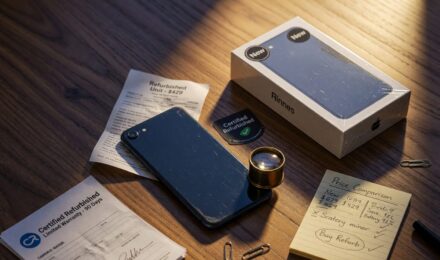
A 256GB iPhone 15 Pro Max currently sells new for $1,099. The same device, Apple Certified Refurbished, costs $699, a clean 36% discount that asks a blunt question about any budget. When you buy refurbished vs new electronics, the savings can run into the hundreds of dollars per device, and that price gap is widening fast. Tariffs and component shortages throughout 2025 have pushed flagship smartphone and laptop MSRPs up 10% to 20% year-over-year, while refurbished inventory, already built, already tested, remains insulated from those hikes.
The global refurbished electronics market reached 124.61 billion USD in 2024 and is projected to hit 141.06 billion USD in 2025, climbing at a 13.2% compound annual growth rate. Consumer surveys from DataIntelo show that 62% of North American and European shoppers would now buy a refurbished smartphone if offered at least a 12-month warranty. Those are not fringe numbers. They represent a mainstream shift where households are rerouting money that once went straight to the newest model toward debt payoff, emergency funds, or just keeping monthly bills predictable.
By the end of this no-nonsense guide, you will have a clear, numbers-backed framework for deciding when to buy refurbished vs new electronics. You will see exact dollar comparisons, understand the hidden costs that can erase a discount, and know exactly which sellers protect your purchase and which ones leave you exposed.
Key Takeaways
- The refurbished electronics market stood at $124.61 billion in 2024 and is forecast to reach $141.06 billion in 2025, growing at 13.2% annually.
- Refurbished smartphones typically save 30% to 55% off new retail, $300 to $600 on a flagship device at today’s prices.
- 62% of consumers in North America and Europe say they would buy refurbished if given a 12-month warranty.
- Official manufacturer refurbished programs often include a full 1-year warranty and new battery, making them near-identical to new at a steep discount.
- Seller-refurbished units bought from unvetted marketplaces carry the highest risk, zero quality guarantees can turn a $400 saving into a $500 repair bill.
- A 5-year total cost model often favors refurbished even after a battery replacement, provided you source from a reputable program.
In This Guide
- Why 2025’s Price Surge Is Reshaping the Buy Refurbished vs New Electronics Debate
- The Real Dollar Savings: Category-by-Category Breakdown
- Beyond the Sticker Price: The True Cost of Ownership
- When New Devices Justify the Higher Price
- Where to Buy Refurbished Without Getting Burned
- How to Vet a Refurbished Device Like a Pro
- A 5-Year Cost Comparison: Putting Refurbished vs. New on Paper
- The Personal Finance Rule for When to Buy Refurbished vs New Electronics
Why 2025’s Price Surge Is Reshaping the Buy Refurbished vs New Electronics Debate
New device prices have climbed sharply. The latest tariffs on semiconductors and display panels, combined with ongoing logistic bottlenecks, have added roughly 10% to 20% to the sticker price of flagship phones and laptops since early 2025. A premium Android phone that debuted at $999 two years ago now launches at $1,099 or more. That reality forces a harder look at the refurbished option.
Refurbished devices are largely immune to these cost pressures because they were manufactured before the tariffs hit. Inventory already in the channel, returns, open-box units, and certified pre-owned stock, carries yesterday’s component cost structure. Consequently, the discount spread between new and refurbished has widened from the typical 20%–30% seen in 2023 to the 30%–55% range widely documented by DataIntelo in 2025.
Flagship phone prices have risen 10%–20% this year alone. Refurbished models of those same devices, built before the hikes, still reflect the older, lower cost base.
A personal finance lens sharpens the argument. The average U.S. household carrying credit card debt pays around 22% APR. An extra $400 saved on a smartphone, directed instead to a Chase or SoFi credit card balance, cuts months off the payoff timeline. Experian data consistently shows that high credit utilization, the ratio of balances to limits, drags down FICO Scores; reducing that balance has a measurable credit benefit on top of the interest savings. People are increasingly treating the buy refurbished vs new electronics decision not as a tech debate but as a cash-flow lever.
Yet the savings are only real if the device lasts. That’s where the quality conversation starts, and where a lot of buyers still get it wrong.
Independent marketplace sellers using the term “refurbished” loosely pose the highest risk. According to Consumer Reports, consumers buying from unvetted third-party channels have no reliable way to determine whether replacement parts meet original equipment manufacturer standards, or whether any testing was performed at all. That quality gap is the reason seller tier matters more than price when making this decision.
The Real Dollar Savings: Category-by-Category Breakdown
When you buy refurbished vs new electronics, the discount isn’t a flat percentage across the board. Smartphones see the deepest cuts, often 30% to 55% below new retail. Laptops and desktops follow at 40% to 60% savings for enterprise-grade models, though consumer laptops show a tighter 20% to 35% range. Tablets and wearables land in the 25% to 40% window. The variation depends almost entirely on the seller tier and cosmetic grade.
Below is actual pricing pulled from official refurbished storefronts and major authorized resellers in August 2025. The pattern holds: the bigger the brand’s own refurbished program, the more consistent the discount.
| Device Model | New Price | Refurbished Price | Savings % |
|---|---|---|---|
| iPhone 15 Pro Max 256GB | $1,099 | $699 (Apple Certified Refurbished) | 36% |
| Samsung Galaxy S24 Ultra 256GB | $1,299 | $849 (Samsung Certified Re-Newed) | 35% |
| MacBook Air M2 256GB | $999 | $749 (Apple Certified Refurbished) | 25% |
| Dell Latitude 5440 i5 | $1,429 | $689 (Dell Outlet) | 52% |
Notice the Dell Latitude example. Enterprise laptops depreciate fast because corporate fleets cycle every 2 to 3 years. For a home office user or student, that 52% discount buys a machine with comparable performance to new at a fraction of the cost. The key difference is warranty length, which we address next.
Apple Certified Refurbished devices receive a new outer shell and battery, and come with the same 1-year warranty as new models. They are functionally indistinguishable from retail units.
Beyond the Sticker Price: The True Cost of Ownership
A $400 upfront saving looks appealing, but the total cost over the device’s useful life can flip the math. Refurbished electronics typically ship with shorter warranties: third-party sellers often offer only 90 days, while manufacturer refurbished programs provide a full year. A single out-of-warranty repair, a cracked screen, a failed logic board, can consume the entire discount in one visit.
Warranty: The Single Biggest Cost Variable
New devices come with 1 to 2 years of manufacturer warranty, and you can often extend coverage with AppleCare+ or similar plans. Refurbished from official channels matches that 1-year baseline. But a marketplace “seller-refurbished” phone may carry no meaningful protection. The cost of a replacement battery alone runs $69 to $99, and a screen replacement on a flagship can top $300 out of pocket.
It’s also worth thinking about debt-to-income ratio, or DTI, the metric lenders like Chase and SoFi use when evaluating loan applications. Taking on a new device on a credit card raises your revolving balance and can push DTI in the wrong direction. A refurbished purchase at a lower price point keeps that figure tighter and your borrowing profile cleaner.
A refurbished phone purchased without a warranty can turn a $400 saving into a $500 repair bill within six months if a non-genuine battery fails.
Battery Health and Performance Longevity
Many refurbished devices come with batteries at 85% health or above; official programs install new batteries. If the battery is older, you may need to replace it within a year, adding $50–$100. Over a 5-year horizon, a refurbished device might require one extra battery replacement compared to a new device, worth factoring in. Still, even with that extra cost, the net saving typically persists, as the worked example later shows.
Resale Value and Upgrade Cycles
Buyers who upgrade every two years should care about residual value. A new flagship phone loses about 40% of its value in the first year. A refurbished unit, already purchased at a discount, depreciates more slowly in absolute dollars. If you sell it after two years, you may recoup a higher percentage of what you paid, though the total dollar loss is smaller either way. This tilts the long-term equation further toward refurbished for those who hold devices longer than three years.
When New Devices Justify the Higher Price
Refurbished isn’t the right answer every time. If your income depends on zero downtime, say you’re a freelance video editor who cannot afford a single crash during a client deadline, the longer warranty and guaranteed new components of a new machine can be worth the premium. Similarly, certain software tools require the latest chip generation for AI acceleration; no refurbished unit will offer that if the model is more than a year old.
There is also a psychological factor worth owning. Some buyers simply sleep better knowing they’re the first owner. That’s a valid choice when the extra spend fits inside a budget that already covers emergency savings and high-interest debt is under control. But if the cash is coming from a credit card at 22% APR, the choice is no longer emotional. It’s expensive.
Where to Buy Refurbished Without Getting Burned
The single biggest mistake buyers make: assuming “refurbished” means the same thing everywhere. It doesn’t. Manufacturer-certified refurbished programs from Apple, Samsung, Dell, and Lenovo subject devices to the same testing protocols as new units, replace worn parts with OEM components, and include a full warranty. Authorized resellers like Amazon Renewed have quality guarantees and return windows, but the refurbishment process is done by third parties whose standards vary. Back Market, a dedicated refurbished marketplace, sits somewhere in between, with graded listings and buyer protections, though its seller network is still less tightly controlled than a direct manufacturer program.
The Federal Trade Commission warns that words like “refurbished” can mean a product is in less-than-perfect condition and advises reading the entire product description, including fine print. The Consumer Financial Protection Bureau (CFPB) makes a parallel point about online retail transactions broadly: consumers should document all purchase terms before completing a transaction, because disputing a charge through a credit card issuer is far easier when written evidence exists. That advice applies directly here.
| Seller Type | Warranty | Return Window | Typical Savings |
|---|---|---|---|
| Manufacturer Certified | 1 year | 14–30 days | 20%–35% |
| Authorized Reseller (e.g., Amazon Renewed) | 90 days to 1 year | 30–90 days | 30%–50% |
| Independent Seller (eBay, etc.) | None to 30 days | Varies | 40%–60% |
Stick to manufacturer-certified or authorized reseller programs with at least a 1-year warranty. The extra 10%–15% you might save on an unvetted marketplace isn’t worth the risk for a daily-use device.
A Better Business Bureau advisory reinforces this: understand what “refurbished” means for each seller, ask about return policies, and research the retailer. That’s not boilerplate advice. It’s the difference between a $400 saving and a doorstop.
How to Vet a Refurbished Device Like a Pro
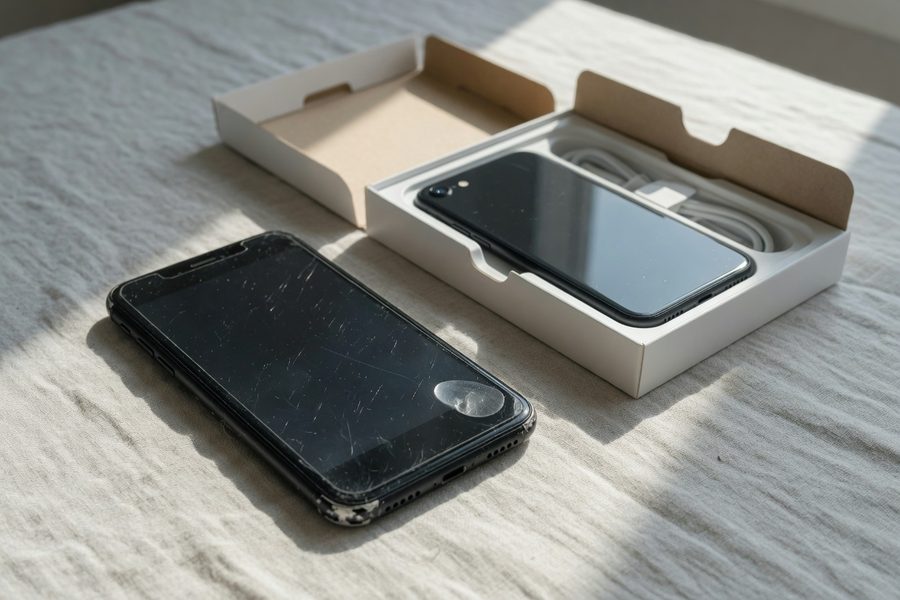
Once you’ve picked a reputable seller, the next layer is the listing itself. Sellers grade devices using terms like “Grade A,” “Excellent,” or “Good,” but these labels are not standardized. One vendor’s “Excellent” might allow light scratches on the screen, while another’s means immaculate. The only way to cut through the confusion is to ask direct questions and confirm answers in writing.
Three Questions That Reveal True Condition
- What is the exact battery health percentage? For phones and laptops, demand a number. Below 85% means a battery replacement is coming soon, adding $50–$100 to the real price.
- Does this device have any non-OEM replacement parts? Third-party screens and batteries perform differently and may void future warranty coverage even from the manufacturer.
- What cosmetic defects am I getting, specifically? Ask for photos of the actual unit, not a stock image. A single deep scratch on the display is different from faint scuffs on the back.
Refurbished laptops from enterprise off-lease programs can cost 40% to 60% less than new equivalents, yet many ship with new SSDs and RAM, delivering performance indistinguishable from a fresh-out-of-box machine.
Return Policies: Your Financial Safety Net
A 30-day no-questions-asked return policy is the floor. Consumer Reports recommends walking away from any seller that won’t accept returns for at least two weeks. Test the device thoroughly the day it arrives: run diagnostics, check battery cycles, make a call, stream video. A refurbished device that passes a 48-hour stress test will almost certainly last for years.

A 5-Year Cost Comparison: Putting Refurbished vs. New on Paper
Numbers beat opinions. Here’s a 5-year total cost snapshot for a mid-range laptop used for remote work and everyday tasks. The new option is a $999 MacBook Air M2; the refurbished alternative is the same model from Apple Certified Refurbished at $749. We’ll factor in one battery replacement for each over five years, because both will likely need it, and assume no other repairs under normal use.
| Cost Element | New ($999) | Refurbished ($749) |
|---|---|---|
| Initial purchase | $999 | $749 |
| AppleCare+ (optional, 3 years) | $179 | Not purchasable for refurbished |
| One battery replacement (~ year 3) | $129 | $129 |
| Total 5-year outlay | $1,307 | $878 |
| Resale value after 5 years | ~$200 | ~$150 |
| Net 5-year cost | $1,107 | $728 |
Even after skipping AppleCare+ on the refurbished unit and assuming slightly lower resale value, the refurbished path saves $379 over five years. That’s real money. Directed toward a high-APR balance on a Chase credit card, it can work harder for you than a marginally newer laptop ever will. This calculus tilts further toward refurbished for users who hold devices beyond five years and self-insure against damage.
One honest caveat: the inability to add AppleCare+ to a refurbished Mac is a genuine limitation. If you rely on priority Apple Support access or accidental damage coverage, that gap matters. A self-insured refurbished device works best for buyers who are disciplined about keeping a small repair fund, essentially a personal FDIC-style buffer for hardware, rather than depending on a formal protection plan.
When you prioritize credit card debt with the cash saved from a refurbished device, the interest avoided can effectively double the financial benefit within two years.
The Personal Finance Rule for When to Buy Refurbished vs New Electronics
A durable decision framework beats a hot take. Use this three-question filter before any electronics purchase:
- Is the device critical to income or daily life? If yes, lean toward manufacturer-certified refurbished or new with extended warranty. If it’s a secondary tablet or backup phone, refurbished from a trusted source wins almost every time.
- Can I fund the purchase without new debt? If the answer is no and you’re the kind of person who already knows how to stack savings like a pro, then refurbished is the only responsible route. It keeps the principal lower and the interest hit smaller, which matters especially when carrying balances at rates that the Federal Reserve’s current environment has kept elevated.
- Will I keep the device at least 3 years? Refurbished savings compound the longer you hold. If you swap devices annually, the depreciation curve on a new model still stings, but the math is more about resale timing.
Track every dollar saved from refurbished purchases in a simple spreadsheet. At year’s end, move that sum directly to an emergency fund or a high-interest debt balance. This makes the decision tangible and repeatable.
The buy refurbished vs new electronics comparison is a cash optimization strategy. The data keeps pointing the same way: if you source from vetted programs, the long-term math favors refurbished by a wide margin. Where people lose money is not in the discount but in ignoring warranty terms and battery condition. Fix those two variables, and you’ll rarely buy new again, unless you have a specific, profitable reason to.

Real-World Example: How a Freelancer Saved $480 and Funded an Emergency Cushion
Consider an illustrative example: Taylor, a freelance writer, needed a reliable laptop and a smartphone upgrade simultaneously. Her old devices were slowing her down, but she refused to finance the purchases on a credit card at 24% APR. New: a MacBook Air M2 at $999 and an iPhone 15 Pro Max at $1,099–$2,098 total. Instead, she bought both from Apple’s Certified Refurbished store: the MacBook Air M2 for $749 and the iPhone 15 Pro Max for $699. Total outlay: $1,448, saving $650 upfront.
She used $170 of that savings to purchase a sturdy case and a USB-C hub, essentials she would have bought anyway, and deposited the remaining $480 into a high-yield savings account that had been sitting at only $300. Six months later, when her car needed an unexpected $500 repair, she didn’t touch a credit card. The refurbished choice effectively converted a tech refresh into a financial safety net.
Her devices arrived with new outer shells, fresh batteries, and a 1-year warranty. After 18 months, both perform identically to their new counterparts, and she still has no device-related debt. Taylor’s outcome is not guaranteed for every buyer, it required buying from the manufacturer’s own refurbished channel, but it illustrates the real-world chain reaction a disciplined refurbished purchase can trigger. Her Experian credit report also benefited: by avoiding new credit card debt, her utilization rate stayed below 10%, which FICO Score models reward with higher scores.
Your Action Plan
-
Set a firm budget before you shop.
Determine the maximum out-of-pocket you can spend without borrowing. This number is your ceiling, refurbished or new, you do not cross it. If the new device exceeds your ceiling, refurbished becomes the default.
-
Identify the exact new model and its current price.
Check the manufacturer’s website and major retailers to nail down the MSRP and any current promotions. Write that figure down; it’s your baseline for measuring the refurbished discount.
-
Search for that same model in manufacturer-certified refurbished stores first.
Start with Apple Certified Refurbished, Samsung Re-Newed, Dell Outlet, or Lenovo Outlet. Compare the listed price, warranty length, and battery replacement policy side by side.
-
If unavailable there, expand only to authorized resellers with 1-year warranties.
Amazon Renewed, Best Buy Certified Refurbished, and Back Market (for phones) can work, but verify the warranty statement in the product listing. No warranty, no purchase.
-
Calculate the true 5-year cost using the same formula we used above.
Add known extras: a battery replacement around year 3, any protection plan, and an estimate of resale value after 5 years. Compare net cost for refurbished vs. new.
-
Ask the seller the three critical condition questions in writing.
Request exact battery health, confirmation of OEM parts, and specific cosmetic defect photos. Save their response. If it’s vague, move on.
-
Test the device aggressively within the first 48 hours of delivery.
Run diagnostics, stream content, make calls, and check every port. If anything is off, initiate a return immediately. A strict return window is your best protection.
-
Log the actual savings and redirect them to a financial priority.
Record the dollar difference between the new price you would have paid and your refurbished outlay. Within that same month, transfer that exact amount to a side-gig-funded emergency savings account or toward your highest-interest debt.
Frequently Asked Questions
What does “certified refurbished” actually mean?
It means the manufacturer or an authorized partner has tested the device to meet original factory specifications, replaced any defective components with genuine parts, and installed a new battery and outer shell in many cases. It also includes a warranty, typically 1 year, that matches or closely mirrors the new product warranty. At Apple, for example, a certified refurbished device is indistinguishable from new except for the box it ships in.
Is it safe to buy refurbished electronics from third-party sellers on eBay or Amazon?
It can be, but only if you verify the seller’s return policy, warranty statement, and refurbishment process. Amazon Renewed sellers must meet a minimum 90-day warranty requirement and a specific cosmetic standard. On eBay, look for listings marked “eBay Refurbished,” which come with a 1- or 2-year warranty through Allstate. Random individual sellers with no warranty language should be avoided, regardless of the rating.
Do refurbished electronics come with a warranty?
Manufacturer-certified refurbished units carry a 1-year warranty identical to new devices. Authorized reseller programs offer warranties ranging from 90 days to 1 year. Independent seller refurbished units often carry no warranty at all, or a very limited 30-day guarantee. Always confirm the exact warranty length in the written product description before buying.
How much can I realistically save by buying refurbished vs new?
Smartphones typically save 30% to 55% off MSRP, between $300 and $600 on current flagships. Laptops fall in a 25% to 50% range for consumer models, and enterprise off-lease laptops can hit savings of 40% to 60%. Tablets and wearables average 25% to 40%. The exact figure depends on seller tier and condition grade.
Will a refurbished phone have a new battery?
If purchased from a manufacturer-certified program, yes. Apple, Samsung, and Google all install fresh batteries in their refurbished devices. Third-party sellers may or may not; always ask for the exact battery health percentage. Anything under 85% means you’ll need a replacement within the first year, eroding some of the upfront savings.
Can I return a refurbished electronics item if I don’t like it?
In most reputable programs, yes. Apple gives 14 days, Amazon Renewed allows 30 to 90 days depending on the item, and Best Buy Certified Refurbished offers 15 days. Independent sellers may set their own policies, some accept returns, some don’t. Never buy a refurbished electronics item that doesn’t clearly state a return window of at least 14 days.
Are refurbished electronics a good choice for students on a budget?
Yes, and the numbers back it. A student who buys a refurbished MacBook Air at $749 instead of $999 and uses the $250 saved for textbooks or a portion of tuition avoids the kind of high-interest financing that traps many young adults. Keeping debt low also protects a young borrower’s DTI ratio, which matters when applying for student loan refinancing through lenders like SoFi. Stick to manufacturer-certified units so the device lasts through an entire degree program without surprise repairs.
What’s the biggest risk when you buy refurbished vs new electronics?
The biggest risk is a non-OEM battery or display failing outside the warranty period, leaving you with a repair bill that exceeds the original discount. That’s why the seller matters more than the price. A $500 saving evaporates the moment you pay $450 for a screen replacement on a phone with no coverage. Buy refurbished electronics only when the warranty and return policy protect that downside.
Does buying refurbished electronics help the environment?
It reduces electronic waste and the demand for new raw materials, but the financial lens should come first. The environmental benefit is a secondary win, not a reason to accept a bad deal. When you buy refurbished vs new electronics from a reputable source, you get that secondary benefit at zero extra cost.
Sources
- Market Research Future, Refurbished Electronics Market Research Report 2024–2035
- DataIntelo, Refurbished Electronics Market Size, Share & Trends Report 2025
- Consumer Reports, Should You Buy Refurbished Electronics?
- Federal Trade Commission, Online Shopping
- Better Business Bureau / Canton Repository, How to Spot a Scam When Shopping for Refurbished Products
- Apple, Certified Refurbished Store
- Dell Outlet, Manufacturer Refurbished Laptops and Desktops
- Amazon Renewed, Refurbished Electronics with Warranty
- Back Market, Refurbished Electronics Marketplace
- Market Research Future, Global Refurbished Electronics Market Size (2024: $124.61B; 2025: $141.06B)
- DataIntelo, Refurbished Electronics Discount Ranges and Consumer Willingness (62%)
- Consumer Reports, Seller-Refurbished Risks and Quality Considerations