Fact-checked by the MyFinancial101 editorial team
Key Takeaways
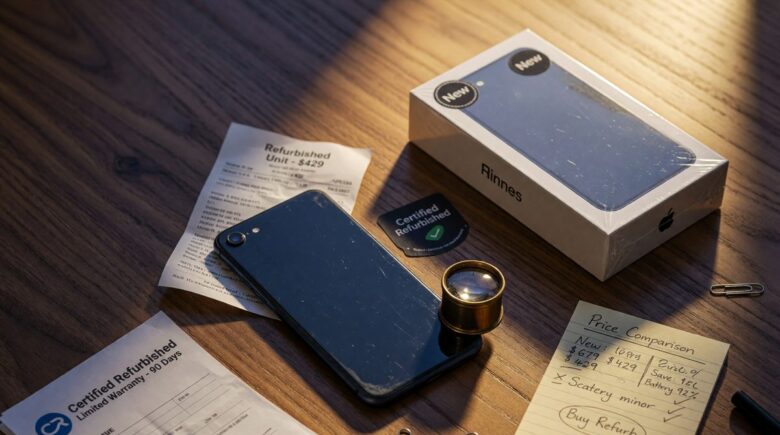
- Certified refurbished electronics typically sell for 20–50% less than their new equivalents, a 256GB iPhone 15 Pro Max, for example, can be found refurbished for around $699, roughly $400 below new retail pricing.
- 88% of surveyed consumers who bought refurbished did so primarily because of the lower price, according to a 2025 Euroconsumers report.
- Apple, Samsung, and Microsoft all back their certified refurbished devices with the same 1-year warranty they attach to new units, but third-party sellers can offer as little as 90 days or nothing at all.
- Nearly 50% of respondents in a North American survey said they were willing to buy electronics labeled as certified refurbished, signaling mainstream acceptance of the channel.
- Manufacturer-certified programs put units through standardized testing and replace defective components before resale, a process that often catches issues untested new stock misses.
- Third-party “seller-refurbished” listings carry real quality risk: parts sourcing and testing standards vary wildly, and consumers have no reliable way to verify them without doing independent research.
In This Guide
- The Financial Case for Refurbished Electronics Right Now
- What “Refurbished” Actually Means and Why It Matters
- Warranty, Returns, and Protections: The Fine Print
- Reliability and Real-World Longevity
- Category-by-Category Breakdown: Phones, Laptops, and More
- Where to Buy Safely Without Sacrificing Savings
- When Buying New Is the Smarter Financial Move
- The Environmental Dividend You Actually Bank
- Refurbished vs New Electronics: Total Cost of Ownership Math
The average retail price of a new flagship smartphone crossed $1,100 in early 2026, a jump driven by ongoing component cost pressures, tariff adjustments on imported hardware, and a tight supply of advanced memory chips. That price point is not an anomaly, it reflects a structural shift in what new electronics now cost. Against that backdrop, the refurbished vs new electronics question has moved from a fringe consideration to one of the most practically important decisions a budget-conscious buyer can make.
The market has responded. Global sales of refurbished and used devices are projected to reach over 350 million units annually by 2026, up sharply from under 200 million just five years prior, according to market data compiled by Coherent Market Insights. In the U.S. alone, certified pre-owned smartphone sales have grown at roughly 10% year-over-year since 2022. The gap between new and refurbished pricing has widened as component costs rise, which means the savings available today are larger than they were even two years ago.
This guide lays out everything you need to make a confident decision. By the end, you will know how to identify a genuinely safe refurbished purchase, which device categories offer the best value, where the real risks hide, and exactly when paying full price for something new is actually the right call.
The Financial Case for Refurbished Electronics Right Now
Most people frame the refurbished question as a compromise, settle for less, pay less. That framing is outdated. In 2026, tariffs on consumer electronics components and persistent chip shortages have pushed new device prices to levels that are genuinely difficult to justify for the majority of use cases. Refurbished isn’t a consolation prize; in many categories, it’s the strategically superior purchase.
What the Savings Actually Look Like
The discount range on certified refurbished devices runs from about 20% on recently released models to 50% or more on devices that are one to two generations old. On a $1,100 flagship phone, a 35% discount translates to $385 in immediate savings. A certified refurbished business-class laptop that retailed for $1,800 new might list for $950 to $1,100 in excellent condition. Those are not marginal differences, they’re enough to fund three to four months of contributions to an investment account started with zero prior experience, or make a meaningful dent in a credit card balance.
A concrete example: a 256GB iPhone 15 Pro Max lists for approximately $1,099 new. The same device in Apple Certified Refurbished condition sells for around $699. That $400 difference, redirected toward a high-yield savings account at 4.5% APY, generates roughly $18 in interest in its first year and compounds from there. Over a typical two-year upgrade cycle, that gap represents real money, not rounding error.
88% of consumers who purchased a refurbished product did so because it was cheaper, according to a 2025 Euroconsumers survey. Price is the primary driver, and in 2026’s elevated-cost environment, that motivation has only strengthened.
How Refurbished Savings Fit Into a Personal Budget
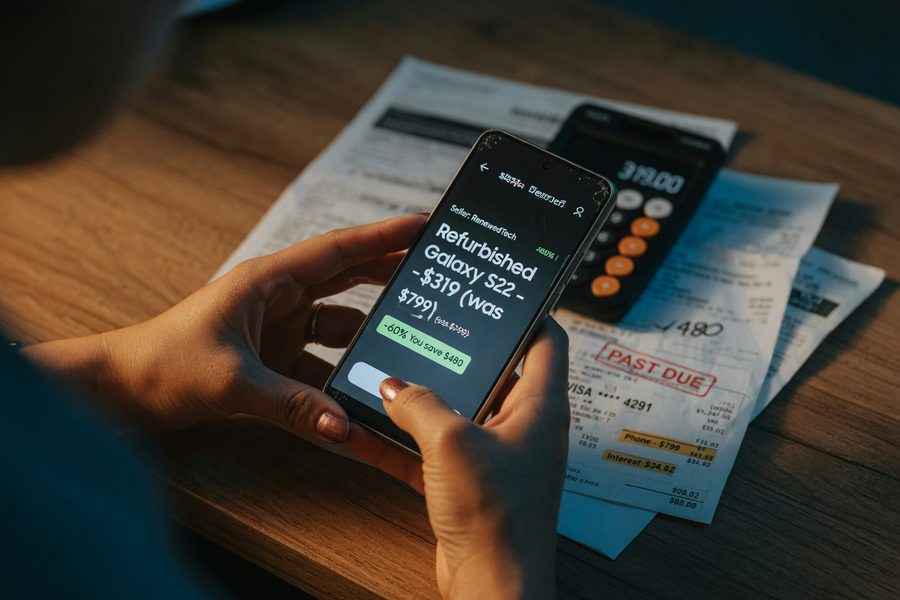
The savings are most impactful when they replace a purchase that would otherwise go on credit. The average credit card APR in the U.S. sits above 20% as of early 2026. Financing a $1,100 phone at that rate for 12 months costs roughly $120 in interest on top of the device price. Buying a functionally equivalent refurbished unit for $699 outright eliminates that interest entirely and frees up $400 for higher-priority financial goals, whether that’s building an emergency fund, paying down debt, or simply keeping cash liquid.
If you’re already working to prioritize and pay down credit card debt, routing tech purchases through refurbished channels is one of the cleaner ways to avoid adding new balances while still getting the device you need.
What “Refurbished” Actually Means and Why It Matters
The word “refurbished” covers an enormous range of quality levels, and that range is the single biggest source of confusion, and disappointment, in this market. A device sold as refurbished by Apple or Samsung went through a defined inspection and repair process. A device sold as “seller refurbished” on a third-party marketplace may have been wiped and repackaged by a one-person operation with no consistent standards.
Manufacturer-Certified vs. Third-Party Refurbished
Manufacturer-certified refurbished programs, like Apple Certified Refurbished or Samsung Certified Pre-Owned, require devices to pass full diagnostic testing, receive replacement of any defective components (often including batteries and outer casings), and ship in new-style packaging with a full warranty. These programs have defined, auditable standards. The device you receive has been confirmed to function as designed.
Third-party certified programs, sold through platforms like Back Market, Swappa, or Amazon Renewed, occupy a middle tier. Back Market, for instance, grades devices on a standardized scale and requires sellers to meet minimum inspection criteria, with a money-back guarantee. Amazon Renewed requires sellers to test functionality and offer at least a 90-day guarantee. These programs vary, but reputable third-party platforms are generally far more reliable than unverified individual seller listings.
Seller-refurbished listings with no certification are the highest-risk category. Parts sourcing and testing standards vary wildly between individual sellers, and consumers have no reliable way to verify them without extensive independent research. If the battery was replaced with an off-brand cell or the screen was swapped for a non-OEM panel, the real cost of ownership shifts quickly.
Condition Grades Explained
| Grade | Typical Description | What to Expect |
|---|---|---|
| Like New / Grade A | No visible wear; full functionality | Closest to new; may include original accessories |
| Excellent / Grade B | Minor cosmetic marks; fully functional | Light scratches not visible during normal use |
| Good / Grade C | Visible wear; fully functional | Noticeable scratches or scuffs; screen intact |
| Fair / Grade D | Heavy cosmetic wear; functional | Significant marks; check battery health carefully |
Grade A and Grade B are generally the sweet spots. Grade C and below can be worthwhile for devices going into heavy-use or child-facing roles where appearance doesn’t matter, but verify battery health percentages explicitly before purchasing.
Warranty, Returns, and Protections: The Fine Print
Warranty coverage is where the gap between certified and uncertified refurbished is most financially significant. A device that fails at month four with no warranty coverage means you’ve absorbed the full cost of the device and still need a replacement. Understanding the coverage landscape before you buy is non-negotiable.
Warranty Comparison by Seller Type
| Seller / Program | Warranty Length | Return Window |
|---|---|---|
| Apple Certified Refurbished | 1 year (same as new) | 14 days |
| Samsung Certified Pre-Owned | 1 year | 15 days |
| Microsoft Certified Refurbished | 1 year | 30 days |
| Amazon Renewed (standard) | 90 days minimum | 30 days |
| Back Market | 1 year (platform guarantee) | 30 days |
| Uncertified Seller-Refurbished | Varies; often 30–90 days or none | Varies; often none |
The major manufacturer programs, Apple, Samsung, Microsoft, provide one year of coverage, matching their new device warranty exactly. That parity matters. Back Market has also moved to a 1-year platform guarantee on most listings, which represents a significant improvement over earlier iterations of third-party marketplaces.
Credit Card Protections and Extended Coverage
Many premium credit cards include purchase protection and extended warranty benefits that apply to refurbished purchases. An extended warranty benefit can add one additional year of coverage beyond the manufacturer warranty at no charge. Purchase protection covers damage or theft within 90 to 120 days of purchase on many cards. If you’re buying refurbished through a certified channel, paying with a card that carries these benefits adds a meaningful second layer of protection without additional cost.
Before buying any refurbished device, spend five minutes confirming your credit card’s extended warranty and purchase protection terms. Cards from Chase, American Express, and Citi frequently extend coverage automatically, and the benefit applies even when the underlying purchase already has a warranty.
Third-party extended warranties on refurbished electronics are a different calculation. They can make sense on high-ticket items like laptops in the $800+ range, where a single repair (a screen replacement, for instance, can run $300–$500) would erode most of the savings. For phones under $500 or accessories under $200, self-insuring with the savings is usually the better financial move.
Reliability and Real-World Longevity
The most persistent concern about refurbished electronics is reliability. The fear is intuitive: someone else owned it, something went wrong, now it’s your problem. The data tells a more nuanced story, and for certified refurbished units, it’s actually reassuring.
Certified refurbishers run every unit through a full diagnostic cycle, replacing components that fail testing. A new device coming off a production line doesn’t receive that individual-unit verification. Early manufacturing defects, a small category but a real one, can slip through quality control on new devices, where they won’t be caught until the consumer discovers them. A certified refurbished unit has, by definition, already been tested and repaired. That process provides its own form of reliability screening.
According to Consumer Reports, pre-owned smartphones, laptops, tablets, and headphones can be a great deal, provided buyers verify genuine refurbishment, check warranty terms, and purchase from certified or manufacturer sources. The emphasis on sourcing is deliberate: the certification process is what makes the reliability case hold.
Battery Health: The Real Longevity Variable
Battery degradation is the one genuinely honest caveat on refurbished phones and laptops. Lithium-ion batteries lose capacity with each charge cycle. A two-year-old flagship phone may have a battery at 80–85% of original capacity, which affects real-world screen-on time noticeably. Certified programs like Apple’s replace batteries below 80% health before resale. Third-party sellers may not.
Always request or verify the battery health percentage before finalizing a refurbished phone purchase. On iPhone, this information is accessible in Settings under Battery. On Android, battery health data is available through manufacturer diagnostic apps or third-party tools. A device with battery health below 80% will need a replacement within 6–12 months of typical use, a cost of $50–$100 that should factor into your total price calculation.
Category-by-Category Breakdown: Phones, Laptops, and More
Not all electronics depreciate the same way, and the refurbished value proposition is much stronger in some categories than others. Understanding which categories reward the refurbished buyer, and which carry more risk, is how you avoid overpaying in either direction.
Smartphones: The Strongest Refurbished Case
Flagship smartphones depreciate fast and predictably. A top-tier phone that retailed for $1,100 new typically hits 50–60% of its original value within 18 months. Certified refurbished channels capture a large portion of those depreciated devices. The functional difference between a two-year-old flagship and the current model is often limited to one or two camera features and a modest processor bump, neither of which most users would notice in daily use.
One important caveat: software support windows. Apple supports iPhones for roughly 6–7 years from launch. Google’s Pixel line guarantees 7 years of OS updates. Samsung’s recent flagship lines receive 7 years of security updates. Buying a refurbished iPhone 13 or 14 in 2026 still leaves you 3–5 years of full software support. Buying a refurbished device from a manufacturer with a shorter support track record is riskier, because a device losing security updates is effectively obsolete regardless of hardware condition.
Laptops: Business-Grade Units Are a Standout Value
Refurbished business-class laptops, think ThinkPads, Dell Latitudes, HP EliteBooks, offer exceptional value. These machines were built to commercial durability standards, often feature upgradable RAM and storage, and enter the refurbished market after corporate lease cycles of 2–3 years, meaning they’re lightly used with significant remaining lifespan. A refurbished ThinkPad X1 Carbon that retailed for $1,800 can be purchased in Grade A condition for $700–$900, with the same build quality that made it worth $1,800 to begin with.
Headphones, Tablets, and Other Accessories
Over-ear headphones and tablets are generally good refurbished buys, they have fewer moving parts than phones and no battery-intensive cellular radios. The risk profile on headphones is low: the failure modes are limited, and a certified refurbished pair of $350 headphones for $200 is a straightforward win. Gaming consoles are another strong category; platforms like Back Market and Swappa carry certified units with strong buyer protections at 25–40% below new pricing.
| Device Category | Refurbished Value Rating | Key Risk to Check |
|---|---|---|
| Flagship Smartphones | Excellent | Battery health; software support timeline |
| Business Laptops | Excellent | Keyboard wear; RAM/storage specs |
| Consumer Laptops | Good | Battery cycle count; port availability |
| Tablets | Good | Screen condition; storage capacity |
| Over-Ear Headphones | Good | Ear pad condition; charging port integrity |
| Budget/Entry-Level Phones | Moderate | New budget models often price-competitive; compare carefully |
| Gaming Consoles | Good | Controller wear; optical drive condition |
Where to Buy Safely Without Sacrificing Savings
The refurbished market’s quality ceiling is high, but so is its floor for risk. The difference between a great refurbished purchase and a regrettable one is almost entirely about where you buy. Manufacturer-direct certified programs are the lowest-risk starting point. From there, the risk gradient rises as you move toward unverified third-party sellers.
Trusted Sources and What to Look For
Manufacturer-direct programs (Apple, Samsung, Microsoft) are the gold standard. Back Market and Swappa are the most consistently reliable independent platforms, with standardized grading, return policies, and buyer protections. Amazon Renewed is acceptable for lower-price purchases where the 90-day guarantee is sufficient, but read individual seller ratings carefully on that platform. eBay “certified refurbished” listings exist but require more due diligence, stick to sellers with thousands of positive reviews and explicit return policies.
Red flags to avoid: listings with no warranty stated, vague descriptions like “tested and working” with no further detail, unusually low prices relative to other certified sources (more than 20% below comparable certified listings), and sellers with fewer than 100 reviews or a rating below 98% positive. The Better Business Bureau has flagged rising volumes of consumer complaints involving online refurbished electronics sales where products fail to match listed condition or never arrive at all.
The BBB has warned that scams involving fake or substandard refurbished electronics have increased alongside the market’s growth. If a deal looks dramatically cheaper than certified alternatives, say, a “refurbished” iPhone 15 Pro for $299, it is almost certainly not what it claims to be. Stick to platforms with documented return and refund guarantees.
Timing Your Purchase for Maximum Savings
Refurbished inventory tends to spike after major new-model launches, when trade-ins flood certified channels and prices on previous-generation devices drop further. Apple typically refreshes its iPhone line in September; the best prices on certified refurbished iPhone 15 models, for example, appeared in October and November 2025, roughly 6–8 weeks after the iPhone 16 launch. If you can wait a few weeks after a product launch, you’ll find both more inventory and sharper pricing on the previous generation. Combine that timing with a cash-back credit card, and you stack another 1–5% savings on top of the refurbished discount.
When Buying New Is the Smarter Financial Move
Refurbished is the better default for most buyers in most categories, but not universally. There are specific scenarios where new is the cleaner, more financially sound choice.
Cases Where New Makes Sense
First, when a device will receive intensive professional use and downtime has a direct income cost. A freelance videographer whose laptop is their primary income tool needs maximum reliability and the longest possible warranty runway. A new device with a 3-year accidental damage plan may be worth the premium for that use case. Second, when a new model introduces a feature you specifically require: a hardware change like USB-C adoption, a new security chip, or a significantly improved camera sensor might justify full price if that feature is central to how you use the device. Third, when new pricing has already dropped to refurbished territory. Entry-level phones in the $250–$350 range are sometimes priced so competitively new that the certified refurbished version of a previous model offers minimal additional savings.
If stretching a budget to buy a new device means adding it to a credit card balance you can’t pay off immediately, the interest charges can erase the “peace of mind” premium entirely. A $1,100 new phone financed at 22% APR for 12 months costs an additional $130 in interest, more than enough to buy an extended warranty on a comparable certified refurbished unit.
Risk tolerance is a real variable here, and it’s worth being honest with yourself about it. Some buyers simply prefer the certainty of a new device, no prior owner, no question about history, fresh battery. If the psychological cost of uncertainty is high for you, and your budget can absorb the difference without borrowing, new is a legitimate choice. The point is to make it consciously, not by default.
The Environmental Dividend You Actually Bank
This section gets treated as a feel-good addendum in most buying guides. It’s worth taking more seriously, because the resource math is striking.
According to the U.S. Environmental Protection Agency (2025), recycling one million cell phones recovers 35,000 pounds of copper, 772 pounds of silver, 75 pounds of gold, and 33 pounds of palladium. The overwhelming majority of a consumer device’s environmental impact happens during manufacturing, the mining, refining, and fabrication of components. Buying refurbished skips that manufacturing demand entirely. You are not merely saving money; you are reducing material extraction and energy consumption by extending the useful life of hardware that already exists.
Manufacturing accounts for roughly 70–80% of a smartphone’s total carbon footprint. Extending a device’s life by two to three years through refurbishment avoids that production footprint for the next buyer. For consumers who are also tracking their spending in the context of broader financial goals, this is a genuine alignment between saving money and consuming more sustainably.
Refurbished vs New Electronics: Total Cost of Ownership Math
The sticker price is only part of the cost equation. A complete comparison between refurbished vs new electronics over a typical two-year ownership cycle needs to account for the purchase price, any repairs or battery replacements, resale value at the end of the cycle, and the opportunity cost of the capital difference.
A Worked Two-Year Ownership Comparison
| Cost Factor | New iPhone 15 Pro Max | Certified Refurbished iPhone 15 Pro Max |
|---|---|---|
| Purchase Price | $1,099 | $699 |
| Battery Replacement (if needed) | $0 (within warranty) | $0–$89 (if below 80% health at purchase, may need replacement by year 2) |
| Estimated Resale Value After 2 Years | ~$420 | ~$310 |
| Net Cost After Resale | $679 | $389–$478 |
| Capital Savings vs. New | $201–$290 |
Even accounting for a potential battery replacement on the refurbished unit and a slightly lower resale value, the certified refurbished device costs roughly $200–$290 less over the full two-year cycle. If the $400 initial savings were placed in a 4.5% APY savings account for 24 months, they’d generate approximately $37 in interest, bringing the real two-year advantage to around $237–$327 depending on battery status.
The arithmetic confirms the headline: for most buyers, certified refurbished delivers meaningfully better total cost of ownership. The gap closes only if the refurbished unit requires a significant repair outside warranty, which is why purchasing from certified channels with strong warranty backing is the critical variable in the entire decision.
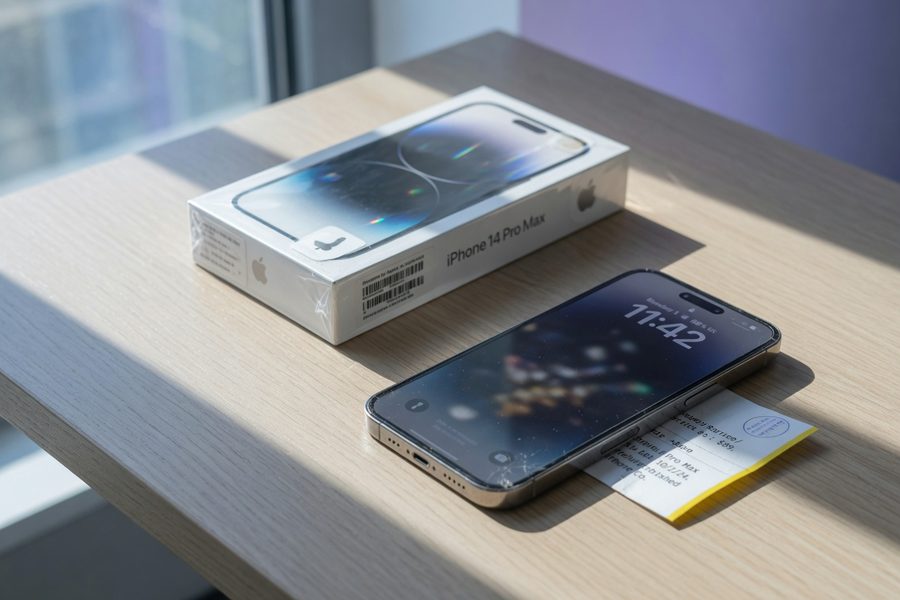
Nearly 50% of respondents in a North American survey said they would purchase electronics labeled or certified as refurbished, according to data cited by the United Nations Environment Programme (2023). Consumer comfort with certified refurbished has grown substantially, and the market infrastructure supporting safe purchases has grown with it.
For buyers actively managing tight budgets, particularly those navigating changing income thresholds and benefit eligibility in 2026, the difference between a $699 and $1,099 electronics purchase is not abstract. It can represent the margin between staying current on bills and falling behind. Routing tech purchases through certified refurbished channels is one of the higher-leverage, lower-effort ways to reduce household spending on durable goods without sacrificing function.
And for buyers who are also using coupon stacking and price-matching strategies to fight inflation, layering refurbished purchases on top of those habits can compound the savings meaningfully across a household’s annual electronics budget.
Avoid the temptation to treat refurbished savings as license to upgrade more frequently. The financial benefit of buying refurbished compounds when you extend device ownership to 3–4 years, not when you use the savings to cycle through devices every 12–18 months. Longer ownership intervals are where the real money is.
Real-World Example: The $400 Decision Over Two Years
Consider an illustrative example: a 34-year-old teacher in a mid-size city is replacing a cracked phone. Her current phone is two years old, and she’s been eyeing a new flagship at $1,099. She has $800 in savings set aside for the purchase. Buying new would require either dipping into an adjacent emergency fund or putting $300 on a credit card at 21% APR.
Instead, she purchases an Apple Certified Refurbished iPhone 15 Pro Max in “Like New” condition for $699 from Apple’s own refurbished store. The device arrives with a 1-year warranty, a replaced battery confirmed at 100% health, and new outer packaging. Her total out-of-pocket is $699 cash, $100 under her savings budget, with nothing on credit.
The $400 she saves compared to buying new goes into a high-yield savings account at 4.5% APY. After 24 months, that $400 has grown to approximately $437 with compounding interest. She avoids $63 in credit card interest she would have paid on the $300 financed portion of the new device. Her total measurable financial benefit: roughly $100 in preserved savings plus $63 in avoided interest plus $37 in earned interest, approximately $200 better off than the new-device path, and she used a device with an identical warranty for the full period.
At month 22, she sells the refurbished iPhone 15 Pro Max for $310 on Swappa. Her effective two-year cost for the device was $389. The comparable new device, if resold at the same price point, would have cost $789 over the same period, exactly $400 more, before the interest savings. The numbers hold up in practice because she bought certified, paid cash, and held the device through its full useful cycle.
Your Action Plan
-
Define your budget ceiling before you browse
Set a firm maximum spend for the device you need, not the device you want. Write down what you’d do with the savings if you bought refurbished instead of new. Having a concrete destination for those dollars (emergency fund, debt payoff, investing) makes the decision easier to execute and harder to rationalize away.
-
Start with manufacturer-certified channels first
Check Apple Certified Refurbished, Samsung Certified Pre-Owned, and Microsoft Refurbished before looking anywhere else. These programs offer the strongest warranties, most consistent testing standards, and clearest return policies. If the device you need is available here, it’s almost always the right starting point.
-
Verify battery health and software support before committing
For any phone or laptop, confirm the battery health percentage, aim for 85% or above on a phone, 80% or above on a laptop. Then check the manufacturer’s published end-of-support date for the specific model. A device that loses security updates within 18 months of purchase is a poor long-term value regardless of hardware condition.
-
Pay with a card that extends your warranty coverage
Before completing your purchase, confirm that your credit card includes extended warranty and purchase protection benefits. Cards from Chase Sapphire, American Express, and several Citi products add one year of coverage beyond the manufacturer warranty at no cost. This single step can turn a 1-year warranty into 2-year coverage without any additional purchase.
-
Time your purchase to follow product launch cycles
If your current device is functional but aging, wait for the manufacturer’s next major launch. Inventory of certified refurbished previous-generation devices typically peaks 6–10 weeks after a new model ships, and prices on those units tend to drop another 5–10% as trade-ins flood the channel. Patience here has a measurable dollar value.
-
Plan your ownership horizon before you buy
The financial case for refurbished is strongest when you commit to a 3-year ownership cycle. Decide upfront that you’re keeping this device until the software support window closes or the hardware becomes a limiting factor, whichever comes first. Frequent upgrades erode the savings advantage and are where buyers lose the financial benefit of buying refurbished in the first place.
Frequently Asked Questions
Is certified refurbished really the same quality as new?
For manufacturer-certified programs, yes, functionally. Apple, Samsung, and Microsoft require units to pass full diagnostics, replace any defective components, and in many cases replace batteries and outer casings before resale. The resulting device performs to factory specification. Where it may differ from new is cosmetic: minor surface marks may exist on Grade B units, and packaging is often non-original. The warranty, however, is identical: one year for all three manufacturer programs.
What is the difference between “manufacturer refurbished” and “seller refurbished”?
Manufacturer refurbished means the original brand (Apple, Samsung, Dell) performed or supervised the refurbishment to defined standards, with a documented warranty. Seller refurbished means an individual or third-party business reconditioned the device with no standardized process. The quality gap between those two categories can be enormous. Stick to certified programs whenever possible.
How much can I realistically save buying refurbished?
On flagship smartphones, savings of 30–45% are typical for devices that are one generation old. On business-class laptops, 40–55% off original retail is achievable through certified channels. On tablets and headphones, expect 20–35%. The highest savings appear on devices that just had a successor model launch, because resale supply spikes and prices adjust downward quickly.
Does buying refurbished affect my ability to get future software updates?
No. Software updates are tied to the device model and the manufacturer’s support timeline, not to whether the unit was purchased new or refurbished. An iPhone 14 purchased as certified refurbished today will receive iOS updates on the same schedule as an iPhone 14 purchased new in 2022. Always check the manufacturer’s published end-of-support date for the specific model you’re considering, that date is the real longevity variable.
Are refurbished electronics more likely to break down?
Certified refurbished units are not more likely to fail than new ones in any meaningful statistical sense, and in some cases, the testing-and-repair process that certified programs apply actually catches early defects that would have surfaced on untested new units. The risk profile shifts toward higher failure rates only with uncertified, seller-refurbished devices, where part quality and testing depth are unknown. Buy certified, and the reliability concern largely dissolves.
What should I do if my refurbished device has a problem after I receive it?
First, check the return window, most certified programs allow 14 to 30 days for a full return or exchange. If the issue arises after the return window but within the warranty period, file a warranty claim directly with the seller or manufacturer. If you paid with a credit card that includes purchase protection or extended warranty, file a claim with your card issuer as a secondary option. Document the issue with photos or video immediately when you notice it, as that documentation speeds up any claim process.
Is it safe to buy refurbished electronics from Amazon?
Amazon Renewed is safer than unverified marketplace listings, but it requires more care than a manufacturer-direct program. Amazon requires Renewed sellers to test functionality and offer at least a 90-day guarantee, but individual seller quality varies. Read each seller’s review profile carefully, prioritize sellers with 1,000+ reviews and a 98%+ positive rating. For high-ticket purchases, the manufacturer’s own certified channel is a safer choice than Amazon Renewed.
Can I use a refurbished phone on any carrier?
This depends on whether the device is unlocked or carrier-locked. Manufacturer-certified refurbished phones are typically sold unlocked and compatible with major U.S. carriers. Third-party refurbished listings may include carrier-locked devices, always confirm unlock status before purchase, especially if you plan to use a different carrier than the original owner. An unlocked device also retains higher resale value.
Do refurbished electronics affect resale value if I want to sell later?
Refurbished devices do carry slightly lower resale values compared to equivalent new devices at the same point in the ownership cycle, but the gap is narrower than most buyers expect. Because the purchase price was already discounted, the net cost after resale is still substantially lower for the refurbished buyer. A certified refurbished iPhone purchased for $699 and sold two years later for $310 has a net cost of $389, still well below the ~$679 net cost of the same model purchased new at $1,099 and resold for $420.
Are there personal finance strategies that pair well with buying refurbished?
Several. The most direct is a technology sinking fund: a dedicated savings bucket funded monthly at a rate that covers your planned device replacement on a 3-year cycle. If you expect to spend $700 on a phone every three years, that’s about $19.50 per month set aside. Buy refurbished, and the sinking fund either covers the cost entirely or builds a surplus. Combining that approach with a cash-back credit card that carries extended warranty benefits, and paying the balance immediately, layers additional savings on top. For anyone working toward debt reduction alongside smarter spending, routing tech purchases through certified refurbished channels is one of the cleaner ways to reduce ongoing household costs.
Sources
- Consumer Reports, Should You Buy Refurbished Electronics?
- Euroconsumers, How Good Is As Good As New (2025 Report)
- U.S. Environmental Protection Agency, Electronics Donation and Recycling
- Coherent Market Insights / UNEP, Refurbished Electronics Market Overview
- The Guardian, Expert Tips for Buying Refurbished Tech (2025)
- ABC7 Chicago / BBB, Consumer Scam Alert: Refurbished Electronics Online Scams
- Apple, Certified Refurbished Products
- Back Market, Certified Refurbished Electronics Marketplace