Fact-checked by the MyFinancial101 editorial team
Quick Answer
A single mom can reduce her grocery bill by 40% without coupons by switching to sales-driven reverse meal planning, conducting weekly pantry audits, reducing meat to two or three meals per week, and using free store loyalty apps. U.S. households spent an average of $6,224 on groceries in 2024, meaning a 40% cut saves roughly $2,490 per year.
Most grocery advice assumes you have a free Sunday afternoon and a binder of coupons. Single moms rarely have either. Yet food at home remains one of the only major budget categories where a disciplined shift in strategy, not extreme effort, can genuinely cut spending by a third to a half. According to U.S. Bureau of Labor Statistics 2024 data, the average household spends $6,224 per year on groceries, and for lower-income households the share of take-home pay consumed by food can be far more punishing.
Food prices rose another 2.3% in 2025, per the USDA Economic Research Service, which means the goal of a 40% cut is being chased against a moving target. That makes strategy even more important than willpower.
Key Takeaways
- The average U.S. household spent $6,224 on groceries in 2024, according to the U.S. Bureau of Labor Statistics; a 40% reduction saves roughly $2,490 per year.
- Food prices rose 2.3% in 2025, per the USDA Economic Research Service, making deliberate strategy more valuable than ever.
- Households in the lowest income quintile spent 33.0% of before-tax income on food in 2024, according to the USDA Economic Research Service.
- Reverse meal planning costs $0 to start and can save $80–$120 per month by centering meals on whatever proteins and produce are marked down that week.
- Free store loyalty apps (Kroger, Safeway/Albertsons Just for U, Target Circle, Walmart+) routinely trim 10–15% off a grocery bill at checkout with no clipping required.
- Combining two meatless meals per week with pantry audits can save an additional $50–$100 monthly at zero upfront cost, per USDA SNAP-Ed guidance.
Why Grocery Bills Hit Single Moms Harder in 2026
Single-income households absorb every price spike without a second paycheck to cushion it. The USDA reports that Americans spent 9.7% of disposable personal income on food in 2025, but for households in the lowest income quintile, that number looks very different: food spending reached $5,498 annually in 2024, representing 33.0% of before-tax income. One income supporting two or three children means the math is fundamentally harder.
Time compounds the problem. Extreme couponing, wholesale club runs, and elaborate Sunday meal prep sessions all assume hours that most single working moms simply do not have. If a strategy only works on a full weekend, it is not a real strategy for this household type. The competitor gap most personal finance articles skip is that the best grocery-saving systems for single moms need to fit around irregular work schedules and limited childcare, not assume leisure time.
Budget assistance programs like SNAP, which faces ongoing funding pressure, can help some households, but they are not a reliable long-term plan. Learning to reduce grocery bill spending through behavioral shifts is what produces lasting results regardless of what programs exist.
Key Takeaway: U.S. households in the lowest income quintile spent 33.0% of before-tax income on food in 2024, according to the USDA Economic Research Service. For single moms, this percentage is far more damaging than the average national figure suggests, making a deliberate strategy non-optional.
The Exact Shift That Delivered a 40% Cut
Reverse meal planning, choosing meals based on what is already on sale rather than shopping to match a predetermined menu, is the single highest-leverage change. It sounds minor. It is not.
Traditional meal planning starts with a recipe and builds a shopping list around it. Reverse planning starts with the weekly store circular and builds meals around what costs the least that week. Protein is expensive and highly variable in price; when chicken thighs drop 30%, you center three meals on chicken. When ground turkey is marked down, you make turkey tacos and a soup. The menu is never fixed until you see the prices.
The Secret Life of Groceries author Benjamin Lorr has noted that reverse-engineering meals around sale prices is one of the most effective ways to reduce a grocery bill without changing what you eat overall. The underlying principle is simple: when you let prices drive the menu rather than recipes drive the shopping list, you automatically buy at the bottom of the price cycle instead of the middle of it.
Ingredient prepping, washing, chopping, and portioning a few core ingredients rather than assembling full meals, makes this practical for time-poor households. Prep a batch of rice, rinse a bag of beans, and slice a head of cabbage on a weeknight in 20 minutes. Those components serve four different meals through the week without committing to a single recipe on Sunday. Documented cases of families cutting spending by nearly 40% this way cite the reduction in food waste as the secondary payoff: you buy fewer duplicates and use what you have.
Tracking matters. A simple notes app running total from each receipt, checked once a week, confirms whether the strategy is working. Without a number, the savings feel uncertain and the habit erodes. A household spending $520 per month on groceries that drops to $312 has hit the 40% mark, a difference of $208 per month or $2,496 per year. That math is real and verifiable.
For more ideas on feeding a family well at lower cost, the seasonal foods approach covered here complements a reverse-planning strategy year-round, not just in cold months.
Key Takeaway: Reverse meal planning combined with ingredient prepping can reduce grocery spending by up to 40% without coupons. A household cutting from $520 to $312 per month saves $2,496 per year, confirmed by tracking weekly receipt totals in a notes app.
Pantry Audits and Smarter Protein Choices
Before every shopping trip, a 90-second pantry and freezer scan eliminates the most common budget leak: buying what you already own. Duplicate cans of diced tomatoes, a second box of pasta, an extra bag of frozen corn, these happen when you shop from memory. A standing mental inventory, or a simple whiteboard on the fridge, closes this gap with almost no ongoing effort.
Using What You Have to Stretch Proteins
Stretching proteins means treating meat as a flavor component rather than the centerpiece. A pound of ground beef that was going to make four servings of tacos can make eight servings when combined with black beans. The dish costs less, the kids still get tacos, and the nutrition profile actually improves. That is the kind of swap that survives picky eaters, which most generic “eat less meat” advice fails to account for.
Reducing meat frequency is one of the most impactful moves available. The USDA Food and Nutrition Service specifically highlights planning around affordable proteins and reducing waste as foundational to cutting food costs while maintaining nutritional quality. Personal finance tools from providers like SoFi and budgeting apps tracked through institutions like Chase increasingly categorize grocery spending as a distinct line item, making it easier to see month-over-month progress when these swaps take effect.
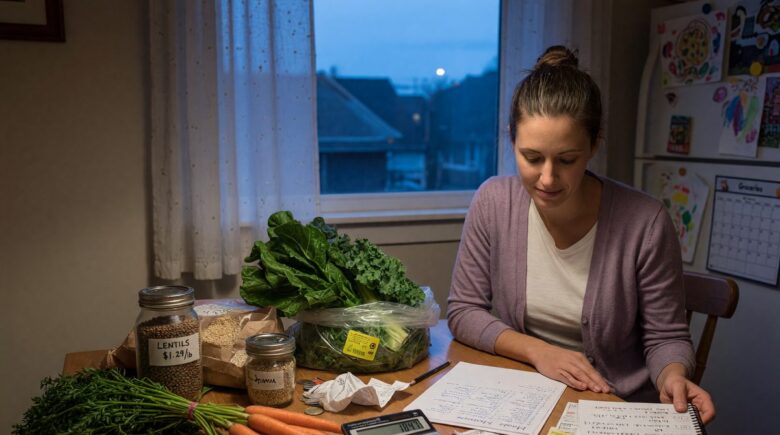
Two meatless meals per week, centered on lentils, eggs, canned chickpeas, or tofu, can cut the protein portion of a weekly grocery bill by 20–25%. The USDA SNAP-Ed Connection specifically recommends plant-based proteins as cost-effective alternatives, a position echoed by nutrition researchers at the USDA Economic Research Service.
Bulk Buying: The Cash-Flow Caveat
Wholesale clubs like Costco or Sam’s Club produce real savings per unit, but they require larger upfront spending and meaningful freezer space. For a single mom managing cash flow week to week, the $60 warehouse membership plus a $120 first-trip spend can create a short-term budget problem even if the long-term math works. Bulk buying on sale at a standard grocery store, stocking up on three to four packages of a discounted item rather than one, delivers most of the benefit without the upfront burden or the risk of food waste from over-purchasing.
Worth naming directly: wholesale clubs also reward households with reliable transportation and adequate storage. Without both, the per-unit savings evaporate quickly into spoilage or inconvenience.
| Strategy | Avg. Monthly Savings | Upfront Cost | Time Required |
|---|---|---|---|
| Reverse Meal Planning | $80–$120 | $0 | 30 min/week |
| Pantry Audits | $20–$40 | $0 | 5 min/trip |
| Meatless 2x/Week | $30–$60 | $0 | Minimal |
| Store Loyalty Apps | $15–$30 | $0 | 5 min/week |
| Wholesale Club Membership | $40–$80 | $60–$130/year | 1–2 hrs/trip |
Key Takeaway: Combining pantry audits with 2 meatless meals per week can save $50–$100 monthly at zero upfront cost, according to guidance from the USDA SNAP-Ed Connection. Wholesale clubs offer savings but require cash-flow flexibility that many single-income households do not have.
Loyalty Programs, Store Brands, and Seasonal Buys
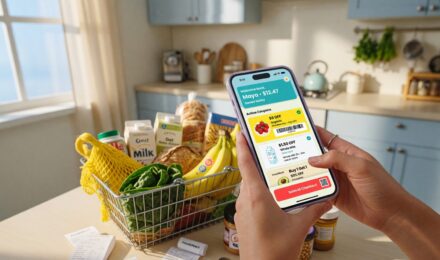
Free store loyalty apps are the closest thing to effortless savings available. Kroger’s app, the Safeway/Albertsons Just for U program, Target Circle, and Walmart+ all deliver automatic member discounts at checkout with no clipping. You load digital offers once at the start of the week; the register applies them automatically. The habit takes five minutes and routinely trims 10–15% off a bill before any other strategy is applied.
Store-brand products present a genuine quality question that most content skips. For commodities (rice, oats, canned beans, pasta, frozen vegetables, cooking oils) the store brand is typically the same product in different packaging, often from the same manufacturer. For items where taste variation matters to kids (cereal, peanut butter, certain sauces), one blind taste-test at home settles the question permanently. Switching staples to store brands delivers consistent savings without repeated willpower.
Seasonal produce is cheaper not just because of harvest cycles but because grocery chains use it as a loss leader. Buying strawberries in May, corn in August, and squash in October and freezing the excess is straightforward and requires no special equipment beyond a zip-lock bag. The CDC’s guidance on eating healthy on a budget specifically recommends frozen and canned foods as nutrition-equivalent alternatives when fresh produce is out of season or over-priced.
If these grocery savings free up cash for the first time, pairing them with a small emergency fund or debt paydown accelerates the overall financial picture. Credit reporting agencies like Experian and credit scoring models built around the FICO Score reward consistently lower utilization ratios, which improves when freed-up grocery dollars reduce reliance on revolving credit. For households carrying high-rate debt, the credit card debt prioritization strategies here are the logical next step once grocery spending is under control. Understanding your APR and debt-to-income (DTI) ratio matters here: the Consumer Financial Protection Bureau (CFPB) notes that high DTI ratios limit access to favorable loan terms, so reducing food expenses to free cash for debt repayment has compounding benefits beyond the grocery aisle.
One honest caveat: loyalty apps and store-brand switching work best at major chains. For households in food deserts served mainly by dollar stores or corner markets, these options are limited. In that case, the reverse meal planning and pantry audit strategies in the previous sections apply regardless of store type. Geography matters, and pretending otherwise does not help.
The Federal Reserve’s surveys on household financial resilience consistently show that food and housing costs are the two categories most likely to push families toward short-term borrowing when income is disrupted. Reducing grocery spend by even 20% creates a measurable buffer. The FDIC’s annual survey on unbanked and underbanked households similarly notes that food cost volatility is a leading reason families turn to high-fee financial products. Cutting the grocery bill is not only a food decision.
Key Takeaway: Free store loyalty apps deliver automatic discounts of 10–15% per trip with no clipping effort. Combined with seasonal produce timing and store-brand staple swaps, this layer of savings stacks on top of meal planning gains, though shoppers in limited-access areas will see fewer options from this category.
Frequently Asked Questions
How do I reduce my grocery bill without coupons?
Start with reverse meal planning: check your store’s weekly circular first, then build your meals around what is marked down. Add a 90-second pantry audit before every trip to avoid buying duplicates, and use free store loyalty apps for automatic checkout discounts. These three habits alone can cut spending by 30–40% without clipping a single coupon.
Is a 40% grocery savings realistic with kids at home?
Yes, and multiple documented cases back it up. The key is choosing strategies that survive picky eaters, such as stretching proteins with beans, swapping staples to store brands, and shopping sales for proteins rather than cutting entire food categories. Meal planning combined with a shopping list alone reduces spending by 20–30% according to USDA-linked research; adding protein reductions and loyalty apps closes the gap to 40%.
What are the best free grocery savings apps in 2026?
Kroger’s digital coupons, Safeway/Albertsons Just for U, Target Circle, Walmart+, and the Ibotta app are the most widely available. All are free to join. Load offers at the start of the week and they apply automatically at checkout, requiring no action at the register.
Should a single mom join a wholesale club to save on groceries?
Only if cash flow allows the upfront investment without stress. Warehouse memberships cost $60–$130 per year, and first trips typically run well over $100. For households managing week-to-week budgets, stocking up on sale items at a regular grocery store (buying three or four units of a discounted product) delivers most of the per-unit savings without the financial strain.
How much does the average American spend on groceries per year?
The U.S. Bureau of Labor Statistics reported average household grocery spending of $6,224 in 2024. For households in the lowest income quintile, the USDA recorded $5,498 annually in 2024, which represented 33.0% of before-tax income, a far heavier burden than the national average suggests.
What is ingredient prepping and how does it differ from meal prepping?
Meal prepping assembles finished dishes in advance; ingredient prepping only washes, chops, and portions core components. A batch of cooked rice, sliced vegetables, and rinsed beans takes 20 minutes on a weeknight and serves multiple different meals through the week. It is faster than full meal prep, reduces food waste, and fits better around unpredictable schedules.
Sources
- U.S. Bureau of Labor Statistics, The New Year and Household Spending (2024 Data)
- USDA Economic Research Service, Food Prices and Spending
- USDA Economic Research Service, Food Expenditure Share of Disposable Income (2025)
- Centers for Disease Control and Prevention, 6 Tips for Eating Healthy on a Budget
- USDA Food and Nutrition Service, Nutrition on a Budget
- USDA SNAP-Ed Connection, Eat Right When Money’s Tight
- AARP, How to Stretch Your Food Budget (Benjamin Lorr Interview)