Fact-checked by the MyFinancial101 editorial team
A single habit separates households that genuinely trim their grocery bills from those that just feel like they’re trying: an inventory check before walking into the store. That’s not a meal plan, it’s a two-minute glance at what’s already in the fridge. Yet skipping it is one of the most expensive **spending less on food mistakes** you can make. In 2025, U.S. consumers, businesses, and government entities poured **$2.51 trillion** into food according to the USDA Economic Research Service. Meanwhile, the average consumer unit still spent **$6,224** on food at home in 2024, per the Bureau of Labor Statistics. High totals aren’t inevitable, they’re often the cumulative result of a handful of avoidable patterns.
Those patterns thrive when people try to spend less without any system. No one sets out to waste money, but without a rough roadmap, small decisions, grabbing an extra bag of chips, buying another jar of marinara you already own, grabbing lunch because there’s no plan for dinner, add up fast. Food-away-from-home spending accounted for **56.3 percent** of total food expenditures in 2025, the USDA notes; that convenience premium bleeds into grocery aisles, too, when unplanned trips end with overpriced prepared meals. Decision fatigue quietly redirects cash toward takeout and last-minute convenience buys, even for people who genuinely want to cook at home.
In this piece, you’ll see exactly which mistakes undercut a “no-plan” approach, what they cost in real numbers, and a handful of zero-planning adjustments that can slash a grocery bill by hundreds of dollars a month without a single meal-prep session. You won’t find a call to become a coupon-clipping, Sunday-prep zealot. Small structure beats chaotic thrift.
Key Takeaways
- Skipping a 30-second fridge scan routinely leads to duplicate purchases, contributing to the $1,600 a year the typical U.S. family loses to food waste.
- Shopping while hungry can inflate a cart by 20–50%, adding $30–$80 to a single trip for a modest household.
- Pre-shredded cheese, precut vegetables, and prepared meals carry a 2–4x per-serving premium over whole ingredients, a gap that widens without any awareness.
- Ignoring digital loyalty apps and weekly sales leaves 30–50% savings on the table for staples that could be bought opportunistically and stocked.
- Buying bulk “deals” without a consumption plan often turns a $15 savings into $20 of wasted product that ends up in the trash.
- Even without meal planning, consolidating trips to 1–2 per week and doing a quick inventory check can reduce monthly grocery spending by $150–$300 for a family of four.
In This Guide
- Why Ad-Hoc Grocery Shopping Rarely Cuts Costs
- Mistake #1: Skipping a Quick Pantry Check
- Mistake #2: Shopping While Hungry or Under Stress
- Mistake #3: Over-Reliance on Convenience Foods
- Mistake #4: Ignoring Store Sales and Loyalty Discounts
- Mistake #5: Buying Bulk Deals Without a Consumption Plan
- The Real Budget Impact Over Months
- Simple No-Plan Tweaks That Still Move the Needle
- Why 2025–2026 Inflation Makes These Mistakes More Expensive
- The Credit Card Interest Trap: When Overspending Compounds
Why Ad-Hoc Grocery Shopping Rarely Cuts Costs
Cutting costs by simply “shopping less” or “buying generic” sounds logical. But without a baseline awareness of what you already own and what you’ll actually eat, each trip becomes a fresh negotiation. A household that runs to the store three or four times a week often ends up spending more than one that consolidates to a single weekly haul, even with no formal meal plan. The reason: every extra trip introduces fresh impulse opportunities and a lack of inventory oversight.
Data backs this up. The ReFED organization reports that 29% of the 240 million tons in the U.S. food supply went unsold or uneaten in 2024. Much of that waste traces back to unplanned purchasing, people buying more than they need, forgetting what’s already in the back of the fridge, or discarding items bought on a whim that never found a meal. A four-person family can easily waste $1,600 worth of food annually, according to multiple USDA-tied estimates.
Households that shop 3+ times a week consistently report higher total grocery spending than those limiting themselves to 1–2 consolidated trips, even without a written plan, because fewer entry points to the store mean fewer unscripted buys.
There’s also a psychological tax. When you’re constantly deciding what to buy with no structure, you’re more likely to grab convenience items or prepared foods because they feel like a solution to the immediate problem of “what’s for dinner.” That decision fatigue is expensive. The USDA’s SNAP-Ed program states plainly that planning meals is one of the best ways to save money and eat healthy meals. That doesn’t mean a rigid weekly menu, but even a loose plan, anchored by an inventory check, scraps a surprising amount of fat from the grocery line item.
Mistake #1: Skipping a Quick Pantry Check
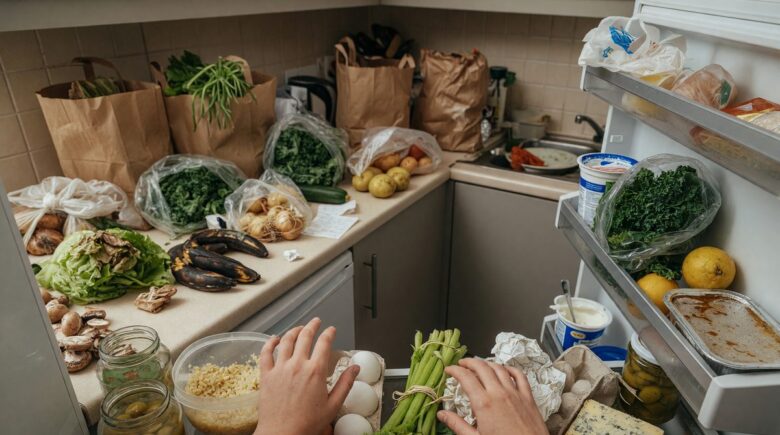
The single cheapest step most people skip is the one that takes less than a minute: scanning the fridge, freezer, and pantry before leaving the house. It sounds painfully obvious. Yet in practice, the habit dissolves when you’re rushing after work or running errands on a weekend. You grab what you think you need, not what you know you need.
The cost is threefold. First, you buy duplicates, another block of cheddar, another bag of frozen peas, that sit unused while the original spoils. Second, you miss the chance to build meals around what’s already paid for, pushing perfectly good ingredients toward the trash. Third, the pattern compounds with each trip: three trips in a week might mean three separate instances of buying an extra pack of chicken breasts because you couldn’t remember whether you still had any. At $6–$10 per duplicated protein, that’s an easy $20–$30 weekly leak.
Snap a quick photo of your fridge shelves and pantry before heading out. A 30-second visual inventory, you don’t need a list, is often enough to stop you from buying a third jar of pasta sauce you already own two of.
Food waste data makes the point hard. The 29% of the U.S. food supply that goes unsold or uneaten includes massive volumes of perfectly edible groceries that households simply forgot about. For a family spending $6,224 a year on food at home, that waste rate implies over $1,800 annually could be tied to mismanaged inventory. A pantry check doesn’t eliminate all of that, some spoilage is inevitable, but it directly attacks the portion caused by duplicate buying and neglect.
Avoiding the Duplicate Trap
How often does someone come home with a new bottle of ketchup only to discover two unopened ones in the pantry? This pattern accelerates when you’re trying to spend less but still shopping frequently. Each trip feels small, so the individual $3 mistake is invisible. Over a month, those “small” mistakes stack into a sum that could have covered half a utility bill.
Mistake #2: Shopping While Hungry or Under Stress
Walking into a grocery store on an empty stomach is a well-documented budget killer. Researchers have repeatedly found that hunger increases the appeal of high-calorie, immediately gratifying foods, and it expands the total volume of the cart. A review by Psychology Today points to studies where hungry shoppers added 20–50% more items than non-hungry shoppers, with junk food and prepared snacks making up a disproportionate share. Even if you only overspend $30 on a trip, repeating that twice a week adds $240 a month, without any nutritional win.
One widely cited study found that people who shopped hungry spent 64% more on high-calorie snacks than those who ate a small snack beforehand, according to an analysis published in JAMA Internal Medicine and summarized by The New York Times.
The trigger isn’t just physical hunger. Emotional stress, rushing after a long workday, dealing with kids in tow, feeling pressed for time, produces a similar effect. When you’re stressed, you’re less likely to comparison-shop or check unit prices. You grab the first thing that solves the immediate problem: a $9 family-sized frozen lasagna instead of a $4 box of pasta and a jar of sauce you already have. The per-serving premium is steep, and it often goes unnoticed because the decision happens on autopilot.
The Budget Hit from Emotional Choices
Even households with strict weekly grocery allowances find them shattered by a single hungry, stressed trip. A budget of $150 for the week can balloon to $200 when you toss in an extra rotisserie chicken, chips, cookies, and an “emergency” frozen pizza. No meal plan is required to avoid this: eat a handful of almonds or a banana before entering the store and you’ve already defanged the primary driver of overspending.
Mistake #3: Over-Reliance on Convenience Foods
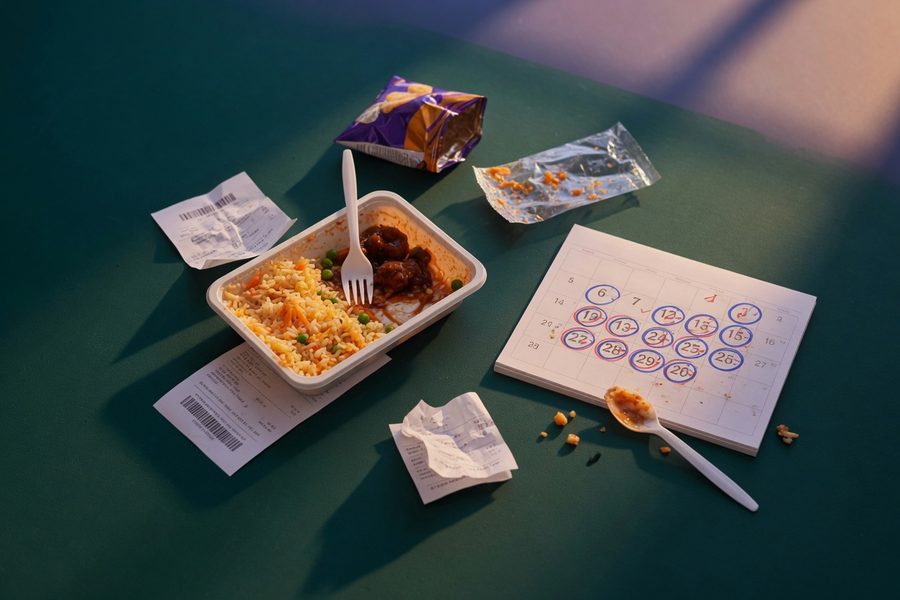
Packaged and prepared items promise speed, but they charge a quiet premium that grows worse the less you plan. A 10-ounce bag of pre-shredded cheddar routinely costs 30% more per pound than a block of the same cheese. Pre-chopped onions and pre-washed salad mixes can carry a 2–4x markup per serving over whole vegetables. When no inventory exists and no rough meal direction is in mind, these items feel like the only viable option for getting dinner on the table fast, but the math doesn’t favor the budget-conscious household.
| Item | Convenience Form (per serving) | Whole Form (per serving) |
|---|---|---|
| Cheddar cheese | $0.45 (pre-shredded) | $0.31 (block) |
| Carrots | $0.60 (baby carrots) | $0.19 (2-lb bag, peeled) |
| Chicken breast | $1.80 (pre-cooked strips) | $0.90 (raw, trimmed) |
| Rice | $0.55 (microwave pouch) | $0.12 (dry bag, cooked) |
Those numbers come from current grocery-chain pricing in June 2026 and don’t include the “last-minute” premium paid when convenience items are bought repeatedly throughout the week. The per-serving gap widens if you’re not even aware you still have raw chicken in the freezer and default to the ready-to-eat version. A household that leans heavily on convenience while avoiding any plan can easily overpay $100–$150 a month compared to a similar household that does just a bit of ingredient prep. For a deeper look at which whole foods hold up best in winter when budgets are tight, seasonal produce strategies make an immediate difference.
Convenience foods generally carry a 2–4x per-serving cost over whole staples, and that margin has widened over the last 18 months as prepared-food manufacturers passed on higher packaging and labor costs.
False Economy of Quick Options
Convenience foods also tend to have shorter fridge lives, lower satiety, and higher sodium, which can drive you to buy more snacks or another meal sooner. The short-term time savings evaporate if you’re back at the store a day later. None of this requires a formal meal plan to fix, simply defaulting to one whole-ingredient swap per dinner (using block cheese, raw chicken, a bag of potatoes instead of instant mash) chips away at the overspend.
Mistake #4: Ignoring Store Sales and Loyalty Discounts
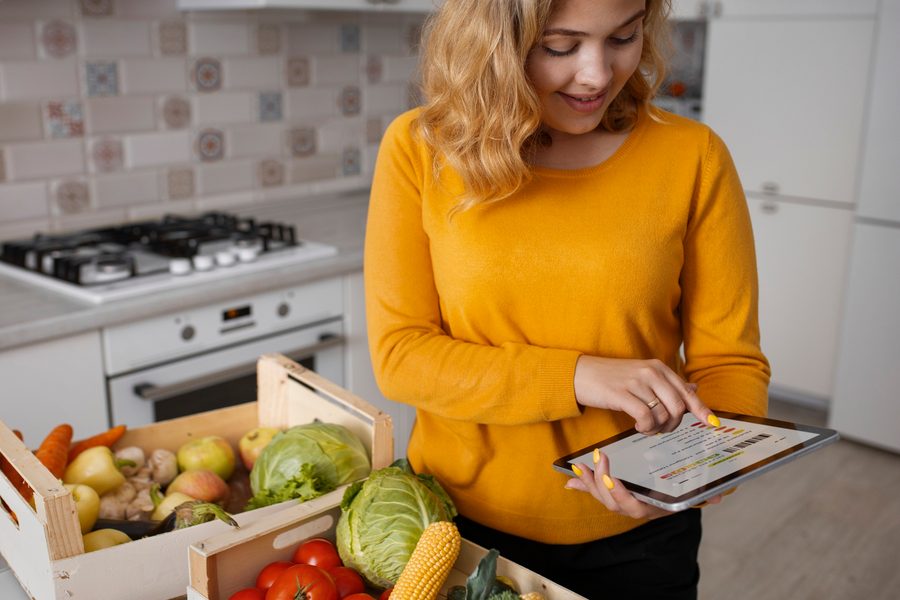
Supermarket loyalty programs and weekly sales flyers are not exclusively for couponers. In fact, walking past them because you “don’t plan” is a deliberate forfeit of 30–50% discounts on items you already buy. Store apps now clip digital coupons automatically with a single tap; you don’t need to cut paper or remember codes.
Even absent a meal plan, a flexible pantry stocked with sale-priced non-perishables, canned tomatoes, pasta, beans, frozen vegetables, functions as a buffer against future full-price purchases. Stacking digital coupons with weekly discounts can shrink a $200 grocery trip to $140. Buying only what you’ll use circles back to the inventory check: if you know you have four cans of black beans, you can skip them even when they’re “on sale” at a mediocre 10% off and wait for a true 40% clearance.
Spending two minutes in the store’s app before shopping to load available digital coupons can cut $20–$50 from a weekly bill, without any planning. The app does the work; you just scan your loyalty card at checkout.
| Staple Item | Regular Price | Sale + Loyalty Price |
|---|---|---|
| 28-oz can crushed tomatoes | $1.89 | $0.99 |
| 1 lb pasta | $1.49 | $0.79 |
| 15-oz can black beans | $1.09 | $0.69 |
| Frozen mixed vegetables (1 lb) | $2.29 | $1.25 |
Opportunistic Stockpiling Without a Plan
The distinction between smart stockpiling and hoarding is simply whether the food gets eaten. If you grab three boxes of pasta at $0.79 each instead of your usual $1.49, and you actually cook pasta twice a week, you’ve saved $5.60, not a fortune, but multiplied across a dozen staple items, the annual difference is meaningful. The mistake is assuming you can’t take advantage of sales unless you have a menu pinned to the fridge. You just need a rough mental note: “We eat pasta, so I’ll buy it when it’s cheap.”
Mistake #5: Buying Bulk Deals Without a Consumption Plan
Warehouse stores and “buy one, get one free” promotions create a powerful illusion of savings. But bulk value only materializes if the product is consumed. A three-pound tub of spinach may cost 40% less per ounce than a 5-ounce bag, and still end up costing more in total because two-thirds of it rots in the crisper before anyone uses it.
A giant package of chicken thighs marked down to $1.29 per pound seems like a steal, until you throw half away because you had no plan to freeze, marinate, and cook them before spoilage. That “deal” just became $2.58 per pound of actually eaten chicken.
The 29% food waste figure already mentioned includes substantial volumes from bulk purchases that households couldn’t finish. A family of four that tosses a $5 bag of spinach, $8 of chicken, and $4 of yogurt each week because of overbuying, all in the name of “saving”, wastes $68 a month. Over a year, that’s $816 that could have been redirected to an emergency fund or debt repayment. The pull of a big yellow sale sticker is emotional, not financial, unless you pair it with an honest assessment of what your household actually eats before the expiration date.
| Bulk Buy | Apparent Savings | Reality When 40% Spoils |
|---|---|---|
| 5-lb bag of apples | $3.99 ($0.80/lb) vs $1.29/lb individually | 2 lbs tossed = actual cost $1.33/lb |
| 3-lb club pack ground beef | $10.47 ($3.49/lb) vs $4.49/lb | 1 lb wasted = actual cost $5.24/lb for used portion |
The antidote, again, is not a full meal plan. It’s a quick check: “Will we realistically eat this much of this specific item in the next 5–7 days?” If the answer is no, skip the bulk tag and buy the smaller size. The unit price looks higher on the sticker, but your wallet registers the smaller total.
The Real Budget Impact Over Months
Individually, each of these mistakes seems minor. The real damage comes from their persistence. A household that overspends on groceries by just $150 a month because of unplanned shopping habits, hunger-driven impulse, and waste bleeds $1,800 annually. That’s money that could have paid down a credit card balance charging 25% APR, or funded six months of contributions to a high-yield savings account. For reference, the Federal Reserve’s data shows average credit card APRs exceeded 22% in early 2026; carrying an extra $1,800 in revolving debt at that rate costs over $390 in interest charges alone.
The USDA’s SNAP-Ed program identifies meal planning as one of the most effective tools for reducing food costs, and the underlying logic applies even to partial planning: any structure that prevents duplicate purchases and reduces waste captures most of the savings.
To put concrete numbers around it: the average food-at-home spend of $6,224 per year translates to $519 a month. A couple who avoids any system and routinely makes the five mistakes described often spends 20–30% above that benchmark, putting their monthly grocery tab at $623–$675. That’s an extra $104–$156 a month per consumer unit. Over 12 months, $1,872 is a meaningful sum. And that’s before accounting for the households earning less, where grocery costs consume a larger share of income; for them, every percentage point of waste hurts harder.
| Spending Pattern | Monthly Grocery Total | Annual Extra Cost |
|---|---|---|
| Baseline average (BLS 2024) | $519 | |
| With frequent unplanned mistakes (+25%) | $649 | $1,560 |
| After adopting simple no-plan tweaks | $519–$550 | Minimal over baseline |
The Link to Bigger Financial Goals
Food spending is often the last place people look for cuts because it feels necessary and non-negotiable. But a household that can free up $150 a month from groceries, without feeling deprived, gains cash to attack high-rate debt, build a small investment habit, or weather utility spikes. Tools like a debt-to-income (DTI) ratio check or a FICO Score review often reveal that recurring grocery overspend is quietly inflating a household’s monthly obligations. With core CPI (excluding food and energy) sitting at 336.121 in May 2026, according to the Federal Reserve Bank of St. Louis, inflationary pressure on other essentials makes every food dollar reclaimed that much more valuable.
Real-World Example: The Two-Trip Trap
Consider an illustrative example: Taylor and Morgan, a couple in their early 30s, earn a combined $72,000. They pride themselves on not “wasting time” meal planning. They hit the grocery store three times a week, after work, hungry, grabbing what looks good. They often buy convenience items like pre-marinated chicken and bagged salads, ignore loyalty discounts, and occasionally stock up on bulk snacks that get stale. Their monthly grocery spending averages $740. They feel like they’re careful but can’t figure out why the number stays high.
After a friend points out the patterns, they adopt a handful of tweaks without any formal plan: they snap a quick fridge photo before each trip, eat a granola bar on the way to the store, load digital coupons in two minutes, and commit to buying only one “convenience” item per shop. They consolidate to one weekly trip and a small midweek top-up if needed. Within three months, their average dropped to $570 a month, a $170 reduction. That’s $2,040 a year they’re now directing toward a high-yield savings account instead of the dumpster.
Simple No-Plan Tweaks That Still Move the Needle
Not everyone wants to map out seven dinners every Sunday, and the data doesn’t demand it. A few stripped-down habits, a twice-weekly inventory glance, a rule against shopping hungry, one minute in a store app, can pull a household back toward the $519–$550 monthly average without any recipe folders. Consistency matters more than complexity here.
Even something as basic as limiting grocery runs to a single “reset” trip each weekend, using a basket instead of a cart to constrain impulse volume, and tracking total weekly spend in a notes app can bring real order. When those tweaks aren’t enough, a light layer of planning, say, deciding on three dinner ideas and a handful of go-to lunches, can bridge the gap without a full-blown system. Some personal finance platforms like SoFi and budgeting apps linked to Chase or Experian accounts offer automatic spending-category breakdowns that make grocery creep visible within days of starting. The point isn’t to become a meal-prep influencer; it’s to stop the leaks.
Why 2025–2026 Inflation Makes These Mistakes More Expensive
Food-at-home prices didn’t cool off the way many expected after 2024’s spikes. While core inflation measures exclude food and energy, the same supply-chain and labor-cost pressures that pushed the core CPI to 336.121 have kept grocery prices elevated in specific categories. Proteins, dairy, and produce have all seen year-over-year increases. In this environment, any wasteful habit is a heavier drag.
Even a 3–5% sustained increase in staple prices can turn a $6,224 annual food-at-home budget into $6,535, an extra $311 a year before any behavioral changes. Add the mistakes discussed here, and a household can easily overshoot by $2,000 or more.
Inflation also magnifies the penalty for ignoring sales. When a box of cereal that cost $3.50 two years ago now sits at $4.29, that 30% off sale price brings it back to roughly the old normal. Passing on the discount because you didn’t check the app doesn’t just mean missing a deal, it means paying an inflated base price that already incorporates the higher input costs. No-plan shopping during an inflationary stretch forces you to absorb every penny of that increase. The Consumer Financial Protection Bureau (CFPB) has noted in its household financial health research that food and housing together remain the two categories most likely to tip a budget into deficit when prices rise simultaneously.
The Single-Person Household Squeeze
One overlooked angle: irregular-schedule or single-person households feel the pinch of no-plan mistakes more acutely because they can’t spread waste across multiple eaters. A single person buying a bulk pack of chicken to “save” often loses the entire savings to spoilage, and inflation has made that protein more expensive per pound, raising the cost of the mistake. The same $10 loss in 2023 might now be a $13.50 loss, because the base price climbed 35%. The arithmetic is unforgiving.
| Year | Chicken Breast (per lb, avg) | Cost of Wasting 2 lbs |
|---|---|---|
| 2023 | $3.10 | $6.20 |
| 2026 | $4.20 | $8.40 |
The Credit Card Interest Trap: When Overspending Compounds
Many U.S. households pay for groceries with a credit card and carry a balance month to month. If you overspend on food by $150 a month due to the mistakes described, and you revolve that debt at a 25% APR, the true cost balloons. Over one year, $150 in monthly overspend carried on the card costs roughly $1,995: the $1,800 in extra groceries plus about $195 in accumulated interest charges. A “small” habit becomes a serious liability fast.
Paying for groceries with a card carrying a balance effectively adds a 20–30% surcharge to every item. That $6 bag of shredded cheese actually costs $7.50 by the time you’re done paying interest on it, a 25% premium on top of the convenience markup.
For households already managing tight margins, the interplay between food overspending and credit card interest is a budget breaker. Every dollar of grocery leakage not only leaves you with less food to show for it, it also grows into a larger debt that competes with rent, utilities, and other essentials. Negotiating a lower APR can certainly help, but the root fix is plugging the grocery hole first. The Federal Reserve’s data shows that the average credit card APR exceeded 22% in early 2026; on a $2,000 balance, that’s over $440 a year in interest. Cutting the grocery overspend is effectively a tax-free return of 25%.
Issuers like Chase, Citi, and Capital One all offer grocery-category rewards cards that can return 3–6% on supermarket purchases, but those rewards evaporate the moment you carry a balance and start paying APR. Credit reporting agencies like Experian track revolving utilization closely; consistently carrying high grocery-driven balances can nudge your FICO Score downward, which then raises the cost of borrowing elsewhere. The convenience-foods mistake and the credit card trap often travel together: households stressed about dinner reach for expensive prefab meals, swipe the card, and carry the balance. Breaking that chain doesn’t require a meal plan. It requires recognizing that a $9 frozen pizza isn’t $9 if it sits on a card at 25% APR for six months. It’s closer to $10.13, and it doesn’t fill you up much.
Your Action Plan
-
Do a 30-second inventory before every trip
Open the fridge, freezer, and pantry; snap a photo or make a mental note of what you already have. This alone prevents duplicate buys and keeps fresh food from getting lost behind older items. It’s the single highest-return habit that requires zero planning.
-
Never enter a grocery store hungry
Eat a small protein-rich snack, a handful of almonds, a hard-boiled egg, a cheese stick, right before you walk in. This cuts impulsive snack purchases by as much as half and keeps your cart aligned with what you actually need.
-
Commit to one weekly “reset” trip and a small top-up if needed
Consolidate the bulk of your shopping into a single Saturday or Sunday run. If you run out of milk midweek, allow a quick, basket-only trip, no cart, no wandering. Fewer store visits equals fewer impulse chances.
-
Spend two minutes loading digital coupons before each main trip
Open your grocery store’s app and clip every coupon for items you might buy, not just what’s on a list. The app remembers them at checkout. Even without a plan, you’ll automatically save 20–40% on many staple items that go on sale that week.
-
Default to one whole-ingredient swap per meal
For each dinner, pick one ingredient to buy in its whole form instead of prepped: block cheese, raw chicken breasts, whole carrots, dry rice. The cumulative per-serving savings add $40–$60 a month for a typical household without any extra cooking time.
-
Buy bulk only when you can name the consumption plan
If a “family size” pack of ground turkey is half off, but you can’t say exactly how it’ll be used by Thursday, skip it. The savings evaporate the moment half of it spoils. Trust unit prices only when you’re confident the food will be eaten.
-
Track weekly grocery spending in a simple notes app
Just logging the dollar amount of each trip, no categories, no itemizing, builds awareness. After three weeks, you’ll see the total and naturally start competing to bring it down. A couple who went from $740 to $570 in the case study above did exactly this.
Frequently Asked Questions
Do I need to meal plan to save money on food?
No, but a very light form of structure, like knowing you have ingredients for three dinners, does most of the heavy lifting. The five mistakes listed here can all be corrected without a written plan; however, the savings ceiling is higher if you add a 10-minute, rough outline each week. The USDA’s SNAP-Ed program notes that planning meals is one of the best ways to save money, but even an informal “what do I already have?” scan counts as planning.
What if I hate cooking and rely on prepared foods?
You can still avoid overpaying for convenience by choosing a middle ground. Opt for “speed-scratch” items like frozen vegetables, pre-cooked but unseasoned grains, and rotisserie chicken, which carry a smaller markup than fully assembled meals. Pair them with one or two whole-ingredient swaps and you’ll chip away at the premium without spending extra time on meal prep.
How much can I realistically save without a meal plan?
A household that currently overspends by 20–30% due to the five common mistakes can typically recover $100–$200 a month just by doing inventory checks, avoiding hungry shopping, using store apps, and reducing convenience buys. The case study in this article dropped $170 a month with zero planning.
Is it okay to buy convenience foods sometimes?
Absolutely. The issue isn’t an occasional shortcut, it’s when those items become the default for most meals. A bag of pre-shredded cheese once a week won’t wreck a budget; using it every day, plus pre-cooked chicken and microwave rice, adds a consistent $100+ premium every month. Treat convenience as a tool, not the entire kitchen.
What’s the biggest spending less on food mistakes people make?
The most expensive single error is shopping without first scanning what you already own at home. It drives duplicates, spoilage, and missed opportunities to use paid-for food. That one habit alone accounts for a substantial slice of the $1,600 in annual food waste a typical family experiences.
Does shopping at discount stores like Aldi or Lidl make these mistakes less costly?
Discount retailers lower the baseline prices, so the same mistakes do less dollar damage. However, the percentage overspend remains similar: buying duplicates or too much bulk at Aldi still generates waste. The inventory-check habit amplifies the benefit of shopping at a discount store, because you’re already operating from a lower price point.
Should I use cash instead of credit cards for groceries?
If you carry a credit card balance, yes, using cash or a debit card can break the cycle of paying interest on food. But if you pay the full balance each month, a rewards credit card can earn 2–6% back on grocery purchases, making it financially wiser. Knowing which camp you’re in makes all the difference.
How do I stop impulse buying at the checkout line?
Two tricks work without a plan: first, shop with a basket instead of a cart if you’re buying only a few items, you’re physically limited. Second, place your phone in your hand while approaching the checkout and focus on the store’s app coupons instead of the candy rack. The mental nudge of looking at savings rather than temptations is surprisingly effective.
Do grocery store apps really save money without meal planning?
Yes. Digital coupons load automatically to your loyalty card and typically slash 20–50% off selected items each week. You don’t need a plan to benefit, you just need to browse the app for two minutes before shopping and clip anything you recognize. Over a month, a person who never plans meals can still save $30–$80 via these apps alone.
Sources
- USDA Economic Research Service, Total U.S. food expenditures reached $2.51 trillion in 2025
- USDA Economic Research Service, Food-away-from-home spending accounted for 56.3% of total food expenditures in 2025
- U.S. Bureau of Labor Statistics, Average annual expenditures on food at home: $6,224 in 2024
- ReFED, 29% of the U.S. food supply went unsold or uneaten in 2024
- SNAP-Ed, USDA, Meal planning, shopping, and budgeting resources
- Nutrition.gov, USDA, Food shopping and meal planning guidance
- U.S. Environmental Protection Agency, Preventing wasted food at home
- Federal Reserve Bank of St. Louis, Core CPI (excluding food and energy), 336.121 index, May 2026
- USDA Economic Research Service, Food Dollar Series, illustrating components of consumer food expenditures
{“@context”:”https://schema.org”,”@graph”:[{“@type”:”Organization”,”@id”:”https://myfinancial101.com/#organization”,”name”:”MyFinancial101″,”url”:”https://myfinancial101.com”},{“@type”:”Person”,”@id”:”https://myfinancial101.com/#person-derek-solis”,”name”:”Derek Solis”,”description”:”Derek Solis is a personal finance journalist and investment enthusiast who has spent the last decade covering economic trends, market movements, and smart spending habits for digital media outlets. He holds a degree in Economics from the University of Texas and specializes in making macroeconomic news relevant to everyday consumers. Derek is known for his sharp analysis and accessible writing styl”,”knowsAbout”:[“Personal Finance”]},{“@type”:”Article”,”headline”:”5 Mistakes People Make When Trying to Spend Less on Food Without Meal Planning”,”datePublished”:”2026-06-30″,”dateModified”:”2026-06-30″,”publisher”:{“@id”:”https://myfinancial101.com/#organization”},”mainEntityOfPage”:{“@type”:”WebPage”,”@id”:”https://myfinancial101.com/spending-less-on-food-mistakes”},”inLanguage”:”en”,”author”:{“@id”:”https://myfinancial101.com/#person-derek-solis”}},{“@type”:”FAQPage”,”mainEntity”:[{“@type”:”Question”,”name”:”Do I need to meal plan to save money on food?”,”acceptedAnswer”:{“@type”:”Answer”,”text”:”No, but a very light form of structure, like knowing you have ingredients for three dinners, does most of the heavy lifting. The five mistakes listed here can all be corrected without a written plan; however, the savings ceiling is higher if you add a 10-minute, rough outline each week. The USDA’s SNAP-Ed program notes that planning meals is one of the best ways to save money, but even an informal “what do I already have?” scan counts as planning.”}},{“@type”:”Question”,”name”:”What if I hate cooking and rely on prepared foods?”,”acceptedAnswer”:{“@type”:”Answer”,”text”:”You can still avoid overpaying for convenience by choosing a middle ground. Opt for “speed-scratch” items like frozen vegetables, pre-cooked but unseasoned grains, and rotisserie chicken, which carry a smaller markup than fully assembled meals. Pair them with one or two whole-ingredient swaps and you’ll chip away at the premium without spending extra time on meal prep.”}},{“@type”:”Question”,”name”:”How much can I realistically save without a meal plan?”,”acceptedAnswer”:{“@type”:”Answer”,”text”:”A household that currently overspends by 20–30% due to the five common mistakes can typically recover $100–$200 a month just by doing inventory checks, avoiding hungry shopping, using store apps, and reducing convenience buys. The case study in this article dropped $170 a month with zero planning.”}},{“@type”:”Question”,”name”:”Is it okay to buy convenience foods sometimes?”,”acceptedAnswer”:{“@type”:”Answer”,”text”:”Absolutely. The issue isn’t an occasional shortcut, it’s when those items become the default for most meals. A bag of pre-shredded cheese once a week won’t wreck a budget; using it every day, plus pre-cooked chicken and microwave rice, adds a consistent $100+ premium every month. Treat convenience as a tool, not the entire kitchen.”}},{“@type”:”Question”,”name”:”What’s the biggest spending less on food mistakes people make?”,”acceptedAnswer”:{“@type”:”Answer”,”text”:”The most expensive single error is shopping without first scanning what you already own at home. It drives duplicates, spoilage, and missed opportunities to use paid-for food. That one habit alone accounts for a substantial slice of the $1,600 in annual food waste a typical family experiences.”}},{“@type”:”Question”,”name”:”Does shopping at discount stores like Aldi or Lidl make these mistakes less costly?”,”acceptedAnswer”:{“@type”:”Answer”,”text”:”Discount retailers lower the baseline prices, so the same mistakes do less dollar damage. However, the percentage overspend remains similar: buying duplicates or too much bulk at Aldi still generates waste. The inventory-check habit amplifies the benefit of shopping at a discount store, because you’re already operating from a lower price point.”}},{“@type”:”Question”,”name”:”Should I use cash instead of credit cards for groceries?”,”acceptedAnswer”:{“@type”:”Answer”,”text”:”If you carry a credit card balance, yes, using cash or a debit card can break the cycle of paying interest on food. But if you pay the full balance each month, a rewards credit card can earn 2–6% back on grocery purchases, making it financially wiser. Knowing which camp you’re in makes all the difference.”}},{“@type”:”Question”,”name”:”How do I stop impulse buying at the checkout line?”,”acceptedAnswer”:{“@type”:”Answer”,”text”:”Two tricks work without a plan: first, shop with a basket instead of a cart if you’re buying only a few items, you’re physically limited. Second, place your phone in your hand while approaching the checkout and focus on the store’s app coupons instead of the candy rack. The mental nudge of looking at savings rather than temptations is surprisingly effective.”}},{“@type”:”Question”,”name”:”Do grocery store apps really save money without meal planning?”,”acceptedAnswer”:{“@type”:”Answer”,”text”:”Yes. Digital coupons load automatically to your loyalty card and typically slash 20–50% off selected items each week. You don’t need a plan to benefit, you just need to browse the app for two minutes before shopping and clip anything you recognize. Over a month, a person who never plans meals can still save $30–$80 via these apps alone.”}}]}]}