
Fact-checked by the MyFinancial101 editorial team
The Verdict
Addressing spending triggers in your budget is worth the effort if you consistently end the month with less money than your budget predicts. The single biggest threshold: if unplanned purchases account for more than $150 per month, trigger awareness alone can close that gap. It is less urgent if your budget and actual spending already align within $50 most months.
Your budget can be technically correct and still fall short every month. The reason is usually not a major expense you forgot to include; it is a cluster of small, repeated spending triggers that never appear as line items because each one feels justified in the moment. Understanding your spending triggers budget gap means identifying the specific cues, digital, emotional, social, and environmental, that prompt purchases you did not consciously plan. The Consumer Financial Protection Bureau (CFPB) has noted that spending feedback tools help consumers curb impulse spending, manage spending on special occasions, and reduce overall spending to achieve financial goals. Awareness, is the precondition for control.
This matters now because digital commerce has made acting on a trigger nearly frictionless. One-click checkout, push notifications timed to payday, and loyalty apps designed to manufacture urgency have all compressed the gap between impulse and purchase. Closing that gap requires knowing exactly which triggers are working on you.
| Factor | Reasons to Address Spending Triggers | Reasons to Skip the Work |
|---|---|---|
| Budget accuracy | Closes the gap between planned and actual spending | Less necessary if your budget already matches reality within $50/month |
| Monthly savings potential | Reducing just 3 triggers can free $100–$200/month for debt or savings | Low ROI if discretionary spending is already minimal |
| Subscription creep | Auditing trial-based triggers often reveals $30–$80/month in forgotten recurring charges | Not worth the effort if you already review statements monthly |
| Emotional spending patterns | Naming the trigger breaks the automatic response loop | Requires honest self-tracking; uncomfortable for some |
| Digital environment | Simple phone settings can remove the trigger entirely (push notifications off) | Minimal benefit if you rarely shop on mobile |
| Long-term habit change | Even partial awareness reduces frequency of trigger-driven purchases over 60 days | Results are gradual, not immediate; requires patience |
Key Takeaways
- Addressing spending triggers is the right move if you consistently overspend your monthly budget by $100 or more without a clear explanation.
- You have at least 3 active subscriptions or app-based accounts you have not reviewed in the past 90 days, each is a potential trigger point.
- You recognize at least one emotional state (stress, boredom, or social pressure) that reliably precedes an unplanned purchase.
- You shop on mobile devices using retailers that offer one-click or saved-payment checkout, compressing the decision window to under 10 seconds.
- You receive push notifications from at least two retail, food delivery, or loyalty apps, each of which can generate 1–2 unplanned purchases per week.
- You have experienced at least one “just this once” subscription trial in the past 6 months that converted to a paid plan you did not immediately cancel.
- You are willing to track spending at the category level for at least 30 days to identify which triggers have the highest dollar impact for your specific habits.
Why Subtle Triggers Drain More Than Obvious Impulse Buys
Obvious impulse buys are easy to spot after the fact and easier to feel guilty about, which means they tend to self-correct. Subtle triggers are different because they feel rational at the time. A push notification offering 20% off on a brand you already trust does not feel like impulse spending; it feels like smart shopping. That rationalization is exactly what makes these triggers budget-wrecking.
The mechanics are straightforward: a cue appears (notification, social post, loyalty point balance, mild boredom), it links to a reward pathway in the brain, and a purchase follows before any budget consideration enters the picture. Repeated dozens of times a month across different contexts, the dollar amounts compound. A $12 food delivery add-on three times a week is $144 a month. A $6 coffee triggered by a mid-afternoon energy slump five days a week is $120 a month. Neither shows up as a budget category called “triggers,” so neither gets reviewed or cut. This is precisely the mechanism the CFPB addresses when it states that consumers who know they are prone to impulse spending benefit most from a concrete plan that limits that spending while building and maintaining a budget.
The gap between “budget on paper” and “money actually left” is almost always trigger-driven, not math-driven.
The 7 Subtle Triggers That Hit Your Budget Hardest
Not all triggers are created equal. These seven are the ones most likely to produce real dollar damage without registering as a problem until month-end.
1. Push notification timing. Retailers like Amazon, DoorDash, and Target send notifications calibrated to moments of low resistance: commute times, late evenings, and the day or two after payday. The notification itself is the trigger, not any genuine need. Walmart and Best Buy use similar timing strategies in their apps, often pairing the alert with a countdown timer to heighten perceived urgency.
2. Loyalty program nudges. Points balances displayed prominently, “your points expire soon” alerts, and “only 50 points to your next reward” messages are engineered to manufacture urgency. Spending $40 to “earn” a $5 reward is not a deal; it is a trigger with a reward wrapper. Chase Ultimate Rewards and American Express Membership Rewards both use threshold messaging that encourages cardholders to spend just enough to hit the next redemption tier, which is a structural trigger built directly into a financial product.
3. The “treat yourself” routine. This one is harder to see because it is social and self-affirming. If stress, a difficult meeting, or a long commute reliably leads to a coffee shop stop or an online cart, that is a budget trigger running on emotional autopilot. Parents managing caregiving stress are particularly exposed to this pattern because the purchase genuinely provides relief in the moment, making it harder to identify as discretionary spending rather than need.
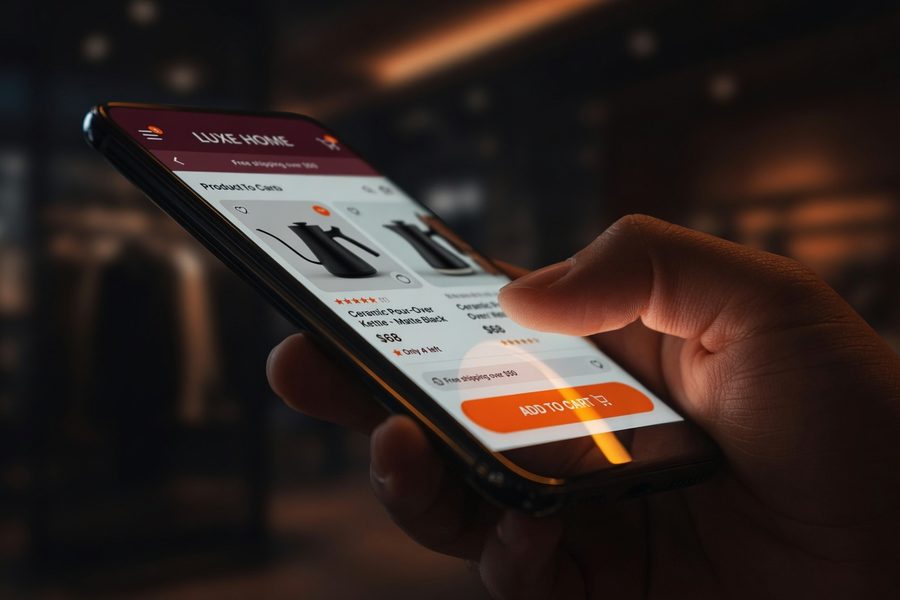
4. Endless scroll and one-click checkout. The combination of algorithmic product feeds on Instagram, TikTok Shop, and Pinterest with saved payment credentials is the defining post-pandemic spending trigger. The scroll generates desire; the one-click removes every friction point that might allow a pause. Apple Pay and Google Pay have made this even faster by storing credentials at the operating system level, meaning a purchase can clear before the rational part of your brain has registered what happened.
5. Free trial conversions. A trial started with genuine intent and forgotten is a subscription trigger on a timer. Most people do not remember the exact billing date, which means the charge arrives as a surprise. Multiplied across two or three forgotten trials, this adds up to a real monthly drain that never appears in a planned budget. Services like SoFi’s money management tools and Experian’s subscription tracker can surface these charges, but only if you connect them to a live account and review them.
6. Smart home and voice assistant suggestions. Devices like Amazon Echo prompt reorders when supplies run low, and those suggestions arrive at the exact moment of need, the highest-urgency point in any purchase decision. The convenience is real, but the trigger bypasses comparison shopping and price review entirely. Google Nest devices are increasingly integrated with retail partners in similar ways.
7. Social calendar spending pressure. Group dinners, birthday gifts, and holiday spending are predictable, yet most budgets treat them as irregular surprises. The trigger here is social expectation, and it compounds because it is recurring and hard to say no to without social cost. If you want to see what controlled social spending actually looks like in practice, the strategies in this guide to saving on Valentine’s Day without killing the romance apply directly to any social obligation spending.
The Hidden Cost of “Just This Once” on Subscriptions and Micro-Purchases
Forgotten trials and small recurring fees share one dangerous trait: they hide in plain sight on your bank statement. A $9.99 streaming trial that converted, a $4.99 cloud storage plan you meant to downgrade, and a $14.99 app subscription from a wellness phase three months ago add up to roughly $30 a month before you have bought a single intentional item.
The problem compounds because micro-purchases also evade mental accounting. Research consistently shows that people track large purchases carefully and track small ones poorly. A $3.99 in-app purchase feels qualitatively different from a $40 purchase even when the cumulative monthly total is identical. This is not a character flaw; it is how human accounting works. The practical response is to audit your bank and credit card statements at the category level, not just the transaction level. Look for any charge under $15 that recurs monthly. If you cannot immediately name what it is for and confirm you still use it, cancel it.
There is a secondary risk worth naming directly: trigger-driven micro-purchases charged to a high-APR credit card are more expensive than they appear. A $9.99 recurring charge on a card carrying a 24% APR that you only partially pay down each month costs meaningfully more over a year than the face value suggests. The Federal Reserve’s data on household finances consistently shows revolving credit card balances concentrated in the lower and middle income brackets, the same households most exposed to trigger-driven spending patterns. If credit card debt has started accumulating around these purchases, it is also worth reviewing how to prioritize and negotiate with creditors before the balance grows further.
How to Spot Your Personal Triggers Before They Strike
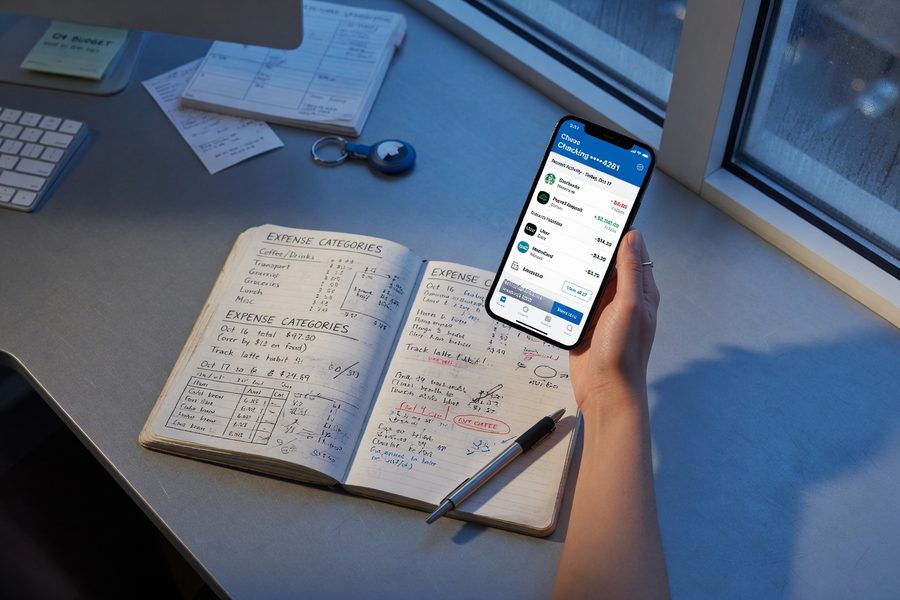
A 7-day spending journal is the fastest diagnostic tool available, and you do not need a separate app to run it. Use your existing bank app’s transaction history and add a single column: what were you doing or feeling when you spent this money? After seven days, patterns become obvious. Three purchases from the same food delivery app all made between 8 p.m. and 10 p.m. on weeknights is a boredom trigger, not a food preference.
The CFPB’s consumer insights research on managing spending found that consumers reported spending feedback tools were likely to help them curb impulse spending and make budgeting easier. The operative word is feedback. You need data about your own behavior, not general advice about triggers that affect other people. Your triggers are specific. A generic list of emotional spending patterns cannot tell you that your particular vulnerability is Monday afternoon stress shopping, but your own transaction history can.
For a more structured approach, try a personal A/B test: disable push notifications from your top two retail apps for 14 days and compare your spending in those categories against the prior 14 days. This kind of controlled experiment is something almost no personal finance article suggests, but it is the most direct evidence you can gather about whether notifications are actually driving purchases for you specifically. Some people will find the impact is minimal; others will see a measurable drop.
One honest caveat: trigger awareness is a maintenance tool, not a financial rescue. If your FICO Score is falling because of revolving debt tied to trigger spending, or if your debt-to-income ratio (DTI) has risen above 40%, behavioral fixes alone will not stabilize your position fast enough. In those cases, the trigger work runs in parallel with more urgent interventions like balance transfers, debt consolidation through a lender like SoFi, or a review of your credit report through Experian or the FDIC-recommended annualcreditreport.com.
Consumers who know they are prone to impulse spending benefit most from a concrete plan that limits that spending while building and maintaining a budget.
Who Should and Who Should Not
Good candidates
Trigger awareness pays off most for people whose spending behavior is shaped by environment and habit rather than fixed expenses.
- Anyone who ends the month $100–$300 short of their budget target with no single obvious culprit, the money is bleeding out through micro-decisions.
- Heavy mobile shoppers who have saved payment credentials on two or more retail platforms and shop directly from social media feeds. Apple Pay and Google Pay users in particular should check how many merchants have their credentials stored.
- People managing credit card balances: if trigger spending is being charged and only partially paid each month, the real cost of each trigger is the purchase price plus the card’s APR. If that describes you, the resource on how credit card debt crushes household budgets puts the stakes in concrete terms.
- Anyone with three or more active subscription services they have not reviewed in the past 90 days. Experian’s free subscription monitoring feature is a useful starting point for this audit.
- Parents and caregivers who use “treat yourself” spending as stress relief, a completely understandable pattern, but one that needs a budget category and a ceiling rather than running unchecked.
Who should skip it
This approach is lower priority for people whose budget issues stem from income, not discretionary behavior.
- Households where income genuinely does not cover fixed expenses. Trigger awareness does not solve a structural shortfall; addressing income is the first priority. Resources like these $19+ hourly jobs hiring now are more immediately useful in that situation.
- People whose discretionary spending is already tracked weekly and consistently within $50 of their budget target.
- Anyone currently in a financial crisis requiring immediate debt restructuring. Trigger work is a maintenance tool, not an emergency intervention. The FDIC and the CFPB both maintain directories of nonprofit credit counseling agencies for households that need structured relief first.
Related reading: hidden money management mistakes hurt.
Frequently Asked Questions
Why does my budget look fine on paper but still run short every month?
The gap is almost always trigger-driven spending that never got its own budget category. Small, repeated purchases, food delivery, app charges, loyalty-prompted buys, accumulate outside the line items you consciously planned, which is why the math looks correct but the money disappears anyway. A 7-day spending journal aligned with your bank transaction history will usually surface the specific patterns within a week.
How do I know if boredom or stress is actually driving my Amazon cart?
Check the timestamp on your purchases against your daily routine. If most unplanned orders happen during commutes, late evenings, or the day after a stressful work event, the correlation is your answer. The trigger is not Amazon; it is the emotional state that makes reaching for the app feel automatic.
What is the 24-hour rule and does it actually work for digital purchases?
The 24-hour rule means adding an item to a wishlist or cart and waiting a full day before completing the purchase. It works reliably for non-urgent purchases because most trigger-driven desire peaks fast and fades just as fast. For very low-cost items under $10, a shorter pause is often enough; the goal is to insert any gap between cue and click.
How much can identifying spending triggers realistically save each month?
Results vary too much to give a universal figure, which is why any article claiming a specific average should be treated skeptically. What the evidence does support is that addressing three to four active triggers, particularly push notifications, forgotten subscriptions, and loyalty-prompted purchases, tends to free up a meaningful amount that compounds quickly when redirected to savings or debt. Your personal A/B test data is more reliable than any population average.
Are spending triggers the same for everyone, or do they differ by situation?
They differ significantly by life stage, income level, and digital habits. Parents face stronger social and stress-based triggers than single adults. Hourly workers are more exposed to payday-timed retailer notifications than salaried employees with predictable cash flow. The seven triggers listed here are the most widely shared, but ranking which ones hit hardest for you requires reviewing your own transaction data, not a generic list.
Sources
- Consumer Financial Protection Bureau, Managing Your Spending to Achieve Your Goals
- Consumer Financial Protection Bureau, Budgeting: How to Create a Budget and Stick With It
- Consumer Financial Protection Bureau, Consumer Insights: Managing Spending
- Federal Reserve, Economic Well-Being of U.S. Households: Expenses and Unexpected Bills
- U.S. Bureau of Labor Statistics, Consumer Expenditure Surveys