Reviewed by the MyFinancial101 Editorial Team
Our Take
For teachers who expect their pension to cover 50–70% of pre-retirement income, building a supplemental income stream is not optional, it is the difference between a comfortable retirement and a financially constrained one. The clearest path is maximizing a 403(b) or 457(b) first, then layering earned income from tutoring, consulting, or rental income into taxable or Roth accounts. This holds for educators who have 10+ years until retirement. The case against it: teachers within 3–5 years of retirement who carry high-interest debt should eliminate that drag before chasing yield on supplemental accounts.
Public school teachers earned a national average salary of $74,495 during the 2024–25 school year, according to the National Education Association’s 2026 compensation report, a figure that sounds livable until you calculate what 60% of it looks like in retirement. That is the quiet math problem most educators never run until it is almost too late to fix. Building a pension supplemental retirement income strategy mid-career is where the real financial leverage lives for teachers.
This article is for K–12 public school educators who have a defined-benefit pension but suspect it will not be enough, and are ready to do something specific about it. What makes the recommendation work is consistency and sequencing; what breaks it is ignoring plan fees and underestimating longevity risk.
Key Takeaways
- Teacher pensions commonly replace 50–70% of pre-retirement income after a full career, short of the 70–80% lifestyle target most financial planners recommend, creating a gap that supplemental savings must fill.
- U.S. state and local pension plans were funded at just 82.5% as of December 31, 2025, according to the Equable Institute’s 2025 analysis, meaning concentration risk in a single pension is real and measurable.
- The 2026 elective deferral limit for 403(b) plans is $24,500 per year, with an additional catch-up contribution available for those 50 and older, per 403bWise’s IRS limit guidance, enabling $30,000+ in annual tax-advantaged savings for mid-career educators.
- Many public school 403(b) plans lack ERISA protections, and documented average fees in these plans run 1–2%+ annually, a drag that can cost a teacher tens of thousands of dollars over a 20-year accumulation period compared to a low-cost IRA alternative.
- In my experience reviewing reader questions about educator finances, teachers who start a side income stream by age 45 and direct it consistently into investments almost always arrive at retirement with a meaningful second income source, those who wait until 55 rarely do.
What Your Teacher Pension Actually Covers
Most teacher pensions replace between 50% and 70% of final salary after a full career, not 80%, and rarely enough to cover the full cost of retirement without a supplement. State defined-benefit formulas typically multiply years of service by a benefit multiplier (often 1.5%–2.5%) and apply it to a final average salary calculated over the last 3–5 years. A teacher with 30 years of service under a 2% multiplier and a $74,000 final average salary would receive roughly $44,400 per year in pension income, calculated as: 30 years × 2% × $74,000. That is 60% of pre-retirement income, before taxes and healthcare costs.
The Variables That Can Erode That Number
Early retirement penalties, limited cost-of-living adjustments, and state-specific Social Security exclusions are the most common culprits. Roughly 40% of public school teachers are not covered by Social Security, according to NEA benefit data, which means there is no federal safety net to catch the gap. Teachers in Texas, California, and Ohio, among others, fall into this category. A pension without Social Security and without a cost-of-living clause is a fixed, shrinking income in real terms over a 25-year retirement.
What I see in practice: Readers in non-Social Security states consistently underestimate how large the income gap becomes after age 75. The pension feels generous at 65. By 78, after a decade of inflation and rising healthcare costs, it often feels precarious. That is the number that should drive urgency around pension supplemental retirement income.
Why the Pension Gap Is Bigger Than It Looks on Paper
The funded ratio problem is real, and teachers deserve a straight answer about it. U.S. state and local pension plans carried a funded ratio of 82.5% as of December 31, 2025, per the Equable Institute’s most recent state pension tracking data. A ratio below 100% means the plan holds less in assets than it owes in future obligations. That does not mean benefits will be cut tomorrow, but it does mean relying on a single pension as your only retirement income is a concentration risk that smart planning should hedge against.
Beyond underfunding, three forces erode pension purchasing power over time: healthcare inflation running above the general Consumer Price Index, longevity risk (teachers who retire at 60 may spend 30+ years in retirement), and the absence or inadequacy of COLA provisions. Many state pensions offer partial COLA adjustments, 1% to 2% annually, while general inflation has run hotter in recent years. The gap compounds silently.
State-Level Risk Is Not Uniform
Some state systems are well-funded; others are structurally strained. Illinois and New Jersey have faced chronic underfunding for years, while Wisconsin and South Dakota consistently post near-full funding. Knowing your own state plan’s funded ratio is the first step. The Teachers’ Retirement System of Georgia explicitly advises members to “consider allocating money toward a defined contribution plan [403(b), 401(k), 457] or an IRA, especially if you are not contributing to Social Security, to supplement your TRS pension.” That language from a state retirement system is telling, even the plan administrators know the pension alone is not the whole answer.

Build the Foundation With Tax-Advantaged Accounts First
Before side hustles and rental income, max the accounts the tax code already gives you. Teachers have access to both 403(b) and 457(b) plans, and that combination is genuinely powerful because 457(b) contributions are not subject to the same early-withdrawal penalty as 403(b) distributions, which matters if you retire before age 59½.
403(b) vs. 457(b): The Sequencing Decision
The 2026 elective deferral limit is $24,500 per year for each plan, per 403bWise’s IRS contribution limit guidance. A teacher who contributes to both can shelter up to $49,000 annually, or more with catch-up provisions for those 50 and older. In practice, most teachers cannot hit that ceiling, but the sequencing still matters: contribute to whichever plan has lower fees first.
Here is the fee problem. Many district-sponsored 403(b) plans carry expense ratios of 1–2% or higher because they are often sold through insurance-based annuity products without ERISA’s fee disclosure requirements. An IRA at Fidelity, Vanguard, or Schwab typically holds index funds with expense ratios under 0.10%. On a $200,000 balance, a 1.5% fee difference costs $3,000 per year, that is money compounding against you, not for you. If you are new to choosing investments inside these accounts, this guide to starting with zero experience can help you understand what to look for before you pick a fund.
The Texas Retirement System notes that “participating in a 403(b) plan gives you a valuable opportunity to supplement your TRS pension with tax-advantaged savings”, but TRS does not vet the vendors, which is where educators need to do their own due diligence. Similarly, CalSTRS Pension2 offers “low cost, flexible 403(b), Roth 403(b) and 457(b) plans” specifically designed to address the fee problem for California teachers.
Where this gets tricky: I have seen teachers faithfully contribute to a 403(b) for 15 years, only to discover at retirement that their plan held a variable annuity charging 2.1% annually. They built the habit right; the product was wrong. Always check the expense ratio before you contribute, not after.
| Account Type | 2026 Contribution Limit | Early Withdrawal Penalty | Typical Fee Range |
|---|---|---|---|
| 403(b) | $24,500 ($31,000 if 50+) | 10% before age 59½ | 0.05%–2.5% |
| 457(b) | $24,500 ($31,000 if 50+) | No 10% penalty on separation | 0.05%–1.5% |
| Roth IRA | $7,000 ($8,000 if 50+) | Contributions can be withdrawn tax-free anytime | 0.03%–0.10% (index funds) |
| Traditional IRA | $7,000 ($8,000 if 50+) | 10% before age 59½ | 0.03%–0.10% (index funds) |
The Second Income Stream That Actually Moves the Needle
Tax-advantaged accounts are the foundation, but a true second income stream means money coming in from a source entirely separate from your employer. For teachers, that is not as far-fetched as it sounds.
The most reliable second income sources I see educators build are: private tutoring scaled into a small tutoring business, online course creation in a subject-matter area, and long-term rental of a single additional property. A teacher who tutors 8 students at $75 per hour for two hours per week generates roughly $62,400 per year (calculated as: 8 students × $75 × 2 hours × 52 weeks). Directed into a Roth IRA and a taxable brokerage account, that income compounds alongside the pension rather than sitting idle. If the idea of side income feels unfamiliar, micro-freelancing is one starting point for educators who want to test a skill-based income stream without a large upfront commitment. For those who want local event or school-adjacent work, this overview of local school and event jobs covers entry points that require no additional credentials.
Tax Planning Is Where Most Teachers Leave Money on the Table
Pension income, 403(b) distributions, and Social Security (where applicable) can stack up and push a retiree into a higher tax bracket than they expected. The fix is pre-retirement Roth conversion, moving traditional 403(b) or IRA balances into a Roth account during years when income is lower than it will be at peak earnings.
Teachers in non-Social Security states have a specific advantage here: retirement income consists of pension plus account withdrawals, with no Social Security triggering the provisional income calculation. That creates tax-planning flexibility. North Carolina Retirement Systems describes these supplemental plans as tools that “help you reach your retirement goals and bridge the gap between your pension and social security”, the key word being bridge. The sequencing of which account you draw from first in retirement can meaningfully reduce lifetime tax liability. Pair this with the broader argument for prioritizing retirement saving over other financial goals, which applies directly to educators who feel pulled toward funding children’s education before their own accounts.
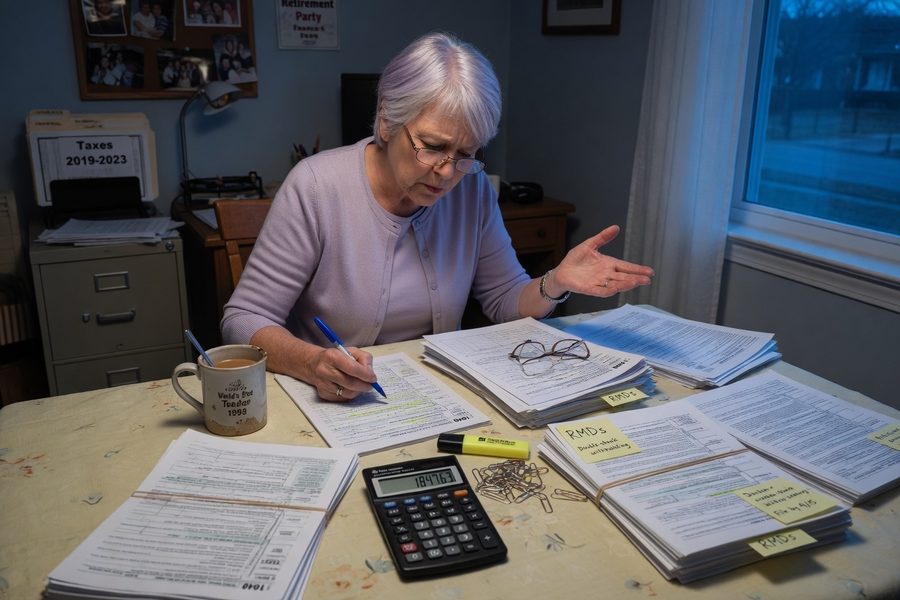
What clients often miss: Required Minimum Distributions from a 403(b) begin at age 73. A teacher who retires at 58 and delays touching the account for 15 years can face large forced distributions that spike taxable income. Planning withdrawals in the early retirement years, even small ones, can flatten that spike significantly.
Where This Recommendation Falls Short
The case for building pension supplemental retirement income through 403(b) accounts and side income is strong for most teachers, but not for all of them, and being honest about the exceptions matters.
The first drawback: this strategy requires surplus cash flow, and many teachers do not have it. At a national average salary of $74,495, a single-income teacher household with children in a high cost-of-living state may genuinely have nothing left to redirect after housing, childcare, and basic expenses. Telling that teacher to max a 403(b) is technically correct and practically useless. The realistic starting point in that situation is contributing enough to capture any employer match (where one exists), then building cash reserves before chasing supplemental investment accounts.
The catch with side income is burnout. Teaching is not a low-demand profession. Educators who add 8–10 hours of tutoring per week on top of a full teaching load frequently report unsustainable fatigue within 12–18 months. The income projection that looks great on paper collapses if the side hustle cannot be sustained. The tradeoff is real: scalable online income (courses, digital products) solves this, but building it requires upfront time investment with delayed returns.
The risk is also elevated for teachers close to vesting milestones. Leaving a district to pursue a higher-paying job or business before reaching pension vesting can mean forfeiting years of accrued benefits. Some state systems require 10 years of service before full vesting. The supplemental income strategy should never incentivize an exit that destroys pension eligibility, the pension’s annuity-like guarantee has real value that should be protected.
Finally, 403(b) plans at many districts genuinely have poor options. If your plan’s cheapest fund carries a 1.5% expense ratio and you cannot contribute to a 457(b) alternatively, a Roth IRA becomes the better second choice, but Roth IRA income limits phase out at $161,000 for single filers in 2026. High-earning veteran teachers in expensive states may lose that option too. Where this falls short is not a reason to do nothing; it is a reason to sequence more carefully than the standard advice suggests.
How We Sourced This
This article draws on verified data from the National Education Association’s 2026 educator compensation report, the Equable Institute’s 2025 state pension funded ratio analysis, and IRS contribution limits as reported by 403bWise for calendar year 2026. Institutional guidance was sourced directly from the Texas Retirement System, the Teachers’ Retirement System of Georgia, CalSTRS Pension2, and the North Carolina Retirement Systems, all publicly available. Fee comparisons between 403(b) plan types and IRA alternatives are based on documented industry research and product disclosures reviewed through May 2026. No statistics were fabricated or extrapolated beyond the verified sources listed. The worked arithmetic example (tutoring income projection and pension replacement calculation) uses figures computed directly from the cited data points.
Frequently Asked Questions
Can a teacher contribute to both a 403(b) and a 457(b) at the same time?
Yes, and doing so is one of the most underused strategies in public education. Because these are separate plan types with independent contribution limits, a teacher can contribute up to $24,500 to each in 2026, for a combined $49,000 in annual tax-advantaged savings, even higher with catch-up provisions for those 50 and older.
What is the biggest mistake teachers make when building supplemental retirement income?
Choosing a 403(b) annuity product with fees above 1% without comparing alternatives. That fee drag over 20 years can cost more than a year’s worth of contributions. The second most common mistake is starting too late, waiting until age 55 to build a supplemental income stream leaves too little compounding time to matter.
Should a teacher choose a Roth 403(b) or a traditional 403(b)?
For most mid-career teachers in moderate tax brackets who expect pension income in retirement, a Roth 403(b) is often the better long-term choice because pension income will already generate taxable income in retirement. Having Roth withdrawals available tax-free creates flexibility. The exception is teachers in high tax brackets now who expect significantly lower income in retirement.
Does a teacher pension affect Social Security benefits?
It depends on the state. Teachers in roughly 15 states, including California, Texas, and Illinois, do not participate in Social Security through their teaching employment. For those educators, the Windfall Elimination Provision or Government Pension Offset may reduce any Social Security benefit earned through other jobs. Checking with the Social Security Administration directly is the clearest way to get a state-specific answer.
What side income sources work best for teachers building supplemental retirement savings?
Private tutoring is the fastest to launch and typically generates $40–$100 per hour depending on subject and market. Online course creation takes longer to build but generates passive income that does not require real-time labor. Rental income from a single property, started a decade before retirement, is the most capital-intensive but also the most durable. The right choice depends on how much time you can sustain and how much startup capital you have.
What happens if my state pension fund is underfunded, could my benefits be cut?
Benefit cuts for current retirees are legally difficult in most states and historically rare, but not impossible. More common outcomes include benefit freezes for new hires, reduced COLA provisions, or increased employee contribution rates. The Equable Institute’s 2025 data showing an 82.5% aggregate funded ratio suggests the system is stressed, not broken, but that is precisely why building supplemental income is the prudent hedge.
Sources
- National Education Association, Educator Pay and Student Spending: How Does Your State Rank (2026)
- Equable Institute, State Pension Funded Ratio Analysis (2025)
- 403bWise, IRS Contribution Limits and 403(b) Education (2026)
- Texas Retirement System, Understanding 403(b) Retirement Plans
- Teachers’ Retirement System of Georgia, Supplementing Your TRS Benefit
- California State Teachers’ Retirement System, Pension2 Supplemental Savings
- North Carolina Retirement Systems, Current Members Milestones
- Internal Revenue Service, Retirement Topics: 403(b) Contribution Limits