Fact-checked by the MyFinancial101 editorial team
Key Takeaways
- A foreclosure does not permanently end your VA loan benefit. Most veterans become eligible again after a standard 2-year waiting period from the foreclosure completion date.
- Chapter 7 bankruptcy requires a 2-year wait from discharge; Chapter 13 may qualify after just 12 months of on-time plan payments with trustee approval.
- When the VA pays a claim on a foreclosed loan, your entitlement is reduced by the exact dollar amount lost. You can restore it by repaying that amount, or use remaining entitlement to buy again without repaying first.
- Lender overlays frequently extend waiting periods to 3 or even 4 years beyond the VA’s 2-year minimum, making it critical to shop multiple VA-approved lenders.
- The VA helped more than 145,000 veterans and family members avoid foreclosure in 2023 alone, reflecting the department’s stated preference for loss mitigation over foreclosure whenever possible.
- Pre-January 1, 1990 loan close dates carry different entitlement restoration rules than post-1990 loans, a distinction most borrowers and even some lenders overlook entirely.
In This Guide
- Can You Still Use Your VA Loan Benefit After Foreclosure or Bankruptcy?
- VA Waiting Periods After Foreclosure and Bankruptcy
- How Foreclosure Affects Your VA Entitlement
- Pre-1990 vs. Post-1990 Loans: A Rule Most Borrowers Miss
- Using Remaining Entitlement Without Full Restoration
- Rebuilding Credit and Finances to Qualify Again
- Lender Requirements and Common Overlays
- Short Sales and Deeds-in-Lieu: How They Differ From Foreclosure
- Applying for a New VA Loan After a Foreclosure or Bankruptcy
- VA Loans vs. FHA and Conventional After a Financial Crisis
Can You Still Use Your VA Loan Benefit After Foreclosure or Bankruptcy?
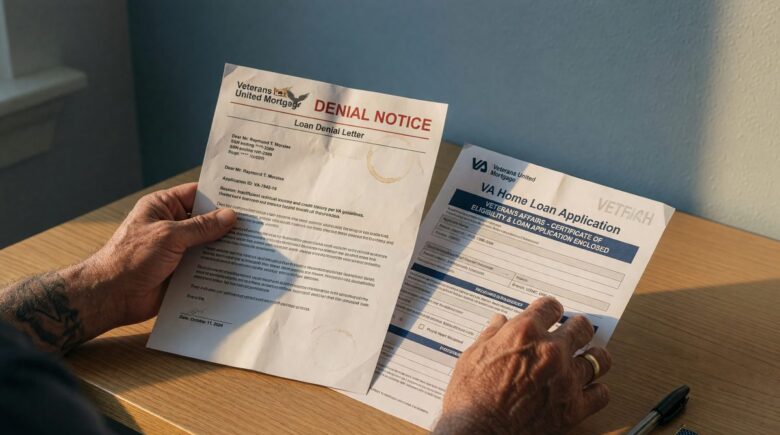
Veterans who lose a home to foreclosure often assume the benefit that helped them buy it in the first place is gone for good. That assumption is wrong, and it costs people real money. A VA loan after foreclosure is not only possible, it is often the fastest path back to homeownership because the waiting periods are shorter than those tied to FHA and conventional financing. Understanding exactly what the foreclosure did to your VA entitlement, and what it takes to either restore it or work around the loss, is where recovery planning starts.
There is an important structural difference between how the VA and a conventional lender treat a foreclosure. A conventional mortgage treats it as a hard stop on your credit profile, requiring anywhere from 3 to 7 years before you can finance again at competitive terms. VA guidelines separate two questions that most lenders treat as one: your credit standing, and your entitlement status. Those are different problems with different solutions. You can have a damaged credit history and still hold usable VA entitlement. You can also have clean credit and find your entitlement reduced until you repay the government’s loss.
By the time you finish this guide, you will know exactly how the waiting periods work for both foreclosure and bankruptcy (including when events overlap), how your entitlement is calculated after a default, what the pre- and post-1990 rules mean for restoration, how to use remaining entitlement for a zero-down purchase before any repayment happens, and how lender overlays can change the timeline you’re actually working with.
VA Waiting Periods After Foreclosure and Bankruptcy
The VA sets a baseline waiting period, but lenders add their own rules on top of it. Knowing both matters before you start building your recovery plan.
Foreclosure: The 2-Year Clock
The standard VA waiting period after a foreclosure is 2 years from the foreclosure completion date. That is the date the title legally transferred, not the date you stopped making payments or received a default notice. State foreclosure timelines vary considerably. In a judicial foreclosure state like New York, the process can take 2 to 3 years. In a non-judicial state like California, it can move in 3 to 4 months. That difference affects when your 2-year clock actually starts.
Confirming the exact completion date is your first task. Pull your credit report, locate the foreclosure trade line, and identify the date of sale or transfer. If there is any ambiguity, the county recorder’s office where the property was located holds the deed transfer on public record.
Chapter 7 Bankruptcy: 2 Years From Discharge
A Chapter 7 bankruptcy discharges qualifying debts, including mortgage obligations in many cases, and the VA waiting period runs 2 years from the discharge date. The discharge date appears on the court’s final order, not the filing date. This is a common point of confusion that can cost you months on your timeline if you count from the wrong date.
If a foreclosure and a Chapter 7 bankruptcy involve the same property and the bankruptcy discharges the mortgage debt, the VA uses the later of the two completion dates as the start of the waiting period. A bankruptcy discharged in March 2023 but with foreclosure completing in September 2023 means your 2-year clock started in September 2023, not March.
Chapter 13 Bankruptcy: A Different Path
Chapter 13 bankruptcy involves a structured repayment plan rather than an immediate discharge. After just 12 months of satisfactory on-time plan payments, applicants may be eligible for a VA loan, provided the bankruptcy trustee approves the new mortgage obligation. You do not need to wait for the full discharge, which can take 3 to 5 years. This makes Chapter 13 one of the faster routes back to VA homeownership when managed well. Lenders will require documentation from the court and trustee, so keeping clean records throughout your plan is essential.
The VA helped more than 145,000 veterans and their families avoid foreclosure in 2023. The program’s strong preference is loss mitigation before foreclosure, which is why contacting the VA before default can change outcomes entirely.
How Foreclosure Affects Your VA Entitlement
Your VA entitlement is the dollar amount the government guarantees to the lender if you default. In 2026, veterans with full entitlement have no loan limit when purchasing (they can borrow whatever a lender will approve without a down payment), because the guarantee scales with the loan. When a foreclosure results in a loss, the VA pays the lender’s claim. That payment reduces your available entitlement by the exact amount paid out.
How the Entitlement Reduction Is Calculated
Say the VA guaranteed $120,000 of your original loan. After foreclosure, the lender sells the property for $90,000 and recovers a portion of legal costs. The VA pays the lender’s net claim, perhaps $40,000 to $50,000 depending on the specifics. That paid amount is now charged against your entitlement. Your remaining entitlement equals your total entitlement minus what the VA paid out.
The precise figure varies by loan balance, property value at time of foreclosure, and any loss mitigation recovery. You cannot calculate it yourself with accuracy. Loan guaranty specialists at the VA are the only authoritative source for your current entitlement balance. Call 877-827-3702 to get the exact number.
What Restoration of Entitlement Actually Means
Restoring your entitlement means repaying the exact dollar amount the VA lost on the prior loan. Once repaid, your full entitlement is reinstated. This is not a credit requirement. It is an accounting requirement. The repayment does not affect your credit score or your waiting period eligibility. It simply determines whether you have full entitlement or must work with what remains.
According to the Veterans Benefits Administration’s buyer’s guide, if your loan ends in foreclosure, short sale, or deed-in-lieu of foreclosure, you will need to repay the amount the VA lost on your loan to restore your future benefit through a process called restoration of entitlement. The process runs through the VA’s loan guaranty office. Once you have the payoff figure (obtained by calling the number above), you submit payment and request a new Certificate of Eligibility (COE) reflecting the restored status. Processing times vary but typically run 2 to 4 weeks once payment is confirmed.
Pre-1990 vs. Post-1990 Loans: A Rule Most Borrowers Miss
Here is a distinction that almost every general article about VA loans after foreclosure skips entirely, and it matters for a specific group of veterans. Entitlement restoration rules differ depending on whether the original VA loan closed before or after January 1, 1990.
For loans that closed on or after January 1, 1990, the VA can generally waive the entitlement repayment requirement if the foreclosure was caused by circumstances beyond the borrower’s control (such as job loss, medical hardship, or divorce) and no fraud or misrepresentation was involved. For loans that closed before January 1, 1990, the older statute applies: repayment of the VA’s loss is required to restore entitlement, regardless of the circumstances, and there is no waiver option. If you or a family member took out a VA loan in the 1980s and it eventually defaulted, this distinction determines your restoration path.
Using Remaining Entitlement Without Full Restoration
Many veterans do not realize they can use whatever entitlement remains after a foreclosure loss to purchase again without repaying the prior loss first. This is called using your second-tier entitlement or bonus entitlement, and it is a legitimate path that does not require you to come up with the restoration amount before buying.
How Second-Tier Entitlement Works in Practice
Basic VA entitlement is $36,000. Bonus entitlement brings total coverage to 25% of the conforming loan limit in your county. In most of the country, the standard conforming limit is $766,550, meaning the VA’s full guarantee covers up to $191,638. If your foreclosure reduced your entitlement by, say, $45,000, you would still have approximately $146,638 in remaining guarantee, enough to support a zero-down loan up to roughly $586,552 (remaining guarantee multiplied by four).
Your COE will show a notation for reduced entitlement if a prior default ate into your guarantee. Lenders can still process a new loan using remaining entitlement, but some less experienced VA lenders will see the notation and incorrectly tell veterans they cannot proceed. Work with a lender who regularly handles second-tier entitlement scenarios.
The practical limit is the lender’s willingness to lend against remaining entitlement and the purchase price in your target market. High-cost markets may require a modest down payment if the purchase price exceeds what remaining entitlement can cover at 25%. But in most markets, remaining entitlement after a single foreclosure is still substantial enough for a zero-down purchase. Calling 877-827-3702 gives you the actual figure before you start house-hunting.
Comparing Entitlement Scenarios
| Scenario | Entitlement Available | Zero-Down Purchase Power (Approx.) |
|---|---|---|
| Full Entitlement (No Prior Default) | $191,638 (25% of $766,550) | No loan limit with full entitlement |
| $45,000 VA Loss on Prior Foreclosure | ~$146,638 remaining | Up to ~$586,552 zero-down |
| $75,000 VA Loss on Prior Foreclosure | ~$116,638 remaining | Up to ~$466,552 zero-down |
| Entitlement Fully Restored (Loss Repaid) | $191,638 (restored) | No loan limit with full entitlement |
The arithmetic here is straightforward. A $45,000 loss to the VA reduces your zero-down purchasing power by roughly $180,000. Whether that matters depends entirely on your target market. A veteran buying in a mid-sized Midwest city where median home prices sit around $250,000 likely has more than enough remaining entitlement to buy with nothing down. Someone buying in the Pacific Northwest or Mid-Atlantic may need to either repay the loss first or bring a small down payment to cover the gap.
Rebuilding Credit and Finances to Qualify Again
The VA does not set a minimum credit score, but virtually every VA-approved lender does. Most require at least a 620 FICO score, and some push to 640 or higher for post-foreclosure applicants. That gap between where you land after a foreclosure (often in the 500s) and where you need to be is real work, but it is achievable within a 2-year window with a disciplined approach.
The Fastest Credit Rebuilding Strategies
Open one or two secured credit cards within 60 to 90 days of the foreclosure finalizing. Use them for small recurring expenses, pay the balance in full each month, and keep utilization under 30%. Each on-time payment adds positive data to your credit file. Within 12 to 18 months, many veterans see their scores recover by 80 to 120 points using this approach alone.
An installment loan adds a different credit category to your profile. A credit-builder loan through a credit union is a low-risk way to establish installment history without taking on significant debt. If you already carry student loans or a car payment in good standing, those work too. The goal is a mix of revolving and installment accounts, all paid on time.
Your letter of explanation carries more weight with VA lenders than most borrowers expect. A clear, factual account of what caused the foreclosure (job loss, medical event, divorce, a sudden income drop) and what has changed since then can shift an underwriter’s assessment significantly. Keep it to one page, be specific about dates and circumstances, and avoid emotional language.
Debt-to-income ratio matters just as much as credit score. Most VA lenders want total monthly debt obligations (including the proposed mortgage payment) below 41% of gross monthly income, though the VA does allow higher ratios with compensating factors. Paying down credit card balances and avoiding new installment debt in the 12 months before you apply is the most direct way to improve your DTI. If rebuilding income is part of the picture, the job market opportunities available in 2026 may be worth exploring as part of a broader financial recovery plan.
Why VA Underwriting Focuses on Recovery, Not the Event
VA guidelines explicitly instruct underwriters to evaluate the borrower’s overall credit profile and financial behavior since the derogatory event, not just the event itself. Two years of clean, on-time payments after a foreclosure is a stronger signal to a VA underwriter than a 750 credit score with a single missed payment 18 months ago. This is a meaningful structural difference from conventional underwriting, which treats the event as a disqualifying mark regardless of what follows it.
If the foreclosure stemmed from high-interest credit card debt that was never resolved, working through a structured repayment plan before applying is the right move. Our overview of how to prioritize and negotiate credit card debt with creditors covers the negotiation tactics that can reduce balances and improve your debt picture before you approach a VA lender.
Lender Requirements and Common Overlays
The VA sets the floor, not the ceiling. Every VA-approved lender can impose lender overlays, which are requirements stricter than the VA’s own minimums. After a foreclosure or bankruptcy, these overlays often affect three things: waiting period length, minimum credit score, and manual underwriting thresholds.
How Overlays Vary Across Major Lender Types
| Lender Type | Typical Wait After Foreclosure | Min. Credit Score (Post-Event) | Manual Underwriting Allowed? |
|---|---|---|---|
| VA Minimum (Guideline) | 2 years | No minimum set | Yes |
| Large Bank VA Lenders | 3 to 4 years | 640 to 660 | Limited |
| VA-Specialized Lenders | 2 years (VA minimum) | 580 to 620 | Yes, more common |
| Credit Unions (VA-Approved) | 2 to 3 years | 600 to 620 | Yes, case-by-case |
| Mortgage Brokers (VA) | Varies by wholesale lender | 580 and up | Yes, depending on investor |
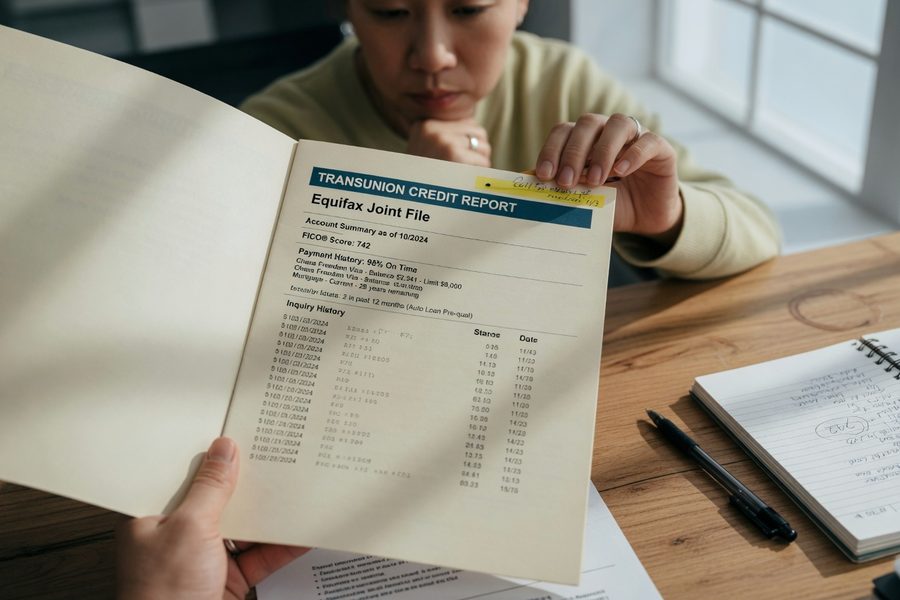
The practical implication is significant. A large retail bank with conservative overlays might tell a veteran at the 2-year mark that they need to wait another 12 to 24 months. A VA-specialized lender reviewing the same file on the same day might approve it. This is not about finding a lender willing to cut corners. It is about finding one whose overlays align with where you actually stand.
Getting denied by one VA lender does not mean you are ineligible for the VA program. Lender overlays vary substantially. Always apply to at least two or three VA-approved lenders before accepting a denial as final. Each inquiry within a 45-day window counts as a single hard pull on your credit report under FICO scoring models.
Documentation Lenders Typically Request Beyond the Standard Application
After a foreclosure or bankruptcy, expect lenders to request the full bankruptcy discharge or dismissal papers, the foreclosure completion documentation, a signed letter of explanation, 24 months of credit payment history (all accounts), and proof of any entitlement restoration or COE showing remaining entitlement. Having these documents organized before you apply compresses the underwriting timeline and signals financial organization to the processor reviewing your file.
Short Sales and Deeds-in-Lieu: How They Differ From Foreclosure
A short sale (selling the home for less than the mortgage balance with lender approval) and a deed-in-lieu of foreclosure (voluntarily transferring the title to the lender to avoid foreclosure proceedings) are both treated similarly to a foreclosure under VA rules. The same 2-year waiting period and the same entitlement restoration requirement apply if the agency paid a loss on the loan.
The distinction that matters most is this: a short sale or deed-in-lieu often results in a smaller loss to the VA than a full foreclosure, because the lender recovers more through a cooperative process than through a contested foreclosure and forced sale. A smaller loss means a smaller entitlement reduction. If you are weighing options before a foreclosure happens, this is a meaningful financial consideration. Contacting the VA’s loss mitigation line at 877-827-3702 before default, not after, is the most important call you can make. The VA’s strong preference, evidenced by the 145,000 foreclosure avoidances in 2023, is to find alternatives before the formal foreclosure process begins.
Applying for a New VA Loan After a Foreclosure or Bankruptcy
The application process for a post-foreclosure VA loan follows the same general path as any VA purchase loan, but with additional documentation steps at several points. Understanding the sequence keeps the process from stalling.
Getting Your Certificate of Eligibility Updated
Your existing COE likely reflects reduced entitlement. Request an updated COE through the VA’s eBenefits portal or through a VA-approved lender who can pull it on your behalf via the Automated Certificate of Eligibility system. If there is a prior foreclosure claim on record, the COE will show your remaining entitlement balance. This number is what you and the lender are working with unless you have already completed entitlement restoration.
If the COE shows a notation about a prior default or an entitlement charge, do not panic. Call 877-827-3702 and ask a VA loan guaranty specialist to walk through the exact status. They can provide the precise restoration amount and confirm whether any conditions apply to your specific loan history. According to the Veterans Benefits Administration’s buyer’s guide, restoration is available when specific conditions are met, including full repayment of the prior loss or qualifying assumption of the original loan by another eligible veteran.
Timeline Expectations for 2026 Applicants
| Step | Estimated Timeframe | Notes |
|---|---|---|
| Confirm Waiting Period Met | Immediate | Verify foreclosure completion date via credit report or county records |
| Request Updated COE | 1 to 5 business days | Via eBenefits or lender ACE system |
| Entitlement Restoration (if chosen) | 2 to 4 weeks after payment | Call 877-827-3702 for exact amount first |
| Lender Pre-Approval | 3 to 10 business days | Have all documentation ready |
| Full Underwriting to Closing | 30 to 45 days | Manual underwriting adds time; VA appraisal required |
The VA’s official guidance on trouble making payments explicitly addresses short sales, deeds-in-lieu, and foreclosures in the same section, and directs veterans to contact the VA before those events complete whenever possible. Acting early dramatically increases the available options.

VA Loans vs. FHA and Conventional After a Financial Crisis
Comparing the VA program to alternatives is worth doing honestly, because it is not always the right answer for every borrower’s situation, even eligible veterans.
Side-by-Side Waiting Period and Requirements Comparison
| Loan Type | Wait After Foreclosure | Wait After Chapter 7 | Minimum Down Payment | Min. Credit Score (Typical) |
|---|---|---|---|---|
| VA Loan | 2 years | 2 years | 0% (with sufficient entitlement) | 580 to 620 (lender set) |
| FHA Loan | 3 years | 2 years | 3.5% | 580 (3.5% down); 500 (10% down) |
| Conventional (Fannie/Freddie) | 7 years (3 with extenuating) | 4 years (2 with extenuating) | 3% to 5% | 620 to 640 |
| USDA Loan | 3 years | 3 years | 0% (rural areas only) | 640 (most lenders) |
On waiting periods and down payment requirements, the VA program wins for eligible veterans, and by a wide margin against conventional financing. The honest caveat is that VA funding fees add upfront cost, ranging from 1.25% to 3.3% of the loan amount depending on down payment and whether it is a first or subsequent use. Veterans with service-connected disabilities are exempt from the funding fee entirely. For a veteran who puts nothing down on a $300,000 home on a subsequent use, the funding fee runs $9,900. That is built into the loan but it does affect the total borrowing cost over time.
If you are a veteran who has worked through credit card debt during the recovery period, understanding how to negotiate your credit card APR before applying for a VA loan can reduce monthly obligations and improve your debt-to-income ratio in the months before you submit an application. Small improvements to your financial picture matter most in the final 6 to 12 months before pre-approval.
Conventional loan guidelines require a 7-year wait after foreclosure under standard rules, compared to the VA’s 2 years. For a veteran who experienced foreclosure in early 2023, the VA path opens in 2025. The conventional path under standard guidelines would not open until 2030. That 5-year gap represents years of equity-building and payment stability.
Real-World Example: Using Remaining Entitlement After a 2022 Foreclosure
Consider an illustrative example: a veteran, call him David, served 6 years in the Army and purchased a home in 2018 using his VA loan benefit. He borrowed $280,000, and the VA guaranteed $70,000 of that loan (25% of the loan balance at origination). A combination of a job loss in 2021 and a subsequent divorce led to foreclosure completing in October 2022. The lender sold the property at auction for $230,000 after legal fees, resulting in a net loss to the VA of approximately $48,000. David’s available entitlement dropped from $191,638 to roughly $143,638.
David spent the next two years rebuilding his finances. He opened a secured credit card in early 2023, added a credit-builder loan through his credit union, and took a second part-time role to stabilize his income. By October 2024, his waiting period had elapsed. His credit score had recovered to 638. His DTI with a projected mortgage payment was 38%.
He contacted the VA at 877-827-3702, confirmed his remaining entitlement of $143,638, and decided not to pursue entitlement restoration immediately since he was buying in a market where median home prices sat around $290,000. At 25% guarantee coverage, his remaining entitlement supported a zero-down purchase up to approximately $574,552. He pre-approved with a VA-specialized lender (his first inquiry at a large bank had been denied based on a 3-year overlay policy), closed on a $285,000 home in December 2024 with zero down payment and a funding fee of $9,405 rolled into the loan.
David’s monthly payment on a $294,405 loan at approximately 6.75% over 30 years runs about $1,910. Had he waited for a conventional loan without entitlement issues and saved a 5% down payment, his earliest eligibility would have been late 2025 under extenuating circumstances rules, and his required down payment would have been $14,250 on a $285,000 purchase. The VA path put him in a home a full year earlier with no cash required at closing. The trade-off is a slightly higher loan balance due to the rolled-in funding fee. Over 30 years, that adds roughly $8,000 to $10,000 in total interest compared to the conventional option with a down payment. An honest accounting shows the VA path still ahead on cash flow and timeline, but the funding fee is a real cost, not a free ride.
Your Action Plan
-
Confirm your foreclosure or bankruptcy completion date
Pull your credit report from AnnualCreditReport.com and locate the exact completion date for the foreclosure or bankruptcy discharge. Verify it against county recorder records or court documents if there is any discrepancy. This date starts your 2-year clock, and getting it right saves you from applying too early or waiting longer than necessary.
-
Call the VA at 877-827-3702 for your entitlement status
Do not rely on old documentation or guesses. A VA loan guaranty specialist can tell you exactly how much entitlement was charged by the prior foreclosure, what the restoration amount would be, and whether any pre-1990 loan rules apply to your situation. Get this number in writing if possible, or take detailed notes including the representative’s name and date of the call.
-
Decide whether to restore entitlement or use what remains
If your target purchase price is well within the range your remaining entitlement supports zero-down, restoration may not be necessary before your first post-foreclosure purchase. If you are in a high-cost market or want maximum borrowing power, repaying the VA’s loss first restores full entitlement. Run the numbers using the formula: remaining entitlement multiplied by 4 equals approximate zero-down purchase limit in standard-limit counties.
-
Build 24 months of clean credit history
Open secured credit accounts as soon as the foreclosure completes. Pay every balance in full every month. Add an installment credit product to diversify your credit mix. Monitor your credit score monthly using a free service. You are targeting a minimum of 620, and ideally 640 or above, before applying. Working with a reputable credit counseling service during the rebuilding period can accelerate your progress and help you avoid common mistakes.
-
Reduce debt-to-income ratio before applying
Calculate your current DTI: add all monthly minimum debt payments and divide by gross monthly income. Aim to get this below 41% with the projected mortgage payment included. Pay down credit card balances, avoid new installment loans in the 6 months before applying, and consider increasing income through additional work. Every percentage point of DTI improvement increases your approval odds and can affect your interest rate.
-
Shop at least three VA-approved lenders before choosing one
Apply within a 45-day window so that multiple inquiries count as one on your credit report. Compare not just interest rates but overlay requirements, handling of second-tier entitlement, and willingness to do manual underwriting if your file has any complexity. A VA-specialized lender or mortgage broker with VA experience typically handles post-foreclosure applications more effectively than a large retail bank with conservative overlay policies. Understanding your broader financial options, including how to evaluate longer-term investment and wealth-building strategies alongside homeownership, helps you make a decision grounded in your full financial picture.
Frequently Asked Questions
Does a foreclosure permanently eliminate my VA loan eligibility?
No. A foreclosure reduces your available entitlement and starts a waiting period, but it does not end your eligibility. After 2 years from the foreclosure completion date, you can apply for a new VA loan using remaining entitlement or restored entitlement. The benefit is earned through military service and is not forfeited by a mortgage default.
What happens if my foreclosure and bankruptcy happened at the same time?
When a foreclosure and bankruptcy involve the same property, the VA uses the later of the two completion dates as the start of your waiting period. If your bankruptcy discharged in January 2023 but the foreclosure completed in June 2023, your 2-year clock runs from June 2023, meaning eligibility from June 2025 forward. Confirm both dates precisely, because the wrong assumption here can delay an application unnecessarily.
How much will the VA charge against my entitlement after a foreclosure?
The charge equals the exact dollar amount the VA paid to the lender on the guaranty claim after the property was sold and proceeds were applied. This varies by original loan balance, sale price at foreclosure auction, and net recovery after fees. There is no standard amount. The only way to get the precise figure is to call the VA at 877-827-3702 and speak with a loan guaranty specialist.
Can I buy a home with no down payment if my entitlement was reduced by a foreclosure?
In most cases, yes. Remaining entitlement after a single foreclosure is often sufficient to support a zero-down purchase in standard-cost markets. The formula is simple: multiply your remaining entitlement by four to get an approximate zero-down purchase limit. A $143,000 remaining entitlement, for example, supports a zero-down loan of roughly $572,000 in a standard-limit county. High-cost markets may require a small down payment to cover any gap between the purchase price and what remaining entitlement can guarantee.
Is there a minimum credit score required for a VA loan?
The VA itself sets no minimum credit score. However, virtually every VA-approved lender sets its own floor, typically between 580 and 640. After a foreclosure, many lenders push toward the higher end of that range, and some large retail banks require 660 or above. Shopping multiple lenders is essential because the effective minimum varies significantly from one institution to the next.
Do the pre-1990 loan rules affect me if I have never had a prior VA loan default?
No. The pre-January 1, 1990 distinction applies only to the original VA loan that ended in foreclosure or default, not to the borrower’s age or service dates. If the foreclosed loan closed after January 1, 1990, the newer rules apply and a waiver of the repayment requirement may be available under qualifying hardship circumstances.
How is a short sale treated differently from a full foreclosure under VA rules?
A short sale and a deed-in-lieu of foreclosure carry the same 2-year waiting period and the same entitlement restoration requirement as a full foreclosure if the VA paid a loss on the loan. The practical difference is that short sales and deeds-in-lieu typically result in smaller VA losses than contested foreclosures, because the lender recovers more through a cooperative process. A smaller loss means a smaller entitlement reduction and a lower restoration amount if you choose to repay it later.
Can a Chapter 13 bankruptcy really let me buy sooner than 2 years?
Yes, under specific conditions. After 12 months of satisfactory, on-time Chapter 13 plan payments, you may be eligible for a VA loan if the bankruptcy trustee approves taking on new mortgage debt. This is notably faster than the Chapter 7 or foreclosure paths. You will need court documentation, trustee written approval, and a lender willing to process a manual underwrite on a file with an open bankruptcy. Not every lender will do this, but VA-specialized lenders handle it more regularly.
Will my VA funding fee be higher because of a prior foreclosure?
The VA funding fee is higher for subsequent use of the benefit compared to first-time use, not specifically because of a foreclosure. For a subsequent-use loan with zero down payment, the funding fee is 3.3%. Veterans with service-connected disabilities rated at 10% or above are exempt from the funding fee entirely. If you are exempt, confirm that status is current and properly documented before closing so the exemption is applied at the right time.
What if I cannot afford to repay the VA’s loss to restore my entitlement?
You are not required to repay the loss before buying again. Purchasing with remaining entitlement is a legitimate option, as long as it is sufficient for your target market. Entitlement restoration through repayment is a choice that gives you full entitlement back, but it is not a prerequisite for the next VA purchase. If and when you sell the new home and pay off that loan in full, you can apply to restore your entitlement at that point as well. Financial counseling resources, including guidance on managing existing debts, can help you plan whether and when repayment makes sense given your overall financial picture.
Veterans with service-connected disability ratings of 10% or higher are exempt from the VA funding fee. On a $300,000 subsequent-use loan, that exemption saves $9,900 in upfront costs. If you believe you have an eligible disability rating, contact the VA to confirm your status before closing.
Some online sources still cite outdated VA loan limits for veterans with full entitlement. The Blue Water Navy Act eliminated loan limits for veterans with full entitlement. If your COE shows full entitlement (no prior charge), your VA loan is not capped by county conforming limits. Loan limits only apply when using remaining (reduced) entitlement from a prior default.
Sources
- U.S. Department of Veterans Affairs, Trouble Making Payments on Your VA-Backed Home Loan
- Veterans Benefits Administration, VA Buyers Guide (Entitlement Restoration Conditions)
- U.S. Department of Veterans Affairs Press Room, VA Helps 145,000 Veterans Avoid Foreclosure in 2023
- U.S. Department of Veterans Affairs, VA Home Loan Eligibility Requirements
- U.S. Department of Veterans Affairs, VA Funding Fee and Loan Closing Costs
- Consumer Financial Protection Bureau, What Is a VA Loan?
- Consumer Financial Protection Bureau, What Is a Deed-in-Lieu of Foreclosure?
- U.S. Department of Housing and Urban Development, FHA Waiting Periods After Foreclosure and Bankruptcy
- Fannie Mae Selling Guide, Significant Derogatory Credit Events: Waiting Periods and Re-establishing Credit
- Federal Housing Finance Agency, Conforming Loan Limits
- U.S. Department of Veterans Affairs, How to Apply for a VA Home Loan