Fact-checked by the MyFinancial101 editorial team
Quick Answer
Feeding a family of four on a $200 monthly grocery budget demands a tight plan: build all meals around sale-priced bulk staples like rice, beans, and chicken thighs, eliminate food waste completely, and cook from scratch every day. Most families can make it work with 8–12 hours of weekly prep and a ruthless no-restaurant rule.
A low grocery budget family staring down the latest USDA numbers might think $200 a month is a fantasy. Households in the lowest income quintile spend nearly $5,498 a year on food, roughly $458 per month. Shrinking that to $200 requires cutting more than half, and the USDA’s own Thrifty Food Plan clocks in around $5.63 per person per day, meaning a family of four would spend about $675 monthly on the government’s safest thrifty estimate. The gap is real, but so are the families who close it every month through systems, not sheer willpower.
Food-at-home prices climbed another 2.3% from 2024 to 2025, and in 2026 that pressure hasn’t eased. A $200 budget doesn’t leave room for packaged snacks, bottled drinks, or a single delivery order. It works because the family treats the grocery line item like a utility bill: fixed, non-negotiable, and monitored relentlessly. This guide lays out the exact steps that make it possible, a realistic assessment of what $200 can actually buy, a shopping system that never pays full price, a month of flexible meal plans, ruthless waste reduction, and strategies to keep nutrition and family buy-in from derailing the effort.
Key Takeaways
- The average low-income household spends $5,498 annually on food, roughly $458 a month, so a $200 grocery target requires a dramatic reset of shopping habits. (USDA ERS)
- Food-at-home prices rose 2.3% between 2024 and 2025; a static $200 budget must absorb those increases with smarter ingredient swaps and less waste. (USDA ERS)
- The USDA Thrifty Food Plan costs about $5.63 per person per day, $675 for a family of four, underscoring that hitting $200 demands buying 70% below that benchmark. (Nutrition.gov)
- A $200 grocery budget only succeeds with zero impulse purchases, an airtight list-driven shopping approach, and consistent use of cashback apps like Ibotta and Fetch. (Ibotta, Fetch)
- Families who combine seasonal produce, bulk dry goods, and batch scratch cooking can keep the per-person daily cost under $1.67 while meeting basic nutritional needs. (Nutrition.gov budget guidelines)
- A $200 budget collapses without a plan for dietary restrictions or picky eaters; involving children in meal selection and price comparison turns them into allies instead of obstacles. (USDA healthy eating on a budget)
In This Guide
- Step 1: Is a $200 Monthly Grocery Budget Realistic for a Low Grocery Budget Family?
- Step 2: Build Your Core Shopping Strategy to Hit $200
- Step 3: Plan a Month of Nutritious Meals That Stay Under $50 a Week
- Step 4: Master Waste Reduction and Scratch Cooking
- Step 5: Handle Dietary Restrictions, Picky Eaters, and Keep the Family on Board
Step 1: Is a $200 Monthly Grocery Budget Realistic for a Low Grocery Budget Family?
Yes, but only if you can check two conditions: at least one person available to cook from scratch nearly every meal, and reliable access to a discount grocery store or a market where bulk staples sell at rock-bottom prices. Add teenagers to the household and the math gets very hard, very fast.
The USDA says the typical low grocery budget family spends 33.0% of its before-tax income on food, which is an enormous share compared to the national average of 9.7% of disposable income spent on food overall. That figure exposes the structural squeeze: families already dedicating a huge slice of cash to food are the ones who need a $200 plan most, yet they face the steepest climb. The climb gets even harder when you compare the target to the Thrifty Food Plan’s $675 monthly price tag. What $200 buys is a diet stripped to essentials: grains, legumes, and affordable proteins like chicken thighs, eggs, or pork shoulder, paired with the cheapest seasonal vegetables you can find.
This is also a good moment to be honest about who this plan does not fit. Families in high-cost cities without a car, households managing multiple serious food allergies, or anyone working two jobs with no time to batch-cook on weekends will find $200 genuinely unworkable. Pushing to $250 or $275 and building the discipline there first is a smarter move than white-knuckling an unreachable number for three weeks and then abandoning the effort entirely.
How to Do This
Run a quick audit. Jot down everything your household spent on food last month: groceries, school lunches, vending machines, takeout. If the total is over $300, hitting $200 will feel like a shock. Then read the ads from the three cheapest stores within driving distance. Aldi, ethnic grocery stores, and salvage markets often price staple proteins below $1.50 a pound. When you see chicken thighs at $0.89/lb, buy 10 pounds and freeze them. That one move alone can anchor two-thirds of the month’s dinners.
It’s also worth connecting the grocery budget to the broader financial picture. If you’re carrying credit card debt, the Consumer Financial Protection Bureau (CFPB) documents how high APRs compound quickly on revolving balances. Families tracking their spending in detail, groceries included, through tools offered by banks like Chase or personal finance platforms like SoFi often find the grocery line is where the biggest gains hide. Cutting $258 a month off food and redirecting it toward a high-interest balance is a concrete debt-reduction strategy, not just budgeting for its own sake.
What to Watch Out For
Regional price gaps crush the plan fast. If you live in a high-cost city with no car, you might not be able to hit $200. Start with $300, record every receipt, then push lower only if the data supports it. And if you have a teenager eating 3,000 calories a day, adjust the target upward by $75 to $100. A budget is a tool, not a punishment.
Low-income U.S. households spent $5,498 on food in 2024. A $200 grocery plan trims that annual figure to $2,400, a savings of over $3,000 that could fund an emergency fund or wipe out a small credit card balance. (USDA ERS)

Step 2: Build Your Core Shopping Strategy to Hit $200
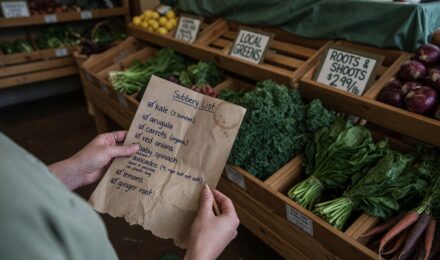
A $200 budget lives and dies on your shopping list. You walk into the store with a written plan, digital or paper, and buy nothing that isn’t on it. Every item is a decision made at home, not in the aisle.
The foundation is dry beans, rice, oats, pasta, and flour. Those five ingredients make up the calorie backbone of nearly every meal because they cost pennies per serving. Then you layer in proteins only when they’re on sale: whole chickens at $0.99/lb, pork butt at $1.29/lb, eggs when they dip under $3 a dozen. Produce stays strictly seasonal, zucchini and cucumbers in summer, cabbage and sweet potatoes in winter, and you freeze extra when prices crash. Focusing on seasonal produce is the single easiest way to avoid paying a premium for an out-of-season bell pepper.
How to Do This
Make one trip a week with a cash envelope and leave credit cards at home. Before you go, scan the weekly circular for loss leaders: those deeply discounted items meant to draw you in. Build the meals entirely around those. Use Ibotta and Fetch to stack rebates on top of sale prices. A box of oatmeal on sale for $2.50 that earns a $0.50 rebate actually costs $2.00; repeat that a dozen times over a month and you’ve quietly sliced $6 to $10 from the total. Using digital coupons and cashback apps turns every trip into a money-back transaction, and the savings compound fast.
Buy in bulk when the unit price is unbeatable, then repackage at home. 25 pounds of rice might cost $18, delivering 250 half-cup servings for about $0.07 each. That’s math worth driving 10 extra miles for.
One often-overlooked angle: if your household qualifies for SNAP benefits, the USDA’s Food and Nutrition Service (FNS) administers the program through state agencies. SNAP eligibility is based on gross income, net income, and household size, with asset limits that the Federal Reserve’s Survey of Consumer Finances shows hit low-income households disproportionately hard. Pairing SNAP with the $200 cash strategy can free up room for items the program doesn’t cover. And if you’re rebuilding credit to qualify for better loan terms, say, a lower APR on a personal loan through SoFi or a secured card from a bank overseen by the FDIC, a tighter grocery budget directly improves your debt-to-income ratio (DTI), which lenders scrutinize alongside your FICO Score.
What to Watch Out For
Watch for the “just one treat” trap. A $3 box of granola bars or a $5 bag of chips erodes the margin. If you need convenience snacks, make them, popcorn kernels cost $0.04 per popped quart.
Tap community resources before you assume you can’t afford produce. Many food banks now distribute fresh fruits and vegetables weekly, and some community gardens let volunteers take home a share. If $200 feels like the floor is about to crack, SNAP benefits can supplement the budget by covering staples while you allocate cash to items not allowed under the program.
| Approach | Monthly Cost for Family of 4 | Key Tactics |
|---|---|---|
| Extreme $200 Plan | $200 | Bulk beans and rice, loss-leader proteins, zero waste, no snacks |
| USDA Thrifty Food Plan | $675 | Moderate-cost proteins, some convenience, balanced variety |
| USDA Low-Cost Food Plan | $870 | More meat, fresh produce variety, occasional prepared foods |
Step 3: Plan a Month of Nutritious Meals That Stay Under $50 a Week
A month of $200 meals isn’t a rotation of suffering. It looks like oatmeal with peanut butter for breakfast, bean-and-rice bowls with sautéed cabbage for lunch, and a slow-cooked whole chicken that stretches into three dinners: tacos, soup, and stir-fry. The plan hinges on repeating ingredients in different forms so nothing spoils.
A real-deal weekly breakdown from one frugal family shows breakfasts built on $0.10 oatmeal servings and eggs bought in flats of 60 for $8. Lunches are leftovers or a $0.30 bowl of lentil soup. Dinners alternate between a $5 whole chicken that yields meat for tacos, a pot of chili with dried beans and a pound of sale ground turkey, and a $3 sheet pan of roasted sweet potatoes and black beans. The weekly tally lands around $48.
How to Do This
Write a rotating two-week menu and stick to it. Variation comes from switching spices and sauces, soy sauce, cumin, garlic powder, vinegar, which cost next to nothing and change the profile entirely. Buy a bag of masa harina for $3 and you can make tortillas that cost $0.05 each instead of $0.25 from a package. Use a slow cooker to turn tough, cheap cuts into tender protein for multiple meals: a pork shoulder at $1.29/lb cooked all day becomes pulled pork for sandwiches, then the broth becomes the base for beans.
For families with dietary restrictions, the same template works with swaps. A gluten-free household replaces wheat flour with corn-based tortillas and certified gluten-free oats; a dairy-free family leans on coconut milk bought in bulk at Asian markets. The principle of cheap calorie foundations doesn’t change.
What to Watch Out For
Nutrition gaps emerge fast if you rely only on white rice and flour. Keep frozen spinach, carrots, and canned tomatoes in rotation to cover Vitamin A and C. A bottle of store-brand multivitamin for $8 covers the rest while you fine-tune the fresh supply.

Step 4: Master Waste Reduction and Scratch Cooking
Waste is the silent budget kryptonite. The average American household tosses about 30% of its food, and on a $200 grocery budget that’s $60 in the trash. The fix: treat every scrap as an ingredient. Onion peels, carrot ends, and chicken bones simmer into broth. Stale bread becomes breadcrumbs or a savory bread pudding. Overripe bananas get frozen for smoothie bases or baked into a no-added-sugar oat banana loaf that costs $1.20 to make.
Scratch cooking isn’t optional at this price point. A baked good that would cost $4 in a bakery costs $0.40 in flour, sugar, and oil. Batch-cook on Sunday: a giant pot of beans, a pan of roasted vegetables, a dozen hard-boiled eggs. Divide into containers, and the weekday scramble disappears. Even a windowsill herb pot, basil, cilantro, chives, saves $3 a bunch every week and keeps flavor high when the budget rules out $2 spice blends. Libraries often have free canning equipment and dehydrator loans that turn a bumper crop of zucchini into a year-round vegetable supply.
The discipline required here also has a financial credit dimension worth noting. Households that track every food expenditure and hold themselves to a fixed monthly cap are building the same habit that credit bureaus like Experian, Equifax, and TransUnion reward indirectly: consistent, bounded spending. A lower monthly outlay on food can reduce revolving credit card balances, which in turn lowers your credit utilization ratio, one of the heaviest factors in a FICO Score calculation. It won’t happen overnight, but a family that redirects $258 per month from groceries to card balances will see movement in their credit profile within a few billing cycles.
One small balcony tomato plant in a 5-gallon bucket can produce 15–20 pounds of fruit over a season, at $0.30 per pound versus store prices of $2–$3. Small-space gardening supplies a few dollars’ worth of fresh produce every week during harvest months, directly chipping away at the grocery total. (University of Minnesota Extension)
Step 5: Handle Dietary Restrictions, Picky Eaters, and Keep the Family on Board
A $200 budget feels impossible when one kid is gluten-free, another won’t eat anything green, and your spouse craves variety. Tight constraints force creative solutions that actually improve buy-in: when every meal is a collaborative project, resistance drops.
For dietary restrictions, map out the cheapest compliant staples first. A vegan family leans on lentils, chickpeas, and tofu from Asian markets at $1.50 a block. A gluten-free household makes corn-based arepas and rice noodles the center of the plate. Avoid specialty “replacement” products at all costs, a $6 loaf of gluten-free bread blows the budget faster than a forgotten steak.
How to Do This
Involve kids directly in the savings game. Give them a calculator at the store and ask them to find the lowest unit price on canned tomatoes. Let each child choose one meal for the week from a short list of budget-approved options. When they feel ownership, they’re less likely to reject the dinner they helped design. At home, a simple whiteboard tracking the running grocery total turns the abstract $200 number into a family challenge instead of a parental decree.
For the real crunch moments, know where the free resources are. Feeding America operates a network of food banks that distribute fresh produce and pantry staples, plugging a sudden gap without spending a dime. Community gardens often swap volunteer hours for a share of the harvest. These aren’t long-term solutions, but they’re the safety net that prevents a $200 plan from becoming a $140 crisis when an unexpected bill hits.
It’s also worth understanding how a tighter grocery budget fits into the larger financial picture. Banks like Chase and online lenders like SoFi look at DTI when evaluating loan applications. The CFPB notes that a DTI above 43% typically disqualifies borrowers from qualified mortgages. Freeing up $258 per month on food and directing it toward debt repayment can shift that ratio meaningfully over six to twelve months, improving access to credit products that carry lower APRs.
What to Watch Out For
Don’t let food become the household tension point. If everyone is miserable after three weeks, pull back to $250 and look for cuts elsewhere. The real win isn’t the number on the receipt, it’s the discipline that frees up cash for an emergency fund or to start negotiating with creditors. A family that slashes its grocery spending from $600 to $200 saves $4,800 a year. That’s a fully funded starter emergency fund, and that fact alone can keep everyone motivated through a month of oatmeal breakfasts.

Frequently Asked Questions
What cashback apps actually save money on groceries when I’m trying to spend $200?
Ibotta and Fetch are the two that matter. Ibotta gives cash back on specific items, you scan receipts or link a loyalty card, and often has bonus offers on staples like milk, bread, and eggs. Fetch takes any receipt and awards points redeemable for gift cards; it doesn’t require you to buy a particular brand, which keeps you from chasing products you don’t need. Used together, they can extract $10–$20 a month without changing what you buy.
How do I stick to a $200 grocery budget if someone in the family has food allergies?
Replace specialty “free-from” products with naturally compliant whole foods. Gluten-free households swap wheat pasta for rice and corn tortillas; a nut-free family uses sunflower seed butter bought in bulk. Shop at ethnic grocery stores where alternative grains like millet or sorghum are often sold in bulk for half the supermarket price.
Can I really grow food on a balcony and make a dent in the grocery bill?
Yes, for herbs, leafy greens, and small tomatoes. A $5 basil plant produces more than $20 worth of fresh herb over a summer. Two 5-gallon buckets of lettuce mix yielded one family a side salad three times a week for two months, total cost under $8. It won’t replace the rice and beans, but it adds variety and freshness that the budget otherwise can’t deliver.
How do seasonal and local eating reduce costs for a low grocery budget family?
Produce in peak season floods the market and prices drop dramatically. Strawberries go from $4 a pint in winter to $1.50 in June; zucchini can be had for $0.69/lb in August. Buy extra during those windows and freeze or dehydrate the surplus. Pair this with community-supported agriculture (CSA) shares when they’re offered at reduced rates for low-income participants.
Where can I find free food or community help when my $200 budget just won’t stretch?
Call 211 or visit Feeding America’s food bank locator. Many food pantries now operate like free grocery stores with no income verification. School backpack programs send food home for kids on Fridays. Community fridges in urban areas offer 24/7 anonymous access. These resources are a bridge while you stabilize the budget, not a sign of failure.
How do I explain a super tight grocery budget to my kids without making them feel poor?
Frame it as a family experiment: “We’re going to see how much we can save this month by making our own snacks and finding the best deals. At the end, the money we don’t spend goes toward a fun outing.” Give each child a $5 surplus reward if the family stays under budget. They’ll start spotting sales you miss.
What’s the simplest way to track spending when I’m juggling multiple store trips on $200?
Use a shared Google Sheets tab on your phone, with columns for date, store, item, and amount. Enter each receipt before you leave the parking lot. When the running total hits $200, you’re done for the month. No app can match the behavioral power of seeing a real-time number inch toward the limit.
Sources
{“@context”:”https://schema.org”,”@graph”:[{“@type”:”Organization”,”@id”:”https://myfinancial101.com/#organization”,”name”:”MyFinancial101″,”url”:”https://myfinancial101.com”},{“@type”:”Person”,”@id”:”https://myfinancial101.com/#person-derek-solis”,”name”:”Derek Solis”,”description”:”Derek Solis is a personal finance journalist and investment enthusiast who has spent the last decade covering economic trends, market movements, and smart spending habits for digital media outlets. He holds a degree in Economics from the University of Texas and specializes in making macroeconomic news relevant to everyday consumers. Derek is known for his sharp analysis and accessible writing styl”,”knowsAbout”:[“Personal Finance”]},{“@type”:”Article”,”headline”:”The $200 Grocery Budget: How a Family of Four Makes It Work Every Month”,”datePublished”:”2026-06-30″,”dateModified”:”2026-06-30″,”publisher”:{“@id”:”https://myfinancial101.com/#organization”},”mainEntityOfPage”:{“@type”:”WebPage”,”@id”:”https://myfinancial101.com/200-dollar-grocery-budget-family-of-four”},”inLanguage”:”en”,”author”:{“@id”:”https://myfinancial101.com/#person-derek-solis”}},{“@type”:”FAQPage”,”mainEntity”:[{“@type”:”Question”,”name”:”What cashback apps actually save money on groceries when I’m trying to spend $200?”,”acceptedAnswer”:{“@type”:”Answer”,”text”:”Ibotta and Fetch are the two that matter. Ibotta gives cash back on specific items, you scan receipts or link a loyalty card, and often has bonus offers on staples like milk, bread, and eggs. Fetch takes any receipt and awards points redeemable for gift cards; it doesn’t require you to buy a particular brand, which keeps you from chasing products you don’t need. Used together, they can extract $10–$20 a month without changing what you buy.”}},{“@type”:”Question”,”name”:”How do I stick to a $200 grocery budget if someone in the family has food allergies?”,”acceptedAnswer”:{“@type”:”Answer”,”text”:”Replace specialty “free-from” products with naturally compliant whole foods. Gluten-free households swap wheat pasta for rice and corn tortillas; a nut-free family uses sunflower seed butter bought in bulk. Shop at ethnic grocery stores where alternative grains like millet or sorghum are often sold in bulk for half the supermarket price.”}},{“@type”:”Question”,”name”:”Can I really grow food on a balcony and make a dent in the grocery bill?”,”acceptedAnswer”:{“@type”:”Answer”,”text”:”Yes, for herbs, leafy greens, and small tomatoes. A $5 basil plant produces more than $20 worth of fresh herb over a summer. Two 5-gallon buckets of lettuce mix yielded one family a side salad three times a week for two months, total cost under $8. It won’t replace the rice and beans, but it adds variety and freshness that the budget otherwise can’t deliver.”}},{“@type”:”Question”,”name”:”How do seasonal and local eating reduce costs for a low grocery budget family?”,”acceptedAnswer”:{“@type”:”Answer”,”text”:”Produce in peak season floods the market and prices drop dramatically. Strawberries go from $4 a pint in winter to $1.50 in June; zucchini can be had for $0.69/lb in August. Buy extra during those windows and freeze or dehydrate the surplus. Pair this with community-supported agriculture (CSA) shares when they’re offered at reduced rates for low-income participants.”}},{“@type”:”Question”,”name”:”Where can I find free food or community help when my $200 budget just won’t stretch?”,”acceptedAnswer”:{“@type”:”Answer”,”text”:”Call 211 or visit Feeding America’s food bank locator. Many food pantries now operate like free grocery stores with no income verification. School backpack programs send food home for kids on Fridays. Community fridges in urban areas offer 24/7 anonymous access. These resources are a bridge while you stabilize the budget, not a sign of failure.”}},{“@type”:”Question”,”name”:”How do I explain a super tight grocery budget to my kids without making them feel poor?”,”acceptedAnswer”:{“@type”:”Answer”,”text”:”Frame it as a family experiment: “We’re going to see how much we can save this month by making our own snacks and finding the best deals. At the end, the money we don’t spend goes toward a fun outing.” Give each child a $5 surplus reward if the family stays under budget. They’ll start spotting sales you miss.”}},{“@type”:”Question”,”name”:”What’s the simplest way to track spending when I’m juggling multiple store trips on $200?”,”acceptedAnswer”:{“@type”:”Answer”,”text”:”Use a shared Google Sheets tab on your phone, with columns for date, store, item, and amount. Enter each receipt before you leave the parking lot. When the running total hits $200, you’re done for the month. No app can match the behavioral power of seeing a real-time number inch toward the limit.”}}]}]}