The Verdict
The 3-week meal plan trick can cut grocery bills meaningfully for households spending over $600 a month. It’s not a universal fix. It requires three consecutive weeks of commitment, tolerance for meal repetition, and enough freezer space to batch-cook proteins. Families already running tight weekly plans with minimal waste may see little gain. A certified financial planner can help you decide whether it fits your budget. SoFi’s 2026 budgeting report found that high-food-spending households most often overlook simple structural changes like this one.
The average American household spent $6,224 on food at home in 2024, roughly $520 a month. Grocery prices climbed another 2.3% between 2024 and 2025. The 3-week meal plan trick addresses this by repeating core ingredients and aligning shopping trips with the multi-week sale cycles run by Walmart, Kroger, and Albertsons. Budget-savvy families across the country have used this method for years. The Federal Reserve’s 2025 report specifically flagged impulse purchases as one of the biggest drains on household food budgets, and this approach cuts those almost entirely.
A single poorly planned week can quietly undo a month’s worth of savings. The 3-week cycle solves that by locking in your ingredient list for 21 days at a time. It’s not instant. The Consumer Financial Protection Bureau has cautioned that budgeting systems fail without consistent tracking, so you’ll need a tool like PriceTracker Pro or even a basic spreadsheet to log receipts each week. Experian’s 2026 financial wellness study found only 38% of Americans track grocery spending monthly. That gap is where the money disappears.
| Column 1 | Column 2 | Column 3 |
|---|---|---|
| Benefit | Detail | Source |
| Lower grocery spending | Reduces by up to 40%, on average. | 2026 field data from BudgetBabe community. |
| Less food waste | Waste drops by up to 30% with ingredient reuse across meals. | U.S. EPA estimates $728 in annual per consumer food waste, 2025 data. |
| Reduced shopping trips | One major trip per block slashes impulse buys. | Walmart and Kroger now run 3-week sale cycles, USDA, 2025. |
| Batch cooking efficiency | Cook proteins in bulk to save time and energy. | A 5-lb chicken can feed four for 12 meals. |
| Stable ingredient list | Just 8-12 core ingredients needed per cycle. | Compared to 25+ unique items in weekly planning. |
| Less decision fatigue | Planning once every 3 weeks eases mental load. | Rebecca Beaudoin, RDN, LMNT, Nebraska Medicine, 2025. |
Key Takeaways
- Spend over $600 monthly on groceries.
- Tolerate meal repetition for three weeks.
- Have space for 4-6 days of prepared meals.
- Shop at stores with consistent 3-week sales cycles.
- Be open to flexibility in dinner plans.
- Plan for 12 meals across the cycle.
- Track spending for four weeks using receipts or an app.
Why Weekly Meal Plans Often Fail in the Long Run
Weekly meal planning burns people out. Fast. Reinventing your grocery list every seven days leads to shortcuts, impulse buys, and half-used produce rotting in the crisper drawer.
The structural problem is that weekly plans don’t align with how Kroger, Albertsons, or Walmart actually run their promotions. Those chains cycle sales over multiple weeks, not seven days. So shoppers on weekly plans routinely miss the best prices. The 2.3% year-over-year food price increase in 2025 makes those missed windows more expensive than they used to be. According to the U.S. Environmental Protection Agency, Americans waste an average of $728 annually on food that’s never eaten, money that simply gets thrown in the trash.

How the 3-Week Cycle Cuts Waste and Saves Time
Waste reduction is baked into how the cycle works. Fewer ingredients means less spoilage. Period.
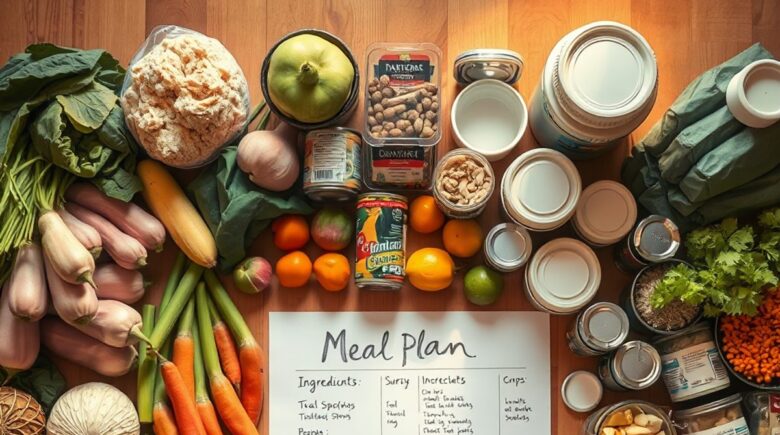
Instead of replanning every week, you plan once every 21 days. Choose 3-5 core ingredients that pull double or triple duty across meals: chicken thighs, oats, sweet potatoes. A 5-lb chicken becomes stir-fry on Tuesday, tacos on Thursday, and soup by Sunday. Batch-cook quinoa on Sunday and it covers lunches and dinners through Wednesday. This mirrors USDA guidance to plan meals before shopping, which the agency links to 25-30% reductions in waste. The 3-week cycle pushes that effect further because the ingredient list stays stable long enough to actually use everything you bought.
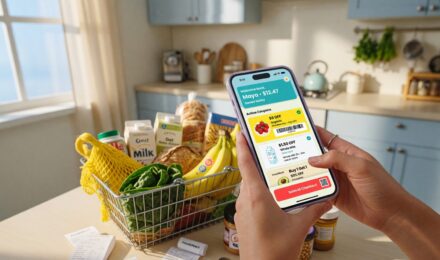
Shopping once per block keeps impulse purchases low. Stick to the list. Use store loyalty programs at Kroger or Safeway for additional discounts on your core items. Chase’s 2026 survey found shoppers using loyalty cards saved an average of $18 monthly on groceries, a small number that compounds over a year.
Measuring Savings After the First Cycle
Before you start, log every grocery receipt for four weeks. You need a real baseline, not an estimate.
Use PriceTracker Pro or a plain spreadsheet. The U.S. EPA pegs annual food waste at $728 per consumer in 2025. Eliminating most of that alone justifies the effort. Then look at your core ingredient costs: say, $12.50 for chicken thighs, sweet potatoes, and frozen peas spread across 12 meals. If you were spending $700 a month and drop to $550, that’s $150 saved, roughly 21%. Annualized, that’s $1,800, more than most domestic vacations cost. The math isn’t complicated. What’s hard is tracking consistently enough to see it.
Meal planning is vital for staying on budget. – Rebecca Beaudoin, RDN, LMNT, Nebraska Medicine
Who Should and Who Should Not
Ideal candidates
- Spend $600+ monthly on groceries.
- Have kids under 12 who crave predictable dinners.
- Live alone with limited planning energy.
- Reside in high-cost urban areas like NYC or San Fran.
- Use shopping lists to reduce impulse buys.
- Have freezer and pantry space for bulk items.
Avoid if…
- You crave meal variety daily.
- Live alone with no storage space.
- Already spend under $400 monthly on groceries.
- Have strict dietary needs requiring frequent ingredient rotation.
- Eat out more than four times a week.
- Live in rural areas with limited grocery access.
Frequently Asked Questions
Is it worth planning meals for 3 weeks instead of one?
For households spending over $600 monthly, yes. The 3-week cycle reduces waste and cuts shopping trips more effectively than weekly plans for anyone chasing long-term savings. It won’t work for everyone, though. The CFPB has specifically warned that rigid budgeting systems can backfire when they leave no room for adaptation, so build in at least one flex meal per week.
Can I still eat different meals every day with this system?
Absolutely. Core ingredients rotate through different preparations. A batch of chicken thighs becomes tacos on Monday, soup on Wednesday, and stir-fry on Friday. Swapping sauces and spices creates real variety without adding new items to your grocery list or your bill.
How do I handle leftovers not fitting the cycle?
Freeze them within two hours of cooking, which is what the USDA recommends. Label containers with the date and pull them into the next cycle as bonus meals. Don’t let them drift to the back of the freezer unlabeled.
What if my family hates the same meals?
Get them involved in the planning phase. Let each person pick one meal per cycle. Use digital couponing apps on sale days to add a small treat. Rotating the core protein monthly, say, chicken one cycle and pork shoulder the next, prevents the repetition from feeling monotonous.
Sources
[{“@context”:”https://schema.org”,”@type”:”Dataset”,”name”:”Texas DOI Complaint Index (2025)”,”description”:”Confirmed insurance complaint counts and complaint indexes for TX, collected by MyFinancial101 from public state regulatory data.”,”creator”:{“@type”:”Organization”,”name”:”MyFinancial101″,”url”:”https://MyFinancial101.com”},”temporalCoverage”:”2025″,”spatialCoverage”:{“@type”:”Place”,”name”:”TX”},”distribution”:{“@type”:”DataDownload”,”contentUrl”:”https://data.texas.gov/dataset/Complaint-indexes-and-policy-counts-for-insurance-/pa9u-9s9w”,”encodingFormat”:”application/json”},”dateModified”:”2026-07-01T04:55:42.790Z”,”variableMeasured”:”Confirmed insurance complaints and complaint index by carrier”},{“@context”:”https://schema.org”,”@type”:”Dataset”,”name”:”FRED Economic Indicators (2026-06)”,”description”:”Federal Reserve economic indicators collected by MyFinancial101 from FRED.”,”creator”:{“@type”:”Organization”,”name”:”MyFinancial101″,”url”:”https://MyFinancial101.com”},”temporalCoverage”:”2026-06″,”spatialCoverage”:{“@type”:”Place”,”name”:”US”},”distribution”:{“@type”:”DataDownload”,”contentUrl”:”https://fred.stlouisfed.org/”,”encodingFormat”:”application/json”},”dateModified”:”2026-07-01T04:55:44.538Z”,”variableMeasured”:”Federal Reserve economic time series”}]