
Quick Answer
Self-employed tax deductions 2026 cover write-offs for the 16.77 million full-time self-employed US workers, per the Small Business & Entrepreneurship Council. The biggest 2026 change: the Qualified Business Income deduction is now permanent, with a new $400 minimum deduction for low-earning but qualifying filers.
This guide is part of our Self-Employed Tax Deductions series. Explore the supporting articles below for specific scenarios.
Updated July 2026
Self-employed tax deductions 2026 look different from prior years in one important way: Congress made the Qualified Business Income deduction permanent and added a guaranteed floor for smaller earners. That’s a real shift, not just another inflation update. Meanwhile the IRS set the 2026 standard mileage rate at 72.5 cents per mile, according to the IRS’s official 2026 mileage rate announcement, and health insurance premiums remain fully deductible above the line for eligible filers.
These write-offs matter because self-employed workers pay both halves of Social Security and Medicare tax, carry their own health coverage, and fund their own retirement. There’s no employer cushioning any of it. Every dollar shifted from taxable income to a legitimate deduction is a dollar that doesn’t get taxed at the marginal rate, and for many freelancers that marginal rate sits well above what a comparable W-2 employee pays after payroll withholding. With roughly 29.8 million nonemployer businesses operating in the US, per Census Bureau data, this isn’t a niche concern. It’s the tax reality for a huge and growing share of the workforce.
This hub maps the entire self-employed deduction landscape for 2026: who qualifies, which deductions sit above the line versus inside the QBI calculation, what’s changed under recent legislation, and where the IRS tends to look hardest. Four supporting briefs in this cluster go deeper on specific, high-friction angles: car leases in Texas, home office limits in New York, business travel recordkeeping, and client meal rules in California. Think of this page as the map and those as the turn-by-turn directions.
Key Takeaways
- The QBI deduction is now permanent and includes a new $400 minimum for filers with at least $1,000 in qualified business income who materially participate, effective for 2026.
- The maximum QBI deduction remains 20 percent of qualified business income for eligible filers, per the IRS’s QBI deduction page.
- The 2026 standard mileage rate is 72.5 cents per mile, up from the prior year, per the IRS’s 2026 announcement.
- Self-employed workers can deduct 100 percent of health insurance premiums above the line, and half of the 15.3 percent self-employment tax, per the IRS’s self-employment tax guidance.
- There are 16.77 million full-time self-employed workers in the US, the highest level on record according to the Small Business & Entrepreneurship Council.
- Nationwide, 29.8 million nonemployer businesses filed under self-employment-style structures, per Census Bureau figures.
- Self-employed filers earning qualifying tips can deduct up to $25,000 annually in qualified tips, subject to phaseouts, through tax year 2028, per the IRS’s 2026 announcement on the One Big Beautiful Bill Act provisions.
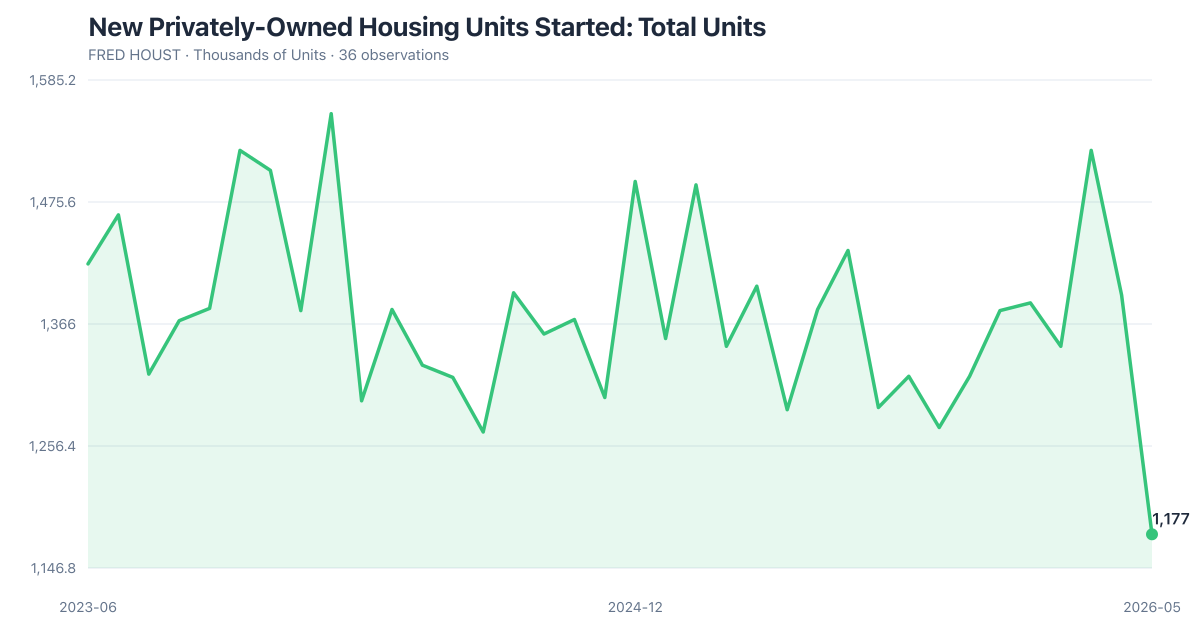
This chart tracks the labor and cost backdrop shaping 2026 self-employment activity, including the unemployment rate (FRED series UNRATE) and consumer price trends (BLS series CUUR0000SA0), both reported through mid-2026.
In This Guide
This page is the central guide in our self-employed tax deductions 2026 series; four supporting briefs dig into specific, frequently misunderstood deduction scenarios.
- Can You Deduct a Car Lease as a Self-Employed Contractor in Texas?
- Home Office Deduction Limits in New York: What the IRS Actually Allows in 2026
- How to Track and Claim Business Travel Expenses Without IRS Audits
- Are Client Meal Expenses Deductible for Freelancers in California? The 2026 Rules
In This Guide
- Who Qualifies as Self-Employed for 2026 Deductions
- The Self-Employment Tax Deduction Explained
- Health Insurance and Retirement Contributions Above the Line
- The Qualified Business Income Deduction in 2026
- Everyday Schedule C Business Expenses
- Vehicle Deductions and the Texas Car Lease Question
- Home Office Rules and Regional Limits
- What Self-Employed Workers Cannot Deduct in 2026
How We Track This Indicator
This hub draws on official IRS guidance for tax year 2026, Census Bureau nonemployer business statistics, and Small Business & Entrepreneurship Council labor figures, alongside FRED series UNRATE and BLS series CUUR0000SA0 for broader economic context. IRS figures update annually with inflation adjustments; Census and BLS data update on their standard release schedules and are subject to revision. None of these series directly measure deduction usage or audit outcomes; they describe the population and economic backdrop against which deduction rules apply. Tax law details can shift with new legislation or IRS guidance between now and filing season, so always confirm current-year specifics before filing.
Who Qualifies as Self-Employed for 2026 Deductions
Self-employed status hinges on one test: do you file Schedule C (or a partnership/S-corp equivalent) and materially participate in the business? That’s the gate. Everything downstream, from the self-employment tax deduction to QBI, depends on clearing it first.
A freelance graphic designer invoicing five clients a year clears this bar easily. A gig driver who logs miles through an app also clears it, even with irregular income and no separate business bank account. The distinction that trips people up is mixed income: someone who freelances nights and weekends while holding a W-2 job during the day still reports the freelance income on Schedule C and can claim business deductions against it, even though their day job withholds taxes normally. The two income streams are taxed under entirely different rules.
Material participation matters more in 2026 than it used to, because the new QBI minimum deduction requires it explicitly. A silent partner who owns a stake in a business but doesn’t work in it may not qualify for that floor, even with qualifying income above the $1,000 threshold. If you’re building an investment side income to supplement freelance work, tools built for Micro-investing with irregular cash flow are worth understanding separately from your Schedule C deductions, since investment income doesn’t get the same self-employment tax treatment.
The Self-Employment Tax Deduction Explained
Self-employed workers pay 15.3 percent in combined Social Security and Medicare tax on net earnings, covering both the employee and employer share that a traditional job would split. The IRS allows a deduction for half of that amount when calculating adjusted gross income, per the IRS’s self-employment tax guidance. This is an above-the-line deduction taken on Schedule 1 of Form 1040, not a business expense on Schedule C.
Here’s the mechanic people get wrong: this deduction lowers your income tax bill, not your self-employment tax bill. You still owe the full 15.3 percent on net earnings. The deduction just means you’re not also paying income tax on the half that functions as an “employer” contribution. Think of it as parallel relief, not a reduction in the SE tax itself.
Worked example: a freelance consultant nets $80,000 in Schedule C profit for 2026. Self-employment tax runs roughly 92.35 percent of net earnings times 15.3 percent, which comes to about $11,304. Half of that, $5,652, gets deducted from gross income before calculating income tax owed. If that consultant sits in the 22 percent federal bracket, that above-the-line deduction alone saves about $1,243 in income tax, even though the full $11,304 in SE tax still gets paid.
Tip: Track quarterly estimated payments against both your income tax and self-employment tax liability separately. Underpaying either one triggers penalties, and the two calculations don’t offset each other.
Health Insurance and Retirement Contributions Above the Line
Self-employed health insurance premiums are fully deductible above the line, meaning 100 percent of what you pay for yourself, your spouse, and dependents, even if you take the standard deduction. This is one of the more generous provisions in the tax code and it doesn’t require itemizing.
Retirement contributions follow a similar above-the-line logic but with higher dollar ceilings. SEP IRA contributions for the self-employed can reach up to $72,000 or 25 percent of net earnings, whichever is lower, capped against the first $360,000 of compensation for 2026. Solo 401(k) plans allow both an employee deferral and an employer-side profit-sharing contribution, often letting a solo business owner shelter more income than a SEP alone. SIMPLE IRAs carry lower limits but simpler administration, which suits businesses without much extra cash to contribute.
The IRS also released broader 2026 inflation adjustments covering Medical Savings Account deductible limits for self-only and family coverage, according to the IRS’s 2026 inflation adjustment release. If you’re weighing a high-deductible plan against a traditional one, our piece on high deductible health plan strategies covers HSA-adjacent tactics that pair well with the self-employed health premium deduction.
Choosing between SEP, Solo 401(k), and SIMPLE isn’t purely a tax question; it’s also about how much administrative overhead you’re willing to take on and whether you expect to hire employees later. A Solo 401(k) generally allows the highest contribution ceiling at moderate income levels, but only if you have no full-time employees other than a spouse.
The Qualified Business Income Deduction in 2026: The 20 Percent Break and the New Minimum
The Qualified Business Income deduction lets eligible self-employed filers and pass-through business owners deduct up to 20 percent of qualified business income, according to the IRS’s QBI deduction guidance. What changed for 2026 is bigger than the percentage: the One Big Beautiful Bill Act made this deduction permanent, removing the sunset that had loomed over it since its original 2017 creation, and it added a new guaranteed minimum deduction of $400 for taxpayers with at least $1,000 in qualified business income who materially participate in the business.
That $400 minimum solves a real problem. Under the old rules, a part-time freelancer netting $3,000 from a side gig might see a QBI deduction so small it barely registered, sometimes just a few dollars. Now, as long as net qualified business income is at least $1,000 and the taxpayer materially participates, the deduction floors out at $400 regardless of how the standard 20 percent calculation shakes out. This mostly helps small-scale, part-time, and early-stage self-employed filers whose 20 percent calculation would otherwise land below that floor.
Income phaseouts still apply to the standard 20 percent calculation for specified service trades or businesses, a category covering consultants, lawyers, doctors, and similar professional services. Above roughly $201,775 for single filers or $403,500 for married filing jointly (figures consistent with the IRS’s published 2026 inflation-adjusted thresholds), the deduction for SSTB income starts phasing out and can disappear entirely at higher income. Non-SSTB businesses, like a freelance carpenter or an e-commerce shop, don’t face the same SSTB exclusion, though wage and capital limitations can still cap the deduction at high income.
Multi-business filers face aggregation questions the IRS lets taxpayers elect into under certain conditions, combining qualified income across commonly controlled businesses to smooth out the calculation. This gets complicated fast when one business is an SSTB and another isn’t, since SSTB income above the phaseout threshold generally can’t be blended in.
| Deduction Type | Where It Applies | 2026 Limit or Rate |
|---|---|---|
| SE tax deduction | Above the line, Form 1040 Schedule 1 | 50% of SE tax owed |
| Self-employed health insurance | Above the line | 100% of premiums paid |
| QBI deduction | Below the line, after AGI | 20% of QBI, or $400 minimum floor |
Key Takeaway: The 2026 QBI deduction guarantees at least $400 for filers with $1,000+ in qualifying income who materially participate, per the IRS’s QBI deduction page, closing a gap that used to shortchange small side businesses.
Everyday Schedule C Business Expenses: Office, Marketing, Supplies, and More
The “ordinary and necessary” test governs everything on Schedule C: an expense must be common in your trade and helpful to running the business. Software subscriptions, professional liability insurance, business licenses, accounting fees, and marketing costs all clear this bar routinely.
Meals with clients or during business travel are generally deductible at 50 percent, not 100 percent, a rule that trips up a lot of first-year freelancers who assume any meal tied to work is fully written off. Startup costs get special treatment too: up to $5,000 in costs incurred before the business officially opens can be deducted in the first year, with the remainder amortized over 15 years if startup costs exceed that threshold.
Section 179 expensing lets self-employed filers deduct the full cost of qualifying equipment purchases in the year bought, rather than depreciating over several years. For 2026, that limit reaches $2.56 million, with phaseout beginning at $4.09 million in total equipment purchases, figures well beyond what most solo operators will ever approach but meaningful for growing consultancies buying serious equipment.
Continuing education and training tied directly to maintaining or improving skills in your current business is deductible; education that qualifies you for a new trade or business generally isn’t. A freelance bookkeeper taking a QuickBooks certification course clears this test; that same bookkeeper enrolling in law school does not.

Vehicle Deductions and the Texas Car Lease Question
Vehicle deductions split into two methods: standard mileage or actual expenses, and self-employed filers can only switch from standard mileage to actual expenses under limited conditions once they’ve made an initial choice. For 2026, the standard mileage rate is 72.5 cents per mile, an increase from the prior year, per the IRS’s 2026 mileage rate announcement. That covers gas, maintenance, depreciation, and insurance bundled into a single per-mile figure, which matters given that gasoline prices in the BLS city-average index rose 26.7 percent year over year.
Leased vehicles used for business raise a distinct set of questions that differ meaningfully by state depending on how the lease is structured and whether the self-employed filer is a sole proprietor, single-member LLC, or something else. Texas contractors in particular face specific documentation expectations around lease inclusion amounts and business-use percentage that don’t always map cleanly onto general IRS guidance. We cover deducting a car lease as a self-employed contractor in Texas in depth in a separate guide, including how lease payments differ from loan payments for tax purposes.
Home Office and Vehicle Deductions: The Two Most Scrutinized Write-Offs
Home office and vehicle deductions draw more IRS scrutiny than almost any other self-employed write-off, mostly because both blend personal and business use in ways that invite overstatement. The home office deduction requires regular and exclusive business use of a specific space; a kitchen table used for dinner and invoicing doesn’t qualify, but a spare bedroom converted entirely into an office does.
Filers can choose the simplified method, currently $5 per square foot up to 300 square feet (a maximum deduction of $1,500), or the actual expense method, which requires calculating the business-use percentage of the home and applying it to rent, utilities, insurance, and depreciation. The simplified method is faster and audit-friendlier for smaller spaces; the actual expense method usually produces a bigger deduction for filers with high housing costs, expensive homes, or larger dedicated office space, but demands far more substantiation.
State and local cost differences change which method makes more sense, and this shows up clearly in high-cost markets. New York freelancers, in particular, run into questions about what square footage the IRS will actually accept in dense apartment living situations where a single room does double duty for storage and work. We cover home office deduction limits in New York in a dedicated guide, since the calculation looks different for someone paying Manhattan rent than someone in a home office in a standalone house.
What Self-Employed Workers Cannot Deduct in 2026
Commuting from home to a regular place of business is never deductible, even for the self-employed, and this remains the single most common point of confusion. If your home qualifies as your principal place of business under the home office rules, trips from home to client sites can count as business travel; if it doesn’t, the drive to your regular workspace is a personal commute no matter how essential the work is.
Common mistake: Claiming 100 percent business use on a vehicle or home office that’s also used personally is one of the fastest ways to draw IRS attention. Mixed-use assets require a documented, defensible business-use percentage, not a round number picked because it looks clean.
Personal expenses routed through a business account don’t become deductible just because they pass through a business bank account. Political contributions, most fines and penalties, life insurance premiums where the taxpayer is the beneficiary, and capital improvements to a home (as opposed to repairs) generally fall outside allowable Schedule C deductions, though capital improvements may add to basis for depreciation purposes in specific home-office scenarios.
Specified service trades or businesses above the QBI phaseout threshold lose the 20 percent QBI deduction on that income entirely once they clear the upper income limit, a distinction that catches high-earning consultants and healthcare professionals off guard since they assume QBI applies universally to pass-through income. Business travel expenses that aren’t properly substantiated with dates, purposes, and receipts are a frequent audit flag; documentation gaps are more often the reason a legitimate deduction gets disallowed than the expense itself being improper. We cover how to track and document business travel expenses without inviting IRS scrutiny in a dedicated guide, and the same substantiation logic extends to client meals, which carry their own state-specific wrinkles we address separately for California freelancers given that state’s cost-of-living context and common client-meeting patterns.
Recordkeeping, Deadlines, and Planning to Maximize (and Defend) Your 2026 Deductions
Good recordkeeping is the difference between a deduction that survives an audit and one that gets disallowed on the spot. That means dated receipts, mileage logs with business purpose noted, and separate bank accounts for business activity whenever practical; commingled personal and business transactions make every deduction harder to defend, even the legitimate ones.
Quarterly estimated tax payments remain mandatory for most self-employed filers expecting to owe $1,000 or more for the year, and missing a quarterly deadline triggers penalties independent of whether the final return is filed on time. If you’ve ever wondered what happens if you miss the tax deadline, the penalty structure for underpaid estimates works similarly to the filing-deadline penalties, just calculated quarterly rather than annually. Planning ahead for 2027 filing means setting aside roughly 25 to 30 percent of net self-employment income for combined federal income and self-employment tax, adjusted up or down based on your bracket and state tax situation.
New 1099 reporting thresholds under recent legislation change what third-party platforms and clients must report to the IRS, which indirectly raises the bar on your own recordkeeping since more of your income now arrives pre-reported. That makes it harder to underreport by accident, but it also means discrepancies between your records and third-party filings are more likely to get flagged automatically.
Filers with multiple businesses, rental income alongside self-employment, or state tax conformity questions (since not every state follows federal QBI or Section 179 rules exactly) should generally involve a tax professional rather than handling these calculations solo. The QBI aggregation election, SSTB boundary questions, and multi-state apportionment are areas where a few hundred dollars in professional fees routinely saves several times that in missed or miscalculated deductions.
Related reading: Can You Deduct a Car Lease as a Self.
Frequently Asked Questions
What are self-employed tax deductions in 2026?
Self-employed tax deductions 2026 refer to the write-offs available to Schedule C filers, including the SE tax deduction, health insurance premiums, retirement contributions, the Qualified Business Income deduction, and ordinary business expenses like supplies, marketing, and vehicle costs.
Where can I find the most current self-employed deduction rules?
The IRS publishes annual updates, including the 2026 inflation adjustments covering QBI thresholds, mileage rates, and retirement contribution limits, at irs.gov.
QBI deduction vs standard deduction: can I claim both?
Yes. The QBI deduction is calculated separately from the standard deduction and doesn’t require itemizing. A self-employed filer can take the standard deduction and still claim up to 20 percent of qualified business income, or the new $400 minimum if qualifying income is below $1,000… actually, above $1,000 with material participation.
Who should consider tracking mileage versus using actual vehicle expenses?
Filers with newer, lower-cost vehicles and high business mileage typically do better with the standard mileage rate of 72.5 cents per mile in 2026. Filers with expensive, high-maintenance, or heavily financed vehicles may benefit more from actual expenses, though that method requires more detailed records.
How often does the IRS update self-employed deduction limits?
Most dollar thresholds, including mileage rates, QBI phaseout income levels, Section 179 limits, and retirement contribution caps, are adjusted annually for inflation and announced by the IRS in the fall for the following tax year.
Does the QBI deduction apply to every self-employed business?
Not universally. Specified service trades or businesses, like consulting, law, and healthcare, lose the standard 20 percent QBI deduction once income clears the upper phaseout threshold. Non-SSTB businesses face different, generally more favorable limitation rules.
When should a self-employed worker consult a tax professional instead of filing alone?
Generally when there are multiple businesses, SSTB income near the phaseout threshold, multi-state tax questions, or significant equipment purchases eligible for Section 179. Straightforward single-business filers with modest income can often handle deductions with reputable tax software.
Who qualifies as self-employed for tax purposes in 2026?
Anyone filing Schedule C, a partnership return, or operating as a sole proprietor or single-member LLC who materially participates in the business generally qualifies, regardless of whether the work is full-time, part-time, or a side activity alongside a W-2 job.
Sources
- Internal Revenue Service, Self-Employment Tax (Social Security and Medicare Taxes)
- Internal Revenue Service, 2026 Tax Inflation Adjustments
- Internal Revenue Service, Working Families Tax Cuts for Individuals and Workers
- Consumer Financial Protection Bureau, Guide to Filing Your Taxes
- Small Business & Entrepreneurship Council, Full-Time Self-Employment Reaches Highest Level on Record in 2025
- Internal Revenue Service, 2026 Business Standard Mileage Rate
- U.S. Census Bureau, Nonemployer Businesses Statistics
- Internal Revenue Service, Qualified Business Income Deduction
- Federal Reserve Economic Data, Housing Starts (HOUST)
- U.S. Bureau of Labor Statistics, Consumer Price Index
- Internal Revenue Service, One-Participant (Solo) 401(k) Plans