
Quick Answer
Independent contractors in Texas can claim the home office deduction if they meet IRS criteria. The simplified method offers up to $1,500 annually at $5 per square foot, capping at 300 sq ft. The space must be used exclusively and regularly for business. Texas has no state income tax, so this benefit is purely federal. By 2025, 72.9 million independent workers are projected in the U.S. (MBO Partners).
This guide is part of Maximizing Self-Employed Tax Deductions: A 2026 Evergreen Guide, a resource focused on tax strategy for self-employed individuals. It covers a deduction many Texas freelancers either miss entirely or claim incorrectly: the home office deduction.
For independent contractors based in Texas, this deduction can offset real overhead costs. With no state income tax, the savings are purely federal. But in high-cost cities like Austin or Dallas, where property taxes run steep, the regular method can still produce meaningful write-offs. Below, you’ll find eligibility requirements, a side-by-side method comparison, and the specific mistakes that get deductions disallowed.
Key Takeaways
- 72.9 million independent workers are expected in the U.S. by 2025 (MBO Partners, State of Independence 2025).
- The simplified method provides $5 per square foot, maxing out at $1,500 (IRS, Simplified Option for Home Office Deduction).
- Texas levies no state income tax, making the home office deduction purely federal.
- High property taxes in Texas, like those in Houston or San Antonio, can enhance the regular method’s value.
Yes, You Can Claim the Deduction, But It’s Not Automatic
Texas freelancers qualify for the home office deduction under federal rules. The catch? All three IRS tests must be satisfied, not just one or two.
Per IRS guidance: “Self-employed individuals may deduct expenses for the business use of their home if the space is used exclusively and regularly as their principal place of business or to meet with clients.” This applies in Texas exactly as it does in any other state. W-2 employees are ineligible, as are freelancers who use the space mainly for personal reasons.
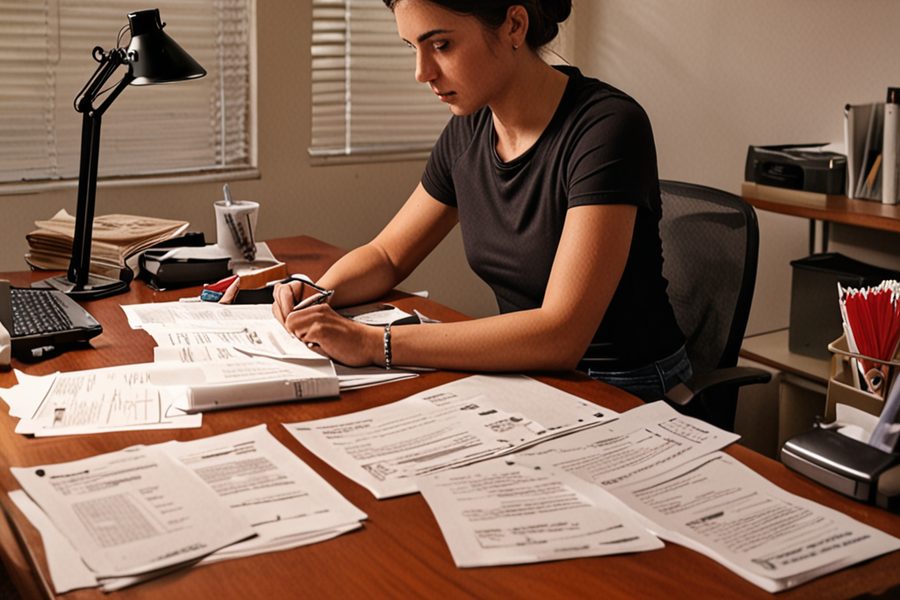
The Three IRS Requirements Every Texas Freelancer Must Fulfill
Exclusive and regular use is non-negotiable. A kitchen corner used for client calls twice a week doesn’t qualify. The space must serve business purposes consistently, with no personal use mixed in.
Federal rules also require that the space function as your principal place of business. That means it’s where you handle most administrative tasks: emails, invoicing, scheduling, client correspondence. Even if you visit client sites regularly, your home can still qualify as the primary base.
A graphic designer in Dallas who runs her business from a locked bedroom with a dedicated desk and computer meets these standards. A writer in Houston who works from a shared living room sofa does not.
From my experience: One client in Fort Worth claimed a 120-square-foot home office, but used it to store seasonal clothes and a child’s toys. The deduction was disallowed during an audit. Keep the space clean, dedicated, and business-only.
Simplified vs. Regular Method: Weighing Which Saves More for Texas Freelancers
The simplified method is exactly what it sounds like: $5 per square foot, capped at 300 sq ft, for a maximum of $1,500. No receipts needed. It works well for small spaces or anyone who’d rather skip the paperwork.
The regular method, though, can produce a larger deduction in high-cost Texas markets. Take a freelancer in San Antonio with a 250-square-foot home office. At Texas’s average property tax rate of 1.42%, a $320,000 home carries roughly $4,544 in annual property taxes. A 15% office share deducts about $682 from property taxes alone, and that’s before utilities or rent enter the picture. In Austin, where home values and rents run significantly higher, the math shifts even further in favor of the regular method. The trade-off is Form 8829 and depreciation tracking.
| Method | Max Deduction | Recordkeeping Required | Best For |
|---|---|---|---|
| Simplified | $1,500 | Minimal (no receipts) | Small spaces, low overhead, simplicity seekers |
| Regular | Varies by expenses | Extensive (Form 8829, receipts, photos) | High property taxes, large homes, renters in major cities |
What Expenses Can You Actually Deduct in Texas?
Direct expenses cover mortgage interest, rent, utilities, and repairs specific to the office space. Indirect costs like insurance and property taxes get allocated proportionally based on your office’s share of total home square footage.
Texas’s average property tax rate sits at 1.42% of home value, one of the highest rates in the country. On a $500,000 home, that’s $7,100 per year. A 15% office share pulls $1,065 in property tax deductions alone, which meaningfully boosts the regular method’s value over the simplified cap.
Utility costs are deductible by square footage percentage. Repairs within the office, like fixing a leaky window that only serves that room, count in full. But a roof repair covering the entire house gets prorated.
Renters benefit too. Austin’s average rent runs around $2,800 per month. A 20% office share equals $560 monthly, or $6,720 annually. That’s more than four times the simplified method’s ceiling.

How to Claim the Deduction on Your Tax Return
Report the deduction on Schedule C (Form 1040). With the simplified method, the election happens directly on Schedule C. The regular method requires completing Form 8829 to calculate the business-use percentage of your home.
Federal guidance states: “You may need to complete Form 8829 depending on your calculation method.” Keep detailed records regardless: photos of the office layout, monthly utility bills, mortgage statements, rent receipts. One client in Houston lost her deduction entirely because she couldn’t document her office’s square footage during an audit. Digital backups matter.
Recordkeeping is especially important in Texas given high property values. If you later sell your home, depreciation recapture may apply if you used the regular method. A spreadsheet tracking annual expenses by category is the minimum; some freelancers use dedicated accounting software or price-tracking tools to stay organized year-round.
Some freelancers run multiple businesses out of the same space. In that case, allocate the office by time or income. A writer and photographer in Dallas splitting a shared office 60/40 would each claim their respective share on separate Schedule Cs.
Common Mistakes That Could Cost You Deductions or Trigger an Audit
Personal use kills the deduction. Storing family photos, kids’ toys, or even a personal book collection in your claimed office space violates the exclusive-use rule. During audits, agents look carefully at what’s actually in the room.
Overstated square footage is the next most common problem. A client in Austin claimed 400 sq ft; the auditor measured 240 usable square feet, cutting her deduction by 40% and adding a penalty on top.
Consistency matters too. Freelancers who claim a home office as their principal place of business but spend most working hours at co-working spaces or client sites face legitimate scrutiny. If the facts don’t support the filing, the deduction won’t hold.
Caution: Don’t claim the home office deduction if your itemized deductions fall below the standard deduction. In 2026, the standard deduction is $13,850 for single filers. If your total itemized deductions, home office included, come in under that threshold, take the standard deduction instead.
Is the Home Office Deduction Worth It for Texas Freelancers in 2026?
For most Texas freelancers, yes. But the answer depends on your actual expenses, income level, and tax bracket.
Consider a freelancer in Houston earning $60,000 with a 250-square-foot office. Using the regular method: 15% of $1,400 in property taxes equals $210; 15% of $2,100 in utilities equals $315; 15% of $3,000 in rent equals $450. Total comes to $975, which falls short of the simplified method’s $1,500 ceiling. Flip this to an Austin freelancer paying higher rent and property taxes, and that same 15% share could easily reach $2,200, making the regular method the better choice.
Texas has no state income tax, so every dollar of this deduction reduces only federal taxable income. At the 12% federal bracket, a $1,500 deduction saves $180. At 22%, it saves $330. Know your bracket before deciding which method to use.
The simplified method is usually enough for freelancers with low overhead or small office spaces. Larger homes, high property tax bills, or Austin-level rents tend to tip the scales toward the regular method despite the extra paperwork.
Not everyone qualifies. Freelancers who work primarily from WeWork locations or coffee shops most of the week will have trouble convincing an auditor that their home qualifies as the principal place of business. Consistency in actual use is what the deduction hinges on.
Related reading: Can You Deduct a Car Lease as a Self.
Frequently Asked Questions
Can I claim a home office if I’m freelancing but don’t have a client meeting room?
Yes. No formal meeting area is required. The space just needs to be used regularly and exclusively for business. Conducting emails, invoicing, and client calls from a dedicated room at home is enough.
Does Texas impose any additional rules for the home office deduction?
No. Texas enforces no state-level rules on this; federal IRS guidelines apply uniformly. Texas’s high property tax rates give homeowners a stronger case for the regular method.
Can I use the home office deduction if I work from home part-time?
Potentially. The space must be used exclusively and regularly for business, but it doesn’t need to be used every single day. Sporadic, occasional use won’t qualify. Daily business tasks from a dedicated space will.
What about sharing a workspace with a partner?
Allocate by time or income. If you use the space 70% of the time, deduct 70% of the allocated expenses. Keep usage records showing the split, since the IRS allows proportional allocation based on actual use.
Sources
- Internal Revenue Service, Publication 587: Business Use of Your Home
- Internal Revenue Service, Simplified Option for Home Office Deduction
- Internal Revenue Service, Form 8829 and Schedule C
- MBO Partners, State of Independence 2025
- FRED, Finance Rate on Consumer Installment Loans (2026-02-01)
- Experian, FICO Score Distribution Report
- Federal Reserve, Consumer Credit Trends
- Consumer Financial Protection Bureau, Homeownership and Tax Deductions
[{“@context”:”https://schema.org”,”@type”:”Dataset”,”name”:”Texas DOI Complaint Index (2025)”,”description”:”Confirmed insurance complaint counts and complaint indexes for TX, collected by MyFinancial101 from public state regulatory data.”,”creator”:{“@type”:”Organization”,”name”:”MyFinancial101″,”url”:”https://MyFinancial101.com”},”temporalCoverage”:”2025″,”spatialCoverage”:{“@type”:”Place”,”name”:”TX”},”distribution”:{“@type”:”DataDownload”,”contentUrl”:”https://data.texas.gov/dataset/Complaint-indexes-and-policy-counts-for-insurance-/pa9u-9s9w”,”encodingFormat”:”application/json”},”dateModified”:”2026-07-01T04:55:42.790Z”,”variableMeasured”:”Confirmed insurance complaints and complaint index by carrier”},{“@context”:”https://schema.org”,”@type”:”Dataset”,”name”:”FRED Economic Indicators (2026-06)”,”description”:”Federal Reserve economic indicators collected by MyFinancial101 from FRED.”,”creator”:{“@type”:”Organization”,”name”:”MyFinancial101″,”url”:”https://MyFinancial101.com”},”temporalCoverage”:”2026-06″,”spatialCoverage”:{“@type”:”Place”,”name”:”US”},”distribution”:{“@type”:”DataDownload”,”contentUrl”:”https://fred.stlouisfed.org/”,”encodingFormat”:”application/json”},”dateModified”:”2026-07-01T04:55:44.538Z”,”variableMeasured”:”Federal Reserve economic time series”}]