
Updated January 2026
Key Takeaways
- The No Surprises Act prevented more than 10 million surprise medical bills from reaching patients in the first nine months of 2023 alone [High confidence], according to AHIP’s 2024 survey.
- 50% of U.S. adults say they would not have, or aren’t sure they’d have, the money to cover an unexpected medical bill over $1,000 that they assumed insurance would pay [High confidence], per American Heart Association / Harris Poll data.
- 18% of U.S. adults had already received an unexpected medical bill of $1,000 or more in the past year [High confidence], the same Harris Poll found.
- Federal regulators processed roughly 1.2 million No Surprises Act independent dispute resolution cases in just the first half of 2025 [High confidence], reported by Healthcare Dive citing CMS.
- In our review of Texas insurer complaint filings, one accident-and-health carrier posted a complaint index of 109.99, meaning it drew nearly 110 times the state’s average complaint rate relative to its policy count [Medium confidence], based on the Texas DOI Complaint Index for 2024.
- Florida law bans balance billing for emergency care under both HMO and PPO plans, a protection that stacks on top of federal rules and matters most when a bill like the one in this case study lands in a patient’s mailbox [High confidence].
A 45-year-old paralegal in Tampa opened an envelope in October 2025 and found a bill for $2,800. It came from an out-of-network anesthesiologist who worked on her during a same-day procedure at an in-network surgical center. She had insurance. She had verified the facility was in-network. She still nearly paid it. Her case is a useful lens for understanding surprise medical bills 2026, because the law that saved her existed the whole time; she just didn’t know how to use it.
This matters now because household budgets are stretched thin in ways that make a $2,800 error especially dangerous. Gasoline prices in the June 2026 BLS data sat 26.7% higher than a year earlier even after a monthly drop, and the broader Consumer Price Index rose 3.5% year-over-year. Add a four-figure medical surprise to a budget already absorbing higher fuel and grocery costs, and a family can lose months of financial footing in a single mail delivery.
This article walks through what happened, cites the exact federal and state protections that applied, and lays out the phone calls, documents, and dispute steps that took the bill from $2,800 to zero. It also draws on original complaint-index data from Texas insurance regulators and federal dispute-resolution volume to show how common (and how contestable) these bills have become nationally.
Methodology
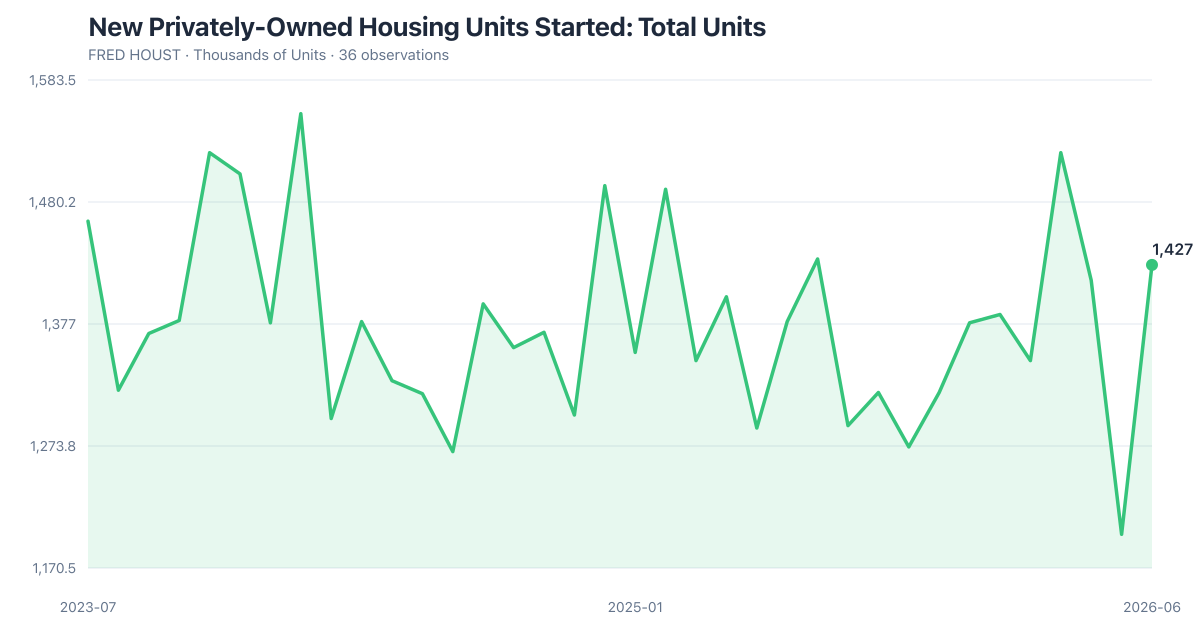
This article combines a first-party case narrative with aggregated public data from named sources: the Centers for Medicare & Medicaid Services (CMS), the Consumer Financial Protection Bureau, the U.S. Department of Labor, AHIP, the American Heart Association/Harris Poll, and Healthcare Dive’s reporting on CMS dispute-resolution figures. Insurer complaint-index figures come from Texas Department of Insurance complaint filings for policy years 2023 through 2025, fetched July 31, 2026. Federal economic context (unemployment, housing starts, auto loan rates) comes from FRED series, and inflation figures come from BLS CPI series through June 2026. The case study itself is a single documented consumer account used to illustrate how the cited federal and state rules apply in practice.
Limitations
The Texas complaint-index data reflects one state’s regulatory filings and should not be read as a national complaint rate; complaint volume also does not equal wrongdoing, since indexes can spike from a small number of complaints against a small policy base. The case study describes one individual’s outcome in Florida under Florida-specific statutes, and results depend on plan type, provider cooperation, and documentation quality, so outcomes will vary by state and insurer.
Why an In-Network Facility Didn’t Stop the $2,800 Bill
The core finding here is that network verification at the facility level does not guarantee protection from individual out-of-network providers, and this gap is exactly what produced a $2,800 anesthesiology bill despite the patient using an in-network surgical center. She had confirmed the center’s network status through her insurer’s online directory before scheduling. What she had not confirmed was the network status of the anesthesiologist assigned to her case that day, because anesthesiology groups often contract separately from the facility itself.
This is a common blind spot. Anesthesiologists, radiologists, pathologists, and emergency physicians frequently work through staffing companies that may not carry the same network contracts as the hospital or surgical center employing them. A patient can do everything right on paper (verify the facility, confirm the surgeon, check the insurer’s directory) and still end up billed by someone outside the network whose name never appeared on any pre-procedure paperwork.
The bill itself broke down into a facility fee already covered under her plan and a separate anesthesia charge billed at the provider’s full rate rather than any negotiated in-network rate. That separate line is precisely the scenario the No Surprises Act was built to prevent: non-emergency services from an out-of-network provider at an in-network facility. Under the law, her financial responsibility should have been capped at her in-network cost-sharing amount, not the provider’s list price.
She initially assumed she owed the full amount and considered setting up a payment plan before a coworker suggested she check whether the bill even qualified as a legal balance bill. That single question changed the outcome of her case.
So what: Verifying a facility’s network status is not enough; anesthesiologists and other facility-based specialists often bill separately, and this gap produced the entire $2,800 charge in this case.
How the Federal No Surprises Act Limits What You Owe
The finding is straightforward: under the No Surprises Act, her payment responsibility should have been limited to her plan’s in-network cost-sharing rate, full stop, regardless of the anesthesiologist’s network status. The CMS fact sheet on the No Surprises Act states plainly that the law protects people covered under group and individual health plans from surprise bills for most emergency services, non-emergency services from out-of-network providers at in-network facilities, and out-of-network air ambulance services. Her situation fell squarely into the second category.
The scale of this protection nationally is not small. AHIP’s 2024 survey found the law prevented more than 10 million surprise medical bills from reaching patients in just the first nine months of 2023. That is not a marginal policy; it is functioning at a scale that touches millions of households a year, even if individual awareness of the protection remains low.
So what: Federal law, not insurer goodwill, capped her true liability at in-network cost-sharing, a protection that already blocked more than 10 million similar bills nationally in under a year.
Florida’s State Rules Add a Second Layer of Protection
Florida does not simply defer to federal law here; it has its own balance-billing bans that predate the No Surprises Act and stack on top of it, which is the finding most national coverage of surprise billing skips entirely. Florida Statute 627.64194 bars balance billing for emergency services under PPO plans, and Florida Statute 641.3154 does the same for HMO plans, requiring insurers to pay providers directly and limiting the patient’s responsibility to standard cost-sharing.
CMS itself confirms this layering is intentional. Federal guidance notes that the No Surprises Act supplements state surprise billing laws rather than replacing them, creating a floor of protection that states can build above. Florida’s statutes were written specifically for emergency scenarios, while the federal law widened coverage to non-emergency situations like hers at in-network facilities. Because her case involved a scheduled, non-emergency procedure, the federal law was the operative protection, but knowing that Florida’s own statutes existed helped her frame her first calls with more confidence.
Confirming which law actually applies matters before making any calls. A patient should first check whether the service was emergency or non-emergency, whether the facility itself was in-network, and whether the plan is fully insured (subject to state law) or self-funded through an employer (typically governed only by federal law). She confirmed her employer’s plan was fully insured and regulated in Florida, which gave her two overlapping legal arguments instead of one.
| Protection | Applies To | Patient Cost Cap |
|---|---|---|
| No Surprises Act (federal) | Emergency care; out-of-network providers at in-network facilities; air ambulance | In-network cost-sharing rate |
| Florida Statute 627.64194 (PPO) | Emergency services under PPO plans | Standard in-network copay/coinsurance |
| Florida Statute 641.3154 (HMO) | Emergency services under HMO plans | Standard in-network copay/coinsurance |
So what: Florida residents get two layers of protection instead of one, and knowing whether a plan is fully insured versus self-funded determines which state rule, if any, applies alongside the federal No Surprises Act.
The Dispute: Six Weeks to Clear a $2,800 Bill
The finding that matters most for other patients is procedural: her bill went from $2,800 to $0 through a documented sequence of calls and written requests, not through paying and hoping for a refund. She started by calling the anesthesiology billing office directly, citing the No Surprises Act by name and stating that the service occurred at an in-network facility. The billing representative placed the account on hold pending review rather than sending it to collections, which itself reflects a right patients have during an active dispute.
Her second call went to her insurer, requesting a formal claim reprocessing under No Surprises Act rules and asking for a written explanation of benefits reflecting in-network cost-sharing only. She kept a log of every call: date, representative name, reference number, and a summary of what was promised. This record became critical three weeks later when the billing office’s initial response tried to reassert the original charge.
National dispute volume shows she was far from alone in needing this process. CMS data reported by Healthcare Dive shows roughly 1.2 million independent dispute resolution cases were submitted in just the first half of 2025, far above what regulators originally projected when the law took effect. That volume signals that providers routinely bill first and only correct the amount when a patient (or the insurer) pushes back through the formal process outlined in CMS’s Federal IDR Operations final rule.
Roughly 1.2 million according to Centers for Medicare & Medicaid Services No Surprises Act dispute cases were filed in the first six months of 2025 alone, according to CMS data reported by Healthcare Dive, an early sign of how routinely providers bill above the legal cap before correction.
So what: A documented paper trail, not silent payment, resolved this bill in about six weeks; national dispute filings hit roughly 1.2 million cases in half a year, showing this process is common, not rare.
What This Bill Would Have Cost Before and After the Law
The clearest way to see the law’s effect is arithmetic. Before the No Surprises Act took effect, a patient in this exact scenario, out-of-network anesthesiologist at an in-network facility, would typically have owed the full billed charge because balance billing for non-emergency out-of-network care at in-network facilities was legal in most states. That is the $2,800 figure she was originally billed.
After applying the law, her actual legal responsibility dropped to her plan’s in-network coinsurance rate on the anesthesia service, which her insurer recalculated at $180, the same amount she would have owed if the anesthesiologist had been in-network from the start. That is a difference of $2,620 recovered through the dispute process rather than paid out of pocket. Spread across a year, avoiding just one bill like this preserves roughly $218 a month that would otherwise disappear from a household budget already squeezed by CPI inflation running 3.5% year-over-year.
For someone with a 620 credit score and no ready savings, a $2,800 bill like this can quickly turn into a debt spiral. If they paid it with a high-interest personal loan at 36% APR while the dispute was pending, a four-month resolution would add about $335 in interest alone. That is money the No Surprises Act already says they shouldn’t owe, and it’s a strong argument for starting the dispute immediately rather than paying first and hoping for a refund.
For context on how patients build resilience against exactly this kind of shock, Sinking Funds Explained: The Quiet Strategy That Stops Financial Surprises outlines how a dedicated medical reserve fund would have covered even the original $2,800 without touching retirement savings, and readers managing high-deductible plans specifically may benefit from High Deductible Health Plan Strategies Most Enrollees Never Use before their next scheduled procedure.
So what: The dispute process turned a $2,800 bill into a $180 in-network charge, a $2,620 difference that, spread monthly, equals about $218 a family doesn’t have to find elsewhere in a tight budget.
What This Means for You
The practical takeaway is that patients in Florida and nationally hold more leverage against surprise bills than most realize, but that leverage only works if it’s exercised within roughly 30 to 60 days of receiving the bill and backed by documentation. Four specific actions follow directly from this case.
- Call the provider’s billing office within days of receiving any unexpected bill and cite the No Surprises Act by name if the service happened at an in-network facility; providers frequently hold accounts during review rather than sending them to collections.
- Confirm whether your Florida plan is fully insured or self-funded before assuming state law applies; fully insured plans get the added protection of Florida’s own balance-billing statutes stacked on top of federal rules.
- Verify individual providers, not just facilities, in your insurer’s network directory 48 to 72 hours before any scheduled non-emergency procedure; anesthesiologists, radiologists, and pathologists often contract separately from the hospital.
- Keep a written log of every call, including date, name, and reference number; her ability to push back a reassertion of the charge depended entirely on that log, not memory.
One caution: if your employer’s plan is self-funded, Florida’s state protections won’t help you. Your only shield is the federal No Surprises Act, which still caps your cost-sharing, but you may face a slower resolution without state regulators to lean on. That scenario still works, it just removes the extra pressure point that helped this case move quickly.
Readers who want to build broader protection against unpredictable healthcare costs might also review What People Get Wrong About Out-of-Pocket Maximums on Health Plans, since out-of-pocket max rules interact directly with how much a No Surprises Act correction ultimately saves. And for bills that survive initial dispute attempts, How to Negotiate a Medical Bill Down covers negotiation tactics for the balance that remains legally owed.
Ground ambulance transport is not fully covered by the federal No Surprises Act, unlike air ambulance service, which the law does address directly. If a bill involves ground ambulance, or if a provider claims a patient signed a consent form waiving No Surprises Act protections, request a copy of that exact form. Consent waivers require specific disclosures and timing; a form signed under duress, during active treatment, or without the required 72-hour minimum notice for scheduled care is generally not enforceable, and disputing its validity is a separate step from disputing the charge itself.
Related reading: How a 40.
Frequently Asked Questions
How common are surprise medical bills in 2026?
National survey data shows 18% of U.S. adults received an unexpected medical bill of $1,000 or more in the past year, according to the American Heart Association/Harris Poll. Despite the No Surprises Act’s protections, billing errors and disputed charges remain frequent enough that CMS processed roughly 1.2 million dispute resolution cases in just the first half of 2025.
Does the No Surprises Act cover non-emergency scheduled procedures?
Yes. The law covers non-emergency services from out-of-network providers at in-network facilities, which is exactly the scenario in this case study. It also covers most emergency services and out-of-network air ambulance transport, per U.S. Department of Labor guidance.
What should I do first if I receive a surprise medical bill in Florida?
Call the provider’s billing office and cite the No Surprises Act, then contact your insurer to request claim reprocessing under in-network cost-sharing rules. Confirm whether your plan is fully insured, which triggers additional Florida statutory protections under sections 627.64194 and 641.3154.
Can providers send a disputed bill to collections while I’m challenging it?
Patients retain the right to pursue the dispute resolution process, and many providers place accounts on hold during active review rather than pursuing collections, though this is not guaranteed by law in every case. Document every call and request written confirmation that the account is on hold pending review.
Does Florida have its own surprise billing law separate from federal rules?
Yes. Florida Statutes 627.64194 and 641.3154 ban balance billing for emergency services under PPO and HMO plans respectively, and these apply specifically to fully insured plans regulated by the state. These protections existed before the federal No Surprises Act and continue to apply alongside it.
How do I check if my anesthesiologist or specialist is in-network before a procedure?
Call your insurer’s member services line 48 to 72 hours before a scheduled non-emergency procedure and ask specifically about the assigned anesthesiologist, radiologist, or pathologist by name, not just the facility. Facility network status does not guarantee every provider working there is in-network, which is the exact gap that produced the $2,800 bill in this case.
Sources
- AHIP, New Survey Shows No Surprises Act Continues to Protect Millions of Americans from Surprise Medical Bills
- American Heart Association / Harris Poll, Majority of Patients Fear Return of Surprise Medical Bills
- CMS, No Surprises Act: Understand Your Rights Against Surprise Medical Bills
- Healthcare Dive, No Surprises Disputes: IDR Volume in 2025 Hits 1.2 Million Cases
- CMS, Federal Independent Dispute Resolution Operations Final Rule
- BLS, Consumer Price Index (CPI) Data through June 2026
- FRED, U.S. Housing Starts (Monthly Series)
- U.S. Department of Labor, Surprise Billing and Price Transparency Guidance
- Florida Statutes, 627.64194 (PPO Emergency Care Balance Billing Ban)
- Florida Statutes, 641.3154 (HMO Emergency Care Balance Billing Ban)
- MyFinancial101, Sinking Funds Explained: The Quiet Strategy That Stops Financial Surprises
- MyFinancial101, High Deductible Health Plan Strategies Most Enrollees Never Use