
Updated January 2026
Market Pulse
- 1. 30-Year Fixed Rate Mortgage Average in the U.S. rose to 6.66%-07-30, up from 6.58% the prior week (FRED series MORTGAGE30US).
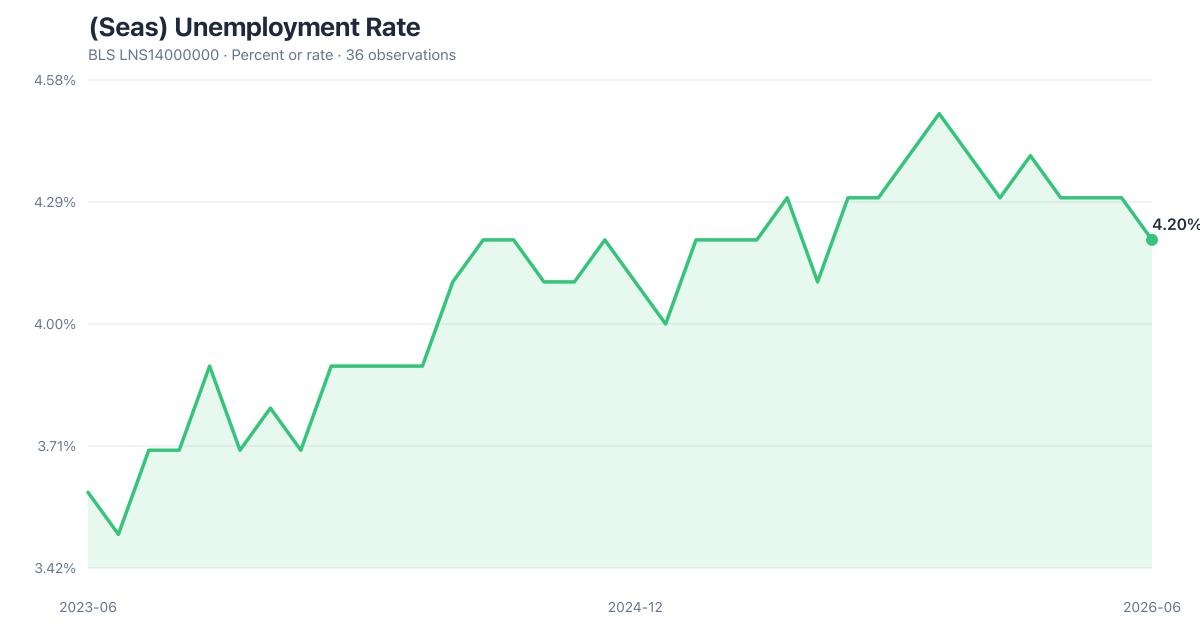
- 2. The U.S. Unemployment Rate fell to 4.20% in June 2026, down from 4.30% in May (BLS series LNS14000000).
- 3. California’s self-employment rate stood at 11.6% in 2024, with over 3 million sole proprietorships operating without employees (Public Policy Institute of California, 2024).
- 4. The federal 1099-NEC reporting threshold increased to $2,000 for 2026, meaning many small payments no longer trigger Form 1099-NEC (IRS, One Big Beautiful Bill Act).
- 5. SPY closed at 757.67 (+1.42%) on 2026-08-03, reflecting broad market strength (Finnhub).
- 6. QQQ rose to 700.07 (+1.76%) on 2026-08-03, driven by positive sentiment around tech earnings (Finnhub).
California freelancers are staring down a strange tax year in 2026. The federal 1099-NEC threshold just jumped to $2,000, so fewer forms will land in your inbox come January. Don’t mistake that for a tax break, though. Every dollar earned is income, even if you don’t get a form. If anything, the change puts more of the recordkeeping burden on you. Pair that with California’s steep state tax brackets and the 15.3% self-employment tax, and effective rates can push past 30% for a lot of independent workers here. IRS guidance is blunt about it: all self-employment income gets reported, form or no form.
Markets, meanwhile, are having a good week. SPY climbed 1.42%, QQQ jumped 1.76%, and that kind of move usually points to steady demand for the digital services, creative work, and tech consulting that a lot of freelancers rely on. Mortgage rates sitting near 6.7% tell a different story, though, one where borrowing is expensive and tax efficiency matters more than usual. Worth pulling your deduction list out now rather than waiting until March.
Data as of
Official figures from FRED (MORTGAGE30US, MORTGAGE15US, FEDFUNDS, UNRATE, TERMCBAUTO48NS), BLS (LNS14000000), and PPIC (2024 self-employment data) were used. All market quotes are from Finnhub and Marketaux-08-03. Official figures from IRS.gov and PPIC.org; market color from news feeds.
What the Data Actually Shows
The federal 1099-NEC threshold now sits at $2,000 for 2026, a change from the One Big Beautiful Bill Act. Practically, that means a freelancer collecting several payments under $2,000 from the same client might never see a 1099-NEC show up. IRS guidance is clear on this point: no form doesn’t mean no obligation.
California’s self-employment numbers are among the highest in the country. 11.6% of the state’s workforce reported being primarily self-employed, according to the Public Policy Institute of California (PPIC, 2024). The state also carries more than 3 million nonemployer establishments, sole proprietorships with zero paid staff (U.S. Census Bureau, 2023). Translation: millions of people here are patching together income from small, irregular payments, and a lot of those payments now fall under the new $2,000 threshold.
| Indicator | Latest | Prior / YoY |
|---|---|---|
| California Self-Employment Rate (2024) | 11.6% | Up from 10.2% in 2023 (PPIC) |
| Federal 1099-NEC Threshold (2026) | $2,000 | Increased from $600 (IRS) |
| 30-Year Mortgage Rate (2026-07-30) | 6.66% | Up 0.08% from prior week (FRED) |
| Unemployment Rate (June 2026) | 4.20% | Down 0.10% MoM (BLS) |
| Calif. Nonemployer Establishments | 3,502,950 | Stable since 2023 (U.S. Census) |
11.6% according to Public Policy Institute of California of California’s workforce is self-employed, more than double the national average of 5.3% (U.S. Census, 2024).
Key Takeaway: California freelancers must report all income, even if it doesn’t trigger a 1099-NEC. With 11.6% of the state workforce self-employed, and over 3 million sole proprietorships, tax compliance is non-negotiable. PPIC, 2024.
Why Markets Are Moving
Strong tech earnings and a solid June jobs report are driving this week’s gains, with SPY and QQQ both up in early August 2026. When the S&P 500 climbs like this, it usually means healthier demand for digital services, which is good news for freelancers working in software, design, and content.
- SPY rose 1.42% on August 3, 2026, driven by positive sentiment around tech and energy performance (etftrends.com).
- QQQ gained 1.76%, with investors eyeing upcoming earnings from major tech firms like SpaceX (Forbes).
- Apple’s 15% July surge was offset by losses in covered-call ETFs, highlighting volatility in leveraged instruments (Yahoo Finance).
Key Takeaway: Market strength in tech and energy sectors suggests strong demand for freelance services in digital and engineering fields. But with mortgage rates near 6.7%, this is a good moment to tighten up tax planning rather than take on new financial risk. FRED, 2026-07-30.
What This Means for You
If you’re a California freelancer earning $50,000 to $100,000 a year, expect your effective tax rate to land somewhere between 28% and 32% once you add up federal, state, self-employment, and California supplemental tax. Don’t count on the QBI deduction to lower your state bill. California never adopted IRC §199A, so that 20% federal deduction does nothing for your state return (IRS, Los Angeles CPA resources).
Fewer 1099s doesn’t mean less income to report. If five clients each pay you $1,500, that’s $7,500 in taxable income whether or not a single form gets issued. On top of that, you’re still on the hook for the full 15.3% self-employment tax on net earnings, then California’s top marginal rate of 12.3% layered on afterward.
Run the numbers on a $70,000 net profit in 2026: roughly $10,500 in self-employment tax, $8,610 in state income tax, and $4,500 in quarterly estimated payments. That’s $23,610 gone before you’ve set aside a dollar for retirement. IRS guidance confirms the employer-equivalent portion of SE tax is deductible when figuring adjusted gross income, which helps a little.
California’s income tax brackets run from 1% to 12.3% in 2026, and net profits between $50,000 and $100,000 typically land in the 9.3% to 10.3% range. Add California’s SDI withholding, 0.9% on wages up to $157,000, and you’re already looking at more than 10% in taxes that aren’t even federal SE tax yet. These amounts get applied before SE tax is calculated. A freelancer netting $80,000, for instance, pays $7,440 in state income tax at the 9.3% rate plus $720 in SDI, which trims $8,160 off taxable income before SE tax enters the picture. That ordering matters for how you plan estimated payments.
Key Takeaway: If your net income exceeds $50,000 in 2026, prioritize retirement contributions and deductible health insurance to reduce taxable income, and avoid underpayment penalties. IRS, 2026.
When to Actually Do Something About This
Above $50,000 in net earnings, there’s real value in taking action now rather than waiting. Under that, focus on clean recordkeeping and basic planning; the stakes are lower. If your income swings wildly month to month, or you’re closing in on $100,000, don’t wait until December to look at deductions.
Freelancers with lumpy income streams should look at Advanced Sinking Fund Strategies to set money aside for taxes before it gets spent elsewhere. It’s a simple way to avoid a nasty surprise in April and sidestep underpayment penalties. Past $100,000, a Solo 401(k) or SEP-IRA is worth a serious look for cutting taxable income.
Quarterly estimated payments come due April 15, June 15, September 15, and January 15 of the following year. California residents file both IRS Form 1040-ES and FTB Form 540-ES, no way around the double paperwork. To dodge penalties, pay at least 90% of your current-year liability or 100% of last year’s (110% if last year’s income topped $150,000). The IRS’s safe harbor worksheet, used alongside the FTB’s 2026 Estimated Tax Worksheet, makes the math manageable. Say you earned $70,000 in 2025: you’d need to pay at least $18,000 in estimated taxes during 2026 to hit safe harbor, assuming your income hasn’t shifted much.
Key Takeaway: If your 2026 net profit exceeds $75,000, prioritize setting up a retirement plan, either a Solo 401(k) or SEP-IRA. Contributions reduce both federal and California taxable income. IRS, 2026.
Freelancer Tax Strategies CA: Beyond 1099-NEC
The $2,000 1099-NEC threshold changes what gets reported to the IRS by third parties. It changes nothing about what you owe. Every dollar of self-employment income still counts, form or not. IRS guidance puts it plainly: “All income from self-employment must be reported.”
California’s tax structure makes this harder to shrug off than in most states. A top rate of 12.3%, no QBI benefit at the state level, and you’re taxed twice on the same income in a meaningful sense. A $100,000 net profit can mean roughly $32,000 in combined taxes, more than a third of what you earned.
There are ways to soften this. The Sinking Funds Explained: The Quiet Strategy That Stops Financial Surprises approach, setting aside roughly 30% of each payment as it comes in, keeps you from scrambling at quarter-end and helps you hit safe harbor thresholds without stress.
Edge cases trip people up more than the basics do. Say you’re a California freelancer doing work for a Texas startup. Your income is still California-source income if you’re physically doing the work from inside the state, meaning you owe California income tax on the full amount regardless of where the client sits. The state applies a “source of income” rule tied to where the work happens, and for digital services that generally comes down to the freelancer’s physical location.
Selling digital products, e-books, courses, software, adds another layer. California now requires sales tax collection on digital goods sold to in-state buyers, effective January 2026. Sell a $50 course to a California buyer and you owe 7.25% in sales tax on it. Skip that and you’re inviting an audit. Payment platforms like Stripe or PayPal can automate the collection based on buyer location, which takes some of the guesswork out of it.
AB5 misclassification is a real risk, not a theoretical one. A worker treated as an independent contractor who actually meets the ABC test for employee status can trigger back taxes and penalties for the business paying them. A freelance designer working exclusively for one client, on that client’s schedule, using that client’s tools, starts to look like an employee under AB5. In 2025, a Sacramento-based graphic designer got hit with a retroactive $14,200 tax bill after California’s Employment Development Department (EDD) reclassified the arrangement. Clear contracts, multiple clients, and documented independence go a long way toward avoiding that outcome. It’s worth saying, though, that none of these strategies are bulletproof: EDD audits can still reclassify a worker even with a solid contract in place if the actual working relationship looks like employment.
California does not conform to the federal 20% QBI deduction. Even if you qualify, you get no state tax benefit. IRS, 2026.
Case Study: A Freelance Web Developer in San Diego
Marisol, a web developer in San Diego, earned $92,000 in 2025 from 18 clients. She received only one 1099-NEC (from a client paying $3,500), but reported $92,000 in income. She paid $13,000 in estimated taxes (100% of prior-year liability), avoided penalties. Her state tax bill was $8,556 (at 9.3%), and SDI was $837. After deducting $12,000 in home office expenses and $2,500 in health insurance, her taxable income dropped to $77,500. In 2026, she opened a Solo 401(k) and contributed $20,000, reducing her federal and state taxable income by that amount. Her total tax burden for 2026 was $27,100, down from $30,000 in 2025. She now uses a quarterly tax calculator and automates sales tax collection for her online course. Marisol’s proactive approach saved her over $2,000 in tax and eliminated year-end stress.
Action Plan
Start with an honest audit of income and expenses. A tool like QuickBooks Self-Employed or Wave makes it easy to track every dollar that comes in. Set up a sinking fund and route 30% of each payment into a separate account before you can spend it. Check your estimated tax payments against safe harbor rules. If your net income clears $75,000, open a Solo 401(k) or SEP-IRA. Keep documentation of your work independence to guard against AB5 reclassification. Selling digital goods means registering for a California seller’s permit and setting up automated tax collection. If any of this feels murky, talk to a CPA who knows California self-employment tax specifically, especially if you’re in a higher-risk field like software or design.
Frequently Asked Questions
What does the $2,000 1099-NEC threshold mean for California freelancers? It means many small payments won’t trigger a 1099-NEC. But every dollar earned is still taxable. You must report all income, regardless of form issuance. IRS.
Can I claim the QBI deduction in California? No. California does not conform to IRC §199A. The 20% federal QBI deduction reduces only federal taxable income. You get no state tax benefit. IRS.
How do quarterly estimated taxes work in California? You pay estimated taxes quarterly using Form 1040-ES (federal) and FTB Form 540-ES (state). Safe harbor rules allow you to pay 100% of prior-year tax liability to avoid penalties. IRS.
What are the best retirement accounts for California freelancers? A Solo 401(k) allows up to $73,000 in 2026 contributions (for those under 50), while a SEP-IRA caps at 25% of net earnings. Both reduce taxable income and qualify for tax-free growth. IRS.
How do I prove business expenses if I work from home? Keep receipts, use mileage logs, and track time spent on business. The IRS requires documentation for home office deductions. Use digital tools like QuickBooks or Wave. IRS.
Sources
- Internal Revenue Service. Self-Employment Tax
- Internal Revenue Service. Gig Work Tax Guide
- Public Policy Institute of California. Self-Employment in California
- U.S. Census Bureau. Nonemployer Establishments
- Visual Capitalist. Self-Employment Rates by State
- Federal Reserve, MORTGAGE30US, MORTGAGE15US, FEDFUNDS
- California Franchise Tax Board, 2026 Estimated Tax Worksheet
- IRS. Estimated Tax for Self-Employed
- California EDD, AB5 Implementation Guidelines
- California FTB. Sales Tax on Digital Goods