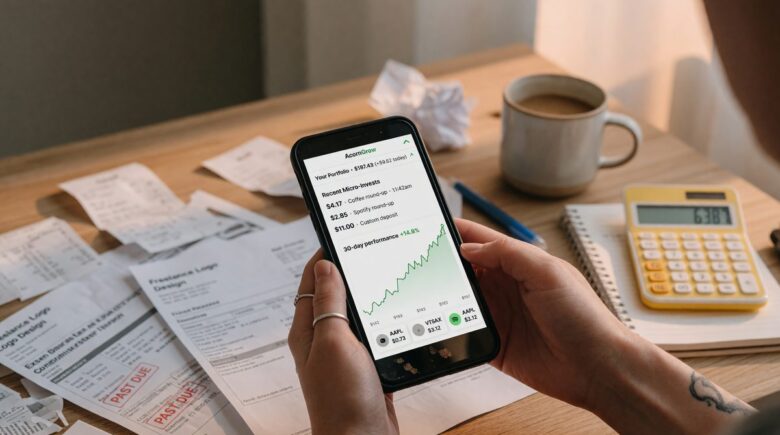
Micro-Investing Apps for Freelancers: Growing Irregular Income Without Risk
$5 daily invested consistently grows to roughly $10,500 in five years. See how micro-investing apps handle irregular freelance income with automation instead of willpower.
$5 daily invested consistently grows to roughly $10,500 in five years. See how micro-investing apps handle irregular freelance income with automation instead of willpower.
Popularity doesn’t equal value. Compare fees, minimums, and tax features across leading robo-advisors to find the right fit for your situation and timeline.
Split $80,000 across staggered CDs to earn $3,200–$3,600 annually while keeping your money liquid and fully insured. See how CD laddering works.
For most middle-income workers, Roth IRAs win because today’s 12–22% tax rates beat deferring taxes to an uncertain future. See when Traditional makes sense instead.
Market volatility actually works in your favor with dollar-cost averaging. See measurable cost-basis advantages within 6 to 12 months by automating fixed investments.
I-bonds offer 4.26% through October 2026, but face a $10K annual limit and 1-year lockup. Treasury notes yield 4.3% with instant liquidity. See which fits your money.
The average index fund investor underperformed the S&P 500 by 848 basis points in 2024. Here are the five behavioral mistakes behind that gap—and how to fix them.
$100 monthly invested at 7% annual returns grows to $50,000 in 20–22 years. See how first-generation investors can start with zero-fee index ETFs and tax-advantaged accounts.
Robo-advisors beat DIY investing for most people despite higher fees—here’s why behavioral mistakes cost self-directed investors more than 0.25% annually.
I bonds offer 4.26% through 2026 with full inflation protection, while Treasury bills yield 3.8-4.0% with better liquidity. Compare features and find which fits your savings goals.
Cut winter utility bills with smart energy-saving moves, weatherization tips, and assistance programs to keep your home warm and costs down.


Self-directed investors typically underperform by 1–3% annually due to emotional decisions and missed rebalancing. See why automation wins for passive wealth builders.
Read More
Robo-advisors beat self-managed portfolios by 2% annually for accounts under $50k. See when automation pays off and when you should take control.
Read More
Maryland's 529 plan returned 9.06% vs Florida's 7.50%, a gap worth $3,000+ over 18 years. State management, fees, and glide paths drive bigger differences than you'd expect.
Read More
Only 22% of self-employed workers have a retirement plan. See how freelancers can contribute up to $69,000 yearly using IRS-approved accounts built for variable income.
Read More
A 24-year-old in Minneapolis grew $7,800 in 14 months using micro-investing and automatic rebalancing. Consistent automation and low fees drove the success.
Read More
A 25-year-old maxing a Roth IRA could accumulate $74,400 more after-tax wealth than a taxable brokerage account over 30 years. Here's why it matters.
Read More